Buy a Custom Fight Chinese or Japanese Calligraphy Wall Scroll
We have many options to create artwork with the Chinese characters / Asian symbols / Japanese Kanji for Fight on a wall scroll or portrait.
If you want to create a cool Fight wall scroll, this is the place. Below you will find a few Asian symbols that express the idea of Fight.
3. Fight to the End / Fight Until the Bitter End
5. If you cannot bite, do not show your teeth
7. Boxing
8. Dragon Fist
11. Drunken Fist
12. Eagle Claw Overturning Fist
13. Fist
14. Five Elements Tai Chi Fist
15. Iron Fist
16. Kempo Karate / Law of the Fist Empty Hand
17. Kick-Boxing
18. Law of the Fist Karate / Kempo Karate
20. Monkey Fist
21. Monkey King
22. Monkey Fist
23. Neijia Fist
26. War
27. White Crane Fist
29. Wing Chun Fist
30. Wudang Fist
31. Wu Xing Fist
34. Bagua Fist
Fight / Beat Someone
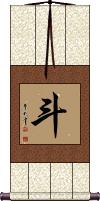
斗 is how to express the act of fighting in Chinese.
Generally, this means fighting against someone or some force whether physically or metaphorically.
Note: There is more than one way to write this character. You will notice variations on the next page after you click “Select and Customize.” If you have a preference, please let us know when you place your order.
Please note that there is a secondary pronunciation and meaning of this character. It can also mean “measuring cup” or in Japanese “sake dipper” or even “The Big Dipper.” In Japanese and Korean, this does not have the fighting meaning associated with it. You should, therefore, select this character only if your audience is Chinese, or you are a big fan of sake dippers or The Big Dipper (as that is how it will be read by Japanese and Korean people).
Fight for a Goal
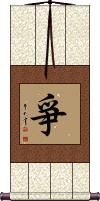
爭 is the way to express the idea of fighting for a goal.
This can also mean struggling or arguing. 爭 is okay for a Chinese audience, and while it is a word in Korean, this character is seldom seen alone in Korean grammar.
Fight to the End / Fight Until the Bitter End
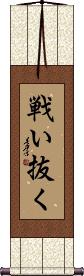
戦い抜く means “To fight to the bitter end” in Japanese.
Note: Because this selection contains some special Japanese Hiragana characters, it should be written by a Japanese calligrapher.
Fighting Spirit
The Will to Fight
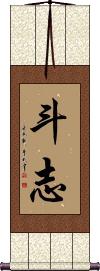
斗志 literally means fighting spirit in Chinese.
As in the spirit that a warrior, soldier, athlete, or fighter must possess.
 Note: There is more than one way to write the first character of this word. It is sometimes written like the version shown to the right (yes, it's completely different but has the same meaning & pronunciation). If you have a preference, please let us know in the special instructions about your order.
Fighting Spirit
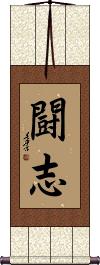
This literally means “fighting spirit” or “the will to fight.”
As in the spirit that a warrior, soldier, athlete, or fighter must possess.
Fighting Spirit
Alternate Japanese version
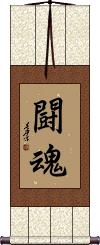
闘魂 is an alternate title with the meaning “fighting spirit” or “the will to fight.”
Fighting Spirit
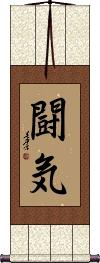
闘気 is an alternate Japanese title for “fighting spirit.”
This one is more like “fighting energy.” The second character is “ki,” the same “ki” in Aikido. This “ki” is the spiritual energy that all martial arts practitioners must master and focus on.
If you cannot bite, do not show your teeth
If you cannot fight, don't start one
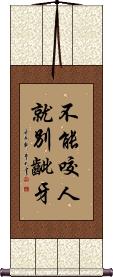
不能咬人就别龇牙 is a Chinese proverb that literally translates as: [if you] can't bite people, don't bare [your] teeth.
Figuratively, this means: Don't show your anger if you can't do anything about the situation.
Some will also say this means “Don't start a fight that you cannot win.” Others will say it means that you must be willing to back up your words (perhaps with your fists).
Black Tiger Fist
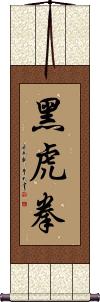
黑虎拳 is Hei Hu Quan or “Black Tiger Fist” - a school of Chinese Martial Arts.
Boxing
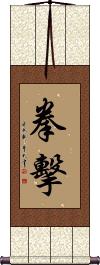
拳擊 is the term used in Chinese to refer to the original Olympic sport of combat and fighting.
If you like to strap on your boxing gloves and go a few rounds or are just a fan of boxing, this could make a nice wall scroll for you.
Note that Japanese use the same first character (which means fist) but a different Kanji for the second. Please see our Japanese boxing entry for that version.
Boxing
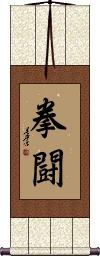
拳闘 is the term used in Japanese Kanji to refer to the original Olympic sport of combat and fighting.
This can also be translated as prizefighting.
The first Kanji means fist. The second means fight. So when literally translated, this means “fistfight” (though understood in Japanese as a more refined sport, versus street fighting).
Note: A completely different second character is used in the Chinese word for boxing but a Chinese person would still be able to guess the meaning of these Kanji.
Dragon Fist
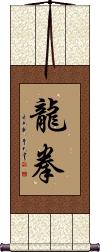
龍拳 is a title that literally means “Dragon Fist.”
Drunken Monkey
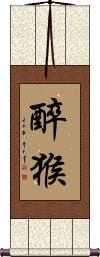
醉猴 is the short title for Drunken Monkey (often used as a title for a style of martial arts or kung fu which mimics the movements of a drunk monkey).
This martial arts style was inspired by the novel, “Journey to the West.”
See Also: Monkey Fist
Drunken Monkey
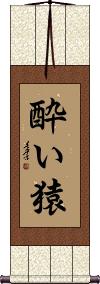
Drunken Monkey Kung Fu
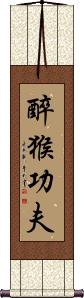
醉猴功夫 is the title for Drunken Monkey Kung Fu (Gong Fu).
The martial arts style was inspired by the novel, “Journey to the West.”
See Also: Monkey Fist
Drunken Fist
(A legitimate style of Kung Fu)
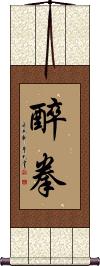
醉拳 is Drunken Fist, a traditional Chinese martial art/technique of Kung Fu.
It is a northern style of martial art that imitates a drunk person in its movements. Many staggering movements serve to deceive the opponent and keep them off-balance.
Some consider Drunken Fist to be among the more complex styles of martial arts due to the need for robust joints and fingers.
See Also: Drunken Monkey
Drunken Fist
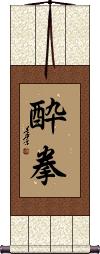
酔拳 is the Japanese version of the title for Drunken Fist or Drunken Boxing.
Eagle Claw Overturning Fist
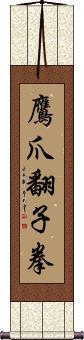
鷹爪翻子拳 is the title of a Chinese martial arts style known as “Ying Zhua Fan Zi Quan” or “Eagle Claw Overturning Fist.”
This style was derived from a combination of 鷹爪派 (Eagle Claw School) and 子母拳 (Son-Mother Fist). The title “son-mother” may seem odd, but it refers to a fist or punches seemingly coming out of another fist or punch. In modern times, 子母彈 is a title for “cluster bomb” (bombs coming out of another bomb).
Fist
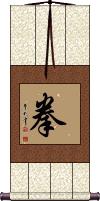
拳 is the simplest way to express “fist” in Chinese, Japanese Kanji, and old Korean Hanja.
Five Elements Tai Chi Fist
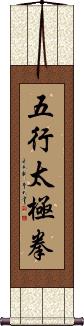
五行太極拳 is a certain school or style of Tai Chi (Taiji).
The characters literally mean “Five Elements Tai Chi Fist.”
Notes:
In Taiwan, it would be Romanized as “Wu Hsing Tai Chi Chuan” - see the standard Mandarin method above in the gray box (used in mainland China and the official Romanization used by the Library of Congress).
The last three characters are sometimes translated as “Grand Ultimate Fist,” so the whole thing can be “Five Elements Grand Ultimate Fist” if you wish.
I have not confirmed the use of this title in Korean but if it is used, it's probably only by martial arts enthusiasts. The pronunciation is correct, as shown above for Korean.
Iron Fist
Tie Quan / Tieh Chuan
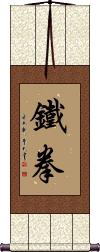
鐵拳 is a common theme used by various schools of martial arts.
鐵 means “iron” but, in some cases, can mean “indisputable.”
拳 means fist.
Some schools use the older/Taiwanese way to Romanize the iron fist, so you may have seen it spelled “Tieh Chuan” instead of “Tie Quan.” Neither way is technically incorrect.
Note that in Mandarin, the first part of the first character sounds like the English word “tea,” blending into a soft “-eh” sound. The second character sounds a lot like “chew on” but as if it is one syllable.
 After WWII in Japan, the Kanji for iron was simplified. This new Kanji form is shown to the right. If you want this modern Japanese version, please click on the Kanji to the right, instead of the button above. The characters shown to the left would still be considered the old or ancient Japanese version of this title.
Kempo Karate / Law of the Fist Empty Hand
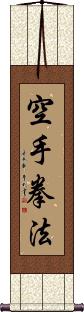
空手拳法 is the Kanji title for Kempo Karate.
The first two characters mean “karate” - technically they express “empty hand.”
The last two express “fist law” which is Romanized from Japanese as “Kenpo” or “Kempo.”
That “empty hand” translation can be understood better when you grasp the idea that karate is a martial art without weapons (other than the weapons organic to your body, such as your foot, hand, fist, etc). When you practice karate, you do so with empty hands (no weapons).
Note: There is also an antiquated way to write karate. It has the same pronunciation but a different first character which means “Tang” as in the Tang Dynasty. Some dojos use that form - let us know if you need that alternate form, and we'll add it.
Kick-Boxing
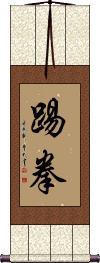
踢拳 is kickboxing in Chinese.
The first character means “kick,” and the second means “fist,” hence “boxing.”
Kick-Boxing
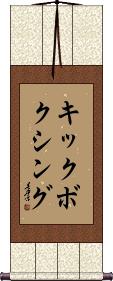
キックボクシング is the Japanese Katakana word for kickboxing.
This is a transliteration or borrowed word, meaning that it's meant to sound like “kick-boxing,” rather than being an organic Japanese Kanji word that means “kick-boxing.”
Note: Because this title is entirely Japanese Katakana, it should be written by a Japanese calligrapher.
Law of the Fist Karate / Kempo Karate
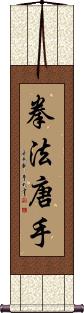
The first two characters mean “fist law” which is Romanized from Japanese as “Kenpo” or “Kempo.”
The last two are a secondary way to express “karate.”
Notes:
The more common way to express “karate” is literally “empty hand” (meaning “without weapons in your hand”). This version would be translated literally as “Tang hand” (as in the Tang Dynasty) or “China hand” (sometimes “Tang” means “China” in Japanese). Even though the character for “Tang” is used instead of “empty,” it's still pronounced “kara-te” in Japanese.
拳法唐手 is not commonly used in China - so please consider it to be a Japanese-only title.
Many Japanese people will say the last two Kanji are the old and antiquated way of saying Karate. This fact does not stop this title from existing, as these four characters are often seen in Kenpo / Kempo Dojos around the western world.
Changquan / Long Fist
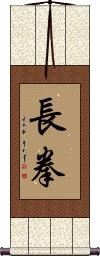
長拳 is the title for Changquan or Chang Quan, meaning Long Fist.
This style comes from the 北少林 (Northern Shaolin). Changquan belongs to the Northern Chinese School of Martial Arts.
Monkey Fist
Saruken
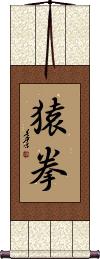
猿拳 is the Japanese martial arts title, “Monkey Fist,” referring to Monkey-Style Kung Fu.
猿拳 is very similar to a Chinese term that uses a different first character (the characters for ape and monkey were reversed when Japan borrowed Chinese characters, so this would be “Ape Fist” if a Chinese person read it).
Monkey King
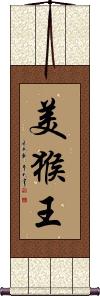
美猴王 is the specific title for “Monkey King.”
A character made famous by the ancient novel Journey to the West.
It literally means “Handsome/Beautiful Monkey King.”
See Also: Monkey Fist | Drunken Monkey
Monkey King
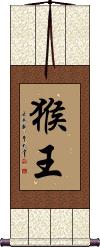
猴王 is the short title for “Monkey King.” This can refer to the character made famous by the ancient novel Journey to the West.
This literally reads “Monkey King.” However, this title is open to interpretation and could be used for someone who is the boss of the primate exhibit at the zoo or certain characters in Chinese opera.
See Also: Monkey Fist | Drunken Monkey
Monkey Fist
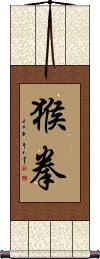
猴拳 literally means what you think, it's the “Monkey Fist” school of Kung Fu. A style that mimics the punches and movements of monkeys and apes.
Becoming popular during the Qing Dynasty, this style can trace its origins back to as early as the Song Dynasty. Some of the romance and popularity of this style comes from the novel “Journey to the West” which features the Monkey King and his fighting skills.
This novel and martial arts style has spawned a stream of Hong Kong movies featuring the Monkey King and other Kung Fu style variations such as “Drunken Monkey” and “Monkey Stealing Peaches” (a technique of disabling your opponent by grabbing and yanking on his testicles).
Note: This kind of makes sense in Korean Hanja and Japanese Kanji but probably unknown by all Koreans and Japanese except those who have an interest in this form of Kung Fu.
Neijia Fist
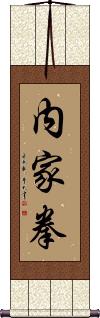
内家拳 is Neijia Fist or internal martial arts.
内家拳 is a Chinese martial arts style based on spiritual, mental, or qi-related aspects.
This style is somewhat known in martial arts circles in Japan as well.
Southern Kingdom Fist
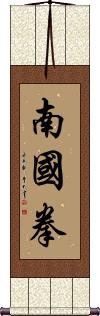
南國拳 means Southern Kingdom Fist in Chinese.
I don't know if this is a widely-known style of martial arts. I added it because people were searching my website for it.
Strive / Struggle
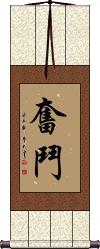
奮鬥 means strive (as in to put great effort into something or a cause).
It can also be translated as a struggle.
 The second character of this word can also be written as shown to the right. Yes.
it’s
very different. If you want this alternate version, just let us know when you place your order (in the special instructions).
The second character of this word can also be written as shown to the right. Yes.
it’s
very different. If you want this alternate version, just let us know when you place your order (in the special instructions).
Strive / Struggle
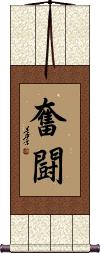
奮闘 is the Japanese version of a word that means strive (as in to put great effort into something or a cause).
It can also be translated as a struggle. There's a very similar version used in Chinese with the same meaning.
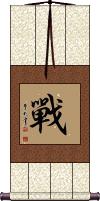
戰 means war, battle, or fight.
戰 is often used to title various wars. For instance, if you add the character for “2” before this character, you have the Chinese title for WWII.
In certain contexts, someone can use this word to mean campaign, game, or match.
Written as 戦 in modern Japanese.
 Note: In Japan, they tend to use the form shown to the right. If you pick the Japanese master calligrapher, you may get/request this version. It should also be noted that this Kanji is seldom used alone in Japanese.
White Crane Fist
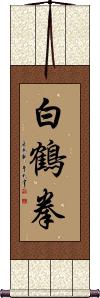
白鶴拳 is the title for the White Crane Fist style of martial arts.
白鶴拳 is also known as “Baihequan” or “Fujian White Crane.”
Wing Chun Fist Maxims
Wing Chun Kuen Kuit
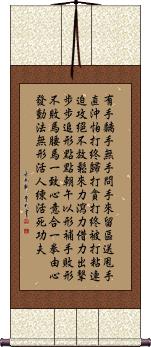
This text is the chant or poem of Wing Chun.
I call it a “chant” because it was meant to be a somewhat rhythmic poem to help practitioners memorize many aspects of Wing Chun.
1 有手黐手,無手問手
2 來留區送, 甩手直沖
3 怕打終歸打, 貪打終被打
4 粘連迫攻, 絕不放鬆
5 來力瀉力, 借力出擊
6 步步追形, 點點朝午
7 以形補手, 敗形不敗馬
8 腰馬一致, 心意合一
9 拳由心發, 動法無形
10 活人練活死功夫
You will see this referred to as “Wing Chun Kuem Kuit.” This Cantonese romanization is popular in the west (and there is no official way to romanize Cantonese, so many variations exist). In Mandarin, it would be, “Yong Chun Quan Jue.” The last character (kuit or kyut from Cantonese, jue or chüeh from Mandarin) kind of means “secrets of the art.” It's a short way to write 口訣, meaning “mnemonic chant” or “rhyme for remembering.”
In the west (especially in the military), we often use acronyms to remember things. There are no initials to make acronyms in Chinese, so in ancient times, chants like this are used to remember vast amounts of information.
I will presume you already know the meaning of the 10 maxims, so I will skip that to keep this calligraphy entry from getting too large.
Some think 练拳者必记 is the title but that just says, “(When) training (the) fist, people should remember:.” Therefore, I've not included that in the calligraphy. However, you can put a note in the special instructions if you want it added.
Note: On a traditional calligraphy wall scroll, the characters will be written in vertical columns, starting from the right, and proceeding left.
Note: This is an except and variation from a huge 口訣. These 10 maxims are used extensively in Wing Chun training, and you’ll find them all over the internet. Just know there is a much longer version out there, along with several variations and excepts like this one. If you know of, or want a different version, just contact me, and I will add it for you.
Wing Chun Fist Maxims (Part 1)
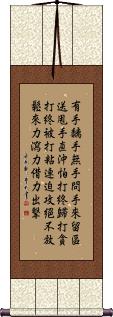
A customer asked me to split these Wing Chun maxims into two parts, so he could order a couplet. I thought this was a good idea, so it's been added here.
1 有手黐手,無手問手
2 來留區送, 甩手直沖
3 怕打終歸打, 貪打終被打
4 粘連迫攻, 絕不放鬆
5 來力瀉力, 借力出擊
A couplet is a set of two wall scrolls that start and finish one phrase or idea. Often, couplets are hung with the first wall scroll on the right side, and the second on the left side of a doorway or entrance. The order in Chinese is right-to-left, so that's why the first wall scroll goes on the right as you face the door.
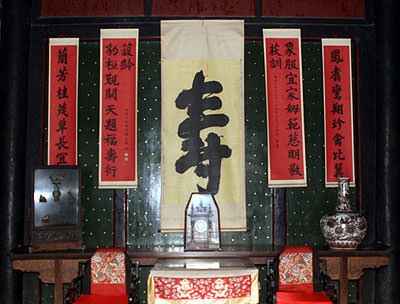
Of course, couplets can also be hung together on a wall. Often they can be hung to flank an altar, or table with incense, or even flanking a larger central wall scroll. See an example here from the home of Confucius
Be sure to order both parts 1 and 2 together. One without the other is like Eve without Adam.
Wing Chun Fist Maxims (Part 2)
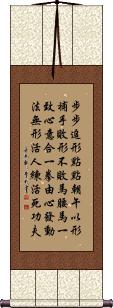
A customer asked me to split these Wing Chun maxims into two parts, so he could order a couplet.
It thought this was a good idea, so it's been added here.
6 步步追形, 點點朝午
7 以形補手, 敗形不敗馬
8 腰馬一致, 心意合一
9 拳由心發, 動法無形
10 活人練活死功夫
Be sure to order both part 1 and part 2 together. They need to be a matched set. It will be incomplete as a single wall scroll. Also, each wall scroll is handmade, so if you order them separately, weeks or months apart, they will vary a little by length, shade of paper, etc.
Wing Chun Fist
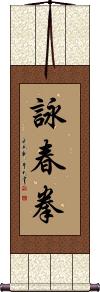
詠春拳 is the title for the “Wing Chun” school of martial arts but with the addition of the character for “fist” at the end. So this is “Wing Chun Fist” or literally “Singing Spring Fist.”
There are lots of alternate Cantonese romanizations for this, such as “Wing Chun Kuen,” “Wing Tsun Cheun,” “Eng Chun Pai,” and “Wing Ceon Kyun.” The characters are the same; just the lack of a standard Cantonese romanization means that people make up their own based on what they think it sounds like.
Wudang Fist
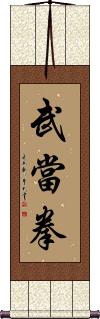
武當拳 means Wudang Quan or Wudang Fist.
Wudang (sometimes romanized as Wutang or Wu Tang) refers to a Mountain range in northwest Hubei. The Wudang martial arts style refers to a version of Shaolin Kung Fu.
Wu Xing Fist
Five Forms Fist of Kung Fu
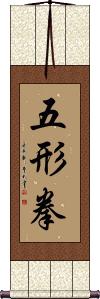
五形拳 is “Wu Xing Fist” or “Five Form Fist.”
The forms refer to Dragon, Snake, Tiger, Crane, and Leopard.
This term is used in Kung Fu, and is recognized by both Chinese and Japanese practitioners of martial arts.
Five Ancestors Fist
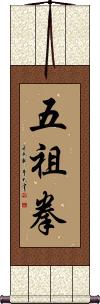
五祖拳 is a martial arts concept (or school) known as Five Ancestors' Fist.
The first character means five.
The second means ancestor, forefather, or grandparents.
The third means fist.
The ancestors referred to by this title and whose attributes contribute to this style are as follows:
1. Grace of the White Crane.
2. Agility of the Monkey.
3. Precision and skill of Emperor Taizu (great mythical ancestor).
4. Power of Luohan (Buddhist arhat).
5. Breath of Damo (founder of Buddhism, or the first Buddha).
Wing Chun Fist Law

咏春拳法 can be translated as “Wing Chun Martial Arts,” or “Wing Chun Fist Law.”
咏春 = Wing Chun.
拳法 = Fist method, fist law, Kempo/Kenpo.
Bagua Fist

八卦拳 can be translated as “Bagua Fist.”
八卦 = Bagua or Eight Trigrams.
拳 = Fist.
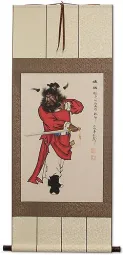
This in-stock artwork might be what you are looking for, and ships right away...
The following table may be helpful for those studying Chinese or Japanese...
| Title | Characters | Romaji (Romanized Japanese) | Various forms of Romanized Chinese | |
| Fight Beat Someone | 斗 | dòu / dou4 / dou | tou | |
| Fight for a Goal | 爭 争 | zhēng / zheng1 / zheng | cheng | |
| Fight to the End Fight Until the Bitter End | 戦い抜く | tataka-i nu-ku tataka-inu-ku | ||
| Fighting Spirit | 斗志 | dòu zhì / dou4 zhi4 / dou zhi / douzhi | tou chih / touchih | |
| Fighting Spirit | 闘誌 闘志 | tou shi / toushi / to shi | ||
| Fighting Spirit | 闘魂 | tou kon / toukon / to kon | ||
| Fighting Spirit | 闘氣 闘気气 | tou ki / touki / to ki | ||
| If you cannot bite, do not show your teeth | 不能咬人就別齜牙 不能咬人就别龇牙 | bù néng yǎo rén jiù bié zī yá bu4 neng2 yao3 ren2 jiu4 bie2 zi1 ya2 bu neng yao ren jiu bie zi ya bunengyaorenjiubieziya | pu neng yao jen chiu pieh tzu ya | |
| Black Tiger Fist | 黑虎拳 | hēi hǔ quán hei1 hu3 quan2 hei hu quan heihuquan | hei hu ch`üan heihuchüan hei hu chüan |
|
| Boxing | 拳擊 拳击 | quán jī / quan2 ji1 / quan ji / quanji | ch`üan chi / chüanchi / chüan chi | |
| Boxing | 拳闘 拳斗 | ken tou / kentou / ken to | ||
| Dragon Fist | 龍拳 龙拳 | lóng quán long2 quan2 long quan longquan | lung ch`üan lungchüan lung chüan |
|
| Drunken Monkey | 醉猴 | zuì hóu / zui4 hou2 / zui hou / zuihou | tsui hou / tsuihou | |
| Drunken Monkey | 酔い猿 | yo i saru / yoisaru | ||
| Drunken Monkey Kung Fu | 醉猴功夫 / 醉猴功伕 醉猴功夫 | zuì hóu gōng fu zui4 hou2 gong1 fu zui hou gong fu zuihougongfu | tsui hou kung fu tsuihoukungfu |
|
| Drunken Fist | 醉拳 | suiken | zuì quán / zui4 quan2 / zui quan / zuiquan | tsui ch`üan / tsuichüan / tsui chüan |
| Drunken Fist | 酔拳 | suiken | ||
| Eagle Claw Overturning Fist | 鷹爪翻子拳 鹰爪翻子拳 | yīng zhuǎ fān zi quán ying1 zhua3 fan1 zi5 quan2 ying zhua fan zi quan yingzhuafanziquan | ying chua fan tzu ch`üan yingchuafantzuchüan ying chua fan tzu chüan |
|
| Fist | 拳 | kobushi | quán / quan2 / quan | ch`üan / chüan |
| Five Elements Tai Chi Fist | 五行太極拳 五行太极拳 | go gyou tai kyoku ken gogyoutaikyokuken go gyo tai kyoku ken | wǔ xíng tài jí quán wu3 xing2 tai4 ji2 quan2 wu xing tai ji quan wuxingtaijiquan | wu hsing t`ai chi ch`üan wuhsingtaichichüan wu hsing tai chi chüan |
| Iron Fist | 鐵拳 铁拳 / 鉄拳 | tekken / teken | tiě quán / tie3 quan2 / tie quan / tiequan | t`ieh ch`üan / tiehchüan / tieh chüan |
| Kempo Karate Law of the Fist Empty Hand | 空手拳法 | kara te ken pou karatekenpou kara te ken po | kōng shǒu quán fǎ kong1 shou3 quan2 fa3 kong shou quan fa kongshouquanfa | k`ung shou ch`üan fa kungshouchüanfa kung shou chüan fa |
| Kick-Boxing | 踢拳 | tī quán / ti1 quan2 / ti quan / tiquan | t`i ch`üan / tichüan / ti chüan | |
| Kick-Boxing | キックボクシング | kikkubokushingu kikubokushingu | ||
| Law of the Fist Karate Kempo Karate | 拳法唐手 | ken pou kara te kenpoukarate ken po kara te | quán fǎ táng shǒu quan2 fa3 tang2 shou3 quan fa tang shou quanfatangshou | ch`üan fa t`ang shou chüanfatangshou chüan fa tang shou |
| Changquan Long Fist | 長拳 长拳 | cháng quán chang2 quan2 chang quan changquan | ch`ang ch`üan changchüan chang chüan |
|
| Monkey Fist | 猿拳 | saruken | ||
| Monkey King | 美猴王 | měi hóu wáng mei3 hou2 wang2 mei hou wang meihouwang | ||
| Monkey King | 猴王 | hóu wáng / hou2 wang2 / hou wang / houwang | ||
| Monkey Fist | 猴拳 | hóu quán / hou2 quan2 / hou quan / houquan | hou ch`üan / houchüan / hou chüan | |
| Neijia Fist | 内家拳 | naikaken | nèi jiā quán nei4 jia1 quan2 nei jia quan neijiaquan | nei chia ch`üan neichiachüan nei chia chüan |
| Southern Kingdom Fist | 南國拳 南国拳 | nán guó quán nan2 guo2 quan2 nan guo quan nanguoquan | nan kuo ch`üan nankuochüan nan kuo chüan |
|
| Strive Struggle | 奮鬥 / 奮斗 奋斗 / 奋鬥 | fèn dòu / fen4 dou4 / fen dou / fendou | fen tou / fentou | |
| Strive Struggle | 奮闘 / 奮鬥 奋斗 / 奋鬥 | fun tou / funtou / fun to | ||
| War | 戰 / 戦 战 | sen | zhàn / zhan4 / zhan | chan |
| White Crane Fist | 白鶴拳 白鹤拳 | bái hè quán bai2 he4 quan2 bai he quan baihequan | pai ho ch`üan paihochüan pai ho chüan |
|
| Wing Chun Fist Maxims | 有手黐手無手問手來留區送甩手直沖怕打終歸打貪打終被打粘連迫攻絕不放鬆來力瀉力借力出擊步步追形點點朝午以形補手敗形不敗馬腰馬一致心意合一拳由心發動法無形活人練活死功夫 有手黐手无手问手来留区送甩手直冲怕打终归打贪打终被打粘连迫攻绝不放松来力泻力借力出击步步追形点点朝午以形补手败形不败马腰马一致心意合一拳由心发动法无形活人练活死功夫 | |||
| Wing Chun Fist Maxims (Part 1) | 有手黐手無手問手來留區送甩手直沖怕打終歸打貪打終被打粘連迫攻絕不放鬆來力瀉力借力出擊 有手黐手无手问手来留区送甩手直冲怕打终归打贪打终被打粘连迫攻绝不放松来力泻力借力出击 | |||
| Wing Chun Fist Maxims (Part 2) | 步步追形點點朝午以形補手敗形不敗馬腰馬一致心意合一拳由心發動法無形活人練活死功夫 步步追形点点朝午以形补手败形不败马腰马一致心意合一拳由心发动法无形活人练活死功夫 | |||
| Wing Chun Fist | 詠春拳 咏春拳 | yǒng chūn quán yong3 chun1 quan2 yong chun quan yongchunquan | yung ch`un ch`üan yungchunchüan yung chun chüan |
|
| Wudang Fist | 武當拳 武当拳 | wǔ dāng quán wu3 dang1 quan2 wu dang quan wudangquan | wu tang ch`üan wutangchüan wu tang chüan |
|
| Wu Xing Fist | 五形拳 | gokeiken | wǔ xíng quán wu3 xing2 quan2 wu xing quan wuxingquan | wu hsing ch`üan wuhsingchüan wu hsing chüan |
| Five Ancestors Fist | 五祖拳 | wǔ zǔ quán wu3 zu3 quan2 wu zu quan wuzuquan | wu tsu ch`üan wutsuchüan wu tsu chüan |
|
| Wing Chun Fist Law | 詠春拳法 咏春拳法 | ei shun ken pō eishunkenpō | yǒng chūn quán fǎ yong3 chun1 quan2 fa3 yong chun quan fa yongchunquanfa | yung ch`un ch`üan fa yungchunchüanfa yung chun chüan fa |
| Bagua Fist | 八卦拳 | hakke ken / hakkeken / hake ken | bā guà quán ba1 gua4 quan2 ba gua quan baguaquan | pa kua ch`üan pakuachüan pa kua chüan |
| In some entries above you will see that characters have different versions above and below a line. In these cases, the characters above the line are Traditional Chinese, while the ones below are Simplified Chinese. | ||||