Buy a Custom Friends Chinese or Japanese Calligraphy Wall Scroll
We have many options to create artwork with the Chinese characters / Asian symbols / Japanese Kanji for Friends on a wall scroll or portrait.
If you want to create a cool Friends wall scroll, this is the place. Below you will find a few Asian symbols that express the idea of Friends.
2. Most Sincere Friend / Honest Friend / Real Friend / Best Friend
4. Best Friends / Closest Friend
6. Friend
8. True Friend
9. Best Friends
13. Eternal Friendship / Friends Forever
14. Soul Mates
15. Friendship
17. Soul Mates
19. Friendship Dojo
21. Acceptance
22. Appreciation of Truth by Meditation
23. Be Like Water
24. Best
25. Best Love / Most Sincere Love
26. Cat / Pussycat
27. Choose Life
28. Commitment
29. Compassion
31. Friendliness
32. Geisha
33. Generosity
34. Good Intentions
35. Grace
36. Green Plum and Bamboo Horse
37. Islam
38. John 14:18
39. Joshua 24:15
40. Justice / Rectitude / Right Decision
41. Kaili
42. Kindness and Forgiving Nature
44. Love
45. Love and Honor
46. Loyalty
49. Never Give Up
51. No Fear
52. No Worries
53. An Open Book Benefits Your Mind
55. Outstanding
57. Peace / Harmony
58. Homosexual / Gay
59. Homosexual Male / Gay Male
60. The Red String
62. Soul Sisters
63. Tibet
64. Together Forever
66. True Victory is Victory Over Oneself
67. Unselfish: Perfectly Impartial
68. Yujin
69. Yushinkai
70. Dog
Friend / Friendship
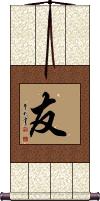
友 is the simplest way to express the idea of friends or friendship in Chinese.
It can mean friend, companion, or pal in Japanese. In Korean, it can mean friend, companion, or associate.
This single character is open to interpretation, so it can mean different things to different people (not necessarily a bad thing, as you can decide what it means to you). If you want a more concisely-defined word, you should probably pick one of our multi-character friendship-related words.
See Also: Best Friends | Friendly | Friendship
Friend / Friendship
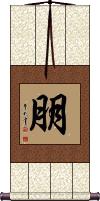
朋 is a simple way to say friend, companion, comrade, or pal in Chinese, Japanese Kanji, or old Korean Hanja.
朋 is a very short form, so a longer two-character word for friendship might be better.
Note: In Japanese, this can also be the female given name, Yukari.
Most Sincere Friend / Honest Friend / Real Friend / Best Friend
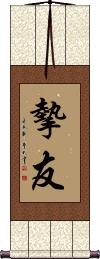
摯友 is one way to say best friend in Chinese.
The first character can mean “honest” or “most sincere.” The second character means “friend” or “friends” (plural forms work differently in Chinese).
See Also: Friendship | Soulmates
Sworn Friend / Ally
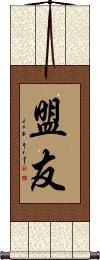
盟友 means a sworn friend or ally. If you stand on the same side of an issue with someone and perhaps fight for the same cause together, this is the term you would use to describe such a partner.
There may not be a personal relationship, as this term is also used to describe whole countries that make a coalition or fight against a common enemy.
This would be most appropriate if you are a high-level military officer, giving this wall scroll to an officer of another country as you join forces together and go to war.
Best Friends / Closest Friend
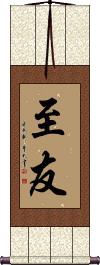
至友 is one way to say best friend in Chinese.
The first character can mean “most,” “extreme,” or “best.”
The second character means “friend” or “friends” (plural forms work differently in China).
Can also be translated as “close friend” or “most intimate friend.”
See Also: Friendship | Soulmates
Christian Friend
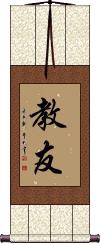
Depending on the context, 教友 can mean Christian or “friend of the same religion.”
While technically, it could be any religion, this is used mainly within the Christian faith. You can also translate this as “Christian friend” and, in some cases, “Church member.”
Friend
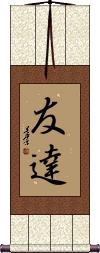
友達 is the most common way to say “friend” in Japanese.
See Also: Best Friends | Friendly | Friendship
Mentor: Teacher and Friend
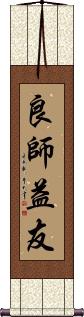
良師益友 is a Chinese proverb or word that means good teacher and helpful friend.
In the most simple translation, these 4 characters mean mentor.
True Friend
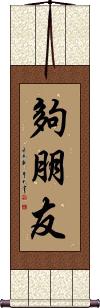
夠朋友 is a colloquial title in Chinese meaning “to be a true friend.”
True Friend
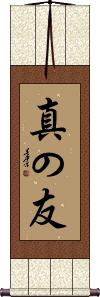
真の友 is “true friend” in Japanese.
Best Friends
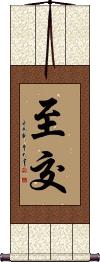
至交 is an alternate way to say best friend in Chinese.
The first character can mean “most,” “extreme” or “best.” The second character means “making friends” or “building friendship.” There's sort of a suggestion with the second character that fate caused you to intersect in life and become friends (that character can mean intersection in some context).
This can also mean “most intimate friend,” “very good friend of long-standing,” or “closest friend.”
See Also: Friendship | Soulmates
Extremely Good Friends
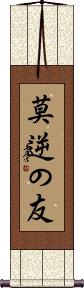
莫逆の友 is Japanese expressing meaning “excellent friends” or “best friends.”
Family and Friends
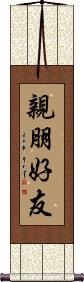
親朋好友 is a Chinese title that simply means “family and friends” or “kith and kin.”
If you read each character more literally, it's like, “relatives, friends, [and] good/close friends.”
Family and Friends
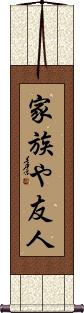
家族や友人 means “family and friends,” in Japanese.
Best Friends / Buddies
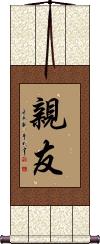
親友 is the Japanese way to say “best friend.”
The first character can mean “relative” or sometimes “parents.” The second character means “friend.” Think about the close relationship that Japanese people have with their parents and relatives, and this starts to mean “close friends.”
Some Japanese-English dictionaries also translate this as “bosom friend,” “old friend,” “intimate friend,” “buddy,” “crony” or “chum.”
Note that in Chinese, this means “relatives and friends.” It's a good meaning in Chinese, but it's not quite the same as “best friends.”
Eternal Friendship / Friends Forever
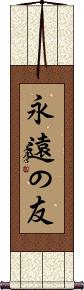
永遠の友 is a Japanese phrase about eternal friendship.
The first two characters mean eternal, eternity, perpetuity, forever, immortality, and permanence.
The third character is a possessive article which sort of makes this selection mean “Love, of the eternal kind.”
The last character is “friend” or “Friendship.”
See Also: Best Friends
Eternal Friendship / Friends Forever
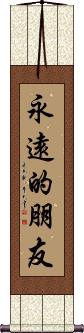
永遠的朋友 means friends that are eternal or a friendship that will last forever - you will remain the best of friends as long as you live.
The first two characters mean forever, eternal, eternity, perpetuity, immortality, and/or permanence.
The middle character links the words (it's a possessive article).
The last two characters represent friendship, or simply “friends.”
Soul Mates
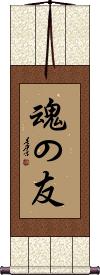
魂の友 is one of a few ways to write “Soul Mates” in Japanese.
The first Kanji means soul, spirit, ghost, immortal soul, the mind, or conscious mind. From Sanskrit, it's Vijñāna.
The middle character is a Japanese Hiragana connecting or possessive article that links the two ideas together.
The last Kanji means friends or friendship.
Friendship
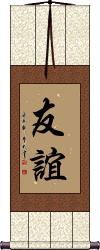
友誼 can be defined as companionship or fellowship.
This word is common in Chinese and Korean Hanja but is seldom used in Japanese anymore.
See Also: Partnership | Friendliness
Friendship
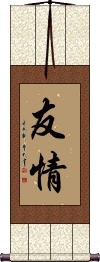
友情 can be translated as “camaraderie” or “fellowship.”
But this character combination is only used commonly in Japanese Kanji and Korean Hanja.
Soul Mates at Heart
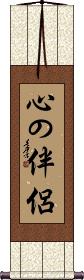
心の伴侶 is a Japanese-only title for soulmates.
心 means heart, soul, mind, core, or center. In ancient times, the heart was believed to be the mind or center of your soul and being.
の is a possessive article that connects everything here.
伴侶 means mates, companions, partners, and spouses.
This Japanese version of soulmates is about two partners, coupled or joined by their hearts.
Soul Mates
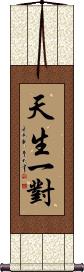
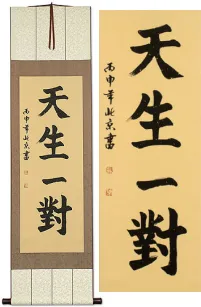
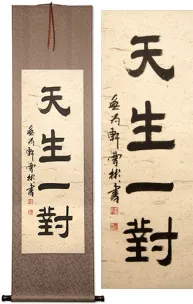
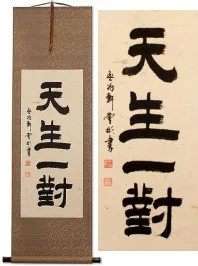
It was tough to find the best way to say “soul mates” in Chinese. We settled on 天生一對 as an old way to say, “A couple selected by heaven.”
The first two characters together mean “natural” or “innate.” Separated, they mean “heaven” and “born.” The last two characters mean “couple.” So this can be translated as “A couple that is together by nature,” or “A couple brought together by heaven's decree.” With a slight stretch, you could say, “A couple born together from heaven.”
It's a struggle to find the best way to describe this idea in English but trust me, it is pretty cool, and it is a great way to say “soulmates.”
If you're in a happy relationship or marriage and think you have found your soul mate, this would be a wonderful wall scroll to hang in your home.
Soul Mates
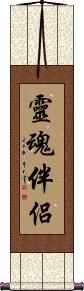
靈魂伴侶 is the literal translation of “Soul Mates.”
This is kind of the western way to express “soul mates” but translated into Chinese, Japanese Kanji, and old Korean Hanja.
The first two characters mean “soul” or “spirit.”
The second two characters mean “mate,” “companion” or “partner.”
Although not the most common title, these characters have good meaning and will be received well in Chinese, Japanese, and Korean. It's a universal title!
Spiritual Soul Mates
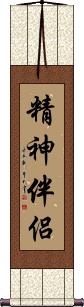
精神伴侶 means “Spiritual Soul Mates.” The first two characters mean “spiritual” or “soul.” The second two characters mean “mates,” “companions,” or “partners.”
This is more about the spiritual connection between partners rather than a “fate-brought-us-together” kind of soul mates.
Both halves of this title have meaning in Japanese but I've not yet confirmed that this is a commonly used title in Japan.
Spiritual Soul Mates
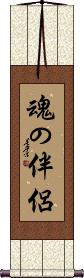
魂の伴侶 is a Japanese-only title for soulmates.
魂 means soul, spirit, immortal soul (the part of you that lives beyond your physical body), or the conscious mind. In the Buddhist context, this is vijñāna or viññāṇa (consciousness, life force, or mind).
の is a possessive article that connects everything here.
伴侶 means mates, companions, partners, and spouses.
Friendship Dojo

友愛道場 can be translated as “Friendship Dojo.”
友愛 = Friendship or fraternity.
道場 = Training hall.
Five Codes of Tang Soo Do
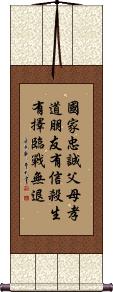
国家忠诚父母孝道朋友有信杀生有择临战无退 are the five codes of Tang Soo Do.
I suggest you have this arranged in five columns when you get to the options page for your custom calligraphy wall scroll.
Here are my translations of each of the five codes:
國家忠誠 Be loyal to your country.
父母孝道 In regards to parents, behave in a filial way.
朋友有信 Be faithful in friendship.
殺生有擇 When fighting for life and death, make noble choices.
臨戰無退 No retreat in battle.
Note: “Tang Soo Do” is a romanization of 唐手道. It's 당수도 in Korean Hangul. It can also be romanized as “Tangsudo” or “Dangsudo.”
Acceptance
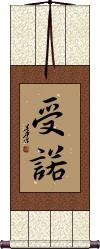
受諾 is a simple Japanese word for acceptance.
Because it's a general term, it can mean acceptance in a lot of different contexts (acceptance of your friends, family, differences, faults, etc.).
Appreciation of Truth by Meditation
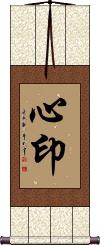
心印 is a Buddhist concept that simply stated is “appreciation of truth by meditation.”
It's a deep subject, but my understanding is that you can find truth through meditation, and once you've found the truth, you can learn to appreciate it more through further meditation. This title is not commonly used outside of the Buddhist community (your Asian friends may or may not understand it). The literal translation would be something like “the mind seal,” I've seen this term translated this way from Japanese Buddhist poetry. But apparently, the seal that is stamped deep in your mind is the truth. You just have to meditate to find it.
Soothill defines it this way: Mental impression, intuitive certainty; the mind is the Buddha-mind in all, which can seal or assure the truth; the term indicates the intuitive method of the Chan (Zen) school, which was independent of the spoken or written word.
Reference: Soothill-Hodous Dictionary of Chinese Buddhism
See Also: Zen
Be Like Water
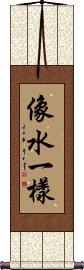
像水一樣 is a short quote from a much longer statement by Bruce Lee.
He summarized how people should be flexible to all circumstances, attacks, or situations. In the end, he exclaims, “Be like water, my friend.” 像水一樣 is the “Be like water” part alone since that seems to be what most people want.
Best
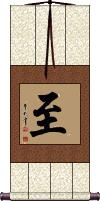
至 is a little strange as calligraphy, but 至 would be the character that means “best” or “extreme” in Chinese and Korean.
The problem is, this is seldom used alone. It's mostly used in combination with other characters to make words like “best friend,” “best food,” and “best love.”
I do not recommend this character for a wall scroll. It's better if you find a more specific term that fits your circumstances.
Note: This can be pronounced in Japanese and has a similar meaning but it is rarely if ever used in modern Japanese.
Best Love / Most Sincere Love
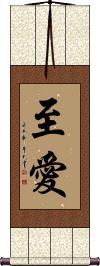
至愛 can mean the best love or most sincere love of your life.
This could be a romantic love such as your love for your spouse or a boyfriend/girlfriend.
It can also apply to the extreme love you have for your children or a parent and maybe a really good friend.
See Also: I Love You
Best Love / Most Sincere Love
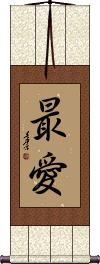
最愛 is a Japanese word that means the best love, beloved, or most sincere love of your life.
This could be a romantic love such as your love for your spouse or a boyfriend/girlfriend.
It can also apply to the extreme love you have for your children or a parent and maybe a really good friend.
Cat / Pussycat
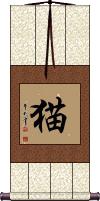
猫 means cat or pussy.
A common name for feline friends in Chinese, Japanese Kanji, and old Korean Hanja.
 There is a more complex alternate form of this cat character. If you want this form, please click on the character at the right, instead of the button above.
Choose Life
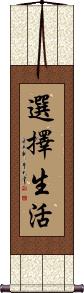
選擇生活 can mean to choose life instead of death (or suicide) or to choose to live life to the fullest.
I think of it as the key phrase used by Renton (Ewan McGregor) in the movie Trainspotting. While Chinese people will not think of Trainspotting when they see this phrase, for me, it will always be what comes near the end of this colorful rant:
Choose life. Choose a job. Choose a career. Choose a family. Choose a fucking big television. Choose washing machines, cars, compact disc players, and electrical tin can openers. Choose good health, low cholesterol, and dental insurance. Choose fixed-interest mortgage repayments. Choose a starter home. Choose your friends. Choose leisure wear and matching luggage. Choose a three-piece suite on-hire purchase in a range of fucking fabrics. Choose DIY and wondering who the fuck you are on a Sunday morning. Choose sitting on that couch watching mind-numbing, spirit-crushing game shows, stuffing fucking junk food into your mouth. Choose rotting away at the end of it all, pissing your last in a miserable home, nothing more than an embarrassment to the selfish, fucked-up brats you have spawned to replace yourself. Choose your future. Choose life.
Commitment
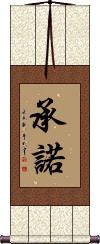
承諾 embodies the idea of commitment but also means to make a big effort or to undertake a great task.
Commitment is caring deeply about something or someone. It is deciding carefully what you want to do and then giving it 100%, holding nothing back. You give your all to a friendship, a task, or something you believe in. You finish what you start. You keep your promises.
In Chinese, this word directly means to undertake something or to make a promise to do something.
Outside of the commitment idea, this particular word can also mean approval, acceptance, consent, assent, acquiescence, or agreement, depending on context (especially in Japanese and Korean). Therefore, this word is probably best if your audience is Chinese.
See Also: Partnership | Hard Work | Dedication
Compassion
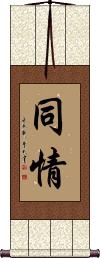
These two characters mean compassion and sympathy in Chinese, Japanese, and Korean, which makes this word universal.
Compassion is caring and understanding someone is hurt or troubled (even if you don't know them). It is wanting to help, even if all you can do is listen and say kind words. You forgive mistakes. You are a friend when someone needs a friend.
Forever In My Heart
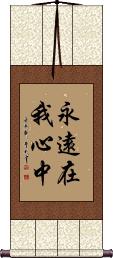
永远在我心中 means “forever in my heart” or “always in my heart” in Chinese.
Forever In My Heart
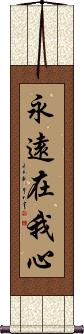
永遠在我心 means “forever in my heart” or “always in my heart” in Chinese.
This is the shorter, somewhat lyrical version of this phrase.
永遠 forever/eternal
在 at/in/exists
我 me/myself/my
心 heart/mind/soul
Forever In My Heart
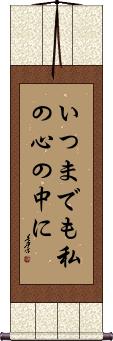
いつまでも私の心の中に means “forever in my heart” or “always in my heart” in Japanese.
Note: Because this selection contains some special Japanese Hiragana characters, it should be written by a Japanese calligrapher.
Forever In My Heart
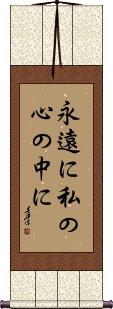
永遠に私の心の中に means “forever in my heart” or “always in my heart” in Japanese.
The character breakdown:
永遠 (eien) eternity; perpetuity; immortality; permanence.
に (ni) indicates the location of a person or thing.
私の (watashi no) my; mine.
心の中 (kokoro no naka) the middle of one's mind; the midst of one's heart.
に (ni) indicates the location of a person or thing (makes this “in” the middle of one's heart).
Note: There’s more than one way to say "Forever in My Heart" in Japanese, so you’ll find another version in our database. This is the very verbose version.
Note: Because this selection contains some special Japanese Hiragana characters, it should be written by a Japanese calligrapher.
Friendliness
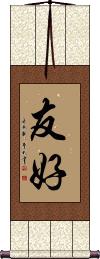
友好 is a Japanese, Chinese, and old Korean word that means friendliness.
This word can also be defined as “amity,” “friendly,” and “outgoing.”
This can be a Japanese given name Yuukou or Yuko. It can also be a Japanese surname that romanizes as Tomoyoshi.
See Also: Friendship
Geisha
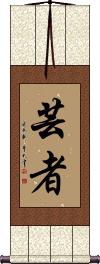
芸者 is the real basis for the way we spell geisha.
However, there are many more ways to refer to a woman that fills the role that westerners think of when they hear the word geisha.
In Japanese, these characters literally mean “artful person.” But in English, it might be better translated as “a person (woman) highly trained/accomplished in the arts.”
However, my Japanese dictionary says “a singing and dancing girl.”
Many will argue as to whether “geisha” = “prostitute” or not. My Japanese friends seem to have the opinion that a geisha is so highly trained in the art of playing musical instruments and dancing that the fact she might also be a prostitute is secondary to her performance on stage.
芸者 is a “Japanese only” term, they use a slightly different first character to express “geisha” in Chinese. Since this is a Japanese term, I have not included the Chinese version.
Generosity
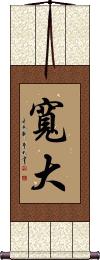
寬大 is a Chinese, Japanese, and Korean word that means Generosity.
Generosity is giving and sharing. You share freely, not with the idea of receiving something in return. You find ways to give others happiness and give just for the joy of giving. Generosity is one of the best ways to show love and friendship.
寬大 can also be translated as charitable, magnanimity, liberality, or in some contexts, broad-mindedness.
Note: There is a tiny deviation in the first character when written in Japanese. If you choose our Japanese master calligrapher, the little dot on the lower right of the first character will be omitted. With or without the dot, this can be read in Chinese, Japanese Kanji, and old Korean Hanja.
See Also: Benevolence | Altruism | Charity
Good Intentions
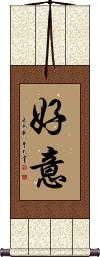
好意 is how to write good intentions in Chinese, Japanese, and old Korean Hanja.
This can also be translated as kindness, goodwill, favor/favour, courtesy, good wishes, friendliness, and/or amity.
Grace
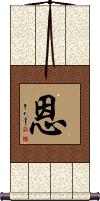
恩 is often translated as “kind act from above,” as in “The Grace of God.”
This doesn't necessarily have to come from God. It could be a favor paid to you, or help that you received (or gave). Of course, you can decide for yourself whether the grace or favor given to you by a friend is actually a gift from God.
Other possible translations of this character:
Favor / favour, acts of kindness, merits, beneficial Influence, kindness, indebtedness, obligation, and benevolent influence.
Green Plum and Bamboo Horse
Innocent Children's Games
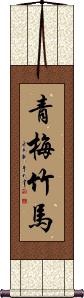
青梅竹馬 means “green plums and hobby-horse.”
Figuratively, it means “innocent children's games,” “childhood sweethearts,” or “a couple who grew up as childhood friends.”
This phrase may sound a little strange as it's a kind of Chinese proverb or idiom. It makes much more sense in Chinese than in English.
Islam
(phonetic version)
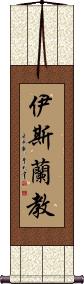
伊斯蘭教 both means and sounds like “Islam” in Mandarin Chinese.
The first three characters sound like the word “Islam,” and the last character means “religion” or “teaching.” It's the most general term for “Islam” in China. The highest concentration of Muslims in China is Xinjiang (the vast region in northwest China that was called The East Turkistan Republic until 1949 and is sometimes called Chinese Turkistan, Uyghuristan). Here you will find Uygurs, Kazakhs, Kyrgyz, and others that are descendants of Turkmen (possibly mixed with Persians and Arabs). Many of their ancestors were traders who traveled the silk road to buy and sell spices and silk and exchange other goods from the Orient and the Middle East.
I spent some time in Xinjiang and got to know this community. They are strong people who can endure much. They are friendly and love to have a good time. I was a stranger but was treated by villagers (near China's border with Afghanistan) as if I was a good friend.
However, I have heard that it's best not to cross them, as in this land, the law is the blade, and everything is “eye for an eye.” The Chinese government has little control in Xinjiang, with almost no police officers except in the capital of Urumqi (so it's a 60-hour roundtrip train ride to seek the aid of law enforcement in most cases).
While few seem devout, there are at least small mosques in every village. And you will never see a man or woman outside without a head covering.
It should be noted that these people are all citizens of China, but they are officially of the Caucasian race. A visit to Xinjiang will change your idea of what it means to be Chinese.
John 14:18
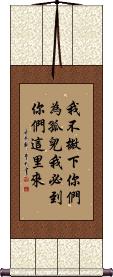
我不撇下你們為孤兒我必到你們這里來 is the translation of John 14:18 into Chinese.
This comes from the Chinese Union Bible which comes from a revised version of the King James. This Chinese Bible was originally translated and printed in 1919 (several revisions since then).
Because of the origin being the KJV, I'll say that in English, this would be, “I will not leave you comfortless: I will come to you...”
In basic English, this would be, “I will not let you be without a friend: I am coming to you.”
Joshua 24:15
This House Serves the LORD
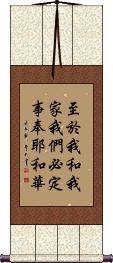
至於我和我家我們必定事奉耶和華 is the last sentence of Joshua 24:15 in Chinese.
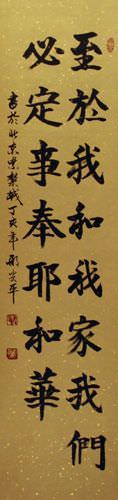
What your
calligraphy
might look like
from our
Chinese Master
Calligrapher
Joshua 24:15 (KJV) ...as for me and my house, we will serve the LORD.
Joshua 24:15 (NIV) ...as for me and my household, we will serve the LORD.
We used the only official Christian Chinese Bible that I know of so that the translation would be as accurate and standard as possible. Any Chinese Christian worth their salt will easily be able to identify this verse from the Chinese words on this scroll.
I think it is a bit like having a secret code on your wall that quietly expresses to whom you are faithful.
A great gift for your devout Christian or Jewish friend if they happen to be fond of Asian art.
Or perhaps a wonderful “conversation starter” for your own home.
Note: If you are curious, the last three characters represent the way “LORD” is used in most English Bibles. In Chinese, this is actually the phonetic name from Mandarin Chinese for “Jehovah.”
Joshua 24:15
This House Serves the LORD
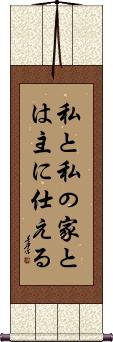
私と私の家とは、主に仕える is the last bit of Joshua 24:15 in Japanese.
Joshua 24:15 (KJV) ...as for me and my house, we will serve the LORD.
Joshua 24:15 (NIV) ...as for me and my household, we will serve the LORD.
This came from the Shinkaiyaku Japanese Bible. This is the most commonly-used Bible translation in Japan for both Protestants and Catholic Japanese folks.
I think it is a bit like having a secret code on your wall that quietly expresses to whom you are faithful.
This will be a nice gift for a friend or a wonderful expression of faith for your own home.
Note: Because this selection contains some special Japanese Hiragana characters, it should be written by a Japanese calligrapher.
Justice / Rectitude / Right Decision
Also means: honor loyalty morality righteousness
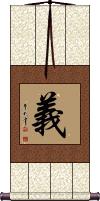
義 is about doing the right thing or making the right decision, not because it's easy but because it's ethically and morally correct.
No matter the outcome or result, one does not lose face if tempering proper justice.
義 can also be defined as righteousness, justice, morality, honor, or “right conduct.” In a more expanded definition, it can mean loyalty to friends, loyalty to the public good, or patriotism. This idea of loyalty and friendship comes from the fact that you will treat those you are loyal to with morality and justice.
義 is also one of the five tenets of Confucius's doctrine.
 There's also an alternate version of this character sometimes seen in Bushido or Korean Taekwondo tenets. It's just the addition of a radical on the left side of the character. If you want this version, click on the image to the right instead of the button above.
This is also a virtue of the Samurai Warrior
See our page with just Code of the Samurai / Bushido here
See Also: Judgment | Impartial | Confucius Tenets
Kaili
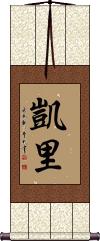
This is a common transliteration to Mandarin Chinese for the name Kaili.
It's also the name of Kaili city in Guizhou province.
I named my first daughter Kaili after visiting Kaili city and finding very friendly people there. I think this is a great English-Chinese baby name, as it is pronounceable in both languages, and the name works as a given name in both languages as well.
Kindness and Forgiving Nature
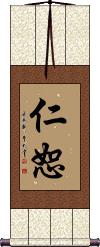
仁恕 is a word in Chinese and Japanese that means something like benevolence with magnanimity or kindness with a forgiving nature.
If this describes you, then you are the type of person that I would like to call my friend.
This may not be the most common word in daily use, but it's old enough that it transcended cultures from China to Japan in the 5th century when Japan lacked a written language and absorbed Chinese characters and words into their language.
Note: 仁恕 is not commonly used in Korean.
Kindness / Caring
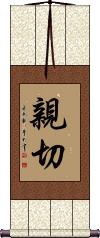
親切 is a Chinese/Japanese/Korean word that can also mean affectionate, cordial, warm, or close (emotionally).
Kindness shows you care and are doing some good to make life better for others. Be thoughtful about people's needs. Show love and compassion to someone who is sad or needs your help. When you are tempted to be cruel, to criticize or tease, decide to be kind instead.
See Also: Love | Caring | Benevolence
Love
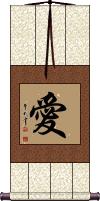
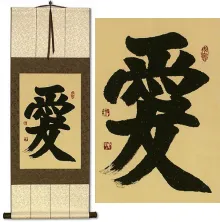
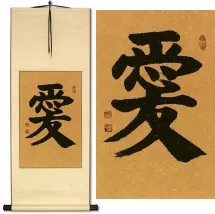
愛 universally means love in Chinese, Japanese Kanji, old Korean Hanja, and old Vietnamese.
愛 is one of the most recognized Asian symbols in the West and is often seen on tee shirts, coffee mugs, tattoos, and more.
愛 can also be defined as affection, to be fond of, to like, or to be keen on. It often refers to romantic love, and is found in phrases like, “I love you.” But in Chinese, one can say, “I love that movie” using this character as well.
This can also be a pet name or part of a pet name in the way we say “dear” or “honey” in English.
This can be a girl’s name “Ai” in both Chinese and Japanese.
More about this character:
This may be hard to imagine as a westerner but the strokes at the top of this love character symbolize family & marriage.
 The symbol in the middle is a little easier to identify. It is the character for "heart" (it can also mean "mind" or "soul"). I guess you can say that no matter if you are from the East or the West, you must put your heart into your love.
 The strokes at the bottom create a modified character that means "friend" or "friendship."
I suppose you could say that the full meaning of this love character is to love your family, spouse, and friends with all of your heart, since all three elements exist in this character.
See Also: I Love You | Caring | Benevolence | Friendliness | Double Happiness Happy Marriage Wall Scroll
Love and Honor
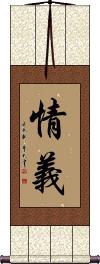
情義 means to love and honor in Chinese. 情義 is more or less the kind of thing you'd find in marriage vows.
The first character suggests emotions, passion, heart, humanity, sympathy, and feelings.
In this context, the second character means to honor your lover's wishes and treat them justly and righteously (fairly). That second character can also be translated as “obligation,” as in the obligation a husband and wife have to love each other even through difficult times.
In the context outside of a couple's relationship, this word can mean “comradeship.”
Japanese may see this more as “humanity and justice” than “love and honor.” It's probably best if your target is Chinese.
This is the short and sweet form, there is also a longer poetic form (you can find it here: Love and Honor if it’s not on the page you are currently viewing).
See Also: Love and Honor
Loyalty
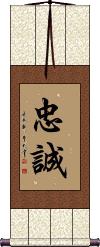
忠誠 is the written form of loyalty that is universal in Chinese, Japanese Kanji, and old Korean Hanja.
Loyalty is staying true to someone. It is standing up for something you believe in without wavering. It is being faithful to your family, country, school, friends, or ideals when the going gets tough and when things are good. With loyalty, you build relationships that last forever.
Notes:
1. There is also a Japanese version that is part of the Bushido Code which may be more desirable depending on whether your intended audience is Japanese or Chinese.
2. This version of loyalty is sometimes translated as devotion, sincerity, fidelity, or allegiance.
Loyalty / Devotion
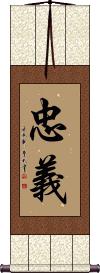
忠義 is another form of loyalty or devotion.
In Chinese, this is more specifically about being loyal and devoted to your friends.
In Japanese, this is more often used to mean loyalty to your country or nation.
Except for the slight difference noted above between Japanese and Chinese, this word is understood universally in Chinese, Japanese Kanji, and old Korean Hanja. It can also be used to describe devotion or fidelity.
It should be noted that this Kanji combination is being used less and less in modern Japan (this is a better choice if your audience is Chinese, though any Japanese person will clearly understand it).
Mother and Daughter
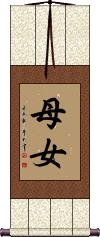
母女 means “mother and daughter” as a unit or as if mother and daughter are a whole together.
母女 is an unusual selection for a calligraphy wall scroll and can be read in many different ways. Your native Asian friends might wonder what you are trying to say. They might even read it as “a mother and daughter without a dad.”
This entry was added to our database for a customer's special request. It has the same meaning in Chinese Characters and Korean Hanja.
See Also: Mother and Son
Mother and Daughter
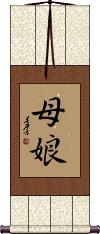
母娘 means “mother and daughter” in Japanese Kanji.
母娘 is an unusual selection for a calligraphy wall scroll and can be read in many different ways. Your native Japanese friends might wonder what you are trying to say.
Note: This will not make sense in Chinese.
See Also: Mother and Son
Never Give Up
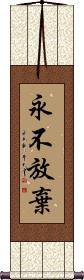
The first character means “eternal” or “forever,” and the second means “not” (together, they mean “never”). The last two characters mean “give up” or “abandon.” Altogether, you can translate this proverb as “never give up” or “never abandon.”
Depending on how you want to read this, 永不放棄 is also a statement that you will never abandon your hopes, dreams, family, or friends.
Better Late Than Never
It's Never Too Late Too Mend
Long ago in what is now China, there were many kingdoms throughout the land. This time period is known as “The Warring States Period” by historians because these kingdoms often did not get along with each other.
Sometime around 279 B.C. the Kingdom of Chu was a large but not particularly powerful kingdom. Part of the reason it lacked power was the fact that the King was surrounded by “yes men” who told him only what he wanted to hear. Many of the King's court officials were corrupt and incompetent which did not help the situation.
The King was not blameless himself, as he started spending much of his time being entertained by his many concubines.
One of the King's ministers, Zhuang Xin, saw problems on the horizon for the Kingdom, and warned the King, “Your Majesty, you are surrounded by people who tell you what you want to hear. They tell you things to make you happy and cause you to ignore important state affairs. If this is allowed to continue, the Kingdom of Chu will surely perish, and fall into ruins.”
This enraged the King who scolded Zhuang Xin for insulting the country and accused him of trying to create resentment among the people. Zhuang Xin explained, “I dare not curse the Kingdom of Chu but I feel that we face great danger in the future because of the current situation.” The King was simply not impressed with Zhuang Xin's words.
Seeing the King's displeasure with him and the King's fondness for his court of corrupt officials, Zhuang Xin asked permission from the King that he may take leave of the Kingdom of Chu, and travel to the State of Zhao to live. The King agreed, and Zhuang Xin left the Kingdom of Chu, perhaps forever.
Five months later, troops from the neighboring Kingdom of Qin invaded Chu, taking a huge tract of land. The King of Chu went into exile, and it appeared that soon, the Kingdom of Chu would no longer exist.
The King of Chu remembered the words of Zhuang Xin and sent some of his men to find him. Immediately, Zhuang Xin returned to meet the King. The first question asked by the King was “What can I do now?”
Zhuang Xin told the King this story:
A shepherd woke one morning to find a sheep missing. Looking at the pen saw a hole in the fence where a wolf had come through to steal one of his sheep. His friends told him that he had best fix the hole at once. But the Shepherd thought since the sheep is already gone, there is no use fixing the hole.
The next morning, another sheep was missing. And the Shepherd realized that he must mend the fence at once. Zhuang Xin then went on to make suggestions about what could be done to reclaim the land lost to the Kingdom of Qin, and reclaim the former glory and integrity of the Kingdom of Chu.
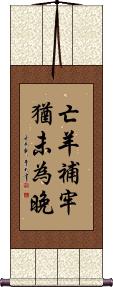
The Chinese idiom shown above came from this reply from Zhuang Xin to the King of Chu almost 2,300 years ago.
It translates roughly into English as...
“Even if you have lost some sheep, it's never too late to mend the fence.”
This proverb, 亡羊补牢犹未为晚, is often used in modern China when suggesting in a hopeful way that someone change their ways, or fix something in their life. It might be used to suggest fixing a marriage, quitting smoking, or getting back on track after taking an unfortunate path in life among other things one might fix in their life.
I suppose in the same way that we might say, “Today is the first day of the rest of your life” in our western cultures to suggest that you can always start anew.
Note: This does have Korean pronunciation but is not a well-known proverb in Korean (only Koreans familiar with ancient Chinese history would know it). Best if your audience is Chinese.
No Fear
(four-character version)
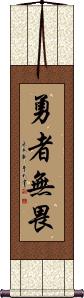
勇者無畏 is a complete sentence that means “Brave People Have No Fear” or “A Brave Person Has No Fear” (plural or singular is not implied).
We translated “No Fear” into the two variations that you will find on our website. Then we checked Chinese Google and found that others had translated “No Fear” in the exact same ways. Pick the one you like best. A great gift for your fearless friend.
See Also: Fear No Man
No Worries
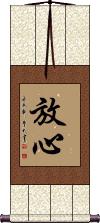
My Australian friends always say, “No worries, mate.” It's caught on with me, though I drop the “mate” part since it confuses my fellow Americans.
If you would like to express the idea of “no worries,” 放心 is the best and most natural way to say it in Chinese.
The characters you see to the left can be translated as “put your mind at rest” or “to be at ease.” You could literally translate “no worries,” but it doesn't “flow” like this simple Chinese version.
For your info, the first character means to release, to free, to let go, to relax, or to rest. The second character means your heart or your mind.
Note that in Japanese and Korean, this holds the similar meaning of “peace of mind” but can also mean absentmindedness or carelessness, depending on context.
An Open Book Benefits Your Mind
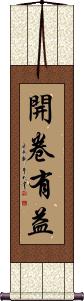
There are several ways to translate this ancient proverb. Translated literally and directly, it says, “Open roll has/yields benefit.”
To understand that, you must know a few things...
First, Chinese characters and language have deeper meanings that often are not spoken but are understood - especially with ancient texts like this. Example: It's understood that the “benefit” referred to in this proverb is to the reader's mind. Just the last character expresses that whole idea.
Second, Chinese proverbs are supposed to make you think and leave a bit of mystery to figure out.
Third, for this proverb, it should be noted that roll = book. When this proverb came about (about two thousand years ago), books were rolls of bamboo slips strung together. The first bound books like the ones we use today did not come about until about a thousand years after this proverb when they invented paper in China.
開卷有益 is a great gift for a bookworm who loves to read and increase their knowledge. Or for any friend that is or wants to be well-read.
Some other translations of this phrase:
Opening a book is profitable
The benefits of education.
Osu / Affirmative
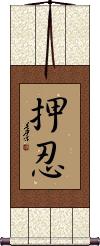
押忍 is a Japanese verbal interjection. In martial arts, it's used like “yes sir!” or “affirmative!.”
This can also be a greeting between close male friends. It can be romanized as “ossu” or “osu” (おっすor おす), though many English speakers think it's “oss.”
Outstanding
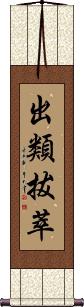
出類拔萃 means “one who stands out from his/her peers,” “stand out from the crowd,” or “standing out from others.” It can also mean “leaving your peers behind.”
A great way to tell yourself that you are outstanding (or give it to a friend you want to encourage to excel).
Partnership: Marriage
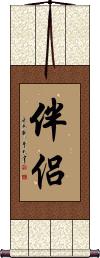
伴侶 is a Chinese, Japanese, and old Korean word that expresses the kind of partnership in which a good marriage is founded.
伴侶 could also be translated as mates or companionship or as a noun to refer to a partner or companion.
This does not have to include marriage but at least refers to a partnership with a deep relationship or bond.
Note that this is not the same as a business partner. Different words are used for various types business partnerships.
See Also: Friendship
Peace / Harmony
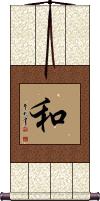
和 is the simplest form of peace and harmony.
和 can also be translated as the peaceful ideas of gentle, mild, kind, and calm. With a more harmonious context, it can be translated as union, together with, on good terms with, or on friendly terms.
Most people would just translate this character as peace and/or harmony. 和 is a very popular character in Asian cultures - you can even call it the “peace symbol” of Asia. In fact, this peace and harmony character was seen repeatedly during the opening ceremony of the 2008 Olympic Games in Beijing (a major theme of the games).
In old Chinese poems and literature, you might see this used as a kind of "and." As in two things summed together. As much as you could say, "the sun and moon," you could say "the sun in harmony with the moon."
See Also: Inner Peace | Patience | Simplicity
Homosexual / Gay
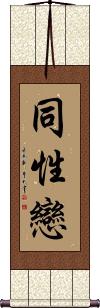
A great way to tell your Chinese friends about your lifestyle while keeping your Anglo friends in the dark.
Kind of a huge bold sign to say “I'm Gay” without anybody knowing.
同性戀 literally means “same-sex feeling” or “same-sex affection” in Chinese.
Homosexual / Gay
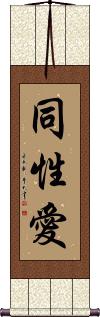
同性愛 is a great way to tell your Japanese friends about your lifestyle while keeping your Anglo friends in the dark.
Kind of a huge bold sign to say “I'm Gay” without anybody knowing.
These Kanji characters literally mean “same-sex love.” This phrase would also be understood in Chinese but this combination would act to really emphasize the “love” component to a native Chinese person.
Homosexual Male / Gay Male
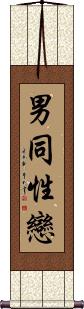
You need the male character in front of the word for homosexual in Chinese to create this word.
It's a much nicer way to say “Gay Male” than English words like Fag, Fairy, Sissy, Puff, Poof, Poofster, Swish, or Pansy. Although I suppose it could be used as a substitute for Nancy Boy, Queer, or Queen (for which, last time I checked, my gay friends said were OK in the right context).
For those of you who think China is a restrictive society - there are at least two gay discos in Beijing, the capital of China. It's at least somewhat socially acceptable to be a gay male in China. However, lesbians seem to be shunned a bit.
I think the Chinese government has realized that the 60% male population means not everybody is going to find a wife (every gay male couple that exists means two more women in the population are available for the straight guys), and the fact that it is biologically impossible for men to give birth, may be seen as helping to decrease the over-population in China.
The Red String
Thread of Lover's Destiny / Fate
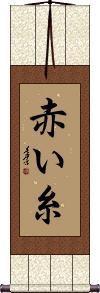
This literally translates as “the red string” or “the red thread” in Japanese, but the real meaning is much deeper...
In Japanese culture, it's believed that fate, destiny, or karma joins lovers by an unseen string, tied around one little finger of each. 赤い糸 is how soul mates find and are drawn to each other.
The Japanese concept of the red thread of fate, by most estimations, comes from Chinese folklore, where it's known as 姻緣紅線. The only difference is that in China, the celestial red thread is tied around the ankles of the lovers (versus what is usually represented as the pinky finger in Japan).
The Red Thread of Fate
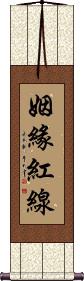
姻緣紅線 is the legendary red string of destiny that binds all soul mates or lovers together.
In ancient Chinese culture, a mythological matchmaker named 月老 (Yuè Lǎo) was the controller of the fate that led lovers to meet. He did this by tying a celestial red string to the ankle of each person. Sometime during their life, they will meet and marry as fate dictates.
While the origin of the red string comes from China, it has spread to other parts of Asia (such as Japan, where it's known as 赤い糸).
Soul Sisters
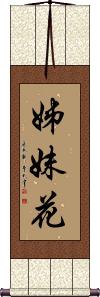
This literally means “sister flowers,” but it is really a way to say “soul sisters” like “soul mates.”
Tibet
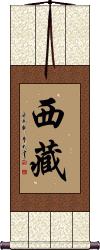
西藏 is the Chinese and Japanese name for Tibet.
It is a vast area in southwest China for which the Chinese government has little control (except in the capital of Llasa). During your travels in Tibet (outside of Llasa) you will find it is rough country full of ruthless bandits and honorable and upright Living Buddhas. There are about 2000 Living Buddhas in Tibet, and at least 10 times more bandits ready to ambush you on the road or trail.
On the eastern frontier of Tibet, you will find the place designated to be Shangri-la. It's a friendly village of Tibetans and is the gateway to greater Tibet.
The full official Chinese name is Tibet Autonomous Region or 西藏自治區|西藏自治区. The name here, 西藏 is quite old - from several dynasties ago.
Together Forever
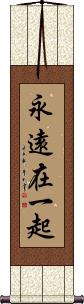
永遠在一起 is “together forever” in Chinese.
This is a great idea for couples making a commitment of a lifetime.
Together Forever
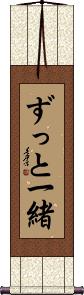
ずっと一緒 is “together forever” in Japanese.
The first three characters mean “continuously,” “throughout,” “all along,” “the whole time,” or “all the way.”
The last two Kanji mean “together.”
Note: Because this selection contains some special Japanese Hiragana characters, it should be written by a Japanese calligrapher.
Together Forever in Love
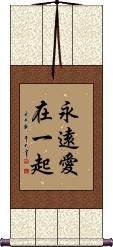
永遠愛在一起 is “together forever in love” in Chinese.
It's a nice phrase if you're a couple who plans to stay together and make your love last as long as you live.
True Victory is Victory Over Oneself
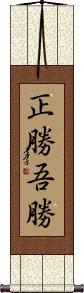
正勝吾勝 is a proverb that is often translated as “True victory is victory over oneself.”
However, literally, Kanji by Kanji, means “True victory [is] my/self victory.”
My Japanese friends rate this very highly for a wall scroll.
See Also: Know Thy Enemy Know Thyself
Unselfish: Perfectly Impartial
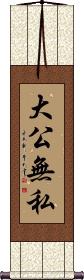
大公無私 is a Chinese proverb that comes from an old story from some time before 476 BC. About a man named Qi Huangyang, who was commissioned by the king to select the best person for a certain job in the Imperial Court.
Qi Huangyang selected his enemy for the job. The king was very confused by the selection, but Qi Huangyang explained that he was asked to find the best person for the job, not necessarily someone that he liked or had a friendship with.
Later, Confucius commented on how unselfish and impartial Qi Huangyang was by saying, “Da Gong Wu Si” which, if you look it up in a Chinese dictionary, is generally translated as “Unselfish” or “Just and Fair.”
If you translate each character, you'd have something like
“Big/Deep Justice Without Self.”
Direct translations like this leave out a lot of what the Chinese characters really say. Use your imagination, and suddenly you realize that “without self” means “without thinking about yourself in the decision” - together, these two words mean “unselfish.” The first two characters serve to drive the point home that we are talking about a concept that is similar to “blind justice.”
One of my Chinese-English dictionaries translates this simply as “just and fair.” So that is the short and simple version.
Note: This can be pronounced in Korean, but it's not a commonly used term.
See Also: Selflessness | Work Unselfishly for the Common Good | Altruism
Yujin
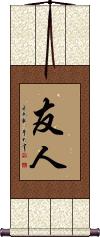
This is a less-common way to write “friend” in Chinese and Japanese.
This is also a given name Yuujin or Yujin, or another romanization for the given name Tomohito.
Yushinkai

友心会 is the martial arts title Yushinkai in Japanese Kanji.
This can translate as “Friendship Club” or “Friends Heart Club.”
Other possible titles that are romanized as Yushinkai are 有心会 and 結心会. These have a meaning that is more like Heartfelt Club or Heart-to-Heart Club. Be sure to check carefully to see what your school title is before you order. Let me know if you need one of these alternate versions.
Dog
Year of the Dog / Zodiac Sign
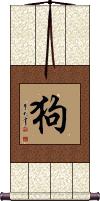
狗 is the character for dog, canine, or hound in Chinese.
If you were born in the year of the dog, you . . .
Are strong-willed
Loyal to your friends and mate.
Never compromise when you think you are right.
Note: Can be pronounced, and means dog in Japanese but feels like a very old word (see our other dog if you need a Japanese dog).
See also our Chinese Zodiac page.
This in-stock artwork might be what you are looking for, and ships right away...
Gallery Price: $200.00
Your Price: $90.88

Gallery Price: $60.00
Your Price: $36.88
Gallery Price: $304.00
Your Price: $168.88
Gallery Price: $87.50
Your Price: $49.00
Gallery Price: $71.00
Your Price: $39.00
Gallery Price: $87.50
Your Price: $39.00
The following table may be helpful for those studying Chinese or Japanese...
| Title | Characters | Romaji (Romanized Japanese) | Various forms of Romanized Chinese | |
| Friend Friendship | 友 | tomo | yǒu / you3 / you | yu |
| Friend Friendship | 朋 | tomo | péng / peng2 / peng | p`eng / peng |
| Most Sincere Friend Honest Friend Real Friend Best Friend | 摯友 挚友 | zhì yǒu / zhi4 you3 / zhi you / zhiyou | chih yu / chihyu | |
| Sworn Friend Ally | 盟友 | meiyuu / meiyu | méng yǒu / meng2 you3 / meng you / mengyou | meng yu / mengyu |
| Best Friends Closest Friend | 至友 | zhì yǒu / zhi4 you3 / zhi you / zhiyou | chih yu / chihyu | |
| Christian Friend | 教友 | jiào yǒu / jiao4 you3 / jiao you / jiaoyou | chiao yu / chiaoyu | |
| Friend | 友達 友达 | tomo dachi / tomodachi | ||
| Mentor: Teacher and Friend | 良師益友 良师益友 | liáng shī yì yǒu liang2 shi1 yi4 you3 liang shi yi you liangshiyiyou | liang shih i yu liangshihiyu |
|
| True Friend | 夠朋友 够朋友 | gòu péng you gou4 peng2 you5 gou peng you goupengyou | kou p`eng yu koupengyu kou peng yu |
|
| True Friend | 真の友 | shinnotomo | ||
| Best Friends | 至交 | zhì jiāo / zhi4 jiao1 / zhi jiao / zhijiao | chih chiao / chihchiao | |
| Extremely Good Friends | 莫逆の友 | bakugyakunotomo | ||
| Family and Friends | 親朋好友 亲朋好友 | qīn péng hǎo yǒu qin1 peng2 hao3 you3 qin peng hao you qinpenghaoyou | ch`in p`eng hao yu chinpenghaoyu chin peng hao yu |
|
| Family and Friends | 家族や友人 | kazoku ya yuujin kazokuyayuujin kazoku ya yujin | ||
| Best Friends Buddies | 親友 亲友 | shin yuu / shinyuu / shin yu | qīn yǒu / qin1 you3 / qin you / qinyou | ch`in yu / chinyu / chin yu |
| Eternal Friendship Friends Forever | 永遠の友 | ei en no yuu eiennoyuu ei en no yu | ||
| Eternal Friendship Friends Forever | 永遠的朋友 永远的朋友 | yǒng yuǎn de péng yǒu yong3 yuan3 de peng2 you3 yong yuan de peng you yongyuandepengyou | yung yüan te p`eng yu yungyüantepengyu yung yüan te peng yu |
|
| Soul Mates | 魂の友 | tamashii no tomo tamashiinotomo tamashi no tomo | ||
| Friendship | 友誼 友谊 | yuugi / yugi | yǒu yì / you3 yi4 / you yi / youyi | yu i / yui |
| Friendship | 友情 | yuujou / yujo | yǒu qíng / you3 qing2 / you qing / youqing | yu ch`ing / yuching / yu ching |
| Soul Mates at Heart | 心の伴侶 | kokoro no han ryo kokoronohanryo | ||
| Soul Mates | 天生一對 天生一对 | tiān shēng yí duì tian1 sheng1 yi2 dui4 tian sheng yi dui tianshengyidui | t`ien sheng i tui tienshengitui tien sheng i tui |
|
| Soul Mates | 靈魂伴侶 灵魂伴侣 | reikon hanryo reikonhanryo | líng hún bàn lǚ ling2 hun2 ban4 lv3 ling hun ban lv linghunbanlv | ling hun pan lü linghunpanlü |
| Spiritual Soul Mates | 精神伴侶 精神伴侣 | sei shin han ryo seishinhanryo | jīng shén bàn lǚ jing1 shen2 ban4 lv3 jing shen ban lv jingshenbanlv | ching shen pan lü chingshenpanlü |
| Spiritual Soul Mates | 魂の伴侶 | tamashii no han ryo tamashiinohanryo tamashi no han ryo | ||
| Friendship Dojo | 友愛道場 | yū ai dō jō yūaidōjō | yǒu ài dào chǎng you3 ai4 dao4 chang3 you ai dao chang youaidaochang | yu ai tao ch`ang yuaitaochang yu ai tao chang |
| Five Codes of Tang Soo Do | 國家忠誠父母孝道朋友有信殺生有擇臨戰無退 国家忠诚父母孝道朋友有信杀生有择临战无退 | guó jiā zhōng chéng fù mǔ xiào dào péng yǒu yǒu xìn shā shēng yǒu zé lín zhàn wú tuì guo2 jia1 zhong1 cheng2 fu4 mu3 xiao4 dao4 peng2 you3 you3 xin4 sha1 sheng1 you3 ze2 lin2 zhan4 wu2 tui4 guo jia zhong cheng fu mu xiao dao peng you you xin sha sheng you ze lin zhan wu tui | kuo chia chung ch`eng fu mu hsiao tao p`eng yu yu hsin sha sheng yu tse lin chan wu t`ui kuo chia chung cheng fu mu hsiao tao peng yu yu hsin sha sheng yu tse lin chan wu tui |
|
| Acceptance | 受諾 | judaku | ||
| Appreciation of Truth by Meditation | 心印 | shin nin / shinnin | xīn yìn / xin1 yin4 / xin yin / xinyin | hsin yin / hsinyin |
| Be Like Water | 像水一樣 | xiàng shuǐ yí yàng xiang4 shui3 yi2 yang4 xiang shui yi yang xiangshuiyiyang | hsiang shui i yang hsiangshuiiyang |
|
| Best | 至 | shi | zhì / zhi4 / zhi | chih |
| Best Love Most Sincere Love | 至愛 至爱 | zhì ài / zhi4 ai4 / zhi ai / zhiai | chih ai / chihai | |
| Best Love Most Sincere Love | 最愛 | moai | ||
| Cat Pussycat | 猫 / 貓 猫 | neko | māo / mao1 / mao | |
| Choose Life | 選擇生活 选择生活 | xuǎn zé shēng huó xuan3 ze2 sheng1 huo2 xuan ze sheng huo xuanzeshenghuo | hsüan tse sheng huo hsüantseshenghuo |
|
| Commitment | 承諾 承诺 | shoudaku / shodaku | chéng nuò cheng2 nuo4 cheng nuo chengnuo | ch`eng no chengno cheng no |
| Compassion | 同情 | dou jou / doujou / do jo | tóng qíng tong2 qing2 tong qing tongqing | t`ung ch`ing tungching tung ching |
| Forever In My Heart | 永遠在我心中 永远在我心中 | yǒng yuǎn zài wǒ xīn zhōng yong3 yuan3 zai4 wo3 xin1 zhong1 yong yuan zai wo xin zhong yongyuanzaiwoxinzhong | yung yüan tsai wo hsin chung yungyüantsaiwohsinchung |
|
| Forever In My Heart | 永遠在我心 永远在我心 | yǒng yuǎn zài wǒ xīn yong3 yuan3 zai4 wo3 xin1 yong yuan zai wo xin yongyuanzaiwoxin | yung yüan tsai wo hsin yungyüantsaiwohsin |
|
| Forever In My Heart | いつまでも私の心の中に | i tsu ma de mo watashi no kokoro no naka ni | ||
| Forever In My Heart | 永遠に私の心の中に | ei en ni watashi no kokoro no naka ni | ||
| Friendliness | 友好 | yuukou / yuko | yǒu hǎo / you3 hao3 / you hao / youhao | yu hao / yuhao |
| Geisha | 芸者 | geisha | yún zhě / yun2 zhe3 / yun zhe / yunzhe | yün che / yünche |
| Generosity | 寬大 宽大 | kandai | kuān dà / kuan1 da4 / kuan da / kuanda | k`uan ta / kuanta / kuan ta |
| Good Intentions | 好意 | kou i / koui / ko i | hǎo yì / hao3 yi4 / hao yi / haoyi | hao i / haoi |
| Grace | 恩 | on | ēn / en1 / en | |
| Green Plum and Bamboo Horse | 青梅竹馬 青梅竹马 | qīng méi zhú mǎ qing1 mei2 zhu2 ma3 qing mei zhu ma qingmeizhuma | ch`ing mei chu ma chingmeichuma ching mei chu ma |
|
| Islam | 伊斯蘭教 伊斯兰教 | yī sī lán jiào yi1 si1 lan2 jiao4 yi si lan jiao yisilanjiao | i ssu lan chiao issulanchiao |
|
| John 14:18 | 我不撇下你們為孤兒我必到你們這里來 我不撇下你们为孤儿我必到你们这里来 | wǒ bù piě xià nǐ mén wéi gū ér wǒ bì dào nǐ mén zhè lǐ lái wo3 bu4 pie3 xia4 ni3 men2 wei2 gu1 er2 wo3 bi4 dao4 ni3 men2 zhe4 li3 lai2 wo bu pie xia ni men wei gu er wo bi dao ni men zhe li lai | wo pu p`ieh hsia ni men wei ku erh wo pi tao ni men che li lai wo pu pieh hsia ni men wei ku erh wo pi tao ni men che li lai |
|
| Joshua 24:15 | 至於我和我家我們必定事奉耶和華 至于我和我家我们必定事奉耶和华 | zhì yú wǒ hé wǒ jiā wǒ men bì dìng shì fèng yē hé huá zhi4 yu2 wo3 he2 wo3 jia1 wo3 men bi4 ding4 shi4 feng4 ye1 he2 hua2 zhi yu wo he wo jia wo men bi ding shi feng ye he hua | chih yü wo ho wo chia wo men pi ting shih feng yeh ho hua | |
| Joshua 24:15 | 私と私の家とは主に仕える | Watashi to watashinoie to wa omo ni tsukaeru | ||
| Justice Rectitude Right Decision | 義 义 | gi | yì / yi4 / yi | i |
| Kaili | 凱里 凯里 | kǎi lǐ / kai3 li3 / kai li / kaili | k`ai li / kaili / kai li | |
| Kindness and Forgiving Nature | 仁恕 | jinjo | rén shù / ren2 shu4 / ren shu / renshu | jen shu / jenshu |
| Kindness Caring | 親切 亲切 | shin setsu / shinsetsu | qīn qiè / qin1 qie4 / qin qie / qinqie | ch`in ch`ieh / chinchieh / chin chieh |
| Love | 愛 爱 | ai | ài / ai4 / ai | |
| Love and Honor | 情義 情义 | qíng yì / qing2 yi4 / qing yi / qingyi | ch`ing i / chingi / ching i | |
| Loyalty | 忠誠 忠诚 | chuu sei / chuusei / chu sei | zhōng chéng zhong1 cheng2 zhong cheng zhongcheng | chung ch`eng chungcheng chung cheng |
| Loyalty Devotion | 忠義 忠义 | chuu gi / chuugi / chu gi | zhōng yì / zhong1 yi4 / zhong yi / zhongyi | chung i / chungi |
| Mother and Daughter | 母女 | mǔ nǚ / mu3 nv3 / mu nv / munv | mu nü / munü | |
| Mother and Daughter | 母娘 | haha musume hahamusume | ||
| Never Give Up | 永不放棄 永不放弃 | yǒng bù fàng qì yong3 bu4 fang4 qi4 yong bu fang qi yongbufangqi | yung pu fang ch`i yungpufangchi yung pu fang chi |
|
| Better Late Than Never | 亡羊補牢猶未為晚 亡羊补牢犹未为晚 | wáng yáng bǔ láo yóu wèi wéi wǎn wang2 yang2 bu3 lao2 you2 wei4 wei2 wan3 wang yang bu lao you wei wei wan | wang yang pu lao yu wei wei wan wangyangpulaoyuweiweiwan |
|
| No Fear | 勇者無畏 勇者无畏 | yǒng zhě wú wèi yong3 zhe3 wu2 wei4 yong zhe wu wei yongzhewuwei | yung che wu wei yungchewuwei |
|
| No Worries | 放心 | houshin / hoshin | fàng xīn / fang4 xin1 / fang xin / fangxin | fang hsin / fanghsin |
| An Open Book Benefits Your Mind | 開卷有益 开卷有益 | kāi juàn yǒu yì kai1 juan4 you3 yi4 kai juan you yi kaijuanyouyi | k`ai chüan yu i kaichüanyui kai chüan yu i |
|
| Osu Affirmative | 押忍 | ossu / osu / osu / osu | ||
| Outstanding | 出類拔萃 出类拔萃 | chū lèi bá cuì chu1 lei4 ba2 cui4 chu lei ba cui chuleibacui | ch`u lei pa ts`ui chuleipatsui chu lei pa tsui |
|
| Partnership: Marriage | 伴侶 伴侣 | hanryo | bàn lǚ / ban4 lv3 / ban lv / banlv | pan lü / panlü |
| Peace Harmony | 和 | wa | hé / he2 / he | ho |
| Homosexual Gay | 同性戀 同性恋 | tóng xìng liàn tong2 xing4 lian4 tong xing lian tongxinglian | t`ung hsing lien tunghsinglien tung hsing lien |
|
| Homosexual Gay | 同性愛 同性爱 | douseiai / doseiai | tóng xìng ài tong2 xing4 ai4 tong xing ai tongxingai | t`ung hsing ai tunghsingai tung hsing ai |
| Homosexual Male Gay Male | 男同性戀 男同性恋 | nán tóng xìng liàn nan2 tong2 xing4 lian4 nan tong xing lian nantongxinglian | nan t`ung hsing lien nantunghsinglien nan tung hsing lien |
|
| The Red String | 赤い糸 | akai ito / akaiito | ||
| The Red Thread of Fate | 姻緣紅線 姻缘红线 | yīn yuán hóng xiàn yin1 yuan2 hong2 xian4 yin yuan hong xian yinyuanhongxian | yin yüan hung hsien yinyüanhunghsien |
|
| Soul Sisters | 姊妹花 | jiě mèi huā jie3 mei4 hua1 jie mei hua jiemeihua | chieh mei hua chiehmeihua |
|
| Tibet | 西藏 | seizou / chibetto seizo / chibetto | xī zàng / xi1 zang4 / xi zang / xizang | hsi tsang / hsitsang |
| Together Forever | 永遠在一起 永远在一起 | yǒng yuǎn zài yī qǐ yong3 yuan3 zai4 yi1 qi3 yong yuan zai yi qi yongyuanzaiyiqi | yung yüan tsai i ch`i yungyüantsaiichi yung yüan tsai i chi |
|
| Together Forever | ずっと一緒 | zutto issho zuttoissho zutto isho | ||
| Together Forever in Love | 永遠愛在一起 永远爱在一起 | yǒng yuǎn ài zài yī qǐ yong3 yuan3 ai4 zai4 yi1 qi3 yong yuan ai zai yi qi yongyuanaizaiyiqi | yung yüan ai tsai i ch`i yungyüanaitsaiichi yung yüan ai tsai i chi |
|
| True Victory is Victory Over Oneself | 正勝吾勝 正胜吾胜 | masa katsu a gatsu masakatsuagatsu | ||
| Unselfish: Perfectly Impartial | 大公無私 大公无私 | dà gōng wú sī da4 gong1 wu2 si1 da gong wu si dagongwusi | ta kung wu ssu takungwussu |
|
| Yujin | 友人 | yuuto / yuujin / tomohito yuto / yujin / tomohito | yǒu rén / you3 ren2 / you ren / youren | yu jen / yujen |
| Yushinkai | 友心會 友心会 | yuu shin kai yuushinkai yu shin kai | ||
| Dog | 狗 | inu / ku | gǒu / gou3 / gou | kou |
| In some entries above you will see that characters have different versions above and below a line. In these cases, the characters above the line are Traditional Chinese, while the ones below are Simplified Chinese. | ||||



