Custom Knowledge Chinese & Japanese Calligraphy Wall Scroll
We have many options to create artwork with Knowledge characters on a wall scroll or portrait.
If you want to create a cool Knowledge wall scroll, this is the place. Below you will find a few Asian symbols that express the idea of Knowledge.
1. Learning leads to Knowledge, Study leads to Benevolence, Shame leads to Courage
4. We are not born with knowledge, how does one achieve maturity?
5. Knowledge of Ultimate Truth
6. The Sea of Knowledge Has No Limits
9. Wisdom and Insight of the Buddha
10. Seeking Wisdom
11. Great Wisdom
12. Great Illumination of Wisdom
14. Experience is the Mother of Wisdom
16. Inner Beauty / Inner Wisdom
17. Intuitive Wisdom / Inner Light
18. Inner Wisdom
20. Mystic Lotus Wisdom of Amitabha
21. Power of Understanding and Wisdom
22. Great Wisdom
23. Great Lotus Wisdom - Samadhi Wisdom
25. When Three People Gather, Wisdom is Multiplied
28. Wisdom comes from Experience
29. Wisdom
31. Wisdom
32. Each Time You Stumble and Fall, You Gain Experience and Wisdom
33. Wisdom Lotus
34. Seeker of Wisdom
35. 1. Right Understanding / Right Perspective / Right View / Perfect View
36. Ten perfect Mahayana rules
37. 2. Right Resolve / Right Thought / Right Intention / Perfect Resolve
38. Art of War: 5 Points of Analysis
39. Awareness
40. Bodhi - Awakening Enlightenment
41. Body and Mind
42. You May Learn from Victory, You Will Learn from Failure
43. The Five Tenets of Confucius
45. Confucius: Universal Education
46. Daodejing / Tao Te Ching - Chapter 33
47. Desire
48. Dew
49. Dharma Gate
51. Example is Better than Precept
52. Failure is the Mother of Success
54. Gem
55. A Life of Serenity Yields Understanding
56. Achieve Inner Peace; Find Deep Understanding
59. The Nature of Enlightenment in One's Mind
60. Keiran
61. Kemo no Shin
62. You May Learn from Victory, You Will Learn from Failure
63. Light / Bright and Promising Future
64. Light / Bright
65. No Mind / Mushin
66. Learn New Ways From Old / Onkochishin
67. Open the Minds of the Next Generation To Stimulate Thinking
68. An Open Book Benefits Your Mind
69. Paramartha
70. Read 10,000 Books, Travel 10,000 Miles
73. Seek
74. Serenity Prayer
77. Sword
80. When Three People Gather, One Becomes a Teacher
Learning leads to Knowledge, Study leads to Benevolence, Shame leads to Courage
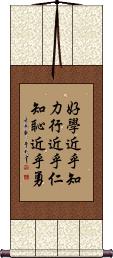
好學近乎知力行近乎仁知恥近乎勇 is a Saying from Confucius which relates certain actions to virtues.
A more verbose translation:
To love learning is akin to knowledge,
to study diligently is akin to benevolence,
to know shame is akin to courage.
Perception of Knowledge
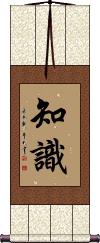
知識 has the very strong meaning of “knowledge” and, in some contexts, “learning.”
The first character represents “to know” or “to realize.”
The second character alone refers to the ability to “recognize” or “realize” and can also be used to mean “knowing.”
See Also: Wisdom | Learn From Wisdom
Knowledge from Experience
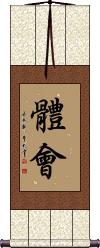
體會 is a Chinese word that basically means “knowledge [comes from] experience,” or “to learn through experience.”
This can also mean realizing or gaining understanding from your experiences.
We are not born with knowledge, how does one achieve maturity?
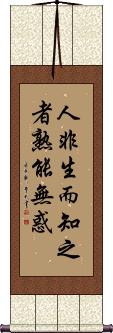
This figuratively means “Without a teacher, how can we learn/mature?”
人非生而知之者熟能無惑 is a philosophic pondering by Han Yu, a Tang Dynasty essayist, and philosopher (618-907 A.D.). This is a Chinese proverb that can be translated as “Knowledge is not innate to man, how can we overcome doubt?” or, “We are not born with knowledge, how does one achieve maturity?.”
This infers that we need the guidance of a teacher if we wish to learn, mature, and become better.
Knowledge of Ultimate Truth
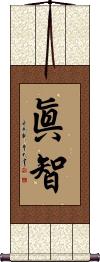
眞智 can mean the wisdom or knowledge of ultimate truth.
眞智 is also the absolute knowledge of the non-thing or that which is immaterial. This makes more sense when you consider that true wisdom includes the knowledge of both the real and unreal, or what is material and immaterial.
In Japan, 眞智 (Masatoshi) can also be a given name.
The Sea of Knowledge Has No Limits
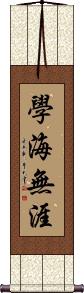
學海無涯 is a Chinese proverb that reads, “sea of learning, no horizon.”
Colloquially, it means there are no limits to what one still has left to learn.
This would be the Chinese equivalent to the quote from Hippocrates, “ars longa, vita brevis,” meaning “it takes a long time to acquire and perfect one's expertise.”
See Also: Learning is Eternal
Realization and Knowledge
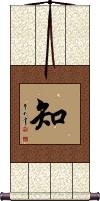
知 means realization or true knowing.
This can also translate as to know, to be aware, wisdom, or higher knowledge.
From older Buddhist ideas, this can represent विद्या (Vidyā or Vidya) or ज्ञान (Jñāna or Jnana) and even the combination Sanskrit word विज्ञान (Vijñāna or Vijnana) which can translate as wisdom arising from perception or knowing.
However, 知 should be distinguished as true knowing versus having a relative understanding or 會.
Wisdom from Hard Knocks
The school of hard knocks
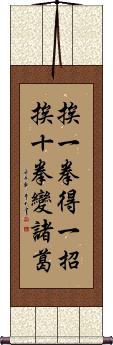
挨一拳得一招挨十拳變諸葛 is a Chinese proverb that literally translates as: Receive one blow, [and one] learns a lesson; Receive ten blows, [and one] becomes a great Zhuge [Liang].
You must first understand that a man named Zhuge Liang was one of the great strategists and philosophers in Chinese history. He's known as a man of great wisdom.
Figuratively, this phrase means:
One can learn much from failure or “hard knocks.”
Wisdom and Insight of the Buddha
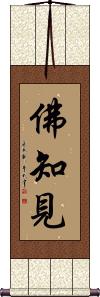
This title represents the wisdom and insight of the Buddha, or the penetrative power of Buddha's wisdom, or vision.
佛知見 is a term derived from the Lotus Sutra, perhaps up to 1900 years ago.
Seeking Wisdom
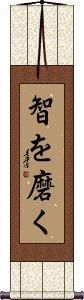
智を磨く is an old obscure Japanese phrase that means to refine, cultivate, or improve one's wisdom.
This is the mantra of one who is a seeker of wisdom. They will always want to polish, shine, refine, improve, and expand their knowledge and understanding.
Note: Because this selection contains some special Japanese Hiragana characters, it should be written by a Japanese calligrapher.
Great Wisdom
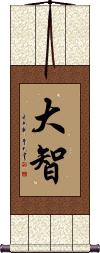
大智 is a Zen Buddhist title that means supreme wisdom, great wisdom, Buddha-wisdom, omniscience, or transcendental wisdom.
Great Illumination of Wisdom
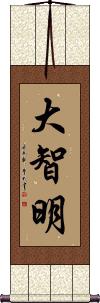
大智明 is a Zen Buddhist title that means the great illumination of wisdom.
This refers to wisdom so bright that it shines through obviously to all in its presence.
Door of Great Wisdom
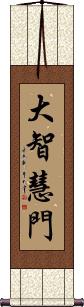
大智慧門 is the title for “The Great Wisdom Door,” or “The Gate to Great Wisdom.”
This refers to a portal to all wisdom and knowledge in Buddhism.
Experience is the Mother of Wisdom
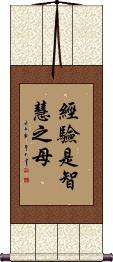
It's been said that wisdom comes from good judgment, and good judgment comes from experience, while experience comes from a series of times when you used bad judgment.
經驗是智慧之母 is a Chinese proverb that makes the simplest connection between experience and wisdom.
See Also: Failure is the Mother of Success | Wisdom | Learn From Wisdom
Fudo Myo-o / Wisdom King
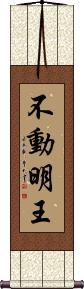
不動明王 is the fierce form of the Buddha Vairocana, and the most important of the Myō-ō or Ming Wang class of deities.
Romanized as Fudō Myō-ō, in Japanese Buddhism or Bùdòng Míngwáng / Pu-Tung Ming-Wang in Chinese Buddhism,
Originally Acala/Achala (अचल “The Immovable”), Acalanātha (अचलनाथ “Immovable Lord”) or Āryācalanātha (आर्याचलनाथ, “Noble Immovable Lord”).
In English, this deity is sometimes called “Wisdom King.”
Inner Beauty / Inner Wisdom
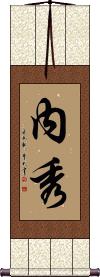
內秀 is an interesting word in Chinese that simultaneously means inner beauty and inner wisdom.
Some will translate it as “intelligent but unassuming.”
It's about having amazing abilities or traits on the inside which are not immediately obvious on the outside.
Intuitive Wisdom / Inner Light
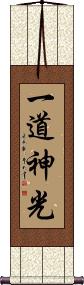
一道神光 is a Buddhist term that means “inner light,” or “intuitive wisdom.”
This actually reads, “[the] one path/way [of] spiritual light.” It implies that your spirit knows the way, and will light the path for you.
Inner Wisdom
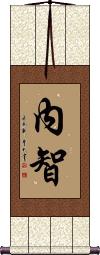
內智 is a Buddhist term that means “inner wisdom.”
Learn from Wisdom
(When you see a wise person, try to be like them)
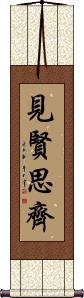
When you meet a wise person, you should learn from them and be inspired to become as wise as they are.
見賢思齊 is a pretty long proverb in English, but in Chinese, it's only four characters.
However, in Chinese, the deeper meaning often surpasses the dictionary definition of each character.
In this case, you should seek wise people to learn from throughout your life...
Always try to learn enough to become equal to them. It also suggests that learning and seeking wisdom is a non-ending cycle.
Mystic Lotus Wisdom of Amitabha
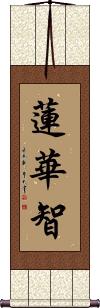
蓮華智 is the lotus or mystic wisdom of Amitābha.
It's one of the five kinds of wisdom in Buddhism.
Power of Understanding and Wisdom
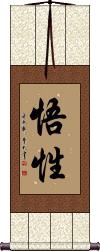
悟性 means the power of understanding and insight in Chinese.
It is often associated with Neo-Confucianism. In that regard, it means to realize, perceive, or have the perception of man's true nature. It can also mean finding your soul, the soul of others, or the soul of the world. Some will translate this simply as the state of being “savvy.”
In Japanese, this is often translated as wisdom and understanding.
Great Wisdom
Prajñā
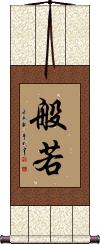
般若 means great wisdom or wondrous knowledge.
In the Buddhist context, this is prajna or prajñā, to know, to understand, to have the wisdom required to attain enlightenment.
Since this is a wisdom that transcends the realm of logic, the pure, absolute wisdom beyond the reach of words and concepts, it is not obtained through learning but is realized for the first time through a religious experience.
Great Lotus Wisdom - Samadhi Wisdom
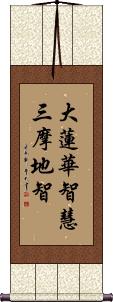
大蓮華智慧三摩地智 is the title for “The wisdom of the great lotus, samādhi-wisdom.”
This is also the penetrating wisdom of Amitābha.
The Wisdom of the Many
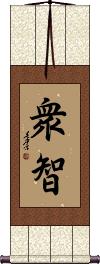
衆智 is a Japanese word that means the wisdom of the many.
When Three People Gather, Wisdom is Multiplied
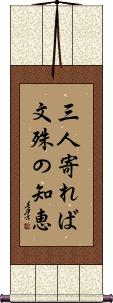
三人寄れば文殊の知恵 literally means “when three people meet, wisdom is exchanged.”
Some will suggest this means when three people come together, their wisdom is multiplied.
That wisdom part can also be translated as wit, sagacity, intelligence, or Buddhist Prajna (insight leading to enlightenment).
In the middle of this proverb is “monju,” suggesting “transcendent wisdom.” This is where the multiplication of wisdom ideas comes from.
Note: This is very similar to the Chinese proverb, "When 3 people meet, one becomes a teacher."
Note: Because this selection contains some special Japanese Hiragana characters, it should be written by a Japanese calligrapher.
Wisdom / Intelligence
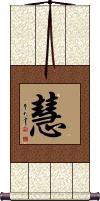
Wisdom / Brilliance
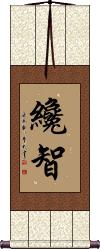
In Chinese, 纔智 means “ability and wisdom” or “ability and intelligence.”
纔智 can also be defined as brilliance or genius.
In Japanese, 纔智 takes on a meaning more of “wit and intelligence.”
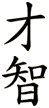 Note that the ancient/traditional form is shown above. After WWII, in both Japan and China, the first character was simplified. If you want this reformed/simplified version, just click on the characters to the right, instead of the button above. This is a good choice if your audience is Japanese.
Wisdom comes from Experience
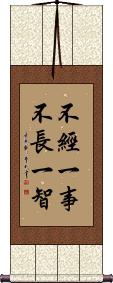
You can translate this 不经一事不长一智 Chinese proverb in a couple of ways.
The first is: You cannot gain knowledge without practice.
The second, and perhaps more popular way is: Wisdom comes from experience.
It literally means if you are inattentive to your affairs or situations you encounter, you will not gain or grow any wisdom or intellect.
Wisdom comes from Experience
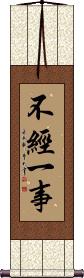
不經一事 means “You can't gain knowledge without practical experience.”
This is the short form (first half) of a longer Chinese proverb. These 4 characters remind you that wisdom only comes from experience.
Wisdom
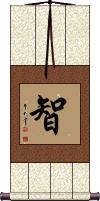
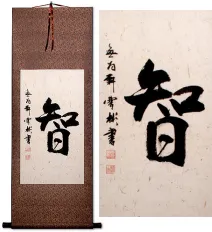
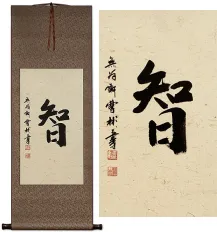
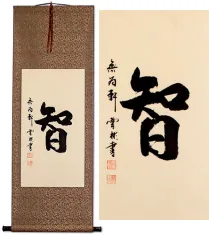
智 is the simplest way to write wisdom in Chinese, Korean Hanja, and Japanese Kanji.
Being a single character, the wisdom meaning is open to interpretation, and can also mean intellect, knowledge or reason, resourcefulness, or wit.
智 is also one of the five tenets of Confucius.
智 is sometimes included in the Bushido code but is usually not considered part of the seven key concepts of the code.
See our Wisdom in Chinese, Japanese and Korean page for more wisdom-related calligraphy.
See Also: Learn From Wisdom | Confucius
Wisdom / Intelligence
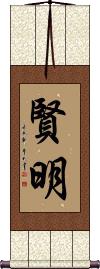
賢明 is a Japanese word that refers to wisdom, intelligence, and prudence.
賢明 was originally a Chinese word that referred to a wise person or enlightened ruler. It means wise and able, sagacious now in China.
Wisdom / Intelligence
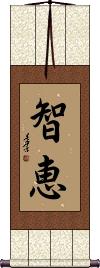
智恵 is a Japanese word that means wisdom; wit; sagacity; sense; intelligence.
In the Buddhist context, this is prajna (insight leading to enlightenment).
This can also be the Japanese female given name Norie.
Wisdom
(All-Knowing)
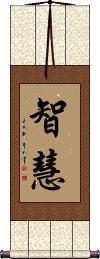
Beyond wisdom, 智慧 can be translated as knowledge, sagacity, sense, and intelligence.
The first character means “wise” or “smart,” and the second character means “intelligence.”
Note: 智慧 is used commonly in Chinese and is a less-common word in Japanese and Korean. If your audience is Japanese, I suggest our other Japanese wisdom option.
This means intellect or wisdom in Japanese too but is a more unusual way to write this word (though both versions are pronounced the same in Japanese).
See Also: Learn From Wisdom
Wisdom
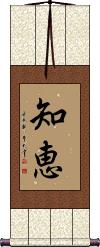
The simple translation of 知惠 is wisdom, but the more expanded version is “to know all things in their entirety.”
The first Kanji represents “to know” or “to realize.” Combined, these two Kanji mean “learn, know, and understand completely.”
Note: While vaguely understood in Chinese, this is only a real word in Japanese.
 Ancient Japanese/Korean version: This is also a word in old Korean Hanja, with a slight difference in the last character - if you want that version (which is also the ancient Japanese version) please click on the character to the right, instead of the button above.
Each Time You Stumble and Fall, You Gain Experience and Wisdom
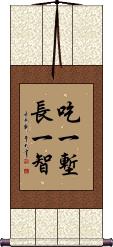
吃一塹長一智 is a Chinese proverb that means “Fall into a moat, and you will gain wisdom from the experience.”
It really suggests that the failures, troubles, frustrations, and setbacks that you encounter in your life are actually helping you to find wisdom. Some would also translate this proverb as “Learn from your mistakes” or “Learn from your experience.”
If you are studying Chinese, you will recognize the first character as “eat,” but in this case, it means to “experience” (as used in this proverb, it is suggesting that you have fallen into a moat and/or had a hard time crossing it).
Translated character by character, this whole proverb is, “Experience one moat, gain one wisdom/knowledge.”
Note: This can be pronounced in Korean, but it's not a commonly used phrase.
Wisdom Lotus
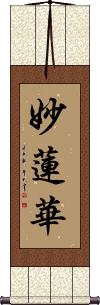
妙蓮華 means the wonderful lotus and the symbol of the pure wisdom of Buddha.
This lotus is unsullied in the midst of the impurity of the world.
Seeker of Wisdom
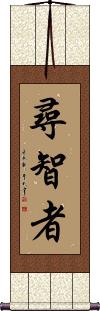
尋智者 is a Chinese title that means “Seeker of Wisdom.”
It's a little ambiguous, as you can also read this as “Seeking a Wise Person.”
Whether you are the person seeking wisdom or in the process of seeking a wise person (you will probably gain wisdom from the wise) this short phrase should suit your needs.
Seeker of Wisdom
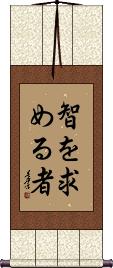
智を求める者 means “seeker of wisdom” in Japanese.
To break it down:
智 is wisdom.
を is a particle that connects wisdom to the next idea.
求める is a transitive verb that means to want, to wish for, to ask for, to seek, to search for, to look for, or to pursue.
者 is a literary way to write “person.”
Note: Because this selection contains some special Japanese Hiragana characters, it should be written by a Japanese calligrapher.
1. Right Understanding / Right Perspective / Right View / Perfect View
Samyag Dristhi / Samyag Drsti / Samma Ditthi
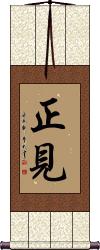
正見 is one of the Noble Eightfold Paths of Buddhism. Right View, along with the Right Thought, constitutes the path to Wisdom.
To get to the correct view of the world, you must first understand and follow Four Noble Truths.
Note: This term is exclusively used by devout Buddhists. It is not a common term, and is remains an unknown concept to most Japanese and Chinese people.
See Also: Buddhism | Enlightenment | Noble Eightfold Path
Ten perfect Mahayana rules
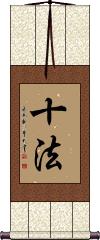
十法 is the title of the ten perfect or perfecting Mahāyāna rules.
The order of rules is as follows:
1. right belief.
2. right conduct.
3. right spirit.
4. the joy of the bodhi mind.
5. joy in the dharma.
6. joy in meditation.
7. pursuing the correct dharma.
8. obedience to, or accordance with dharma.
9. departing from pride, desire, etc.
10. comprehending the inner teaching of Buddha and taking no pleasure in attaining such knowledge or noting the ignorance of others.
This title is only used in the context of Buddhism. Japanese and Chinese people who are not familiar with Buddhism will not recognize this title.
2. Right Resolve / Right Thought / Right Intention / Perfect Resolve
Samyak Samkalpa / Samma Sankappa
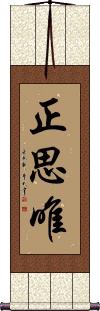
正思唯 is one of the Noble Eightfold Paths of Buddhism. Right Thought, along with the Right View, constitute the path to Wisdom.
In Buddhism, Right Thought, in simple terms, means to free yourself from having ill will towards anyone or anything. It also suggests that you remain harmless to other living creatures.
This can also be defined as “Resolve in favor of renunciation, goodwill, and non-harming of sentient beings.”
 There is an ancient/alternate version of the third character for this selection. You can see that alternation third character to the right. If you want your selection to use that older character, just click on the character to the right, instead of the button above.
Note: This term is exclusively used by devout Buddhists. It is not a common term, and is remains an unknown concept to most Japanese and Chinese people.
See Also: Buddhism | Enlightenment | Noble Eightfold Path
Art of War: 5 Points of Analysis
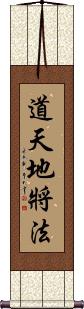
道天地將法 is a list of five key points to analyzing your situation from the first chapter of Sun Tzu's Art of War.
This reads like a 5-part military proverb. Sun Tzu says that to sharpen your skills, you must plan. To plan well, you must know your situation. Therefore, you must consider and discuss the following:
1. Philosophy and Politics: Make sure your way or your policy is agreeable among all of your troops (and the citizens of your kingdom as well). For when your soldiers believe in you and your way, they will follow you to their deaths without hesitation and will not question your orders.
2. Heaven/Sky: Consider climate / weather. This can also mean considering whether God is smiling upon you. In the modern military, this could be waiting for clear skies so that you can have air support for an amphibious landing.
3. Ground/Earth: Consider the terrain in which the battle will take place. This includes analyzing defensible positions, and exit routes, while using varying elevations to your advantage. When you plan an ambush, you must know your terrain and the best location from which to stage that ambush. This knowledge will also help you avoid being ambushed, as you will know where the likely places in which to expect an ambush from your enemy.
4. Leadership: This applies to you as the general and your lieutenants. A leader should be smart and be able to develop good strategies. Leaders should keep their word, and if they break a promise, they should punish themselves as harshly as they would punish subordinates. Leaders should be benevolent to their troops, with almost a fatherly love for them. Leaders must have the ability to make brave and fast decisions. Leaders must have steadfast principles.
5. [Military] Methods: This can also mean laws, rules, principles, models, or systems. You must have an efficient organization in place to manage both your troops and supplies. In the modern military, this would be a combination of how your unit is organized and your SOP (Standard Operating Procedure).
Notes: This is a simplistic translation and explanation. Much more is suggested in the actual text of the Art of War (Bing Fa). It would take a lot of study to master all of these aspects. In fact, these five characters can be compared to the modern military acronyms such as BAMCIS or SMEAC.
CJK notes: I have included the Japanese and Korean pronunciations but in Chinese, Korean and Japanese, this does not make a typical phrase (with subject, verb, and object) it is a list that only someone familiar with Sun Tzu’s writings would understand.
Awareness
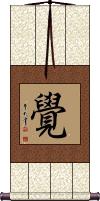
覺 can mean to feel; to figure out; thinking; awake; aware; bodhi; knowing; understanding; enlightenment; illumination; apprehend; perceive; realize.
覺 is a character that is impossible to define in a single word.
This term is often associated with Buddhism where it's understood to be: Illumination, enlightenment, or awakening in regard to the real in contrast to the seeming. However, it can also refer to enlightenment in regard to morality and evil.
Notes:
In Japanese, this can be the personal name Satoru.
In certain context, and only when pronounced as "jiao" in Chinese, it can refer to a nap, sleep or the state of sleeping. However, as a single character on a wall scroll, everyone will read this with the awareness or enlightenment context.
By no means is this the only way to write enlightenment. In fact, you should only choose this character if you are looking more for a word meaning awareness.
See Also: Enlightenment | Wisdom
Bodhi - Awakening Enlightenment
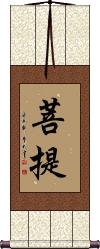
The Bodhi or 菩提 is the moment of completion in Buddhism.
It is when all things become known and you have completed your journey to enlightenment.
The reference is to the Bodhi tree where Siddhartha Gautama (the legendary man who established the Buddhist religion) achieved enlightenment. Sometimes this is referred to as “the tree of enlightenment,” but if you want the full version with the character for a tree at the end, please see the Bodhi Tree entry.
See Also: Buddhism | Buddha | Nirvana | Enlightenment
Body and Mind
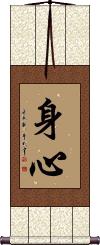
身心 means “body and mind” or “mental and physical” in Chinese and Japanese.
In the Buddhist context, body and mind encompass the five elements (skandha) of a sentient being.
The body is the physical material (rūpa) of life. The mind embraces the other four skandhas, which are consciousness, perception, action, and knowledge.
You May Learn from Victory, You Will Learn from Failure
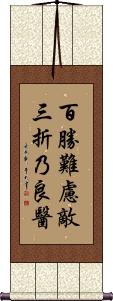
百胜难虑敌三折乃良医 is a Chinese proverb that literally translates as: [Even a general who has won a] hundred victories [may be] hard put to see through the enemy's [strategy], [but one who has] broken [his] arm three [times] [will] be a good doctor.
Figuratively, this means: One cannot always depend on past successes to guarantee future success but one can always learn from lessons drawn from failure.
See Also: Failure - Mother of Success | Experience - Mother of Success | Fall Down 7 Times Get Up 8 | Hard Knocks
The Five Tenets of Confucius
The Five Cardinal Rules / Virtues of Confucius
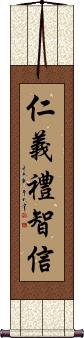
仁義禮智信 are the core of Confucius's philosophy.
Simply stated:
仁 = Benevolence / Charity
義 = Justice / Rectitude
禮 = Courtesy / Politeness / Tact
智 = Wisdom / Knowledge
信 = Fidelity / Trust / Sincerity
Many of these concepts can be found in various religious teachings. It should be clearly understood that Confucianism is not a religion but should instead be considered a moral code for a proper and civilized society.
This title is also labeled “5 Confucian virtues.”
 If you order this from the Japanese calligrapher, expect the middle Kanji to be written in a more simple form (as seen to the right). This can also be romanized as "jin gi rei satoshi shin" in Japanese. Not all Japanese will recognize this as Confucian tenets but they will know all the meanings of the characters.
See Also: Confucius Teachings | Ethics
The Ease of the Scholar
Quote from Confucius
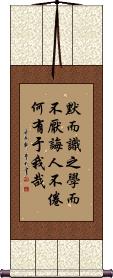
默而识之学而不厌诲人不倦何有于我哉 is a quote from the Analects of Confucius that translates as:
To quietly recite and memorize the classics,
to love learning without tiring of it,
never be bored with teaching,
How could these be difficult for me?
This is a suggestion that for a true scholar, all of these things come with ease.
This was written over 2500 years ago. The composition is in ancient Chinese grammar and phrasing. A modern Chinese person would need a background in Chinese literature to understand this without the aid of a reference.
Confucius: Universal Education
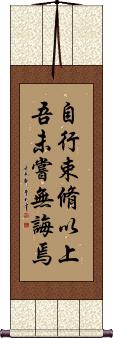
自行束脩以上吾未尝无诲焉 means, for anyone who brings even the smallest token of appreciation, I have yet to refuse instruction.
Another way to put it is: If a student (or potential student) shows just an ounce of interest, desire, or appreciation for the opportunity to learn, a teacher should offer a pound of knowledge.
This quote is from the Analects of Confucius.
This was written over 2500 years ago. The composition is in ancient Chinese grammar and phrasing. A modern Chinese person would need a background in Chinese literature to understand this without the aid of a reference.
Daodejing / Tao Te Ching - Chapter 33
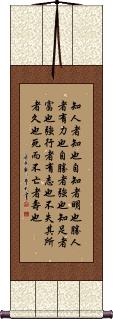
This is referred to as passage or chapter 33 of the Dao De Jing (often Romanized as “Tao Te Ching”).
These are the words of the philosopher Laozi (Lao Tzu).
To know others is wisdom;
To know oneself is acuity/intelligence.
To conquer others is power,
To conquer oneself is strength.
To know contentment is to have wealth.
To act resolutely is to have purpose.
To stay one's ground is to be enduring.
To die and yet not be forgotten is to be long-lived.
To understand others is to be knowledgeable;
To understand yourself is to be wise.
To conquer others is to have strength;
To conquer yourself is to be strong.
To know when you have enough is to be rich.
To go forward with strength is to have ambition.
To not lose your place is to be long-lasting.
To die but not be forgotten -- that's true long life.
He who is content is rich;
He who acts with persistence has will;
He who does not lose his roots will endure;
He who dies physically but preserves the Dao
will enjoy a long after-life.
Notes:
During our research, the Chinese characters shown here are probably the most accurate to the original text of Laozi. These were taken for the most part from the Mawangdui 1973 and Guodan 1993 manuscripts which pre-date other Daodejing texts by about 1000 years.
Grammar was a little different in Laozi’s time. So you should consider this to be the ancient Chinese version. Some have modernized this passage by adding, removing, or swapping articles and changing the grammar (we felt the oldest and most original version would be more desirable). You may find other versions printed in books or online - sometimes these modern texts are simply used to explain to Chinese people what the original text really means.
This language issue can be compared in English by thinking how the King James (known as the Authorized version in Great Britain) Bible from 1611 was written, and comparing it to modern English. Now imagine that the Daodejing was probably written around 403 BCE (2000 years before the King James Version of the Bible). To a Chinese person, the original Daodejing reads like text that is 3 times more detached compared to Shakespeare’s English is to our modern-day speech.
Extended notes:
While on this Biblical text comparison, it should be noted, that just like the Bible, all the original texts of the Daodejing were lost or destroyed long ago. Just as with the scripture used to create the Bible, various manuscripts exist, many with variations or copyist errors. Just as the earliest New Testament scripture (incomplete) is from 170 years after Christ, the earliest Daodejing manuscript (incomplete) is from 100-200 years after the death of Laozi.
The reason that the originals were lost probably has a lot to do with the first Qin Emperor. Upon taking power and unifying China, he ordered the burning and destruction of all books (scrolls/rolls) except those pertaining to Chinese medicine and a few other subjects. The surviving Daodejing manuscripts were either hidden on purpose or simply forgotten about. Some were not unearthed until as late as 1993.
We compared a lot of research by various archeologists and historians before deciding on this as the most accurate and correct version. But one must allow that it may not be perfect, or the actual and original as from the hand of Laozi himself.
Desire
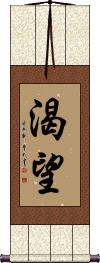
This Chinese word can mean desirous, wishful, or desire.
The first character means to thirst for [something] or to be thirsty. The second character means to hope for, to expect, to gaze (into the distance), or to look for something. The combined meaning of these two characters changes a bit, but I think it's nice to know the individual meanings to give you a better understanding of where a word comes from.
Korean definitions of this word include craving, longing, and thirst for knowledge.
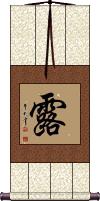
露 is the Chinese, Japanese Kanji, and old Korean Hanja for dew.
Depending on the context in which this character is used, it can also mean: tears; syrup; nectar; outdoors (not under cover); to show; to reveal; to betray; to expose; scanty; bare; unconcealed; naked; public.
露 can be a Chinese surname Lu. 露 can also be the Japanese surname Tsuyuzaki or Tsuyusaki, and the given names Tsuyu or Akira.
Oddly, 露 is sometimes used as an abbreviation for Russia.
In the Buddhist context, 露 also means dew, but can be a symbol of transience. Sometimes used as a metaphor to expose or disclose knowledge and truth.
Dharma Gate
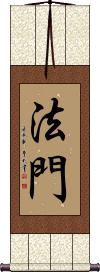
This is the Dharma Gate, The Gate to Enlightenment, or Dharmaparyāya.
The doctrines, or wisdom of Buddha is regarded as the door to enlightenment.
Learning is Eternal
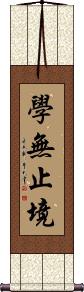
This Chinese philosophy tells of how we continue to learn throughout our lives.
This proverb can be translated in a few ways such as “Study has no end,” “Knowledge is infinite,” “No end to learning,” “There's always something new to study,” or “You live and learn.”
The deeper meaning: Even when we finish school we are still students of the world gaining more knowledge from our surroundings with each passing day.
See Also: An Open Book Benefits Your Mind | Wisdom | Learn From Wisdom
Example is Better than Precept
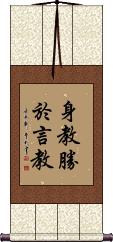
Tell somebody how to do something and they might get it.
Show them how to do it, and they will master it in no time.
身教勝於言教 can also be translated as “Behavior teaches more than words.”
See Also: Wisdom
Failure is the Mother of Success
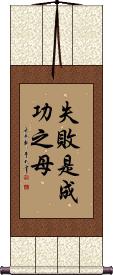
失败是成功之母 is a Chinese and Korean proverb that means “Every failure that you experience is a chance to learn from it and find success.”
Knowing what does not work is just as important as finding out what does work.
See Also: Experience is the Mother of Wisdom
Failure is the Mother of Success
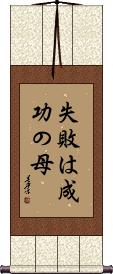
失敗は成功の母 is a Japanese proverb that means exactly what you think.
Every failure that you experience is a chance to learn from it and find success.
Knowing what does not work is just as important as finding out what does work.
Note: This is the Japanese version of an ancient Chinese proverb.
Note: Because this selection contains some special Japanese Hiragana characters, it should be written by a Japanese calligrapher.
See Also: Experience is the Mother of Wisdom
Flying Tigers AVG
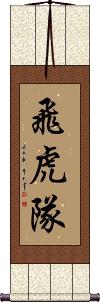
飛虎隊 is the full Chinese title of the “Flying Tigers Group.”
These were the American pilots that volunteered to go to China and fight the Japanese before the entry of the USA into World War Two. These fighter pilots were so esteemed in China that fallen American pilots could always find refuge in villages and safe passage and escape to areas of China that were not occupied by Japan at that time. Chinese villagers helped such fallen pilots with full knowledge that when the Japanese occupation forces found out, all the men, women, and children in the village would be massacred by Japanese troops (there are more than a few known cases of such massacres).
The Flying Tigers successfully kept supply lines to the Chinese resistance open and divided Japanese forces at a crucial time while America prepared to join WWII officially.
A wall scroll like this honors the men who risked or gave their lives as noble volunteers and is a reminder of the best moment in the history of Sino-American relations.
These three characters literally mean “flying tiger(s) group/team/squad.”
Note: Hanging these characters on your wall will not make you any friends with Japanese people who are aware or this history (most Japanese have no idea, as Japan’s involvement in WWII has all but been erased from school textbooks in Japan).
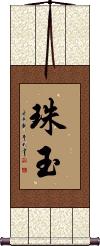
珠玉 is a Chinese, Japanese Kanji, and old Korean Hanja word meaning gem.
Beyond just the word gem, this can refer to pearls and jades, jewels, clever remarks, beautiful writing, gems of wisdom, genius, or an outstanding person.
If your name is Gem, this is a nice way to represent your name in 3 Asian languages. Though the pronunciation will be far from Gem, the meaning of gem is really nice.
Note: In Japanese, this is sometimes used as the female given name, Tama.
A Life of Serenity Yields Understanding
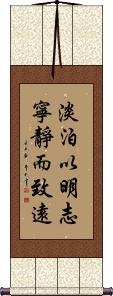
淡泊以明志寧靜而致遠 is a kind of complex ten-character proverb composed by Zhuge Liang about 1800 years ago.
淡泊以明志寧靜而致遠 is a Chinese proverb that means “Leading a simple life will yield a clear mind, and having inner peace will help you see far (into the world).”
What I have translated as “simple life” means NOT being materialistic and NOT competing in the rat race.
The last word means “far” but the deeper meaning is that you will surpass what you can currently see or understand. Perhaps even the idea of opening up vast knowledge and understanding of complex ideas.
The whole phrase has a theme that suggests that if you are NOT an aggressive, cut-throat person who fights their way to the top, no matter how many people they crush along the way, and instead seek inner peace, you will have a happier existence and be more likely to understand the meaning of life.
See Also: Serenity
Achieve Inner Peace; Find Deep Understanding
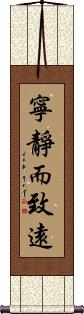
寧靜而致遠 is five characters from a longer ten-character proverb composed by Zhuge Liang about 1800 years ago.
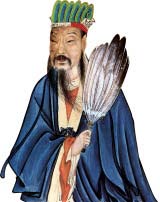
诸葛亮 Zhuge Liang
The proverb means “Your inner peace/tranquility/serenity will help you see or reach far (into the world).”
The last word means “far” but the deeper meaning is that you will surpass what you can currently see or understand. Perhaps even opening up vast knowledge and understanding of complex ideas.
Intelligence / Intellect
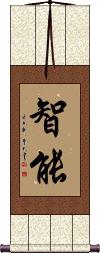
These two characters mean intelligence or intelligent.
The first character means wisdom, intellect, or knowledge.
The second means ability, talent, skill, capacity, capable, able, and can even mean competent.
Together, 知能 can mean “capacity for wisdom,” “useful knowledge,” or even “mental power.” Obviously, this translates more clearly into English as “intelligence.”
Note: This is not the same word used to mean “military intelligence.” See our other entry for that.
 In modern Japan, they tend to use a version of the first character without the bottom radical. If your audience for this artwork is Japanese, please click on the Kanji to the right instead of the button above.
Joushiki Wo Koeru
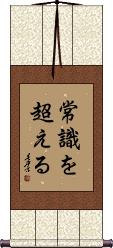
This Japanese phrase, “常識を超える” or “Jōshiki Wo Koeru” means “beyond common sense.”
常識 alone can be translated as “common sense,” “good sense,” “common knowledge”,“general knowledge,” “common practice,” “accepted practice,” or “social etiquette.”
The rest of the phrase indicates exceeding, overtaking, surpassing, transcending, or an idea of going beyond something.
More ways to translate this whole phrase:
Over what was known.
Surpassing common sense.
Beyond the ordinary.
Going beyond conventional knowledge.
Beyond conventional wisdom.
Note: Because this selection contains some special Japanese Hiragana characters, it should be written by a Japanese calligrapher.
The Nature of Enlightenment in One's Mind
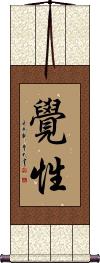
覺性 represents “The enlightened mind free from all illusion,” “The nature of enlightenment in one's mind,” or “The Buddha-nature.”
To reach this “enlightened nature,” one must form their mind into and utilize their mind as the agent of knowledge, or enlightenment.
Keiran
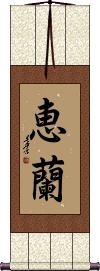
This is the Japanese female given name Keiran.
This kind of means “wisdom orchid” or “fragrance of wisdom.”
Kemo no Shin
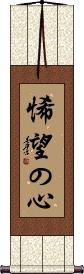
悕望の心 is “Kemō no Shin,” a Japanese Zen Buddhist word that means “The seeking mind” or “[Having] The mind to seek something.”
The first two characters mean longing for. The last two mean “of mind” or “of heart.” So, this is a mind that longs for or seeks knowledge, etc.
You May Learn from Victory, You Will Learn from Failure
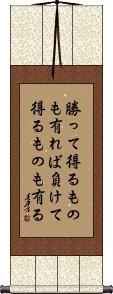
You may learn when everything goes right but the lessons learned when everything goes wrong are more vivid and lead to long-lasting wisdom.
Another way to look at this: One cannot always depend on past successes to guarantee future success but one can always learn from lessons drawn from failure.
Note: Because this selection contains some special Japanese Hiragana characters, it should be written by a Japanese calligrapher.
Light / Bright and Promising Future
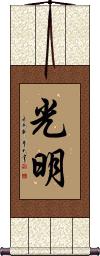
光明 is a nice way to say “light” in Chinese and old Korean Hanja.
This is because the word also suggests a bright future or refers to someone who is very promising (great future potential).
The first character means light or bright.
The second character means bright and clear (in this context).
This word appears in most Japanese dictionaries, but it is not the most common Japanese Kanji word for light (more commonly used for the name Mitsuharu).
In old Korean Hanja, this can also mean brightness or brilliance.
In the context of Buddhism, this means “Light emanating from a Buddha or Bodhisattva, symbolizing their wisdom and compassion.”
Light / Bright
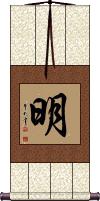
明 means light, bright, clear, clarity, to understand, or wise.
In Chinese, this can refer to the Ming Dynasty (1368-1644) where it can also be the surname Ming.
In Japanese, this can be romanized many different ways when used as surnames or given names. 明 is a partial list of those names: Meishuu, Mei, Min, Myoujin, Myou, Hinata, Haru, Toshi, Tooru, Sayaka, Saya, Satoshi, Asumi, Akera, Akemine, Akesaki, Ake, Akuru, Akiraka, and Akira.
In the Buddhist context, this represents vidyā (knowledge). To expand that, Buddhists understand this to mean bright, clear, enlightenment, wisdom, or to understand. It represents Buddha-wisdom and its revelation; also the manifestation of a Buddha's light or effulgence.
No Mind / Mushin
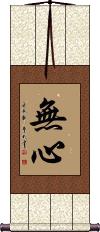
In Japanese, 無心 means innocent or without knowledge of good and evil. It literally means “without mind.”
無心 is one of the five spirits of the warrior (budo) and is often used as a Japanese martial arts tenet. Under that context, places such as the Budo Dojo define it this way: “No mind, a mind without ego. A mind like a mirror which reflects and dos not judge.” The original term was “mushin no shin,” meaning “mind of no mind.” It is a state of mind without fear, anger, or anxiety. Mushin is often described by the phrase “Mizu no Kokoro,” which means “mind like water.” The phrase is a metaphor describing the pond that clearly reflects its surroundings when calm but whose images are obscured once a pebble is dropped into its waters.
This has a good meaning in conjunction with Chan / Zen Buddhism in Japan. However, out of that context, it means mindlessness or absent-mindedness. To non-Buddhists in China, this is associated with doing something without thinking.
In Korean, this usually means indifference.
Use caution and know your audience before ordering this selection.
More info: Wikipedia: Mushin
Learn New Ways From Old / Onkochishin
New ideas coming from past history
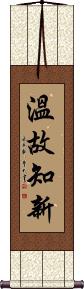
溫故知新 is a proverb from Confucius that is used in Chinese, Japanese, and Korean cultures.
It can be translated in several ways:
Coming up with new ideas based on things learned in the past.
Examine things of the past, and obtain new knowledge.
Developing new ideas based on the study of the past.
Gain new insights through restudying old issues.
Understand the present by reviewing the past.
Learning from the past.
Review the old and know the new.
Taking a lesson from the past.
Taking a lesson from the wisdom of the ancients.
Follow the old ways.
The direct translation would be, “By asking old things, know new things.”
The Character meanings breakdown this way:
溫故 = ask old
知新 = know new
Explained: To learn new things that are outside of your experience, you can learn from old things of the past. You can find wisdom in history.
 VS.
VS. 
Note: Japanese use a variant of the first Kanji in modern times.
Therefore if you order this from a Japanese calligrapher, expect the first Kanji to look like 温 instead of 溫.
In addition to 温故知新 as mentioned above, this is sometimes written as 温古知新 in Japan.
Open the Minds of the Next Generation To Stimulate Thinking
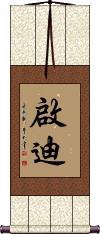
This word is often used to describe the idea of opening the minds of the young or the new generation.
See Also: Wisdom | Learning is Eternal | Learn From Wisdom
An Open Book Benefits Your Mind
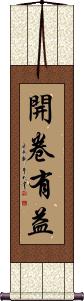
There are several ways to translate this ancient proverb. Translated literally and directly, it says, “Open roll has/yields benefit.”
To understand that, you must know a few things...
First, Chinese characters and language have deeper meanings that often are not spoken but are understood - especially with ancient texts like this. Example: It's understood that the “benefit” referred to in this proverb is to the reader's mind. Just the last character expresses that whole idea.
Second, Chinese proverbs are supposed to make you think and leave a bit of mystery to figure out.
Third, for this proverb, it should be noted that roll = book. When this proverb came about (about two thousand years ago), books were rolls of bamboo slips strung together. The first bound books like the ones we use today did not come about until about a thousand years after this proverb when they invented paper in China.
開卷有益 is a great gift for a bookworm who loves to read and increase their knowledge. Or for any friend that is or wants to be well-read.
Some other translations of this phrase:
Opening a book is profitable
The benefits of education.
Paramartha
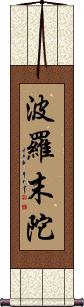
波羅末陀 is the Chinese and Japanese way to write the ancient Sanskrit word Paramārtha or परमार्थ which now means the highest truth, ultimate truth, ultimate reality, or fundamental meaning.
Paramārtha is the name of a famous Buddhist monk born in 499 CE. Paramārtha traveled the world (including Cambodia and territories that are now part of China) to spread the teachings of Buddhism by translating scriptures into the local languages so the truth could be understood by the masses.
So, we should all want to be a Paramārtha who brings the ultimate truth, knowledge, and enlightenment to others.
Read 10,000 Books, Travel 10,000 Miles
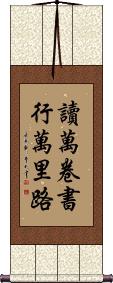
讀萬卷書行萬里路 is a lifelong suggestion for expanding your horizons by gaining knowledge, experience, and seeing the world.
Of course, this was written long ago when it was hard to travel 10,000 miles (at least 1000 years before the invention of the airplane).
With air travel and the business I'm in, I often achieve that lifetime goal on a monthly basis.
However, I am a little behind in the book count.
Note: An ancient Chinese mile (里 or lǐ) referred to in this proverb is about a third of a British/American mile. However, at that time, this was a great distance to travel.
Respected Teacher
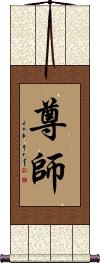
尊師 means “respected teacher,” “revered master,” or “guru” in Japanese and Chinese.
尊師 is a nice gift for a revered teacher in your life whose knowledge and mentoring have meant a lot to you.
Study / Learn / School
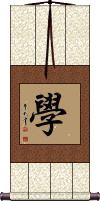
學 is “study” or “learn” in Chinese, Japanese Kanji, and old Korean Hanja.
學 is a very broad character that can mean a lot of things related to scholarship. It can refer to a school (in fact, if you put the character for “big” in front of this, you have “college” or “university,” if you put the word for “middle,” you have “middle school.” This can also mean science; the process of acquiring knowledge; learning; scholarship; erudition; knowledge. It can also add the Chinese or Japanese version of “-ology” (the study of) too many words.
 There is a very common simplified version of this character. You will see this form in modern Japan and mainland China, Singapore, and other places. If you want this simplified version, please click on the character shown to the right instead of the "select and customize" button above.
Seek
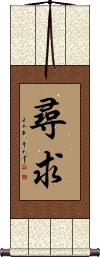
尋求 means to seek or to look for something. Occasionally used in a Buddhist context for seeking something (enlightenment, knowledge, truth, meaning, etc.).
尋求 is rarely used in Japanese and almost exclusively in a Buddhist context (most Japanese will not recognize it as a Japanese word).
Serenity Prayer
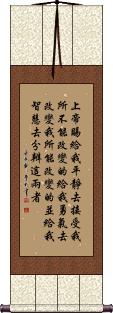
This is the serenity prayer, as used by many 12-step programs and support groups.
In Chinese, this says:
God grant me the serenity to accept the things I cannot change, the courage to change the things I can, and the wisdom to know the difference.
Serenity Prayer
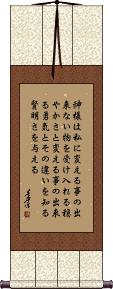
This is a Japanese version of the serenity prayer, as used by many 12-step programs and support groups.
In Japanese, this says:
God grant me the serenity to accept the things I cannot change, the courage to change the things I can, and the wisdom to know the difference.
Note: Because this selection contains some special Japanese Hiragana characters, it should be written by a Japanese calligrapher.
Shikin Haramitsu Daikomyo
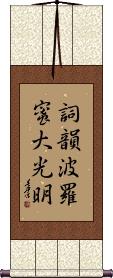
詞韻波羅蜜大光明 are the Japanese Kanji characters that romanize as “Shikin Haramitsu Daikōmyō.”
This is a complicated proverb. I'm actually going to forgo writing any translation information here. You can figure it out via Google search and at sites like Paramita and the Perfection of Wisdom or
Fecastel.Wordpress.com::Shikin Haramitsu Daikōmyō
Shingitai / Shin Gi Tai
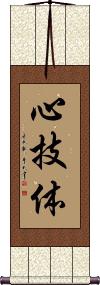
心技体 is the Japanese title “shin gi tai” or “shingitai.”
This can refer to the three elements of Sumo wrestlers or martial artists, “heart-technique-physique.”
Here is what each character represents:
心 (shin) mind, heart, and spirit.
技 (gi) skill, knowledge, and experience.
体 (tai) body and physical effort.
心技体 have the same meanings in Chinese, though this title is used much more often in Japanese.
Sword
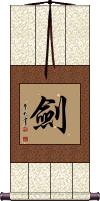
劍 is pronounced “jian” in Chinese. When you say it, imagine that you are making the sound of a sword as it clashes with a metal shield. This might get you closer to the correct pronunciation in Chinese.
I actually wonder if this word came from the metallic ringing sounds of a sword in battle - but such knowledge is lost in history.
The sword is a symbol of a warrior. The one thing that a soldier in ancient China lived and died by. A warrior with his skills and sword proves himself of great value. A warrior who losses his sword instantly becomes worthless.
劍 is an excellent scroll for someone in the military (especially officers of all services - as well as enlisted NCO Marines since they still carry swords even if mainly for ceremonial purposes). Or perhaps someone who practices variations of kung fu or tai chi that involve weapons.
Please note that while this character is understood with the sword meaning in Japanese, you might be looking for the word “katana” which also means sword in Japanese but means “knife” in Chinese.
There are other ways to write sword, and here are a few...


If you are particular about the version you receive, please let me know when you place your order (Note: Special styles are only available from one of our master calligraphers).
Teach A Man To Fish
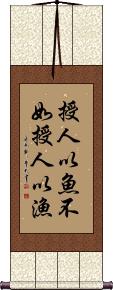
授人以魚不如授人以漁 is the Chinese version of the proverb, “Give a man a fish and you feed him for a day; teach a man to fish and you feed him for a lifetime.”
This implies that knowledge is the best charity.
Tetsu / Wise Sage
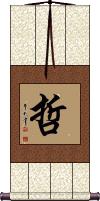
哲 is a Japanese name that is often romanized as Tetsu.
The meaning of the character can be: philosophy; wise; sage; wise man; philosopher; disciple; sagacity; wisdom; intelligence.
哲 can also be romanized as: Yutaka; Masaru; Hiroshi; Tooru; Tetsuji; Choru; Satoru; Satoshi; Akira; Aki.
When Three People Gather, One Becomes a Teacher
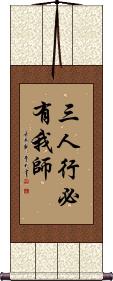
三人行必有我师 means “when three people meet, one becomes the teacher.”
This famous Chinese philosophy suggests that when people come together, they can always learn from each other.
One person must be the teacher and others learn. And in turn, the others become the teachers of the knowledge they possess.
It is important to remember that we all have something to teach, and we all have something to learn as well.
A Wise Man Changes His Mind (but a fool never will)
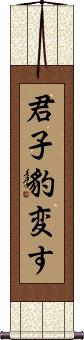
君子豹変す is a Japanese proverb that suggests that a wise man is willing to change his mind, but a fool will stubbornly never change his.
The first word is 君子 (kunshi), a man of virtue, a person of high rank, a wise man.
The second word is 豹変 (hyouhen), sudden change, complete change.
The last part, す (su), modifies the verb to a more humble form.
The “fool” part is merely implied or understood. So if wise and noble people are willing to change their minds, it automatically says that foolish people are unwilling to change.
Wise and Virtuous
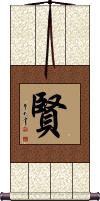
賢 is used to refer to being a wise, trustworthy, and virtuous person. But it also contains the ideas of intelligence, genius, scholarship, virtue, sage, saint, good, and excellent in character.
賢 is used in Chinese, Japanese Kanji, and old Korean Hanja. Also used in a Buddhist context with the same meaning.
Note: Can also be the male given name, Masaru, in Japanese.
Daodejing / Tao Te Ching - Chapter 27
The Mastery of Effortless Skill

Chapter 27 of the Daodejing reveals a profound truth about mastery: the highest skill leaves no trace, requires no force, and appears almost invisible.
善行無轍跡,
善言無瑕謫,
善數不用籌策,
善閉無關鍵而不可開,
善結無繩約而不可解。
是以聖人常善救人,
故無棄人;
常善救物,
故無棄物。
是謂襲明。
故善人者,不善人之師;
不善人者,善人之資。
不貴其師,不愛其資,
雖智大迷,
是謂要妙。
The sage moves through life with such natural harmony that nothing seems imposed; doors need no locks, knots require no rope, and actions leave no mark behind.
This is the essence of wúwéi (effortless action), where true ability arises from deep alignment with the Tao rather than deliberate effort.
At its heart, this chapter teaches compassion without exception. The sage “abandons no one and nothing,” recognizing value in all people and all things. Even those who seem flawed or unrefined are not rejected, but understood as part of a greater whole with each person both a student and a teacher in the unfolding of life.
Laozi reminds us that wisdom is not about perfection or control, but about subtle awareness. The truly skilled individual does not rely on tools, rules, or rigid structures; instead, they embody an intuitive understanding that makes their actions naturally complete.
In this way, excellence becomes quiet, effortless, and beyond imitation.
This teaching also reflects a deeper philosophical insight: Opposites are interdependent. The “good” person learns from the “not good,” and the “not good” provides the material for growth. To reject either is to misunderstand the balance of existence itself.
As calligraphy, Daodejing Chapter 27 serves as a reminder to cultivate inner mastery rather than outward display. It is a meditation on refinement, humility, and the quiet power of skill perfected through harmony with the natural order.
Note: The Chinese text used here is based on the early Mawangdui silk manuscript tradition (2nd century BCE). The Guodian manuscripts do NOT preserve Chapter 27 in full form.
This in-stock artwork might be what you are looking for, and ships right away...

Gallery Price: $61.00
Your Price: $33.88

Gallery Price: $61.00
Your Price: $33.88

Gallery Price: $61.00
Your Price: $33.88

Gallery Price: $61.00
Your Price: $33.88



Gallery Price: $150.00
Your Price: $78.88
Gallery Price: $150.00
Your Price: $78.88

Gallery Price: $65.00
Your Price: $39.88

Gallery Price: $61.00
Your Price: $33.88
The following table may be helpful for those studying Chinese or Japanese...
| Title | Characters | Romaji (Romanized Japanese) | Various forms of Romanized Chinese | |
| Learning leads to Knowledge, Study leads to Benevolence, Shame leads to Courage | 好學近乎知力行近乎仁知恥近乎勇 好学近乎知力行近乎仁知耻近乎勇 | hào xué jìn hū zhī lì xíng jìn hū rén zhī chǐ jìn hū yǒng hao4 xue2 jin4 hu1 zhi1 li4 xing2 jin4 hu1 ren2 zhi1 chi3 jin4 hu1 yong3 hao xue jin hu zhi li xing jin hu ren zhi chi jin hu yong | hao hsüeh chin hu chih li hsing chin hu jen chih ch`ih chin hu yung hao hsüeh chin hu chih li hsing chin hu jen chih chih chin hu yung |
|
| Perception of Knowledge | 知識 知识 | chishiki | zhī shi / zhi1 shi / zhi shi / zhishi | chih shih / chihshih |
| Knowledge from Experience | 體會 体会 | tǐ huì / ti3 hui4 / ti hui / tihui | t`i hui / tihui / ti hui | |
| We are not born with knowledge, how does one achieve maturity? | 人非生而知之者熟能無惑 | rén fēi shēng ér zhī zhī zhě shú néng wú huò ren2 fei1 sheng1 er2 zhi1 zhi1 zhe3 shu2 neng2 wu2 huo4 ren fei sheng er zhi zhi zhe shu neng wu huo | jen fei sheng erh chih chih che shu neng wu huo | |
| Knowledge of Ultimate Truth | 眞智 | masatoshi | zhēn zhì / zhen1 zhi4 / zhen zhi / zhenzhi | chen chih / chenchih |
| The Sea of Knowledge Has No Limits | 學海無涯 学海无涯 | xué hǎi wú yá xue2 hai3 wu2 ya2 xue hai wu ya xuehaiwuya | hsüeh hai wu ya hsüehhaiwuya |
|
| Realization and Knowledge | 知 | chi | zhī / zhi1 / zhi | chih |
| Wisdom from Hard Knocks | 挨一拳得一招挨十拳變諸葛 挨一拳得一招挨十拳变诸葛 | ái yī quán dé yī zhāo ái shí quán biàn zhū gě ai2 yi1 quan2 de2 yi1 zhao1 ai2 shi2 quan2 bian4 zhu1 ge3 ai yi quan de yi zhao ai shi quan bian zhu ge | ai i ch`üan te i chao ai shih ch`üan pien chu ko ai i chüan te i chao ai shih chüan pien chu ko |
|
| Wisdom and Insight of the Buddha | 佛知見 佛知见 | bucchiken / buchiken | fó zhī jiàn fo2 zhi1 jian4 fo zhi jian fozhijian | fo chih chien fochihchien |
| Seeking Wisdom | 智を磨く | chiomigaku | ||
| Great Wisdom | 大智 | daichi | dà zhì / da4 zhi4 / da zhi / dazhi | ta chih / tachih |
| Great Illumination of Wisdom | 大智明 | dai chi myou daichimyou dai chi myo | dà zhì míng da4 zhi4 ming2 da zhi ming dazhiming | ta chih ming tachihming |
| Door of Great Wisdom | 大智慧門 大智慧门 | dai chi e mon daichiemon | dà zhì huì mén da4 zhi4 hui4 men2 da zhi hui men dazhihuimen | ta chih hui men tachihhuimen |
| Experience is the Mother of Wisdom | 經驗是智慧之母 经验是智慧之母 | jīng yàn shì zhì huì zhī mǔ jing1 yan4 shi4 zhi4 hui4 zhi1 mu3 jing yan shi zhi hui zhi mu jingyanshizhihuizhimu | ching yen shih chih hui chih mu | |
| Fudo Myo-o Wisdom King | 不動明王 不动明王 | fu dou myou ou fudoumyouou fu do myo o | bù dòng míng wáng bu4 dong4 ming2 wang2 bu dong ming wang budongmingwang | pu tung ming wang putungmingwang |
| Inner Beauty Inner Wisdom | 內秀 内秀 | nèi xiù / nei4 xiu4 / nei xiu / neixiu | nei hsiu / neihsiu | |
| Intuitive Wisdom Inner Light | 一道神光 | ichidou no shinkou ichidounoshinkou ichido no shinko | yī dào shén guāng yi1 dao4 shen2 guang1 yi dao shen guang yidaoshenguang | i tao shen kuang itaoshenkuang |
| Inner Wisdom | 內智 内智 | nai chi / naichi | nèi zhì / nei4 zhi4 / nei zhi / neizhi | nei chih / neichih |
| Learn from Wisdom | 見賢思齊 见贤思齐 | jiàn xián sī qí jian4 xian2 si1 qi2 jian xian si qi jianxiansiqi | chien hsien ssu ch`i chienhsienssuchi chien hsien ssu chi |
|
| Mystic Lotus Wisdom of Amitabha | 蓮華智 莲华智 | renge chi / rengechi | lián huá zhì lian2 hua2 zhi4 lian hua zhi lianhuazhi | lien hua chih lienhuachih |
| Power of Understanding and Wisdom | 悟性 | gosei | wù xìng / wu4 xing4 / wu xing / wuxing | wu hsing / wuhsing |
| Great Wisdom | 般若 | hannya | bō rě / bo1 re3 / bo re / bore | po je / poje |
| Great Lotus Wisdom - Samadhi Wisdom | 大蓮華智慧三摩地智 大莲华智慧三摩地智 | dai renge chie sanmajichi dairengechiesanmajichi | dà lián huá zhì huì sān mó dì zhì da4 lian2 hua2 zhi4 hui4 san1 mo2 di4 zhi4 da lian hua zhi hui san mo di zhi | ta lien hua chih hui san mo ti chih |
| The Wisdom of the Many | 衆智 | shuchi | ||
| When Three People Gather, Wisdom is Multiplied | 三人寄れば文殊の知恵 | san nin yore ba monju no chie sanninyorebamonjunochie | ||
| Wisdom Intelligence | 慧 | e / kei | huì / hui4 / hui | |
| Wisdom Brilliance | 纔智 才智 | sai chi / saichi | cái zhì / cai2 zhi4 / cai zhi / caizhi | ts`ai chih / tsaichih / tsai chih |
| Wisdom comes from Experience | 不經一事不長一智 不经一事不长一智 | bù jīng yī shì bù zhǎng yī zhì bu4 jing1 yi1 shi4 bu4 zhang3 yi1 zhi4 bu jing yi shi bu zhang yi zhi bujingyishibuzhangyizhi | pu ching i shih pu chang i chih puchingishihpuchangichih |
|
| Wisdom comes from Experience | 不經一事 不经一事 | bù jīng yī shì bu4 jing1 yi1 shi4 bu jing yi shi bujingyishi | pu ching i shih puchingishih |
|
| Wisdom | 智 | chi / tomo | zhì / zhi4 / zhi | chih |
| Wisdom Intelligence | 賢明 贤明 | ken mei / kenmei | xián míng xian2 ming2 xian ming xianming | hsien ming hsienming |
| Wisdom Intelligence | 智恵 | chie | ||
| Wisdom | 智慧 | chie | zhì huì / zhi4 hui4 / zhi hui / zhihui | chih hui / chihhui |
| Wisdom | 知惠 知恵 | chie | zhī huì / zhi1 hui4 / zhi hui / zhihui | chih hui / chihhui |
| Each Time You Stumble and Fall, You Gain Experience and Wisdom | 吃一塹長一智 吃一堑长一智 | chī yí qiàn, zhǎng yí zhì chi1 yi2 qian4 zhang3 yi2 zhi4 chi yi qian zhang yi zhi chiyiqianzhangyizhi | ch`ih i ch`ien chang i chih chihichienchangichih chih i chien chang i chih |
|
| Wisdom Lotus | 妙蓮華 妙莲华 | myō renge / myōrenge | miào lián huá miao4 lian2 hua2 miao lian hua miaolianhua | miao lien hua miaolienhua |
| Seeker of Wisdom | 尋智者 寻智者 | xún zhì zhě xun2 zhi4 zhe3 xun zhi zhe xunzhizhe | hsün chih che hsünchihche |
|
| Seeker of Wisdom | 智を求める者 | chi o motomeru mono chiomotomerumono | ||
| 1. Right Understanding Right Perspective Right View Perfect View | 正見 正见 | sei ken / seiken | zhèng jiàn zheng4 jian4 zheng jian zhengjian | cheng chien chengchien |
| Ten perfect Mahayana rules | 十法 | jippou / jipo | shí fǎ / shi2 fa3 / shi fa / shifa | shih fa / shihfa |
| 2. Right Resolve Right Thought Right Intention Perfect Resolve | 正思唯 | sei shi yui seishiyui | zhèng sī wéi zheng4 si1 wei2 zheng si wei zhengsiwei | cheng ssu wei chengssuwei |
| Art of War: 5 Points of Analysis | 道天地將法 道天地将法 | dou ten chi shou hou doutenchishouhou do ten chi sho ho | dào tiān dì jiàng fǎ dao4 tian1 di4 jiang4 fa3 dao tian di jiang fa daotiandijiangfa | tao t`ien ti chiang fa taotientichiangfa tao tien ti chiang fa |
| Awareness | 覺 觉 | gaku / satoru | jué / jiào jue2 / jiao4 jue / jiao jue/jiao | chüeh chiao chüehchiao |
| Bodhi - Awakening Enlightenment | 菩提 | bodai | pú tí / pu2 ti2 / pu ti / puti | p`u t`i / puti / pu ti |
| Body and Mind | 身心 | shin jin / shinjin | shēn xīn / shen1 xin1 / shen xin / shenxin | shen hsin / shenhsin |
| You May Learn from Victory, You Will Learn from Failure | 百勝難慮敵三折乃良醫 百胜难虑敌三折乃良医 | bǎi shèng nán lǜ dí sān zhé nǎi liáng yī bai3 sheng4 nan2 lv4 di2 san1 zhe2 nai3 liang2 yi1 bai sheng nan lv di san zhe nai liang yi | pai sheng nan lü ti san che nai liang i | |
| The Five Tenets of Confucius | 仁義禮智信 仁义礼智信 | jin gi rei tomo nobu jingireitomonobu | rén yì lǐ zhì xìn ren2 yi4 li3 zhi4 xin4 ren yi li zhi xin renyilizhixin | jen i li chih hsin jenilichihhsin |
| The Ease of the Scholar | 默而識之學而不厭誨人不倦何有于我哉 默而识之学而不厌诲人不倦何有于我哉 | mò ér zhì zhī xué ér bù yàn huǐ rén bù juàn hé yòu yú wǒ zāi mo4 er2 zhi4 zhi1 xue2 er2 bu4 yan4 hui3 ren2 bu4 juan4 he2 you4 yu2 wo3 zai1 mo er zhi zhi xue er bu yan hui ren bu juan he you yu wo zai | mo erh chih chih hsüeh erh pu yen hui jen pu chüan ho yu yü wo tsai | |
| Confucius: Universal Education | 自行束脩以上吾未嘗無誨焉 (note 嘗 = 嚐) 自行束脩以上吾未尝无诲焉 | zì xíng shù xiū yǐ shàng wú wèi cháng wú huì yān zi4 xing2 shu4 xiu1 yi3 shang4 wu2 wei4 chang2 wu2 hui4 yan1 zi xing shu xiu yi shang wu wei chang wu hui yan | tzu hsing shu hsiu i shang wu wei ch`ang wu hui yen tzu hsing shu hsiu i shang wu wei chang wu hui yen |
|
| Daodejing Tao Te Ching - Chapter 33 | 知人者知也自知者明也勝人者有力也自勝者強也知足者富也強行者有志也不失其所者久也死而不亡者壽也 知人者知也自知者明也胜人者有力也自胜者强也知足者富也强行者有志也不失其所者久也死而不亡者寿也 | zhī rén zhě zhī yě zì zhī zhě míng yě shèng rén zhě yǒu lì yě zì shèng zhě qiáng yě zhī zú zhě fù yě qiáng xíng zhě yǒu zhì yě bù zhī qí suǒ zhě jiǔ yě sǐ ér bù wáng zhě shòu yě zhi1 ren2 zhe3 zhi1 ye3 zi4 zhi1 zhe3 ming2 ye3 sheng4 ren2 zhe3 you3 li4 ye3 zi4 sheng4 zhe3 qiang2 ye3 zhi1 zu2 zhe3 fu4 ye3 qiang2 xing2 zhe3 you3 zhi4 ye3 bu4 zhi1 qi2 suo3 zhe3 jiu3 ye3 si3 er2 bu4 wang2 zhe3 shou4 ye3 zhi ren zhe zhi ye zi zhi zhe ming ye sheng ren zhe you li ye zi sheng zhe qiang ye zhi zu zhe fu ye qiang xing zhe you zhi ye bu zhi qi suo zhe jiu ye si er bu wang zhe shou ye | chih jen che chih yeh tzu chih che ming yeh sheng jen che yu li yeh tzu sheng che ch`iang yeh chih tsu che fu yeh ch`iang hsing che yu chih yeh pu chih ch`i so che chiu yeh ssu erh pu wang che shou yeh chih jen che chih yeh tzu chih che ming yeh sheng jen che yu li yeh tzu sheng che chiang yeh chih tsu che fu yeh chiang hsing che yu chih yeh pu chih chi so che chiu yeh ssu erh pu wang che shou yeh |
|
| Desire | 渴望 | kě wàng / ke3 wang4 / ke wang / kewang | k`o wang / kowang / ko wang | |
| Dew | 露 | ro | lòu / lou4 / lou | |
| Dharma Gate | 法門 法门 | hou mon / houmon / ho mon | fǎ mén / fa3 men2 / fa men / famen | |
| Learning is Eternal | 學無止境 学无止境 | xué wú zhǐ jìng xue2 wu2 zhi3 jing4 xue wu zhi jing xuewuzhijing | hsüeh wu chih ching hsüehwuchihching |
|
| Example is Better than Precept | 身教勝於言教 身教胜于言教 | shēn jiào shèng yú yán jiào shen1 jiao4 sheng4 yu2 yan2 jiao1 shen jiao sheng yu yan jiao shenjiaoshengyuyanjiao | shen chiao sheng yü yen chiao | |
| Failure is the Mother of Success | 失敗是成功之母 失败是成功之母 | shī bài shì chéng gōng zhī mǔ shi1 bai4 shi4 cheng2 gong1 zhi1 mu3 shi bai shi cheng gong zhi mu shibaishichenggongzhimu | shih pai shih ch`eng kung chih mu shih pai shih cheng kung chih mu |
|
| Failure is the Mother of Success | 失敗は成功の母 | shippai wa seikou no haha shippaiwaseikounohaha shipai wa seiko no haha | ||
| Flying Tigers AVG | 飛虎隊 飞虎队 | fēi hǔ duì fei1 hu3 dui4 fei hu dui feihudui | fei hu tui feihutui |
|
| Gem | 珠玉 | shugyoku | zhū yù / zhu1 yu4 / zhu yu / zhuyu | chu yü / chuyü |
| A Life of Serenity Yields Understanding | 淡泊以明志寧靜而致遠 淡泊以明志宁静而致远 | dàn bó yǐ míng zhì, níng jìng ér zhì yuǎn dan4 bo2 yi3 ming2 zhi4, ning2 jing4 er2 zhi4 yuan3 dan bo yi ming zhi, ning jing er zhi yuan | tan po i ming chih, ning ching erh chih yüan | |
| Achieve Inner Peace; Find Deep Understanding | 寧靜而致遠 宁静而致远 | níng jìng ér zhì yuǎn ning2 jing4 er2 zhi4 yuan3 ning jing er zhi yuan ningjingerzhiyuan | ning ching erh chih yüan ningchingerhchihyüan |
|
| Intelligence Intellect | 智能 / 知能 智能 | chinou / chino | zhì néng / zhi4 neng2 / zhi neng / zhineng | chih neng / chihneng |
| Joushiki Wo Koeru | 常識を超える | jou shiki wo ko e ru joushikiwokoeru jo shiki wo ko e ru | ||
| The Nature of Enlightenment in One's Mind | 覺性 觉性 | kakushou / kakusho | jué xìng / jue2 xing4 / jue xing / juexing | chüeh hsing / chüehhsing |
| Keiran | 恵蘭 | keiran | ||
| Kemo no Shin | 悕望の心 | kemou no shin kemounoshin kemo no shin | ||
| You May Learn from Victory, You Will Learn from Failure | 勝って得るものも有れば負けて得るものも有る | katte erumono mo areba makete erumono mo aru | ||
| Light Bright and Promising Future | 光明 | kou mei / mitsu haru koumei / mitsuharu ko mei / mitsu haru | guāng míng guang1 ming2 guang ming guangming | kuang ming kuangming |
| Light Bright | 明 | mei / myou / mei / myo | míng / ming2 / ming | |
| No Mind Mushin | 無心 无心 | mu shin / mushin | wú xīn / wu2 xin1 / wu xin / wuxin | wu hsin / wuhsin |
| Learn New Ways From Old Onkochishin | 溫故知新 温故知新 | on ko chi shin onkochishin | wēn gù zhī xīn wen1 gu4 zhi1 xin1 wen gu zhi xin wenguzhixin | wen ku chih hsin wenkuchihhsin |
| Open the Minds of the Next Generation To Stimulate Thinking | 啟迪 启迪 | qǐ dí / qi3 di2 / qi di / qidi | ch`i ti / chiti / chi ti | |
| An Open Book Benefits Your Mind | 開卷有益 开卷有益 | kāi juàn yǒu yì kai1 juan4 you3 yi4 kai juan you yi kaijuanyouyi | k`ai chüan yu i kaichüanyui kai chüan yu i |
|
| Paramartha | 波羅末陀 波罗末陀 | ha ra ma da haramada | bō luó mò tuó bo1 luo2 mo4 tuo2 bo luo mo tuo boluomotuo | po lo mo t`o polomoto po lo mo to |
| Read 10,000 Books, Travel 10,000 Miles | 讀萬卷書行萬里路 读万卷书行万里路 | dú wàn juǎn shū, xíng wàn lǐ lù du2 wan4 juan3 shu1 xing2 wan4 li3 lu4 du wan juan shu xing wan li lu duwanjuanshuxingwanlilu | tu wan chüan shu hsing wan li lu | |
| Respected Teacher | 尊師 尊师 | son shi / sonshi | zūn shī / zun1 shi1 / zun shi / zunshi | tsun shih / tsunshih |
| Study Learn School | 學 学 | gaku | xué / xue2 / xue | hsüeh |
| Seek | 尋求 寻求 | jingu | xún qiú / xun2 qiu2 / xun qiu / xunqiu | hsün ch`iu / hsünchiu / hsün chiu |
| Serenity Prayer | 上帝賜給我平靜去接受我所不能改變的給我勇氣去改變我所能改變的並給我智慧去分辨這兩者 上帝赐给我平静去接受我所不能改变的给我勇气去改变我所能改变的并给我智慧去分辨这两者 | shàng dì cì wǒ píng jìng qù jiē shòu wǒ suǒ bù néng gǎi biàn de wǒ yǒng qì qù gǎi biàn wǒ suǒ néng gǎi biàn de bìng wǒ zhì huì qù fēn biàn zhè liǎng zhě shang4 di4 ci4 gei3 wo3 ping2 jing4 qu4 jie1 shou4 wo3 suo3 bu4 neng2 gai3 bian4 de gei3 wo3 yong3 qi4 qu4 gai3 bian4 wo3 suo3 neng2 gai3 bian4 de bing4 gei3 wo3 zhi4 hui4 qu4 fen1 bian4 zhe4 liang3 zhe3 shang di ci gei wo ping jing qu jie shou wo suo bu neng gai bian de gei wo yong qi qu gai bian wo suo neng gai bian de bing gei wo zhi hui qu fen bian zhe liang zhe | shang ti tz`u kei wo p`ing ching ch`ü chieh shou wo so pu neng kai pien te kei wo yung ch`i ch`ü kai pien wo so neng kai pien te ping kei wo chih hui ch`ü fen pien che liang che shang ti tzu kei wo ping ching chü chieh shou wo so pu neng kai pien te kei wo yung chi chü kai pien wo so neng kai pien te ping kei wo chih hui chü fen pien che liang che |
|
| Serenity Prayer | 神様は私に変える事の出来ない物を受け入れる穏やかさと変える事の出来る勇気とその違いを知る賢明さを与える | kamisama ha watashi ni kaeru koto no deki nai mono o ukeireru odayaka sa to kaeru koto no dekiru yuuki to sono chigai o shiru kenmei sa o ataeru kamisama ha watashi ni kaeru koto no deki nai mono o ukeireru odayaka sa to kaeru koto no dekiru yuki to sono chigai o shiru kenmei sa o ataeru | ||
| Shikin Haramitsu Daikomyo | 詞韻波羅蜜大光明 词韵波罗蜜大光明 | shi kin ha ra mitsu dai kou myo shikinharamitsudaikoumyo shi kin ha ra mitsu dai ko myo | ||
| Shingitai Shin Gi Tai | 心技体 | shin gi tai shingitai | xīn jì tǐ xin1 ji4 ti3 xin ji ti xinjiti | hsin chi t`i hsinchiti hsin chi ti |
| Sword | 劍 剑 | ken / tsurugi | jiàn / jian4 / jian | chien |
| Teach A Man To Fish | 授人以魚不如授人以漁 授人以鱼不如授人以渔 | shòu rén yǐ yú bù rú shòu rén yǐ yú shou4 ren2 yi3 yu2 bu4 ru2 shou4 ren2 yi3 yu2 shou ren yi yu bu ru shou ren yi yu | shou jen i yü pu ju shou jen i yü | |
| Tetsu Wise Sage | 哲 | tetsu | zhé / zhe2 / zhe | che |
| When Three People Gather, One Becomes a Teacher | 三人行必有我師 三人行必有我师 | sān rén xíng bì yǒu wǒ shī san1 ren2 xing2 bi4 you3 wo3 shi1 san ren xing bi you wo shi sanrenxingbiyouwoshi | san jen hsing pi yu wo shih sanjenhsingpiyuwoshih |
|
| A Wise Man Changes His Mind (but a fool never will) | 君子豹変す | kun shi hyou hen su kunshihyouhensu kun shi hyo hen su | ||
| Wise and Virtuous | 賢 贤 | ken | xián / xian2 / xian | hsien |
| Daodejing Tao Te Ching - Chapter 27 | 善行無轍跡善言無瑕謫善數不用籌策善閉無關鍵而不可開善結無繩約而不可解是以聖人常善救人故無棄人常善救物故無棄物是謂襲明故善人者不善人之師不善人者善人之資不貴其師不愛其資雖智大迷是謂要妙 善行无辙迹善言无瑕谪善数不用筹策善闭无关键而不可开善结无绳约而不可解是以圣人常善救人故无弃人常善救物故无弃物是谓袭明故善人者不善人之师不善人者善人之资不贵其师不爱其资虽智大迷是谓要妙 | shàn xíng wú zhé jì shàn yán wú xiá zhé shàn shù bù yòng chóu cè shàn bì wú guān jiàn ér bù kě kāi shàn jié wú shéng yuē ér bù kě jiě shì yǐ shèng rén cháng shàn jiù rén gù wú qì rén cháng shàn jiù wù gù wú qì wù shì wèi xí míng gù shàn rén zhě bù shàn rén zhī shī bù shàn rén zhě shàn rén zhī zī bù guì qí shī bù ài qí zī suī zhì dà mí shì wèi yào miào shan4 xing2 wu2 zhe2 ji4 shan4 yan2 wu2 xia2 zhe2 shan4 shu4 bu4 yong4 chou2 ce4 shan4 bi4 wu2 guan1 jian4 er2 bu4 ke3 kai1 shan4 jie2 wu2 sheng2 yue1 er2 bu4 ke3 jie3 shi4 yi3 sheng4 ren2 chang2 shan4 jiu4 ren2 gu4 wu2 qi4 ren2 chang2 shan4 jiu4 wu4 gu4 wu2 qi4 wu4 shi4 wei4 xi2 ming2 gu4 shan4 ren2 zhe3 bu4 shan4 ren2 zhi1 shi1 bu4 shan4 ren2 zhe3 shan4 ren2 zhi1 zi1 bu4 gui4 qi2 shi1 bu4 ai4 qi2 zi1 sui1 zhi4 da4 mi2 shi4 wei4 yao4 miao4 shan xing wu zhe ji shan yan wu xia zhe shan shu bu yong chou ce shan bi wu guan jian er bu ke kai shan jie wu sheng yue er bu ke jie shi yi sheng ren chang shan jiu ren gu wu qi ren chang shan jiu wu gu wu qi wu shi wei xi ming gu shan ren zhe bu shan ren zhi shi bu shan ren zhe shan ren zhi zi bu gui qi shi bu ai qi zi sui zhi da mi shi wei yao miao | shan hsing wu che chi shan yen wu hsia che shan shu pu yung ch`ou ts`e shan pi wu kuan chien erh pu k`o k`ai shan chieh wu sheng yüeh erh pu k`o chieh shih i sheng jen ch`ang shan chiu jen ku wu ch`i jen ch`ang shan chiu wu ku wu ch`i wu shih wei hsi ming ku shan jen che pu shan jen chih shih pu shan jen che shan jen chih tzu pu kuei ch`i shih pu ai ch`i tzu sui chih ta mi shih wei yao miao shan hsing wu che chi shan yen wu hsia che shan shu pu yung chou tse shan pi wu kuan chien erh pu ko kai shan chieh wu sheng yüeh erh pu ko chieh shih i sheng jen chang shan chiu jen ku wu chi jen chang shan chiu wu ku wu chi wu shih wei hsi ming ku shan jen che pu shan jen chih shih pu shan jen che shan jen chih tzu pu kuei chi shih pu ai chi tzu sui chih ta mi shih wei yao miao |
|
| In some entries above you will see that characters have different versions above and below a line. In these cases, the characters above the line are Traditional Chinese, while the ones below are Simplified Chinese. | ||||



