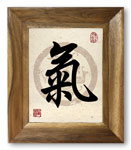
Buy a Custom Live Chinese or Japanese Calligraphy Wall Scroll
We have many options to create artwork with the Chinese characters / Asian symbols / Japanese Kanji for Live on a wall scroll or portrait.
If you want to create a cool Live wall scroll, this is the place. Below you will find a few Asian symbols that express the idea of Live.
Switched to secondary search mode due to lack of results using primary.
These secondary results may not be very accurate. Try a different but similar meaning word or phrase for better results. Or...
Look up in my Japanese Kanji & Chinese Character Dictionary(My dictionary is a different system then the calligraphy search you just tried)
If you want a special phrase, word, title, name, or proverb, feel free to contact me, and I will translate your custom calligraphy idea for you.
1. 100 Years of Happy Marriage
2. 2. Right Resolve / Right Thought / Right Intention / Perfect Resolve
3. 3. Right Speech / Right Talk / Perfect Speech
4. 4. Right Action / Perfect Conduct
6. 5. Right Living / Right Livelihood / Perfect Livelihood
7. Year-In Year-Out Have Abundance
8. In the Abyss of Infinite Bitterness - Turn to the Shore
9. Optimism / Happy With Your Fate
10. Adventure
11. Alive
13. Alone / Solitary Existence
14. Ardent / Fierce
15. Great Aspirations / Ambition
17. Banzai / Wansui
18. Banzai
19. Beautiful Life / Life in Perfect Harmony
20. You are always a beauty in your lover’s eyes
21. Beauty / Beautiful Princess
22. Best Love / Most Sincere Love
23. Best Friends
24. Better to be Happy than Rich
25. Big Dream
26. Birth / Life
28. Blue Lotus
29. The Tree of Enlightenment / The Bodhi Tree
30. Body
31. Body and Mind
33. Bonsai / Penzai
34. Breath of Life
37. Triple Truth of Japanese Buddhism
38. Buddha Heart / Mind of Buddha
39. Bushido / The Way of the Samurai
40. Carpe Diem / Seize the Day
41. Chaos / Anarchy / Confusion / Mayhem
42. Choose Life
44. Clarity
45. Community
48. The Law of Creation and Destruction
49. Give Up Desire
50. Danger
51. Daodejing / Tao Te Ching - Chapter 33
52. Daodejing / Tao Te Ching - Chapter 27
53. Datsuzoku
54. Day
59. Destiny / Fate
61. Dignity / Honor / Sanctity / Integrity
62. Doctor
64. Drinking the water of a well: One should never forget who dug it
65. Earth
67. Embrace Life / Embrace Living
68. Embrace Life
69. Empress
70. Enjoy Life
72. Eternal Life / Everlasting Life / Immortality
73. Eternal Life / Future Life
74. Everyday Life
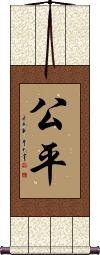
76. Fair / Impartial
77. Fall Down Seven Times, Get Up Eight
78. Fire Horse
79. Rise and Fall / Ups and Downs
80. Flowers Bloom and Flowers Fall
81. Flowers Bloom and Flowers Wither
82. Flowers Fall / The End Comes
84. Four Noble Truths: Suffering
85. Fresh Start
86. Eternal Friendship / Friends Forever
87. Galatians 5:25
88. The Good Life / Beautiful Life
89. Grand Master / Great Teacher
90. Guan Shi Yin: Protector Of Life
91. Healing Hands
92. Healthy Living
93. Heaven and Earth
100 Years of Happy Marriage
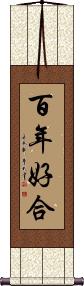
百年好合 is a wish or greeting, often heard at Chinese weddings, for a couple to have 100 good years together.
Some will translate this more naturally into English as: “May you live a long and happy life together.”
The character breakdown:
百 = 100
年 = Years
好 = Good (Happy)
合 = Together
2. Right Resolve / Right Thought / Right Intention / Perfect Resolve
Samyak Samkalpa / Samma Sankappa
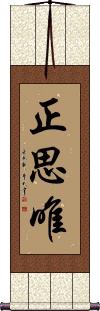
正思唯 is one of the Noble Eightfold Paths of Buddhism. Right Thought, along with the Right View, constitute the path to Wisdom.
In Buddhism, Right Thought, in simple terms, means to free yourself from having ill will towards anyone or anything. It also suggests that you remain harmless to other living creatures.
This can also be defined as “Resolve in favor of renunciation, goodwill, and non-harming of sentient beings.”
 There is an ancient/alternate version of the third character for this selection. You can see that alternation third character to the right. If you want your selection to use that older character, just click on the character to the right, instead of the button above.
Note: This term is exclusively used by devout Buddhists. It is not a common term, and is remains an unknown concept to most Japanese and Chinese people.
See Also: Buddhism | Enlightenment | Noble Eightfold Path
3. Right Speech / Right Talk / Perfect Speech
Samyag Vaca / Samma Vaca / Samma Vacha
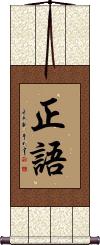
正語 is one of the Noble Eightfold Paths of Buddhism. Right Speech, along with Right Action and Right Living, constitute the path to Virtue.
Right Speech is abstaining from lying, abstaining from divisive speech, abstaining from abusive speech, abstaining from idle chatter, abstaining from slander, abstaining from gossip, or any form of harmful or wrong speech.
This term is exclusively used by devout Buddhists. It is not a common term, and is remains an unknown concept to most Japanese and Chinese people.
See Also: Buddhism | Enlightenment | Noble Eightfold Path
4. Right Action / Perfect Conduct
Samyak Karmanta / Samma Kammanta
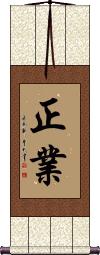
正業 is one of the Noble Eightfold Paths of Buddhism. Right Action, along with Right Speech and Right Living, constitute the path to Virtue.
The five precepts of Right Action are...
1. Refrain from destroying living beings (no murder or any form of taking a life).
2. Refrain from stealing.
3. Refrain from sexual misconduct (adultery, rape, etc.).
4. Refrain from false speech (lying or trickery).
5. Refrain from intoxicants that lead to heedlessness (no drugs or alcohol).
This concept can be summarized as “Avoidance of actions that conflict with moral discipline.”
Note: In Japanese, when read by a non-Buddhist, this will mean “the right job/vocation.”
This term is exclusively used by devout Buddhists. It is not a common term, and is remains an unknown concept to most Japanese and Chinese people.
See Also: Buddhism | Enlightenment | Noble Eightfold Path
Five Codes of Tang Soo Do
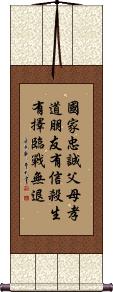
国家忠诚父母孝道朋友有信杀生有择临战无退 are the five codes of Tang Soo Do.
I suggest you have this arranged in five columns when you get to the options page for your custom calligraphy wall scroll.
Here are my translations of each of the five codes:
國家忠誠 Be loyal to your country.
父母孝道 In regards to parents, behave in a filial way.
朋友有信 Be faithful in friendship.
殺生有擇 When fighting for life and death, make noble choices.
臨戰無退 No retreat in battle.
Note: “Tang Soo Do” is a romanization of 唐手道. It's 당수도 in Korean Hangul. It can also be romanized as “Tangsudo” or “Dangsudo.”
5. Right Living / Right Livelihood / Perfect Livelihood
Samyag Ajiva / Samma Ajiva
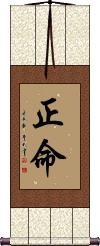
正命 (right living) is one of the Noble Eightfold Paths of Buddhism.
Right Living, along with Right Speech and Right Action, constitute the path to Virtue.
Right Living means that a Buddhist should only take a job or pursue a career in a field that does no harm. Buddhists should not work in the arms trade, as pimps or in the field of prostitution, as a butcher or in a shop that kills or sells meat, in a laboratory that does animal research, or in any other business that involves scheming or unethical behavior.
Another definition: Avoidance of professions that are harmful to sentient beings, such as slaughterer, hunter, dealer in weaponry or narcotics, etc.
This term is exclusively used by devout Buddhists. It is not a common term, and is remains an unknown concept to most Japanese and Chinese people.
See Also: Buddhism | Enlightenment | Noble Eightfold Path
Year-In Year-Out Have Abundance
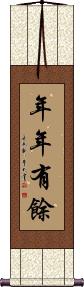
年年有餘 is a common proverb or wish of prosperity you'll hear around the time of Chinese New Year.
Directly translated character by character, it means “Year Year Have Surplus.” A more natural English translation including the deeper meaning would be “Every Year may you Have Abundance in your life.”
On a side note, this phrase often goes with a gift of something related to fish. This is because the last character, “yu” which means surplus or abundance, has exactly the same pronunciation in Mandarin as the word for “fish.”
This is also one of the most common titles for traditional paintings that feature koi fish.
In China, this phrase might make an odd wall scroll - a customer asked especially for this common phrase which is why it appears here. See my other abundance-related words if you want a wall scroll that will seem more comfortable in Chinese culture.
Note: This can be pronounced in Korean, but it's not a commonly used term.
See Also: Prosperity | Good Fortune
In the Abyss of Infinite Bitterness - Turn to the Shore
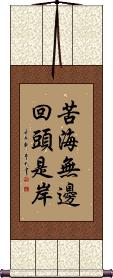
苦海無邊, 回頭是岸 can be translated almost directly as “The sea of bitterness has no bounds, turn your head to see the shore.”
Often this proverb refers to how Buddhist enlightenment can allow one to shed off the abyss of worldly suffering. But it can apply to other religions. If you find yourself trapped in the hardship of this worldly life, take a new turn, and seek a path to salvation.
Optimism / Happy With Your Fate
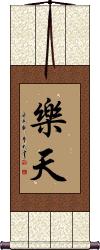
樂天 is about being optimistic and also making the best of whatever life throws at you.
This is hard to define. One dictionary defines this as “acceptance of fate and happy about it.” There is one English word equivalent, which is sanguinity or sanguinary.
You can also say that this means “Be happy with whatever Heaven provides,” or “Find happiness in whatever fate Heaven bestows upon you.” 樂天 suggests being an optimist in life.
Note: This is sometimes a given name in China.
 Please note that Japanese tend to write the first character in a slightly-different form (as seen to the right). Let us know if you have a preference when you place your order.
Adventure
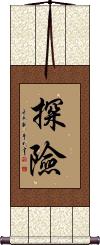
If you lead a life of adventure (like I do), a 探險 wall scroll is for you.
Alone, the first character can mean “to explore,” “to search out,” or “to scout.” The second character holds the meanings of “dangerous” and “rugged.” Together these two characters create the word that means “adventure” or “to explore.”
探険 is a modern Japanese Kanji version, but it more precisely means exploration or expedition rather than adventure. 探險 is the old/ancient Japanese version used before WWII. Let us know if you want the modern Japanese version instead.
See Also: Bon Voyage | Travel
Alive
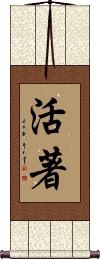
活著 is the word that means alive, as in the state of living or being alive (Chinese only).
All Hopes Fulfilled
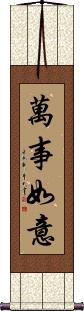
萬事如意 is a Chinese and old Korean proverb that means to have all one's wishes.
When speaking to someone, it's a way to say best wishes, all the best, may all your hopes be fulfilled, or may everything go well.
On your wall as calligraphy, it's meant to inspire all your wishes, hopes, dreams, and life to go well or come true.
Alone / Solitary Existence
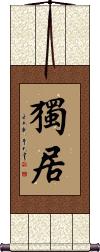
獨居 is a Chinese word that can be translated as to live alone, to live a solitary existence, solitude, solitary life, dwelling alone.
You might use a word like this regarding a hermit.
 In modern Japan, and Simplified Chinese, they use the version of the first character shown to the right. If you want this version please click on the character to the right instead of the button above.
Ardent / Fierce
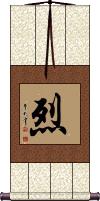
烈 is a Chinese word that means ardent; intense; fierce; stern; upright; to give one's life for a noble cause.
In another context, this character can refer to one's exploits or achievements.
In the Buddhist context, this is burning, fierce, virtuous, and/or heroic.
While technically, it had the same meaning in Japanese, it's usually a female given name, Retsu in Japanese these days.
Great Aspirations / Ambition
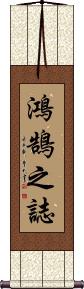
鴻鵠之誌 is a Chinese proverb that implies that having grand ambitions also means that others will not understand your great expectations and ideas.
Though the actual words come from a longer saying of Confucius, which goes, “The little swallows living under the eaves wouldn't understand the lofty ambitions of a swan (who flies far and wide).”
This Confucius quote has led to this idiomatic expression in China that means “think big.” What you'd be saying is “The lofty ambitions of a swan.”
Note that Chinese people sometimes refer to the little swallow as one who does not “think big” but is, instead, stuck in a rut or just leading a mundane life. Therefore, it's a compliment to be called a swan but not a good thing to be called a swallow.
Great Aspirations / Ambition
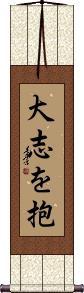
大志を抱 is a single Japanese word that kind of reads like a short proverb.
It suggests that you should have “high aims,” “ambitions,” or “aspirations” in your life.
Balance / Equilibrium
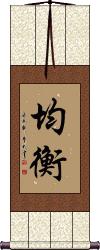
均衡 means balance or equilibrium.
This title is best for a Japanese audience where the word suggests that your life is in balance in all matters (or is a reminder for you to try and keep all matters in balance).
Banzai / Wansui
Old Japanese / Traditional Chinese & Korean
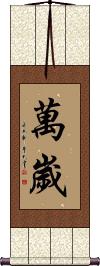
萬歲 is the traditional Chinese, Korean Hanja, and ancient Japanese way of writing banzai.
In modern times, the first character was simplified in Japan and China. So you might want to select the other entry for universal readability.
While it has become a popular, if not an odd, thing to scream as you jump out of an airplane (preferably with a parachute attached), banzai is actually a very old Asian way to say “hooray.” The Japanese word “banzai” comes from the Chinese word “wan sui,” which means “The age of 10,000 years.” It is actually a wish that the Emperor or the Empire live that long.
Imagine long ago when the Emperor made a rare public appearance. 萬歲 is what all people would yell to their leader in respect.
So if you like it as a hooray, or you want to wish someone that they live for 10,000 years, this is the calligraphy for you.
Other translations include Cheers! (not the drinking kind), hurrah!, long live [name]!, and congratulations!
To other things with banzai in their names, I am still waiting for the promised sequel to Buckaroo Banzai.
Notes: Sometimes people confuse banzai with bonsai. A bonsai is a miniature tree. They have nothing to do with each other.
Banzai
Modern Japanese Version
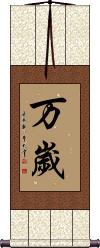
万歲 is the modern Japanese way to write banzai.
We've made two almost identical entries for this word, with just a variation on the first character. In the last century, 萬 was simplified to 万 in Japan and China. The new generation will expect it to be written as 万 but the old generation can still read the more traditional 萬 form. You must make your determination as to what version is best for you. If your audience is mostly Japanese, I suggest 万歲.
While it has become a popular, if not an odd, thing to scream as you jump out of an airplane (preferably with a parachute attached), banzai is actually a very old Asian way to say “hooray.” The Japanese word “banzai” comes from the Chinese word “wan sui” which means “The age of 10,000 years.” It is actually a wish that the Emperor or the Empire live that long.
Imagine long ago when the Emperor made a rare public appearance. This is what all of the people would yell to their leader in respect.
So if you like it as a hooray, or you want to wish someone that they live for 10,000 years, this is the calligraphy for you.
To other things with banzai in their names, I am still waiting for the promised sequel to Buckaroo Banzai.
Other translations: hurrah, long life, congratulations, cheers, live long.
Notes: Sometimes people confuse banzai with bonsai. A bonsai is a miniature tree. They have nothing to do with each other. Further, Bonzai is not a word at all - although it would make a great name for a calcium supplement for older people.
Beautiful Life / Life in Perfect Harmony
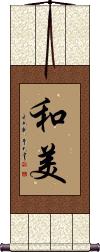
和美 is a word that means “harmonious” or, “in perfect harmony.”
The deeper meaning or more natural translation would be something like, “beautiful life.”
The first character means peace and harmony.
The second character means beautiful. But in this case, when combined with the first character, beautiful refers to being satisfied with what you have in your life. This can be having good relations, good feelings, comfort, and having enough (with no feeling of wanting).
Note: In Japanese, this is often used as the name "Wami." This title is probably more appropriate if your audience is Chinese.
You are always a beauty in your lover’s eyes
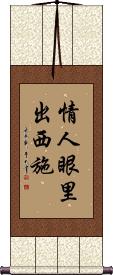
Any woman with affection for Asian art will love a gift of this Chinese proverb calligraphy on a wall scroll.
She will melt in your arms as you tell her the meaning of these characters.
Contained in this phrase is a reference to the most beautiful woman in Chinese history. Her name was Xi Shi, and she was known to have good looks that need not have fine robes or makeup. Her charms were so powerful that she brought down an entire kingdom (in a successful effort to bring honor and pride back to her people).
情人眼里出西施 is a great way to express that the woman in your life is your one love.
Beauty / Beautiful Princess
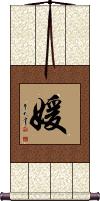
媛 means, a beauty; beautiful (woman); princess; a young lady of noble birth; girl; small & lovely.
媛 is used a bit more commonly in Chinese than in Japanese.
Note: This can be the female given name "Hime" in Japanese.
Best Love / Most Sincere Love
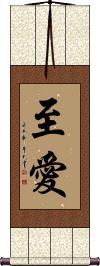
至愛 can mean the best love or most sincere love of your life.
This could be a romantic love such as your love for your spouse or a boyfriend/girlfriend.
It can also apply to the extreme love you have for your children or a parent and maybe a really good friend.
See Also: I Love You
Best Love / Most Sincere Love
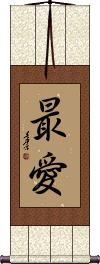
最愛 is a Japanese word that means the best love, beloved, or most sincere love of your life.
This could be a romantic love such as your love for your spouse or a boyfriend/girlfriend.
It can also apply to the extreme love you have for your children or a parent and maybe a really good friend.
Best Friends
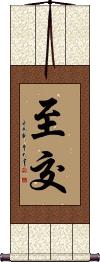
至交 is an alternate way to say best friend in Chinese.
The first character can mean “most,” “extreme” or “best.” The second character means “making friends” or “building friendship.” There's sort of a suggestion with the second character that fate caused you to intersect in life and become friends (that character can mean intersection in some context).
This can also mean “most intimate friend,” “very good friend of long-standing,” or “closest friend.”
See Also: Friendship | Soulmates
Better to be Happy than Rich
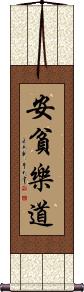
安貧樂道 means “It's better to be happy than rich” in Chinese.
Even if you are poor, you should still feel satisfied in your life...
...Satisfaction, happiness and the meaning of your life come from within yourself and not from money or riches of the world.
In Chinese, there are a lot of four-character proverbs which express some very old philosophies.
Though there are only four characters on this scroll, in Chinese, the meanings often surpass the dictionary definition of each character.
In this case, you should not set your expectations too high for the money or riches you wish to have. One who sets their expectations too high is almost always disappointed. Instead, you should cherish what you have, seek to improve yourself from within, and not measure your worth by the size of your bank account.
Big Dream
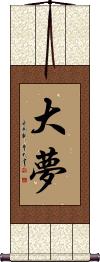
大夢 means “Big Dream” in Chinese and Japanese.
大夢 is primarily a Buddhist term referring to the great dream that represents a long and winding life that feels like a dream (since reality is an illusion anyway in Buddhism).
This can also be a female given name, Hiromu, or Oomu, in Japanese. Also, more rare unisex given names Daimu or Taimu.
Birth / Life
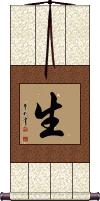
生 is a Chinese word that means “to be born” and “to give birth.”
Also, it's often used to refer to life itself, and sometimes “to grow.”
生 is used in a lot of compound words such as “yi sheng,” which means “doctor” (literally “healer of life”), “sheng ri” which means “birthday” (literally “birth-day”), and “xue sheng” which means student (literally “studying life” or “learner [about] life”). Few Chinese people will think of the literal meaning when this uses words like doctor and student - but it is interesting to note.
生 has the same root meaning in Korean Hanja and Japanese. However, in Japanese, there are many possible pronunciations, and this can be used to mean “raw” or “unprocessed” (as in draft beer). Therefore, not be the best if your audience is Japanese.
See Also: Vitality
Blessings on this Home
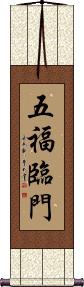
五福臨門 means “five good fortunes arrive [at the] door.”
It is understood to mean “may the five blessings descend upon this home.”
These blessings are known in ancient China to be: longevity, wealth, health, virtue, and natural death (living to old age). This is one of several auspicious sayings you might hear during the Chinese New Year.
Blue Lotus
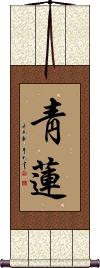
靑蓮 is a common title for Blue Lotus.
靑蓮 is often used in a Buddhist context for blue lotus from the Sanskrit “utpala.” This often refers to the clarity and purity of the lotus blue eyes possessed by a Living Buddha. It can also represent the purity of mind (without desire, suffering, fear, etc.).
The Tree of Enlightenment / The Bodhi Tree
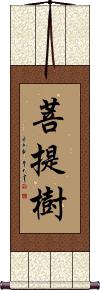
菩提樹 is the full title of the Bodhi tree (a fig tree) under which Siddhartha Gautama (the legendary man who established the Buddhist religion), achieved enlightenment.
Sometimes this is referred to as “the tree of enlightenment.” If you don't have a Bodhi tree to sit under, maybe you can achieve enlightenment under a wall scroll with this title.
Body
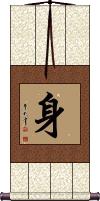
身 is how to write “body” as in your human body, in Chinese, Japanese Kanji, and Korean Hanja.
Depending on the context and certain language issues, this character can also mean: main part, hull, oneself, somebody, person, I, me, sword, lifetime, one's station in life, etc.
While this written word is universal in three languages, it still makes a rather odd selection for a wall scroll. Also, they tend to use 体 (karada) in Japanese for the body (depending on context).
See Also: Karada
Body and Mind
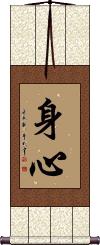
身心 means “body and mind” or “mental and physical” in Chinese and Japanese.
In the Buddhist context, body and mind encompass the five elements (skandha) of a sentient being.
The body is the physical material (rūpa) of life. The mind embraces the other four skandhas, which are consciousness, perception, action, and knowledge.
Body and Earth in Unity
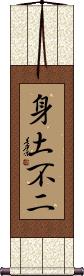
身土不二 (Shindofuni) is originally a Buddhist concept or proverb referring to the inseparability of body-mind and geographical circumstances.
This reads, “Body [and] earth [are] not two.”
Other translations or matching ideas include:
Body and land are one.
Body and earth can not be separated.
Body earth sensory curation.
You are what you eat.
Indivisibility of the body and the land (because the body is made from food and food is made from the land).
Going further, this speaks of our human bodies and the land from which we get our food being closely connected. This phrase is often used when talking about natural and organic vegetables coming directly from the farm to provide the healthiest foods in Japan.
Character notes: 身(shin) in this context does not just mean your physical body but a concept including both body and mind.
土 (do) refers to the soil, earth, clay, land, or in some cases, locality. It's not the proper name of Earth, the planet. However, it can refer to the land or realm we live in.
Japanese note: This has been used in Japan, on and off, since 1907 as a slogan for a governmental healthy eating campaign (usually pronounced as shindofuji instead of the original shindofuni in this context). It may have been hijacked from Buddhism for this propaganda purpose, but at least this is “healthy propaganda.”
Korean note: The phrase 身土不二 was in use by 1610 A.D. in Korea, where it can be found in an early medical journal.
In modern South Korea, it's written in Hangul as 신토불이. Korea used Chinese characters (same source as Japanese Kanji) as their only written standard form of the language until about a hundred years ago. Therefore, many Koreans will recognize this as a native phrase and concept.
See Also: Strength and Love in Unity
Bonsai / Penzai
Dwarf Tree Culture
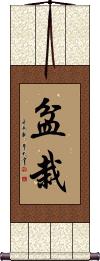
盆栽 is the word that refers to the culture, hobby, and to miniature trees themselves that have become popular around the world.
Like many things, this art migrated from China to Japan some time ago, but we tend to associate it with Japanese culture and even use the Japanese word in English.
Granted, in the present day, this hobby seems to be more popular in Japan but still has a great following in China and even a little in Korea as well.
Note: Many people confuse the title of the bonsai tree with “banzai” which is a form of “hooray” in Japanese. I have also seen it misspelled as “bansai.” The correct Romanization (Romaji) is “bonsai.”
Breath of Life
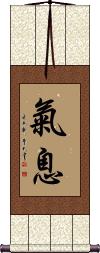
氣息 can mean breath of life or panting for want of breath in the Buddhist context.
In other contexts, it can mean breath, smell, odor, or flavor.
Death Before Dishonor
Better to be broken jade than unbroken pottery
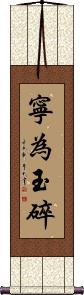
寧為玉碎 is the short version of a longer Chinese proverb which means “rather be shattered piece of jade than an unbroken piece of pottery.”
寧為玉碎 says the “rather be a broken piece of jade” part (the second half is implied - everyone in China knows this idiom).
A little more explanation:
Death is implied with the “broken” meaning. Jade is one of the most precious materials in Chinese history, and in this case, is compared with one's honor and self-worth. Pottery is just something you eat off of; it has no deep value, just as a person who has lost their honor or had none to begin with.
Thus, this means “better to die with honor than to live in shame” or words to that effect.
This is often translated in English as “Death Before Dishonor,” the famous military slogan.
I would also compare this to the English proverb, “Better to die on your feet than to live on your knees.”
Death Before Dishonor
Better to be broken jade than unbroken pottery
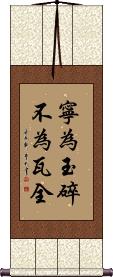
寧為玉碎不為瓦全 is the long version of a Chinese proverb that means “rather be shattered piece of jade than an unbroken piece of pottery.”
A little more explanation:
Death is implied with the “broken” meaning. Jade is one of the most precious materials in Chinese history, and in this case, is compared with one's honor and self-worth. Pottery is just something you eat off of, it has no deep value, just as a person who has lost their honor, or had none to begin with.
Thus, this means “better to die with honor than to live in shame” or words to that effect.
寧為玉碎不為瓦全 is often translated in English as “Death Before Dishonor,” the famous military slogan.
I would also compare this to the English proverb, “Better to die on your feet than to live on your knees.”
This is an idiom. It therefore doesn’t directly say exactly what it means. If you think about the English idiom, "The grass is always greener," it does not directly say "jealousy" or "envy" but everyone knows that it is implied.
Broken Mirror Rejoined
Used in modern times for divorced couples that come back together
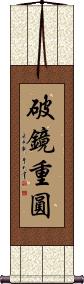
破鏡重圓 is about a husband and wife who were separated and reunited.
About 1500 years ago in China, there lived a beautiful princess named Le Chang. She and her husband Xu De Yan loved each other very much. But when the army of the Sui Dynasty was about to attack their kingdom, disposed of all of their worldly possessions and prepared to flee into exile.
They knew that in the chaos, they might lose track of each other, so the one possession they kept was a bronze mirror which is a symbol of unity for a husband and wife. They broke the mirror into two pieces, and each of them kept half of the mirror. They decided that if separated, they would try to meet at the fair during the 15th day of the first lunar month (which is the lantern festival). Unfortunately, the occupation was brutal, and the princess was forced to become the mistress of the new commissioner of the territory, Yang Su.
At the Lantern Festival the next year, the husband came to the fair to search for his wife. He carried with him his half of the mirror. As he walked through the fair, he saw the other half of the mirror for sale at a junk market by a servant of the commissioner. The husband recognized his wife's half of the mirror immediately, and tears rolled down his face as he was told by the servant about the bitter and loveless life that the princess had endured.
As his tears dripped onto the mirror, the husband scratched a poem into his wife's half of the mirror:
You left me with the severed mirror,
The mirror has returned, but absent are you,
As I gaze in the mirror, I seek your face,
I see the moon, but as for you, I see not a trace.
The servant brought the inscribed half of the mirror back to the princess. For many days, the princess could not stop crying when she found that her husband was alive and still loved her.
Commissioner Yang Su, becoming aware of this saga, realized that he could never obtain the princess's love. He sent for the husband and allowed them to reunite.
This proverb, 破鏡重圓, is now used to describe a couple who has been torn apart for some reason (usually divorce) but have come back together (or remarried).
It seems to be more common these days in America for divorced couples to reconcile and get married to each other again. This will be a great gift if you know someone who is about to remarry their ex.
Triple Truth of Japanese Buddhism

人間性を再生するのは寛容な心親切な言葉奉仕と思いやりの精神 is known as the Triple Truth of Buddhism in Japanese.
The Buddha ordered that all should know this triple truth...
A generous heart, kind speech, and a life of service and compassion are the things that renew humanity.
That is the English translation most commonly used for this Japanese Buddhist phrase. You might have seen this on a coffee cup or tee shirt.
Note: Because this selection contains some special Japanese Hiragana characters, it should be written by a Japanese calligrapher.
Buddha Heart / Mind of Buddha
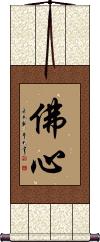
佛心 means the Buddha's mind, Buddha-heart, or the spiritually enlightened heart/mind.
The Buddha Heart is detached from good and evil and other such constructs. The Buddha Heart has mercy, compassion, and loving-kindness for all sentient life, the good, the wicked, and all in between.
The heart and mind (心) are the same concepts in the ancient Orient, so you can use heart and mind interchangeably in this context.
Bushido / The Way of the Samurai
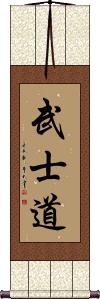
武士道 is the title for “The Code of the Samurai.”
Sometimes called “The Seven Virtues of the Samurai,” “The Bushido Code,” or “The Samurai Code of Chivalry.”
This would be read in Chinese characters, Japanese Kanji, and old Korean Hanja as “The Way of the Warrior,” “The Warrior's Way,” or “The Warrior's Code.”
It's a set of virtues that the Samurai of Japan and ancient warriors of China and Korea had to live and die by. However, while known throughout Asia, this title is mostly used in Japan and thought of as being of Japanese origin.
The seven commonly-accepted tenets or virtues of Bushido are Rectitude 義, Courage 勇, Benevolence 仁, Respect 礼(禮), Honour 名誉, Honesty 誠, and Loyalty 忠実. These tenets were part of oral history for generations, thus, you will see variations in the list of Bushido tenets depending on who you talk to.
See our page with just Code of the Samurai / Bushido here
Carpe Diem / Seize the Day
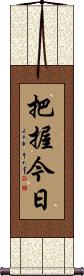
把握今日 is the closest and most natural way to express this proverb in Chinese.
The first two characters mean “to seize” but can also be translated as “take control of.”
The last two characters mean “today.”
Chaos / Anarchy / Confusion / Mayhem
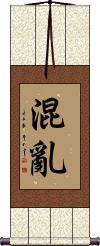
The first character means confused, dirty, muddy, or mixed.
The second character means confusion and disorder.
Together, these characters mean chaos and sometimes extended to mean a type of anarchy.
This term is often used in a less-than-literal term to describe anything in disarray. Someone might use this word in a sentence like, “My kitchen is in a state of chaos” or “my life is so chaotic.”
 Please note that Japanese use an alternate/simplified version of the second character of chaos - it also happens to be the same simplification used in mainland China. Click on the character to the right if you want the Japanese/Simplified version of this two-character chaos calligraphy.
Choose Life
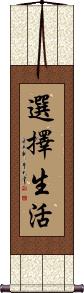
選擇生活 can mean to choose life instead of death (or suicide) or to choose to live life to the fullest.
I think of it as the key phrase used by Renton (Ewan McGregor) in the movie Trainspotting. While Chinese people will not think of Trainspotting when they see this phrase, for me, it will always be what comes near the end of this colorful rant:
Choose life. Choose a job. Choose a career. Choose a family. Choose a fucking big television. Choose washing machines, cars, compact disc players, and electrical tin can openers. Choose good health, low cholesterol, and dental insurance. Choose fixed-interest mortgage repayments. Choose a starter home. Choose your friends. Choose leisure wear and matching luggage. Choose a three-piece suite on-hire purchase in a range of fucking fabrics. Choose DIY and wondering who the fuck you are on a Sunday morning. Choose sitting on that couch watching mind-numbing, spirit-crushing game shows, stuffing fucking junk food into your mouth. Choose rotting away at the end of it all, pissing your last in a miserable home, nothing more than an embarrassment to the selfish, fucked-up brats you have spawned to replace yourself. Choose your future. Choose life.
Chop Wood, Carry Water
Before enlightenment or after, chores remain.
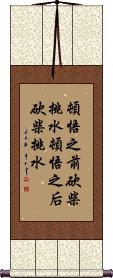
頓悟之前砍柴挑水; 頓悟之後砍柴挑水 means “Before enlightenment, chop wood, carry water; After enlightenment, chop wood, carry water.
This is a Chinese proverb that is attributed to 吴力 (Wú Lì) who lived between 1632 and 1718 - living part of his life as a devout Buddhist, and many years as a Catholic Jesuit Priest in China - what an interesting life!
This has been explained many times in many ways. I am a Buddhist, and here is my brief take on this proverb...
Before enlightenment, one may find daily chores mundane, tedious, and boring. However, upon reaching enlightenment one is not relieved of the details of daily life. An enlightened person will, however, see such chores as a joy, and do them mindfully.
There is another version floating around, which is 在你領悟之前砍柴、運水。在你領悟之後,砍柴、運水。
If you want this other version, just contact me. The meaning is the same, just different phrasing.
Clarity
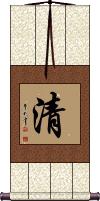
清 is a word that means clarity or clear in Chinese, Japanese Kanji, and old Korean Hanja.
Looking at the parts of this character, you have three splashes of water on the left, “life” on the top right, and the moon on the lower right.
Because of something Confucius said about 2500 years ago, you can imagine that this character means “live life with clarity like bright moonlight piercing pure water.” The Confucian idea is something like “Keep clear what is pure in yourself, and let your pure nature show through.” Kind of like saying, “Don't pollute your mind or body, so that they remain clear.”
This might be stretching the definition of this single Chinese character but the elements are there, and “clarity” is a powerful idea.
Korean note: Korean pronunciation is given above but this character is written with a slight difference in the "moon radical" in Korean. However, anyone who can read Korean Hanja, will understand this character with no problem (this is considered an alternate form in Korean). If you want the more standard Korean Hanja form (which is an alternate form in Chinese), just let me know.
Japanese note: When reading in Japanese, this Kanji has additional meanings of pure, purify, or cleanse (sometimes to remove demons or "exorcise"). Used more in compound words in Japanese than as a stand-alone Kanji.
Community
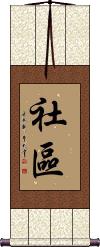
社區 is how to write community in Chinese.
社區 can mean the neighborhood you live in. It can also be used the same way we use the word community in English.
Examples: African-American community, Christian community, Asian community, etc.
If you need a special calligraphy wall scroll to describe your community, just contact me, and I’ll translate it and make it for you.
Mercy / Compassion / Love
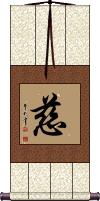
慈 is the simplest way to express the idea of compassion.
This can also mean love for your fellow humans, humanity, or living creatures. Sometimes this is extended to mean charity.
This term is often used in a Buddhist or Christian context. The concept was also spoken of by Laozi (Lao Tzu) in the Dao De Jing (Tao Te Ching).
慈 is considered the direct translation of the Sanskrit word मैत्री (maitrī) Pali word मेत्ता (mettā). In this context, it means benevolence, loving kindness, and goodwill.
This Chinese character is understood in Japanese but is usually used in compound words (not seen alone). Also used in old Korean Hanja, so it's very universal.
See Also: Mercy | Benevolence | Forgiveness | Kindness
Courtesy / Politeness
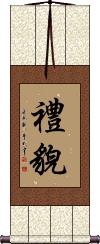
禮貌 is a Chinese and old Korean word that means courtesy or politeness.
Courtesy is being polite and having good manners. When you speak and act courteously, you give others a feeling of being valued and respected. Greet people pleasantly. Bring courtesy home. Your family needs it most of all. Courtesy helps life to go smoothly.
If you put the words "fēi cháng bù" in front of this, it is like adding "very much not." it’s a great insult in China, as nobody wants to be called "extremely discourteous" or "very much impolite."
The Law of Creation and Destruction
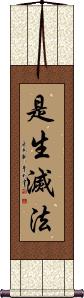
是生滅法 is a Buddhist term for “the law of arising and ceasing,” or, “the law of creation and destruction.”
Everything has a beginning and an end, birth and death, etc. All things follow this law.
Give Up Desire
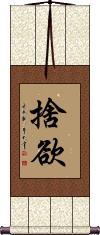
捨欲 is a Buddhist term that means to give up desire or the act of cutting off desire.
In Buddhism, our attachments, greed, and/or desires are the root of our suffering. Release them and live a happy life!
Danger
A dangerous character in every way
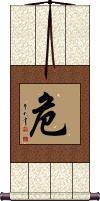
危 means danger, peril, or “to endanger” in Chinese, Japanese, and old Korean.
If you live a dangerous life or want to subtly warn others that you are a dangerous person, this may be the selection for you.
This also means “danger” and sometimes “fear” in Japanese and Korean but is seldom seen outside of compound words in those languages (as a single character, it's kind of like an abbreviation for danger in Japanese and Korean). 危 is also a rather odd selection for a wall scroll anyway. It's only here because people search for danger on our website.
Daodejing / Tao Te Ching - Chapter 33
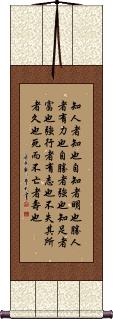
This is referred to as passage or chapter 33 of the Dao De Jing (often Romanized as “Tao Te Ching”).
These are the words of the philosopher Laozi (Lao Tzu).
To know others is wisdom;
To know oneself is acuity/intelligence.
To conquer others is power,
To conquer oneself is strength.
To know contentment is to have wealth.
To act resolutely is to have purpose.
To stay one's ground is to be enduring.
To die and yet not be forgotten is to be long-lived.
To understand others is to be knowledgeable;
To understand yourself is to be wise.
To conquer others is to have strength;
To conquer yourself is to be strong.
To know when you have enough is to be rich.
To go forward with strength is to have ambition.
To not lose your place is to be long-lasting.
To die but not be forgotten -- that's true long life.
He who is content is rich;
He who acts with persistence has will;
He who does not lose his roots will endure;
He who dies physically but preserves the Dao
will enjoy a long after-life.
Notes:
During our research, the Chinese characters shown here are probably the most accurate to the original text of Laozi. These were taken for the most part from the Mawangdui 1973 and Guodan 1993 manuscripts which pre-date other Daodejing texts by about 1000 years.
Grammar was a little different in Laozi’s time. So you should consider this to be the ancient Chinese version. Some have modernized this passage by adding, removing, or swapping articles and changing the grammar (we felt the oldest and most original version would be more desirable). You may find other versions printed in books or online - sometimes these modern texts are simply used to explain to Chinese people what the original text really means.
This language issue can be compared in English by thinking how the King James (known as the Authorized version in Great Britain) Bible from 1611 was written, and comparing it to modern English. Now imagine that the Daodejing was probably written around 403 BCE (2000 years before the King James Version of the Bible). To a Chinese person, the original Daodejing reads like text that is 3 times more detached compared to Shakespeare’s English is to our modern-day speech.
Extended notes:
While on this Biblical text comparison, it should be noted, that just like the Bible, all the original texts of the Daodejing were lost or destroyed long ago. Just as with the scripture used to create the Bible, various manuscripts exist, many with variations or copyist errors. Just as the earliest New Testament scripture (incomplete) is from 170 years after Christ, the earliest Daodejing manuscript (incomplete) is from 100-200 years after the death of Laozi.
The reason that the originals were lost probably has a lot to do with the first Qin Emperor. Upon taking power and unifying China, he ordered the burning and destruction of all books (scrolls/rolls) except those pertaining to Chinese medicine and a few other subjects. The surviving Daodejing manuscripts were either hidden on purpose or simply forgotten about. Some were not unearthed until as late as 1993.
We compared a lot of research by various archeologists and historians before deciding on this as the most accurate and correct version. But one must allow that it may not be perfect, or the actual and original as from the hand of Laozi himself.
Daodejing / Tao Te Ching - Chapter 27
The Mastery of Effortless Skill

Chapter 27 of the Daodejing reveals a profound truth about mastery: the highest skill leaves no trace, requires no force, and appears almost invisible.
善行無轍跡,
善言無瑕謫,
善數不用籌策,
善閉無關鍵而不可開,
善結無繩約而不可解。
是以聖人常善救人,
故無棄人;
常善救物,
故無棄物。
是謂襲明。
故善人者,不善人之師;
不善人者,善人之資。
不貴其師,不愛其資,
雖智大迷,
是謂要妙。
The sage moves through life with such natural harmony that nothing seems imposed; doors need no locks, knots require no rope, and actions leave no mark behind.
This is the essence of wúwéi (effortless action), where true ability arises from deep alignment with the Tao rather than deliberate effort.
At its heart, this chapter teaches compassion without exception. The sage “abandons no one and nothing,” recognizing value in all people and all things. Even those who seem flawed or unrefined are not rejected, but understood as part of a greater whole with each person both a student and a teacher in the unfolding of life.
Laozi reminds us that wisdom is not about perfection or control, but about subtle awareness. The truly skilled individual does not rely on tools, rules, or rigid structures; instead, they embody an intuitive understanding that makes their actions naturally complete.
In this way, excellence becomes quiet, effortless, and beyond imitation.
This teaching also reflects a deeper philosophical insight: Opposites are interdependent. The “good” person learns from the “not good,” and the “not good” provides the material for growth. To reject either is to misunderstand the balance of existence itself.
As calligraphy, Daodejing Chapter 27 serves as a reminder to cultivate inner mastery rather than outward display. It is a meditation on refinement, humility, and the quiet power of skill perfected through harmony with the natural order.
Note: The Chinese text used here is based on the early Mawangdui silk manuscript tradition (2nd century BCE). The Guodian manuscripts do NOT preserve Chapter 27 in full form.
Datsuzoku
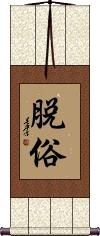
While 脱俗 is a Japanese word that literally means desocialization, unworldliness, or saintliness, it's often used to describe a break from habit or daily routine, an escape or freedom from the ordinary; a life unbounded by convention.
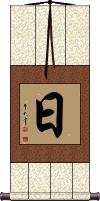
This is how to write “day” in Chinese, Japanese, and Korean Hanja.
This can also mean “Sun,” the star in the middle of the Solar system in which we live. In Japanese, it can also mean “sunshine” or even “Sunday.”
When writing the date in modern Chinese and Japanese, putting a number in front of this character indicates the day of the month. Of course, you need to indicate the month too... The month is expressed with a number followed by the character for the moon. So “three moons ten suns” would be “March 10th” or “3/10.”
Note: This is also the first character for the proper name of Japan. Remember that Japan is “The land of the rising sun”? Well, the first character for Japan means “sun” and the second means “origin” so you get the real meaning now. Sometimes, in China, this sun character can be a short name for Japan or a suffix for something of or from Japan.
Death Before Surrender
Rather die than compromise
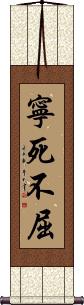
寧死不屈 is often translated as “Death Before Dishonor.”
The literal translation is more like, “Better die than compromise.” The last two characters mean “not to bend” or “not to bow down.” Some might even say that it means “not to surrender.” Thus, you could say this proverb means “Better to die than live on my knees” or simply “no surrender” (with the real idea being that you would rather die than surrender).
Death with Dignity
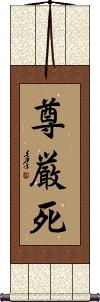
尊厳死 is not a good choice for a wall scroll unless you have a very specific and personal reason.
This was added at the request of a customer.
尊厳死 means “death with dignity” or “natural death” (as opposed to extending one's life unnaturally with life support).
Death Before Surrender
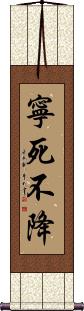
寧死不降 is an ancient Chinese proverb that can be translated as “Rather die than surrender,” “Prefer death over surrender,” “To prefer death to surrender,” or simply “No surrender.”
This is probably the closest proverb to the English proverb “Better to die on your feet than to live on your knees.”
Frightful Demon / Asura
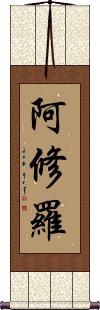
This demon title comes from the ancient Sanskrit word Asura.
阿修羅 is often used in Buddhism when describing various demons. Sometimes defined as “Fighting and battling a giant demon.”
In the context of Buddhism: This title originally meant a spirit, spirits, or even the gods (perhaps before 1700 years ago). It now generally indicates titanic demons, enemies of the gods, with whom, especially Indra, they wage constant war. They are defined as “not devas,” “ugly,” and “without wine.” There are four classes of asuras, separated according to their manner of rebirth. They can be egg-born, womb-born, transformation-born, and spawn- or water-born. Their abode is in the ocean, north of Sumeru but certain of the weaker dwell in a western mountain cave. They have realms, rulers, and palaces, as have the devas.
In terms of power, Asuras rank above humans but below most other deities. They live near the coastal foot of Mount Sumeru (on the northern side). Their domain is partially or wholly in the ocean.
Destiny / Fate
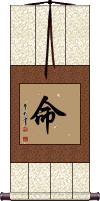
命 is often translated as “destiny.”
Sometimes this character is simply translated as “life” but more in terms of one's lot in life. In a certain context, this can mean command or decree (generally from a king or emperor). Of course, such a decree is part of fate and leads you to fulfill your destiny.
In Chinese, this word leans toward the fate or destiny definition.
In Korean, it is usually read simply as “life.”
In Japanese, it can mean all definitions shown above, depending on context.
See Also: Good Fortune
Destiny / Fate
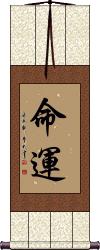
These two characters contain the ideas of fate, destiny, fortune, and luck.
You can also say that it means “what life throws at you” or “your lot in life” because the first character contains the idea of life or living.
This version is really only used in Chinese. There's another version with just the characters reversed that is more universal. In fact, skip this one. The opposite character order is better.
Die Without Regret
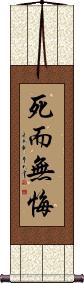
死而無悔 is how to say “die with no regrets” in Mandarin Chinese.
This proverb comes from the Analects of Confucius.
See Also: No Regrets
Dignity / Honor / Sanctity / Integrity
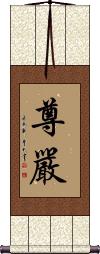
尊嚴 is a form of honor that means showing great respect for yourself, other people, and the rules you live by.
When you are honorable, you keep your word. You do the right thing regardless of what others are doing.
尊嚴 is the kind of personal honor or dignity that is of great value. If you lose this, you have lost yourself and perhaps the reputation of your family as well.
While this is not directly the same thing as “face” or “saving face” in Asian culture, it is associated with the same concept in China.
 In Japan, they currently use a more simplified second character for this word. The ancient Japanese form is the same as China but after WWII some Kanji were changed. If you want the modern Japanese version, just click on the Kanji image shown to the right, instead of the button above.
Doctor
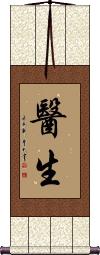
醫生 is the title used to refer to medical doctors or physicians in China.
Note: Sometimes, this same term is used in Korean, but not common.
The meaning is close to “healer [of] life” as the first character, 醫, can mean medicine, the healing art, healing, curing, medical, to cure, or to treat. The second character, 生, means birth or life.

 In Japan, they use a simplified version of the first character (医生 is also used as the Simplified Chinese version of Doctor). If you want this version, please click the characters to the right instead of the button above.
Don't Worry, Be Happy
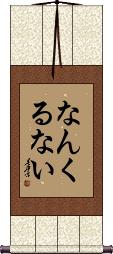
なんくるない or nankurunai is an Okinawan word, written in Japanese that means “Don't worry, be happy.”
沖縄/Okinawa and/or the 琉球/Ryūkyū Islands have a more laid-back “island style” approach to life. So the nankurunai idea is a perfect match for that lifestyle.
Note: Because this title is entirely Japanese Hiragana, it should be written by a Japanese calligrapher.
Drinking the water of a well: One should never forget who dug it
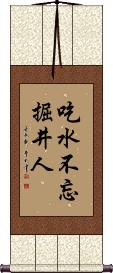
This proverb suggests that one should always be grateful to those who helped one succeed.
And remember your ancestors and those that came before you whose sacrifices made your present life better.
Some Chinese will separate the intended meaning from this proverb and translate this as “Don't forget the people who once helped you.” In Modern China, this idiom is virtually never used to refer to an actual well.
Note: This can be pronounced in Korean but it's not a commonly used phrase.
Earth
(Used in Japanese version of five elements)
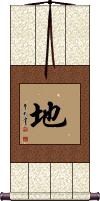
地 is the single-character element and title of the planet Earth in Chinese, old Korean Hanja, and Japanese Kanji.
Because this is a single character, the definition is a little ambiguous and can have many meanings depending on the context in which it is used. These meanings include: earth, ground, land, soil, dirt, place, territory, bottom (of a package, book, etc.), earth (one of the Japanese five elements), the region in question, the local area, skin, texture, fabric, material, weave, base, background, one's true nature, narrative (i.e. descriptive part of a story), real life, actuality, etc.
In Japanese, this Kanji can be pronounced several ways, including chi, ji, tsushi, or tsuchi.
地 is also an element of the Japanese version of the five elements (the original Chinese version uses a different version of earth).
Eat Drink and Be Merry
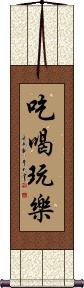
吃喝玩樂 is the short version of, “Eat, drink, and be merry.”
This is a Chinese proverb that suggests abandoning oneself to a life of pleasure.
Eat Drink and Be Merry
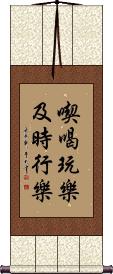
喫喝玩樂及時行樂 is just about the closest proverb to match the western idea of “Eat, drink, and be merry.”
This is a Chinese proverb that more literally means “Eat, drink, play, be merry, enjoy everything as long as you can.”
It's basically a suggestion that you try to enjoy everything in life, as long as you live, or as long as you are able.
Embrace Life / Embrace Living
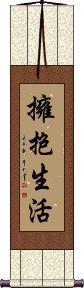
擁抱生活 is a Chinese title that means to embrace or to hug life, or embrace what it is to live.
Embrace Life
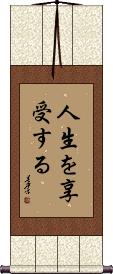
人生を享受する means “embrace life,” in Japanese.
This can also be translated as “enjoy life.”
Note: Because this selection contains some special Japanese Hiragana characters, it should be written by a Japanese calligrapher.
Empress
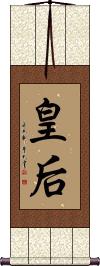
皇后 is the title of empress/emperess, the female form of the emperor.
皇后 is used in Chinese, Japanese Kanji, and old Korean Hanja.
While the emperor's reign was for life, if he died, his wife would hold his power. In this case, a woman was the ultimate ruler of the greater part of East Asia (now China) until her death and the succession of the emperor's firstborn son to lead the empire. Numerous times in various Chinese dynasties, an empress took power in this way.
The first character means emperor by itself.
The second character alone can mean “wife of an emperor or king” (the first character clarifies that we are talking about an empress and not a queen). It can also mean sovereign or last offspring, depending on context.
Note: In some books, this word is translated as queen. While only incorrect if you get technical (because an empress is theoretically a higher level than a queen), the meaning is very similar.
皇后 is sometimes used for the title of queen, but more technically, this is the wife of the emperor (a higher level than a queen).
Enjoy Life
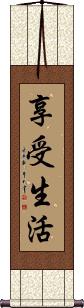
享受生活 is a Chinese proverb that means “Enjoy Life.”
The first two characters mean “to enjoy” and the last two mean “life” or “living.”
Enjoy Life
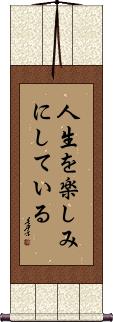
人生を楽しみにしている is one way to write “enjoy life” in Japanese.
The character breakdown:
人生 (jinsei) life (i.e. conception to death) human lifetime, living.
を (o) connecting particle.
楽しみ (tanoshimi) enjoyment; pleasure; anticipation; looking forward to.
に (ni) connecting particle.
し (shi) to do; to cause; to become; to make (into).
て (te) connecting particle.
いる (iru) indicates continuing action or resulting state.
Note: Because this selection contains some special Japanese Hiragana characters, it should be written by a Japanese calligrapher.
Learning is Eternal
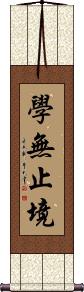
This Chinese philosophy tells of how we continue to learn throughout our lives.
This proverb can be translated in a few ways such as “Study has no end,” “Knowledge is infinite,” “No end to learning,” “There's always something new to study,” or “You live and learn.”
The deeper meaning: Even when we finish school we are still students of the world gaining more knowledge from our surroundings with each passing day.
See Also: An Open Book Benefits Your Mind | Wisdom | Learn From Wisdom
Eternal Life / Everlasting Life / Immortality
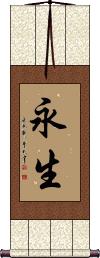
永生 are the last two words from John 3:16 in the Chinese Union Bible.
Although not specifically Christian, this is the way to express ever-lasting life or eternal life in Chinese.
In Japanese, this can either mean eternal life or immortality.
See Also: Eternity | Rebirth | Reincarnation | Immortality
Eternal Life / Future Life
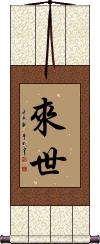
來世 is a word that can be used in many different ways.
It is often used to express the next life (life in heaven or wherever your soul is bound for). So it does have a religious overtone. However, it can also be used to express your life in the future - perhaps during your present lifetime.
It can also be translated as “the next world,” “the next generation,” “the time that is to come,” “otherworld,” or simply “posterity.”
See Also: Eternity | Rebirth | Reincarnation | Immortality
Everyday Life
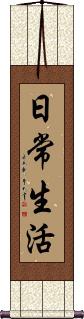
日常生活 simply means everyday life or regular life.
You can also translate it as “Living day to day.”
Extreme Faithfulness
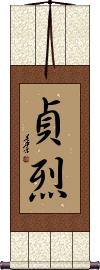
貞烈 is the Japanese Kanji for “Extreme Faithfulness.”
The first Kanji means “firm adherence to one's principles,” chastity (of a woman), chaste, etc.
The second Kanji means ardent, intense, fierce, stern, upright, to give one's life for a noble cause, exploits, achievements, virtuous, and in some contexts, heroic.
Now you get the idea why this refers to someone who is extremely faithful (to a cause, themselves, their religious beliefs, or their philosophy.
Fair / Impartial
Fall Down Seven Times, Get Up Eight
Always rising after a fall or repeated failures
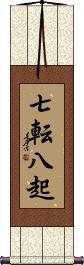
七転八起 is a Japanese proverb that relays the vicissitudes of life, with the meaning “seven times down eight times up.”
Some would more naturally translate it into English as “Always rising after a fall or repeated failures” or compare it to the English, “If at first, you don't succeed, try, try again.”
The first Kanji is literally “7.” The second means “fall down” (sometimes this Kanji means “turn around,” “revolve” or “turn over” but in this case, it holds the meaning of “fall”). The third is “8.” And the last is “get up,” “rouse,” or “rise.”
Basically, if you fail 7 times, you should recover from those events and be prepared to rise an 8th time. This also applies if it is the world or circumstances that knock you down seven times...
...just remember that you have the ability to bounce back from any kind of adversity.
Note: This can be pronounced in two ways. One is “shichi ten hakki” or “shichitenhakki.” The other is “nana korobi ya oki” also written, “nanakorobi-yaoki.”
Special Note: The second character is a Kanji that is not used in China. Therefore, please select a Japanese calligrapher for this title.
Fire Horse
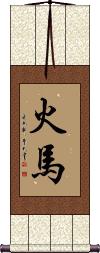
火馬 is the title, “Fire Horse.”
火馬 is not a common title for calligraphy. You might be looking for 丙午, the 43rd year of the sexagenary cycle (the year of the Fire Horse, renowned for disasters and the birth of women destined to kill their husbands).
Rise and Fall / Ups and Downs
Eiko-Seisui
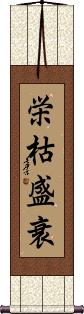
This Japanese proverb can be translated as “flourish and wither, prosper and perish,” “life is full of fortune and misfortune,” or simply “vicissitudes of life.”
栄枯盛衰 / 榮枯盛衰 is about the rise and fall of human affairs or the ups and downs of life. Prosperity comes and goes, everything is fleeting and temporary, but like waves, another swell of prosperity may come.
Here's how the Kanji break down in this proverb:
栄 = prosper; thrive; flourish; boom.
枯 = wither; die.
盛 = prosperous; flourishing; thriving; successful; energetic; vigorous; enthusiastic.
衰 = become weaker; decline; get weak; die down; subside; abate; fail.
 Notes: The original version of the first character looks like the image to the right. In modern Japan, they simplified that Kanji a bit into the version shown above. If you have a preference for which style is used for your calligraphy, please let me know when you place your order.
Apparently, with that original version of the first character, this is also used in Korean Hanja. However, I have not confirmed that
it’s
used in the same way or is widely-known in Korean.
Flowers Bloom and Flowers Fall
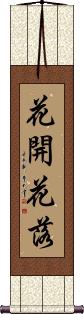
花開花落 is a complete proverb that lightly speaks of the cycle of life, or how things come and go in life.
This is used as a metaphor to suggest that youth is a temporary state that in time will pass.
This can also be used to suggest that fortunes can come and go (everything is temporary).
Note: There are two very similar versions of this proverb. The other uses a word that means wither instead of fall.
Flowers Bloom and Flowers Fall
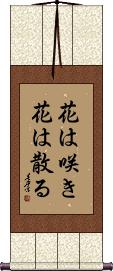
花は咲き花は散る is a Japanese proverb about the cycle of life, or how things come and go in life.
This can be used to suggest that youth, fortune, and life can come and go (everything is temporary).
Note: Because this selection contains some special Japanese Hiragana characters, it should be written by a Japanese calligrapher.
Flowers Bloom and Flowers Wither
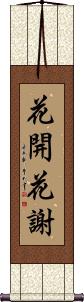
花開花謝 is a complete proverb that lightly speaks of the cycle of life, or how things come and go in life.
This is used as a metaphor to suggest that youth is a temporary state, which in time, will pass.
This proverb can be used to suggest that fortunes can come and go (everything is temporary).
Note: There are two very similar versions of this proverb. The other uses a word that means fall instead of wither.
Flowers Fall / The End Comes
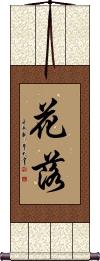
花落 means flower fall (closes and loses its petals).
It suggests nearing the end of something. A time that some might call “The sunset of life.” 花落 often follows 花開 or “flower open” to talk of the cycle of life.
We offer this as a possible companion to a “flower open” scroll (to be placed side by side or at either side of a doorway to say “things come and go” - a cool metaphor for a doorway). If placed in a doorway, it could be used to suggest to your guests that things bloom when they arrive through your door but wither when they leave (a great compliment).
See Also: Flowers Bloom
Forever Young / Long Life
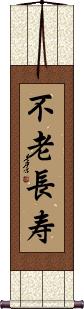
This Japanese phrase means “perpetual youth and longevity.”
It contains the ideas of never getting old and eternal life.
Four Noble Truths: Suffering
Dukkha
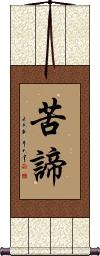
苦諦 relays that part of life in this universe is suffering.
All living things experience some form of suffering, according to Buddhist teaching.
This title is about accepting and understanding that the world is full of suffering.
This term is exclusively used by devout Buddhists. It is not a common term, and is remains an unknown concept to most Chinese, Japanese and Korean people.
See Also: Buddhism | Enlightenment
Fresh Start
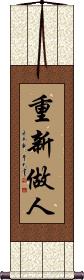
重新做人 is a Chinese proverb that means or suggests starting a new life or to make a fresh start.
Eternal Friendship / Friends Forever
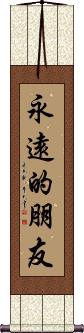
永遠的朋友 means friends that are eternal or a friendship that will last forever - you will remain the best of friends as long as you live.
The first two characters mean forever, eternal, eternity, perpetuity, immortality, and/or permanence.
The middle character links the words (it's a possessive article).
The last two characters represent friendship, or simply “friends.”
Galatians 5:25
If we live in the Spirit, let us also walk in the Spirit
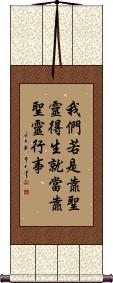
我們若是靠聖靈得生就當靠聖靈行事 is the translation of Galatians 5:25 into Mandarin Chinese via the Chinese Union Bible.
KJV: If we live in the Spirit, let us also walk in the Spirit.
NIV: Since we live by the Spirit, let us keep in step with the Spirit.
The annotation of this Chinese translation:
1.我们 wǒ men - we / us / ourselves
2.若是 ruò shì - if
3.靠 kào - depend upon / lean on / near / by / against / to support
4.圣灵 shèng líng - Holy Ghost
5.得 děi - to have to / must / ought to / degree or possibility
6.生就 shēng jiù - born one way or another (nervous, suspicious, etc.)
7.当 dàng - suitable / adequate / fitting / proper
8.靠 kào - depend upon / lean on / near / by / against / to support
9.圣灵 shèng líng - Holy Ghost
10.行事 xíng shì - how one does things / how one runs things (in this case, it suggests, “to walk in step with”)
The Good Life / Beautiful Life
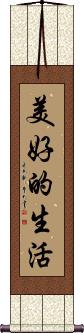
In Chinese, 美好的生活 means “Beautiful Life,” or “The Good Life.”
Grand Master / Great Teacher
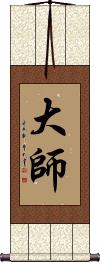
大師 is a way to title a great master, grand master, or great teacher.
This can be used in the context of martial arts or a Buddhist teacher. Thus, it can be used to title a living Buddha, Bodhisattva, or high-ranking monk.
Guan Shi Yin: Protector Of Life
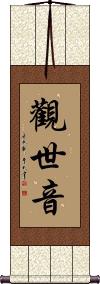
觀世音 is an alternate title for Guanyin, the Bodhisattva of Compassion or Goddess of Mercy.
觀世音 is the Buddhist bestower of children, the protector of life and all in distress (especially of those at sea).
Healing Hands
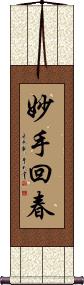
妙手回春 can be translated as “healing hands.”
The first two characters are used to describe a doctor or medical professional who has admirable skills in curing disease. Literally: Wonderful or skilled hands.
The last two characters mean “Springing back to life.”
Altogether, it suggests that these skilled hands can cure whatever ails you and bring you back to life. 妙手回春 is a great honor to bestow on your doctor or other healthcare professionals that have helped you.
Healthy Living
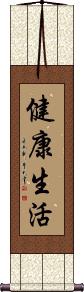
If you are into healthy living, 健康生活 might be an excellent selection for a wall scroll to hang in your home.
The first two characters speak of health, vitality, vigor, and being of sound body. The second two characters mean living or life (daily existence).
Heaven and Earth
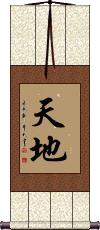
天地 is “Heaven and Earth” in Chinese, Japanese Kanji, and old Korean Hanja.
This title is used in many different contexts. It can be a general term but is also used by Buddhists and in other religions.
This can also be used to refer to all of nature, the universe, the top and bottom, the realm of life, or the sphere of existence.
Heaven Blesses the Diligent
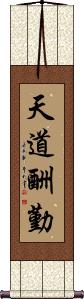
天道酬勤 can be interpreted in a few different ways:
God blesses those who work hard.
It is the way of Heaven to smile on the diligent.
God will reward those that are worthy.
Heaven blesses those who are diligent.
Whichever translation you like, a scroll like this on your wall may serve as a reminder to work hard because your diligence will pay off both in this life and the next.
Note: This can be pronounced in Korean, but it's not a commonly used term.
This in-stock artwork might be what you are looking for, and ships right away...

Gallery Price: $61.00
Your Price: $33.88

Gallery Price: $61.00
Your Price: $33.88

Gallery Price: $31.00
Your Price: $16.88
Gallery Price: $47.00
Your Price: $26.00


Gallery Price: $61.00
Your Price: $33.88

Gallery Price: $61.00
Your Price: $33.88

Gallery Price: $61.00
Your Price: $33.88
Gallery Price: $198.00
Your Price: $109.88
Gallery Price: $31.00
Your Price: $17.00

Gallery Price: $61.00
Your Price: $33.88

Gallery Price: $61.00
Your Price: $33.88

Gallery Price: $61.00
Your Price: $33.88
Gallery Price: $90.00
Your Price: $35.00