Asian Art Outpost

Adventures in Asian Art


Custom Martial Arts Chinese & Japanese Calligraphy Wall Scroll

We have many options to create artwork with Martial Arts characters on a wall scroll or portrait.

See our special page full of Martial Arts related words and phrases.
We also have specific pages for Karate, Aikido, Kung Fu, and Jujitsu.
If you need a different style of martial arts, just enter it in the calligraphy search box in the upper left of this page.

Quick links to words on this page...

  1. Martial Arts / Wu Shu
  2. Martial Arts
  3. Martial Arts Master
  4. Martial Arts Skills
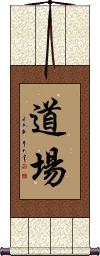
  5. Dojo / Martial Arts Studio
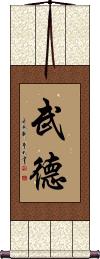
  6. Martial Morality...
  7. The Nature of Martial Arts
  8. Warrior Essence / Warrior Spirit / Martial
  9. Aikido
10. Mind of the Beginner
11. Rank Holder
12. Bruce Lee
13. The Spirit of Dragon and Tiger
14. Drunken Monkey
15. Drunken Monkey Kung Fu
16. Drunken Fist
17. Five Elements Tai Chi Fist
18. Goju Ryu
19. Goju Ryu Karate-Do
20. Heijoshin
21. Immovable Mind
22. Indomitable Spirit
23. Iron Palm
24. Iron Fist
25. Jing Mo / Jing Wu
26. Jita-Kyoei
27. Judo
28. Jujitsu / Jujutsu
29. Old Karate / Tang Hand Way / Tang Soo Do
30. Karate-do
31. Kenpo / Kempo / Quan Fa / Chuan Fa
32. Kempo Karate / Law of the Fist Empty Hand
33. Kobudo
34. Kodokan
35. Korean CKD Virtues
36. Kung Fu / Gong Fu
37. Kyuki-Do
38. Laughing Dragon Kung Fu
39. Lingering Mind
40. Master / Sifu / Shi Fu / Shifu
41. Sensei / Master / Teacher / Mister
42. Mind Like Water
43. Monkey Fist
44. Mushindo
45. No Mind / Mushin
46. Patience / Perseverance...
47. Purified Spirit / Enlightened Attitude
48. Pushing Hands / Tui Sau
49. Qi Gong / Chi Kung
50. Sakasa
51. Self-Restraint / Self-Control
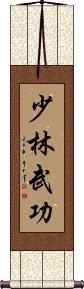
52. Shaolin Chuan / Shao Lin Quan
53. Shorinji Kempo / Kenpo
54. Shorin-Ryu
55. Shotokan
56. Shotokan Aikido
57. Shotokan Karate-Do
58. Southern Praying Mantis
59. Sticky Hands / Chi Sau
60. Sword Saint
61. Taekwondo
62. Teacher / Master / Old Sage
63. Uechi-Ryu Karate-Do
64. Wing Chun
65. Wing Chun Fist
66. Five Ancestors Fist
67. Xing Yi Quan
68. Heart of Judo
69. Zendo / The Zen Way

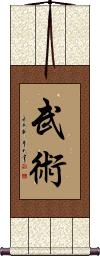
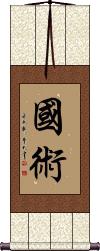
Martial Arts / Wu Shu

Chinese / Korean

wǔ shù
bujutsu
무술
武
術

This is the very Chinese way to express "Martial Arts". Some even use this word to directly describe Kung Fu. But this is a label that fits all disciplines from Karate to Kung Fu to Taekwondo.

Note: This also means Martial Arts with the same appearance in old Korean Hanja characters and is pronounced "musul" or "musur" in Korean.

While this is best if your audience is Chinese or Korean, this also means "martial arts" in Japanese.

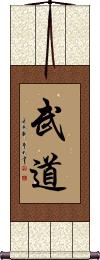
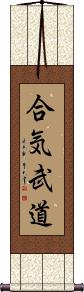
Martial Arts

Japanese

wǔ dào
budou
무도
武
道

This is more the Japanese way to say "Martial Arts", but it's understood in Korean Hanja and Chinese too. Some will use this title to mean chivalry (the conduct of a knight) or military art. The way this word is understood would depend on the context in which it is used.

The first character means "force" or "warlike" or "essence of a warrior".

The second character means "method", "path", and "the way". It is the same character used to describe/mean the philosophy of Taoism / Daoism.

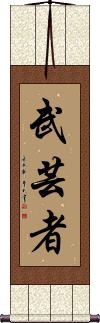
Martial Arts Master (Japanese Only)

wǔ yún zhě
bugeisha
무운자
武
芸
者

This is the Japanese Kanji title for "Martial Arts Master". It suggests that you have reached at least the level of black belt, and are probably to the level where you are ready to become an instructor.

Please consider carefully where you stand before ordering this phrase on a wall scroll. If you are not a master, this will make you look a bit foolish.

If you want to get this as a gift for your master at the dojo. Try to discreetly make sure this term is used in your school. Different schools and styles of Japanese martial arts use different terms. You may notice in the Romaji and the characters, this has the same characters as "geisha" which means "person skilled in arts" (what a geisha girl really is). The title here has the character for "martial", "warrior", and/or "military" in front of it. Therefore the literal translation is "martial art person".

These Kanji are valid Chinese characters and Korean Hanja, but this title does not really make sense in Chinese and not often used in Korean, though a Chinese or Korean would be able to guess the meaning by looking at the first and last characters.

Martial Arts Skills
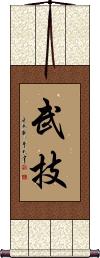
wǔ jì
bugi
무기
武
技

This can be translated as "martial arts skills", "warrior skills", or "military skills" depending on usage. In both Japanese and Chinese, rather than meaning martial arts, this speaks more to the skills that you posses in regards to martial arts. This phrase also has a light suggestion of "having an itch to show off these skills".

Dojo / Martial Arts Studio

dào cháng
dou jou
도장
道
場

This is the Japanese term for a room or hall in which martial arts are taught. This word is often spelled "dojo" which has become a word in the English lexicon. However, the true Romaji is "doujou" or "dōjō".

Please note: The Chinese definition of these characters is quite different. In Chinese, this is a place where Buddhist or Taoist mass is held. It could also be the place where spiritual or psychic events are performed.

Martial Morality
Martial Arts Ethics / Virtue

wǔ dé
butoku
무덕
武
德

This refers to the virtue, morality, and ethics that any practitioner of martial arts should posses. This can be used in both Chinese and Japanese in lieu of English terms such as "soldierly virtue", "good conduct" (military), "warrior ethics", and being honorable in regards to any fight or competition.

See Also...  Morality Of Mind | Morality Of Deed

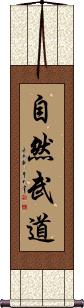
The Nature of Martial Arts

zì rán wǔ dào
shizen budo
自
然
武
道

The first two characters create a word that means nature, natural, or spontaneous. The last two characters are often translated as martial arts.

Back to the top of this page

Warrior Essence / Warrior Spirit / Martial


bu
武

This character is the essence or spirit of a warrior. This character is part of the word "wu shu" which is sometimes translated as "martial arts" or "kung fu".

In more modern speech and other context, this can mean military, martial, warlike, fierce, and perhaps violent, but usually as a prefix for a longer word or phrase.

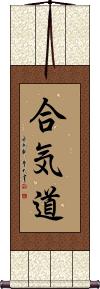
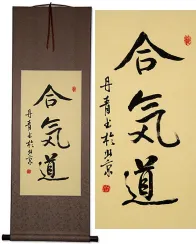
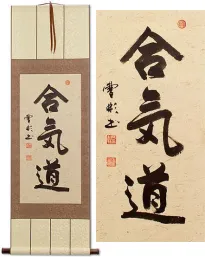
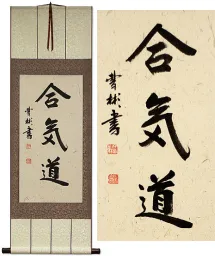
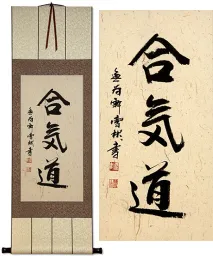
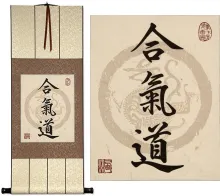
Aikido (Japanese)

Defensive form of martial arts

hé qì dào
ai ki dou
합기도
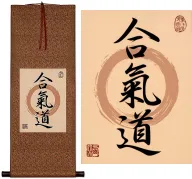
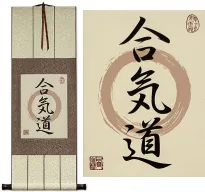
合
気
道

Aikido is often referred to as the defensive martial art. While aikido was born in Japan, it has become a somewhat famous form of defensive tactics taught to soldiers and Marines, as well as some law enforcement officers in the west.

Looking at the characters, the first means "union" or "harmony".
The second character means "universal energy" or "spirit".
The third means "way" or "method".

Please note that while these Japanese Kanji characters can be pronounced in Chinese, this word is not well-known in China and is not considered part of the Chinese lexicon.

Note: It is somewhat accepted that this is the origin of Hapkido in Korea. And other than a modern simplification to the middle Kanji of this 3-Kanji word, it is written the same in Korean Hanja.

More Aikido info.

See Also...  Hapkido

Mind of the Beginner

chū xīn
shoshin
初
心

This is often translated in Japanese as "beginner's mind". In Chinese, the dictionary definition is "one's original intention".

The first character means first, initial, primary, junior, beginning, or basic.

The second character means heart, mind, soul, or essence.

This is one of the five spirits of the warrior (budo), and is often used as a Japanese martial arts tenet. Under that context, places such as the Budo Dojo define it this way: The state of shoshin is that of a beginners mind. It is a state of awareness the remains always fully conscious, aware, and prepared to see things for the first time. The attitude of shoshin is essential to continued learning.

Back to the top of this page

Rank Holder

The One Who has Achieved Rank in Martial Arts

yǒu duàn zhě
yuu dan sha
유단자
有
段
者

This is a Japanese term for someone who holds rank in karate, judo, etc.
This term theoretically applies to anyone with rank (above white belt). However, some schools or dojos may reserve this title for a holder of a black belt.

I'd suggest that you only order this phrase if you have honestly reached this level.

This title does kind of make sense in Chinese, but only to those Chinese who practice "kong shou dao" (karate) or when used in the context of martial arts.

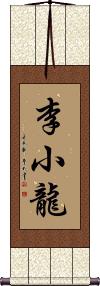
Bruce Lee

lǐ xiǎo lóng
bu ruu su ri
이소룡
李
小
龍

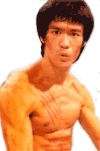
Bruce LeeMany people have no idea that Bruce Lee had a "real" Chinese name. In mainland China and Hong Kong he is known as "Li Xiao-Long". He kept his family name pronunciation (Li = Lee). This is a common family name that also means "plum".

His given name "Xiao-Long" literally means "little dragon". This is why you often see the character for dragon associated with Bruce Lee on various posters etc.

For a pronunciation lesson, the "X" in Romanized Chinese is pronounced like a "sh" sound but with your tongue at the bottom of your mouth. The vowel sound in "Long" is like the English "oh", not like the "ah" sound in the English word "long".

If you are a big Bruce Lee fan, you should know this information, and you should have this wall scroll hanging in your room or martial arts studio.

Note: Japanese use these same exact Chinese characters / Kanji to write Bruce Lee's real name (with different pronunciation - which is a bit like how the name "Bruce Lee" sounds in English).

See Also...  Kung Fu | Marital Arts

The Spirit of Dragon and Tiger

lóng hǔ jīng shén
ryu ko sei shin
龍
虎
精
神

This means the spirit of the dragon and tiger. It speaks to the vitality and vigor that is the nature of these two creatures.

Beyond "spirit", the second two characters can also mean mind, soul, or heart. Therefore, you can also say this means "Heart of the Dragon and Tiger", etc.

This is often titled as "Ryukoseishin" in many Japanese martial arts.

Back to the top of this page

Drunken Monkey

zuì hóu
醉
猴

This is the short title for Drunken Monkey (often used as a title for a style of martial arts or kung fu which mimics the movements of a drunk monkey). This martial arts style was inspired by the novel, "Journey to the West".

Drunken Monkey Kung Fu

zuì hóu gōng fu
醉
猴
功
夫

This is the title for Drunken Monkey Kung Fu (Gong Fu). The martial arts style inspired by the novel, "Journey to the West".

Drunken Fist

(A legitimate style of Kung Fu)

zuì quán
suiken
취권
醉
拳

Drunken Fist is a traditional Chinese martial art / technique of Kung Fu.

It is a northern style of martial art that imitates a drunk person in its movements. Many staggering movements serve to deceive the opponent and keep them off-balance.

Some consider Drunken Fist to be among the harder styles of martial arts due to the need for powerful joints and fingers.

See Also...  Drunken Monkey

Back to the top of this page

Five Elements Tai Chi Fist

wǔ xíng tài jí quán
go gyou tai kyoku ken
오행태극권
五
行
太
極
拳

This is a certain school or style of Tai Chi (Taiji). The characters literally mean "Five Elements Tai Chi Fist".

Notes:
In Taiwan, it would be Romanized as "Wu Hsing Tai Chi Chuan" - see the standard Mandarin method above in the gray box (used in mainland China and the official Romanization used by the Library of Congress).

The last three characters are sometimes translated as "Grand Ultimate Fist", so the whole thing can be "Five Elements Grand Ultimate Fist" if you wish.

I have not confirmed use of this title in Korean, but if it is used, it's probably only by martial arts enthusiasts. The pronunciation is correct as shown above for Korean.

Goju Ryu

gou juu ryuu
剛
柔
流

This is the title of the Goju-Ryu school / style of Karate / Japanese martial arts.

Goju Ryu Karate-Do

gou juu ryuu kara te dou
空
手
道
剛
柔
流

Characters shown
above are read
vertically, starting
from the right

This is the title of the Goju-Ryu Karate-Do school of martial arts.

Back to the top of this page

Heijoshin

píng cháng xīn
hei jou shin
평상심
平
常
心

This is the title Heijoshin, as associated with Kendo and Aikido schools of Japanese martial arts.

This is also a word in Japanese which can be translated as "one's self-possession" or "presence of mind".

In Chinese and Korean, this means "simplicity heart". In Chinese and Korean, this implies that you enjoy what you have, keep your heart in balance, and have no over-blown ambitions.

Immovable Mind

A Japanese martial arts title/concept

fu dou shin
부동심
不
動
心

The first two Kanji alone mean immobility, firmness, fixed, steadfastness, motionless, idle.

The last Kanji means heart, mind, soul, or essence.

Together, these three Kanji create a title that is defined as "immovable mind" within the context of Japanese martial arts. However, in Chinese it would mean "motionless heart" and in Korean Hanja, "wafting heart" or "floating heart".

This is one of the five spirits of the warrior (budo), and is often used as a Japanese martial arts tenet. Under that context, places such as the Budo Dojo define it this way: An unshakable mind and an immovable spirit is the state of fudoshin. It is courage and stability displayed both mentally and physically. Rather than indicating rigid, inflexibility, fudoshin describes a condition that is not easily upset by internal thoughts or external forces. It is capable of receiving a strong attack while retaining composure and balance. It receives and yields lightly, grounds to the earth, and reflects aggression back to the source.

Indomitable Spirit (Korean)

bǎi shé bù qū
백절불굴
百
折
不
屈

This Korean word means "indomitable spirit", at least, that is the way it is commonly translated in martial arts circles (Taekwondo, Hapkido, etc).

The literal translation is "[one] hundred [times] broken [still] don't succumb".
Or more naturally translated, "Even if attacked/beaten one hundred times, still be undaunted/indomitable".

This is also a word in Chinese, though rarely used in modern times.

Back to the top of this page

Iron Palm

tiě zhǎng
tetsu-tenohira
철장
鐵
掌

These two characters mean "iron palm", the martial arts technique taught by Brian Gray and others.

This term can mean different things to different people. The consensus is that rather than a type or style of martial arts, this is a technique for refining hand position and strengthening of hands in order to strike blows for with maximum force and effect.

The regime may include herbal treatments and special exercises to fortify the hands.

In more extreme versions, the carpals and metacarpal bones in the hand are systematically broken, so that when they heal, they will become stronger.

Japanese note: This does make sense in Japanese (though the version shown above is the ancient form of the first Kanji) this is far from a commonly-known term.

Iron Fist

Tie Quan / Tieh Chuan

tiě quán
tekken
철권
鐵
拳

This is a common theme used by various schools of martial arts.

The first character means "iron", but in some cases, can mean "indisputable".
The second character is fist.

Some schools use the older/Taiwanese way to Romanize the iron fist, so you may have seen it spelled "Tieh Chuan" instead of "Tie Quan". Neither way is technically incorrect.

Note that in Mandarin, the first part of the first character actually sounds like the English word "tea" blending into a soft "-eh" sound. The second character sounds a lot like "chew on", but as if it is one syllable.

鉄After WWII in Japan, the Kanji for iron was simplified. This new Kanji form is shown to the right. If you want this modern Japanese version, please click on the Kanji to the right, instead of the button above. The characters shown to the left would still be considered the old or ancient Japanese version of this title.

Jing Mo / Jing Wu

jīng wǔ
jing mo
정무
精
武

This two-character title is used for a certain type of martial arts. You can translate this roughly as "Excellent Marital Arts" or "Excellence in Martial Arts". You will notice that the second character is "wu" as in wushu (martial arts) and wushi (warrior).

More information can be found at the Jing Mo website. You should probably only order this if you are a member of this association.

Note that "jing mo" is the Cantonese pronunciation of these characters. In Mandarin, they are "jing wu".
Also used in Korean, but only by those involved with martial arts who can also read Korean Hanja (a small percentage of the population).

Back to the top of this page

Jita-Kyoei

Mutual Welfare and Benefit

ji ta kyou ei
自
他
共
榮

This can be translated a few different ways. Here are some possibilities:
Benefit mutually and prosper together.
Mutual welfare and benefit.
A learning concept of mutual benefit and welfare (that is applicable to all fields of society).
Mutual prosperity.

The first two characters are the easy to explain. They are "self" and "others". Together, these two characters create a word which means "mutual" (literally "me and them").

The third character can have different meanings depending on context. Here, it means "in common" or "to share".

The fourth character suggests the idea of "prosperity", "flourishing" or becoming "glorious".

It should be noted that these Kanji are used almost exclusively in the context of Judo martial arts. This is not a common or recognized Japanese phrase outside of Judo.

栄In modern Japanese Kanji, the last character looks like the image to the right. If you want this slightly-simplified version, please let us know when you place your order.

Judo

róu dào
judo
유도
柔
道

This is the martial art invented in Japan and known as "Judo" around the world.

Translated directly, it means "Gentle Way" or "Flexible Way"

More about Judo

Jujitsu / Jujutsu

róu shù
juu jutsu
유술
柔
術

This word has been somewhat incorrectly spelled and pronounced "Jujitsu" for some time in the English-speaking world. The correct Japanese Romaji is Jujutsu or Juujutsu.

A little background on the word: By combining the Kanji pronounced "Ju" (which means flexible, pliable, gentle, yielding) with the Kanji pronounced "Jutsu" (which means art, or technique), we get a meaning that can be translated as "flexible technique", "gentle art" or "yielding technique".
This word does make sense in Chinese as well, although pronounced, "rou shu" in China.

The Jujutsu system has a history in Japan that started well-before the 1600's. Some see this style as a variation of the "Empty Hand Method" (Karate-do). Even the samurai of old used some Jujutsu methods in defending themselves with their unarmed hands against weapons that could pierce their heavy armor.

There are convoluted relationships between various schools and systems of martial arts, but it's generally accepted that Jujutsu led to the development of Judo and a few other variations.

Back to the top of this page

Old Karate / Tang Hand Way / Tang Soo Do

táng shǒu dào
kara te do
당수도
唐
手
道

This is a very seldom-used title for Karate-do. This title uses a character which represents the Tang Dynasty of China. Thus, this is often translated as the "Tang Hand Way" or incorrectly, "Tang Fist Way". I have also seen some call it "China Hand Way".

There is not a lot of information on this title, but some believe that a simplified form of Kung Fu that started in China, and ended up very popular in Japan used this title initially. It was later changed in Japan to a different Karate title which means "Empty Hand" (as in, without weapons).

In Korean, this title represents a certain style of martial arts. From Korean, this is often romanized as "Tang Soo Do", "Tangsudo", "Dang Su Do", or "Dangsudo". The last two romanizations on that list are the official Korean government romanization, though martial arts schools tend to use other non-standard versions.

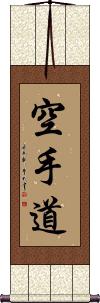
Karate-do

kōng shǒu dào
kara te dou
공수도
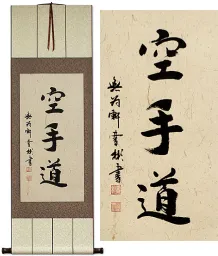
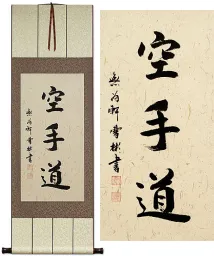
空
手
道

Credit is given that karate started in China, but migrated and became refined, and vastly popular in Japan. The literal meaning of these characters is "empty hand method". Karate is a martial art that uses no blades of weapons other than the "natural weapons" that God gave to humans (fists and feet). The last character somehow became optional, but the meaning of that character is "method" or "the way" as in Taoism / Daoism.

Kenpo / Kempo / Quan Fa / Chuan Fa

quán fǎ
kenpou
권법
拳
法

This form of martial arts can be translated in several ways. Some will call it "fist principles" or "the way of the fist", or even "law of the fist". The first character literally means fist. The second can mean law, method, way, principle or Buddhist teaching.

Kempo is really a potluck of martial arts. Often a combination of Chinese martial arts such as Shaolin Kung Fu with Japanese martial arts such as Karate, Jujutsu (Jujitsu), Aikido, and others. You may see the term "Kempo Karate" which basically means Karate with other disciplines added. In this way, Kempo becomes an adjective rather than a title or school of martial arts.

These facts will long be argued by various masters and students of Kempo. Even the argument as to whether it should be spelled "kenpo" or "Kempo" ensues at dojos around the world (the correct Romaji should actually be "kenpou" if you precisely follow the rules).

The benefit of Kempo is that the techniques are easier to learn and master compared to pure Kung Fu (wu shu). Students are often taught basic Karate moves, kicks, and punches before augmenting the basic skills with complex Kung Fu techniques. This allows students of Kempo achieve a level where they can defend themselves or fight in a relatively short amount of time (a few years rather than a decade or more).

Because the definition of this word is so fluid, I should make some notes here:

1. Purists in Okinawa will claim that "Okinawa Kenpo" or "Ryukyu Hon Kenpo" is the original and true version of this martial art from the old kingdom. There is actually little or no connection between Okinawa Kenpo and the way the word is used elsewhere.

2. In Chinese, where these characters are pronounced "quan fa" (sometimes Romanized as "chuan fa" because the Chinese-pinyin "q" actually sounds like an English "ch" sound), these characters do not hold the connotation of being a mixed martial art. It is simply defined as "the law of the fist".

3. In my Japanese dictionary, it oddly defines Kenpo as "Chinese art of self-defense". I personally don't feel this is the most common way that people perceive the word, but just something you should know.

Back to the top of this page

Kempo Karate / Law of the Fist Empty Hand
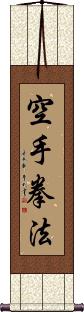
kōng shǒu quán fǎ
kara te ken pou
空
手
拳
法

The first two characters mean "karate" - technically they express "empty hand".

The last two express "fist law" which is Romanized from Japanese as "Kenpo" or "Kempo".

That "empty hand" translation can be understood better when you grasp the idea that karate is a martial art without weapons (other than the weapons organic to your body, such as your foot, hand, fist, etc). When you practice karate, you do so with empty hands (no weapons).

Note: There is also an antiquated way to write karate. It has the same pronunciation but a different first character which means "Tang" as in the Tang Dynasty. Some dojos use that form - let us know if you need that alternate form, and we'll add it for you.

Kobudo (Japanese)

gǔ wǔ dào
kubudou
古
武
道

This is the title for Kubudo, which can be defined as Okinawan weapons fighting.

The literal translation would be something like "Old Martial Way". The last two characters are often translated as "martial arts" so "Old Martial Arts" is another possible translation.

Please note that even though these are Chinese characters, and can be pronounced in Chinese, this is a Japanese only title. It is not often used nor understood in Chinese. So please consider this to only be appropriate for a Japanese audience.

Kodokan

kou dou kan
講
道
館

This is Kodokan. It's used to refer to a certain school or style of Judo. Some may use it as an adjective for other Japanese martial arts. Be careful in selecting the correct Kodokan, as there are two different titles that romanize as Kodokan.

Here's how the characters break down in meaning for this one:
1. Mutual Assistance or Association. Can also refer to a lecture, speech, or explaining something (as in teaching).
2. Way / Path (the Tao/Dao as in Taoism/Daoism)
3. Schoolroom / Building / Establishment / Mansion / Small Castle / Hall (of learning)

Altogether, you get something like, "The Path of Mutual Learning Hall".

More about Kodokan from the Institute of Kodokan.

Back to the top of this page

Korean CKD Virtues

qiān xùn zhèng zhí wēn róu rěn nài kè jǐ bù qū
겸손정직온유인내극기불굴
忍
耐
克
己
不
屈
謙
遜
正
直
溫
柔

Characters shown
above are read
vertically, starting
from the right

These are the virtues used by Choi Kwang Do Martial Arts.

This is a word list, containing these tenets:
1. Humility (Humble / Modesty)
2. Honesty (Integrity)
3. Gentleness
4. Perseverance (To Endure)
5. Self-Control (Self-Restraint)
6. Unbreakable Spirit (Unyielding / Unbending)

The characters shown here are the ancient Korean Hanja form of writing. If you wish for a Korean Hangul form of these tenets, we can arrange that with our Master Calligrapher Xing An-Ping.

Korean Pronunciation:
1. gyeom son
2. jeong jig
3. on yu
4. in nae
5. geug gi
6. bur gur


Kung Fu / Gong Fu

gōng fu
kan fu / ku fu
功
夫

One of the most famous types of martial arts in the world - and not just because of Bruce Lee.

Some translate the meaning as "Accomplishment by Great Effort". I think this is partially true, but directly translated it literally means "Merit/Achievement/Accomplishment Man". The word "fu" can sometimes mean "husband" or "porter", but in this case, it can only mean "man". However, few in China will think "man" when they hear the word "Gong Fu" spoken.

This term is also used for things other than martial arts. In fact, it's used to refer to a person with excellent skills in crafts that require a great deal of effort such as cooking, tea ceremonies, and calligraphy.

What a lot of people don't know is that the spelling of "Kung Fu" was actually taken from the old Wade Giles form of Romanization. Using this method, the sounds of the English "G" and "K" were both written as "K" and an apostrophe after the "K" told you it was supposed to sound like a "G". Nobody in the west knew this rule, so most people pronounce it with a "K-sound". And so Gong Fu will always be Kung Fu for most westerners.

Also, just to educate you a little more, the "O" in "Gong" has a sound like the English word "oh".

The popular Chinese dish "Kung Pao Chicken" suffers from the same problem. It should actually be "Gong Bao Chicken".

Historical note: Many will claim that Kung Fu was invented by the monks of the Shaolin monastery. This fact is argued in both directions by scholars of Chinese history. Perhaps it is more accurate to say that the Shaolin Monks brought the original fame to Kung Fu many generations ago.

Japanese note: While Japanese martial artists will recognize these characters, Katakana is more often used to approximate the pronunciation of "Kung Fu" with "カンフー". Some will argue as to whether this should be considered a Japanese word at all.

Kyuki-Do

Korean Martial Art

jī qì dào
격기도
擊
氣
道

This is the title of the Kyuki-Do form of Korean martial arts.

In Korean Hangul, it's 격기도.

While "Kyuki-Do" is the most common romanized form of this title, the official Korean romanization is actually "Gyeog Gi Do" or "Gyeoggi-Do".


The first character means to hit, strike, attack, rout, or break.
The second means "life energy" or "atmosphere".
The last means "the way" or "method".

FYI: The last two characters are the same as the last two in the titles Hapkido and Aikido.

I have included Mandarin Chinese pronunciation above, however, this term would only be known by Chinese people familiar with this style of martial arts. Consider this to be a Korean-only title.

Back to the top of this page

Laughing Dragon Kung Fu

xiào lóng gōng fu
소룡공부
笑
龍
功
夫

This is the title for a Martial Arts studio (custom-made at by request of the owner of the studio).

Lingering Mind

A Japanese martial arts title/concept

cán xīn
zan shin
殘
心

First off, this should only be used in context of Japanese martial arts. In Chinese, it's a rather sad title (like a broken heart). In Chinese, the first character alone means destroyed, spoiled, ruined, injured, cruel, oppressive, savage, incomplete, disabled. However, in Japanese, it's remainder, leftover, balance, or lingering.
The second character means heart, mind, soul, or essence in both languages.

This is one of the five spirits of the warrior (budo), and is often used as a Japanese martial arts tenet. Under that context, places such as the Budo Dojo define it this way: The spirit of zanshin is the state of the remaining or lingering spirit. It is often described as a sustained and heightened state of awareness and mental follow-through. However, true zanshin is a state of focus or concentration before, during, and after the execution of a technique, where a link or connection between uke and nage is preserved. Zanshin is the state of mind that allows us to stay spiritually connected, not only to a single attacker, but to multiple attackers and even an entire context; a space, a time, an event.

In modern Japan (and Simplified Chinese), they use a different version of the first character, as seen to the right. Click on this character to the right instead of the button above if you want this modern Japanese version of lingering mind / zanshin.

Master / Sifu / Shi Fu / Shifu

Martial Arts Teacher

shī fu
si fu
사부
師
傅

This means master in Chinese (occasionally used in Korean Hanja as well). In the context of Martial Arts, this is the master and teacher who instructs students.

In other contexts, this can simply mean "skilled worker".

Historically, this term has been used for a lot of things, such as, "The tutor of a king or emperor". But now it's more commonly used to mean, master worker, or qualified worker.

Currently, within the field of skilled labor, a master (shifu) is higher than a journeyman, and is considered to be one worthy to teach others.

Note: In the 1970's and 1980's this term was used as a common form of polite address between people. You might say, "master, do you know were Tian'anmen Square is?" to just a person on the street at that time. This usage has almost passed, however, for some reason, people still often refer to taxi cab drivers as "master" in China (though I think/hope this is fading).

Language notes: I've often seen this romanized as "sifu", this is actually the Cantonese romanization. In Mandarin Chinese, it's "shifu". The pronunciation in Mandarin is actually like "sure foo" (using typical English pronunciation). There's an "R-sound" in there, which is not obvious from the romanization. Many martial arts studios incorrectly pronounce this like "she foo". In Cantonese, it sounds like "Sea foo" (almost like "sea food", minus the "d" on the end).

This is kind of a weird selection for a calligraphy wall scroll, this entry is more for educational purposes. But you are welcome to buy it if you feel it's appropriate for your circumstances.

Back to the top of this page

Sensei / Master / Teacher / Mister

xiān shēng
sensei
선생
先
生

If you've taken even a single karate class in your life, you know this term. This is sensei, which is associated in the west with a master or instructor of karate, aikido, judo, and other Japanese martial arts.

In reality, this is a term of respect for almost any professional or skilled person (doctor, lawyer, teacher, etc). In some cases, it is used for musicians and artists who have achieved a certain level of fame, skill, or accomplishment.

It should be noted that this is also a courtesy title in Chinese, but more like calling someone "mister" or "gentleman". It doesn't really have the "master" or "teacher" meaning in Chinese - see our Chinese "Master / Sifu / Shi Fu" entry if your audience is Chinese.

In Korean Hanja, this means teacher, instructor, schoolmaster, or schoolmistress.

This entry is more for educational purposes. This is kind of a strange thing to put on a wall scroll. It's a title that is used more orally to show respect, rather than something written in calligraphy. If you feel that it is appropriate in your circumstances, we are very willing to create a piece of sensei Japanese calligraphy artwork for you.

Mind Like Water

Mizu No Kororo

mizu no kokoro
水
の
心

This is the Japanese Buddhist and martial arts phrase, "mizu no kokoro", which means, "mind like water" or "heart of water".

The phrase is a metaphor describing the pond that clearly reflects it’s surroundings when calm, but whose images are obscured once a pebble is dropped into its waters.

Monkey Fist

hóu quán
후권
猴
拳

This literally means what you think, it's the "Monkey Fist" school of Kung Fu. A style that mimics the punches and movements of monkeys and apes.

Becoming popular during the Qing Dynasty, this style can trace its origins back to as early as the Song Dynasty. Some of the romance and popularity of this style comes from the novel "Journey to the West" which features the Monkey King and his fighting skills.

This novel and martial arts style has spawned a stream of Hong Kong movies featuring the Monkey King, and other Kung Fu style variations such as "Drunken Monkey" and "Monkey Stealing Peaches" (a technique of disabling your opponent by grabbing and yanking on his testicles).

Note: This kind of makes sense in Korean Hanja and Japanese Kanji, but probably unknown by all Koreans and Japanese except those who have an interest in this form of Kung Fu.

Back to the top of this page

Mushindo

mu shin dou
無
心
道

This is the base title for Mushindo (without mind way). This is often coupled with a trailing word to make titles like Mushindo-Kai or Mushido-Kempo.

If you are looking for this title, you probably know more than I can tell you about this martial arts style.

No Mind / Mushin

wú xīn
mu shin
무심
無
心

In Japanese, this word means innocent, or one with no knowledge of good and evil. It literally means "without mind".

This is one of the five spirits of the warrior (budo), and is often used as a Japanese martial arts tenet. Under that context, places such as the Budo Dojo define it this way: "No mind, a mind without ego. A mind like a mirror which reflects and dos not judge." The original term was "mushin no shin", meaning, "mind of no mind." It is a state of mind without fear, anger, or anxiety. Mushin is often described by the phrase, "mizu no kokoro", which means, "mind like water". The phrase is a metaphor describing the pond that clearly reflects it’s surroundings when calm, but whose images are obscured once a pebble is dropped into its waters.

This has a good meaning in conjunction with Chan / Zen Buddhism in Japan. However, out of that context, it means mindlessness or absent-minded. To non-Buddhists in China, this is associated with doing something without thinking.
In Korean, this usually means indifference.

Use caution and know your audience before ordering this selection.

More info: Wikipedia: Mushin

Patience / Perseverance
To Endure / Tolerant

rěn nài
nintai
인내
忍
耐

Patience is quiet hope and trust that things will turn out right. You wait without complaining. You are tolerant and accepting of difficulties and mistakes. You picture the end in the beginning and persevere to meet your goals.

These characters can also mean "to endure", "restrain oneself" and in some context it can mean "perseverance" or "endurance".

This is also used as a tenet of Taekwondo and other Korean martial arts.

忍Note that when writing this as Kanji, Japanese will tend to write the first character in the form shown to the right. If you select our Japanese master calligrapher, please expect this Kanji form (yes, it's just one stroke that is slightly different in location, crossing another stroke in the Japanese Kanji form).

See Also...  Peace | Inner Peace | Harmony | Perseverance

Back to the top of this page

Purified Spirit / Enlightened Attitude

A Japanese martial arts title/concept

sen shin
先
心

The first Kanji alone means before, ahead, previous, future, precedence.

The second Kanji means heart, mind, soul, or essence.

Together, these two Kanji create a word that is defined as "purified spirit" or "enlightened attitude" within the context of Japanese martial arts.

This is one of the five spirits of the warrior (budo), and is often used as a Japanese martial arts tenet. Under that context, places such as the Budo Dojo define it this way: Senshin is a spirit that protects and harmonizes the universe. Senshin is a spirit of compassion that embraces and serves all humanity and whose function is to reconcile discord in the world. It holds all life to be sacred. It is the Buddha mind.

Pushing Hands / Tui Sau

tuī shǒu
推
手

The first character means "pushing".
The second character means "hand" (or "hands").

This term can be romanized as "Tui Sau", "Tui Sao", or from Mandarin, "Tui Shou".

If you are looking for this term, chances are, you already know the meaning within the context of Tai Chi and other martial arts.

Qi Gong / Chi Kung

qì gōng
kikou
기공
氣
功

Qigong is the title of a technique that is somewhere between a medical practice, meditation, and in some cases a religion. The definition is blurred depending on which school of Qigong you are following. In some cases, it is even incorporated with martial arts.

Some people (even Chinese people) mix this title with Tai Chi (Tai Qi) exercises.

Lately in China, people will claim to practice Tai Chi rather than Qigong because the Qigong title was recently used as a cover for an illegal pseudo-religious movement in China with the initials F.G. or F.D. (I can not write those names here for fear of our website being banned in China).

You can learn those names and more here: Further info about Qigong

If you are wondering about why I wrote "Qi Gong" and "Chi Kung" as the title of this calligraphy entry, I should teach you a little about the various ways in which Chinese can be Romanized. One form writes this as "Chi Kung" or "Chikung" (Taiwan). In the mainland and elsewhere, it is Romanized as "Qi Gong" or "Qigong". The actual pronunciation is the same in Taiwan, mainland, and Singapore Mandarin. Neither Romanization is exactly like English. If you want to know how to say this with English rules, it would be something like "Chee Gong" (but the "gong" has a vowel sound like the "O" in "go").

Romanization is a really confusing topic and has caused many Chinese words to be mispronounced in the west. One example is "Kung Pao Chicken" which should actually be more like "Gong Bao" with the "O" sounding like "oh" for both characters. Neither system of Romanization in Taiwan or the Mainland is perfect in my opinion and lead to many misunderstandings.


Back to the top of this page

Sakasa (Japanese)

sakasa
逆
さ

This is a Japanese word that means reverse, inversion, upside down, inverted, reverse, opposite, and in some context (especially without the secondary hiragana character) can mean wicked.

This word has some significance to those practicing certain forms of Japanese martial arts.

Note: The first character is kanji (originally a Chinese character now used in Japanese) it still holds the same meaning in Chinese. However, the secondary hiragana makes this a Japanese-only entry.

Self-Restraint / Self-Control

kè jǐ
kokki
극기
克
己

This word can be translated as "self-denial", "self-abnegation", "self-restraint", "self-discipline", "self-mastery" or selflessness.

As a tenet of Korean taekwondo, and other martial arts, this is often used with the title "self-control".

Shaolin Chuan / Shao Lin Quan

shǎo lín quán
소림권
少
林
拳

This is the title of the martial art (style of Kung Fu) that is taught to the monks and students in the Shaolin Buddhist Monastery. The addition of Chuan or Quan which means fist is what signifies that you are talking about this school or form of martial arts.

Back to the top of this page

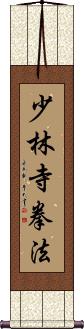
Shorinji Kempo / Kenpo

shào lín sì quán fǎ
shourinji kenpou
少
林
寺
拳
法

This is a specific type of martial arts in Japan that claims origins in the Kung Fu practiced in the original Shaolin Monastery of China.

The first three characters mean "Shaolin Monastery" and you might notice the Japanese is pronounced in a very similar way. This is because many words were "borrowed" from the original Chinese when Japan did not have a written language and simply absorbed Chinese characters into their language around the 5th century. When a Japanese word did not exist, the Chinese pronunciation was often absorbed as well as the written form.

The last two characters mean "fist law" or "method of the fist". It has long been argued as to whether the Japanese for these characters should be Romanized as "kempo" or "kenpo". The official method should be "kenpou" but it's common to drop the "u" that comes after the "o".

I imagine if you are looking for this title, you already know what it means, so the above is simply extra information that a student of Shorinji Kempo might want to know.

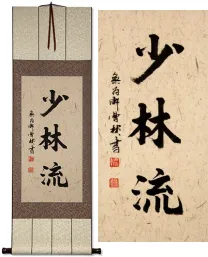
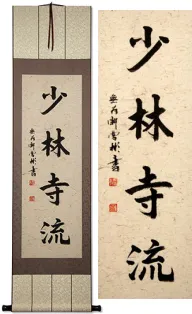
Shorin-Ryu (Japanese)

Little Forest Style

shào lín liú
shou rin ryu
少
林
流

This is a specific type of martial arts (Karate) from Okinawa, Japan.

The first two characters mean "Little Forest". This happens to be the exact title of Shaolin (the famous place in China that many believe to be the birthplace of Kung Fu).

The last character can mean a flow or movement, but in the context of martial arts, refers to a style, method, or in the extended meaning, a school.

Note: This title can be pronounced in Chinese, but would only be used or well-known by Chinese people who practice this Japanese martial art (rare). In most cases, consider this to be a "Japanese only" title.

小Note: This title is sometimes written with a different first character. It can be written with a character that means "little/small" (see first character to the right).

松But it can also be written with a first character which means "pine" (see second character to the right).

Click on the character above (instead of the button above) of your choice if you want one of these alternate forms.

Shotokan (Japanese Only)

sōng tāo guǎn
shou tou kan
송도관
松
濤
館

These Kanji characters make up the title for Shotokan.

This should be considered a Japanese-only title. It does make sense and is pronounceable in Chinese and Korean, but only as a title for a building (perhaps a martial arts hall) surrounded by pine trees. Also, the first two characters were simplified in both Japanese and Chinese. The third character was simplified in Chinese, but not Japanese.

Upon request, we can offer the fully traditional Chinese version, but be sure you know what you are asking for.

Note: This would be understood in Chinese and Korean Hanja by a person from those cultures who is familiar with martial arts and various schools of Japanese karate.

Back to the top of this page

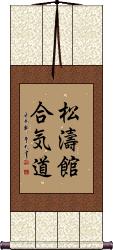
Shotokan Aikido (Japanese)

sōng tāo guǎn hé qì dào
shou tou kan ai ki dou
송도관합기도
合
気
道
松
濤
館

Characters shown
above are read
vertically, starting
from the right

This is the title for Shotokan Aikido in Japanese.

Note: Chinese and Korean pronunciations of these characters are included above, however, this title would only be understood in Chinese or Korean by someone who practices or is familiar with Shotokan Aikido. Please consider this title to be "Japanese only".

See Also...  Hapkido

Shotokan Karate-Do

Japanese Only

sōng tāo guǎn kōng shǒu dào
shou tou kan kara te dou
송도관공수도
松
濤
館
空
手
道

These Japanese Kanji make up the title for Shotokan Karate.

This should be considered a Japanese-only title. It does make sense and is pronounceable in Chinese and Korean, but only as a title for a building (perhaps a martial arts hall) surrounded by pine trees - followed by the characters for "The empty hand method" (kong shou dao / Karate-do). Also, the first two characters were simplified in both Japanese and Chinese. The third character was simplified in Chinese, but not Japanese.

Upon request, we can offer the fully traditional Chinese version, but be sure you know what you are asking for.

Note: This would be understood in Chinese and Korean Hanja by a person from those cultures who is familiar with martial arts and various schools of Japanese karate.

Southern Praying Mantis

nán pài táng láng
남파당랑
南
派
螳
螂

This can be translated literally as "Southern School Praying Mantis" or "Southern Style Praying Mantis".

Despite its name, the Southern Praying Mantis style of Chinese martial arts is unrelated to the Northern Praying Mantis style. Southern Praying Mantis is instead related most closely to fellow Hakka styles such as Dragon and more distantly to the Fujian family of styles that includes Fujian White Crane, Five Ancestors, and Wing Chun.

This style of martial arts focuses more on fighting skills rather than aesthetics.

Of course, you already knew that if you were looking for this term.

Note: This title can be pronounced and does have meaning in Korean, but only to Koreans familiar with Chinese martial arts.

Back to the top of this page

Sticky Hands / Chi Sau

chī shǒu
黐
手

The first character means "wood glue" or can be understood as "sticky" or "sticking".
The second character means "hand" (or "hands").

This term can be romanized as "Chi Sau", "Chi Sao", or from Mandarin, "Chi Shou".

This is a concept that comes from the Wing Chun (AKA: Ving Tsun, Wing Tsun, or Yong Chun) style of martial arts. If you are looking for this term, chances are, you already know the meaning within the context of Wing Chun.

Sword Saint (Japanese)

jiàn shèng
kensei
剣
聖

This can be translated as "Sword Saint", "God of the Sword" or "Saint of the Sword". This is an ancient Japanese title bestowed on a master with the greatest of skills in swordsmanship.

Keep in mind that this is an antiquated term. It will only be understood in the context of martial arts. The pronunciation "kensei" also applies to other words like "constitutional government" and power (these words have different kanji and are completely unrelated).

Notes: This is sometimes Romanized as "kensei", "ken sei", and incorrectly as "Kensai".

Chinese Note: This title is pronounceable in Chinese, but seldom, if ever used in Chinese. Also, the first character is an alternate character form for sword, currently only used in Japan.

Taekwondo

tái quán dào
te kon do
태권도
跆
拳
道

This is one of the most widespread types of martial arts in the world as well as being an Olympic sport. Taekwondo was born in Korea with influences of Chinese and Japanese styles, combined with traditional Korean combat skills. Some will define it as the "Korean art of empty-handed self-defense".

In the simplest translation, the first character means "kick", the second character can mean either "fist" or "punching" the third means "way" or "method". Altogether, you could say this is "Kick Punch Method". When heard or read in various Asian languages, all will automatically think of this famous Korean martial art. It is written the same in Japanese Kanji, Chinese, and Korean Hanja characters - so the appearance of the characters are rather universal. However, you should note that there is another way to write this in modern Korean Hangul characters which looks like the image to the right. Taekwondo Hangul Characters

We suggest the original Korean Hanja (Chinese characters) for a wall scroll, but if you really need the Hangul version, you must use master calligrapher Xing An-Ping: Order Taekwondo in Korean Hangul

Note: Taekwondo is sometimes Romanized as Tae-Kwondo, Tae Kwon Do, Taekwon-do, Taegwondo, Tae Gweon Do, Tai Kwon Do, Taikwondo, Taekwando, Tae Kwan Do and in Chinese Taiquandao, Tai Quan Dao, Taichuando, or Tai Chuan Tao.

Back to the top of this page

Teacher / Master / Old Sage

lǎo shī
老
師

If you looked at these characters literally, they mean "old teacher", "old master", or "old sage". Together, they are understood as "teacher". When you think about that, also realize that with age comes respect in Asian cultures. So calling someone old is actually a term of respect (not like the way we mean it in English). You could actually replace "old" with "respected" and be closer to the way this is meant in Chinese.

Teachers in general are more respected by their students and the population in China. When I was a teacher in China, I certainly felt that.

This term is also used for masters of certain fields. For instance, a master calligrapher would respectfully be addressed as "teacher". In fact, in this case, "master" and "teacher" are synonymous.

Other artists (especially those are are famous or accomplished) should be addressed with this term. Also, some schools of martial arts use this term of respect for their masters/teachers/instructors.

Uechi-Ryu Karate-Do

ue chi ryuu kara te dou
空
手
道
上
地
流

Characters shown
above are read
vertically, starting
from the right

This is the title of the Uechi-Ryu Karate-Do school of Okinawan martial arts. Uechi actually means "higher stages of practice" in a Buddhist context.

Wing Chun

yǒng chūn
wing2 cheun1
詠
春

This martial arts technique has an oral history (versus a written one) so very little can be said for sure about its origins.
Wing Chun (or Wing Cheun) is a Chinese martial art that emphasizes short combat strokes.

The characters literally mean "Singing Spring" (as in springtime).

If you are wondering, the spelling and pronunciation of this martial arts style in English comes from the Cantonese pronunciation of these characters. The second character sounds similar in both Mandarin and Cantonese, but the first is quite different.

Back to the top of this page

Wing Chun Fist

yǒng chūn quán
詠
春
拳

This is the title for the "Wing Chun" school of martial arts, but with the addition of the character for "fist" on the end. So this is "Wing Chun Fist".

Five Ancestors Fist

wǔ zǔ quán
五
祖
拳

This is a martial arts concept (some would say "school") known as Five Ancestors' Fist.

The first character means five.
The second means ancestor, forefather, or grandparents.
The third means fist.


The ancestors referred to by this title and whose attributes contribute to this style are as follows:
1. Grace of the White Crane.
2. Agility of the Monkey.
3. Precision and skill of Emperor Taizu (mythical great ancestor).
4. Power of Luohan (Buddist arhat).
5. Breath of Damo (founder of Buddhism, or the first Buddha).

Xing Yi Quan

Style of Martial Arts

xíng yì quán
ke i ken
形
意
拳

This is the title for the Xingyiquan style/form of Chinese martial arts involving explosive linear movements.

Some translate this as "shape-of-the-mind fist".

While pronunciation has never changed in Chinese, the old romanization was "Hsing I Chuan". This is still used in Taiwan.

This term is used in some Japanese martial arts circles where it's romanized from Japanese as keīken, keiiken, or keiken.

Back to the top of this page

Heart of Judo

róu
yawara
柔

This Kanji literally means flexible, pliable, gentle, or yielding. This is also the first Kanji of the Japanese martial arts titles of Judo and Jujutsu (Jujitsu). In those cases, it's pronounced "ju" in Japanese. However, alone, the classic pronunciation is "yawara". Some translate this Kanji (in the context of martial arts) as "The Heart of Judo".

Please note that this just means pliable, gentle, and yielding in Chinese and old Korean Hanja. They do know what Judo and Jujitsu are, but if this character is seen alone in China or Korea, people generally will not think of the martial arts context.

Zendo / The Zen Way

chán dào
zen dou
선도
禅
道

This title is used in certain contexts, but is not widely-known by the general population of China or Japan.

From Japanese, you will see this title romanized as "zendo", which is the brand name of a board game, and also a title used by some martial arts studios and karate dojos. Oddly, many translate this as "zen fist" although there is no "fist" in the title. If you literally translated this title, it would be "meditation way" or "meditation method".

In Chinese, this would be "chan dao" with the same literal meaning as the Japanese title. It's used in China by just a handful of martial arts styles/studios.

You should only order this title if you really understand the meaning, and it has some personal connection to you (such as practicing a martial art style that uses this title, or if you love the board game Zendo). Many who see your wall scroll will not be familiar with this title, and you'll have some explaining to do.

禪The first character can also be written in a more complex traditional way as shown to the right. Let us know in the special instructions for your calligraphy project if you want this style.

禅If you order this from the Japanese master calligrapher, the first character will automatically be written with an extra dot on top. This is the variant form of the original Chinese character which is commonly used in modern Japan Kanji. See sample to the right.


You should look at these ready-to-ship pieces of artwork:

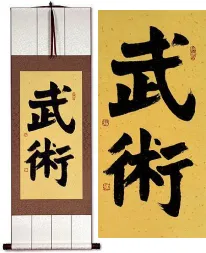
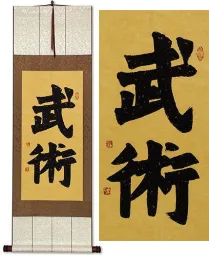
Martial Arts - Wushu - Chinese Characters Wall Scroll

Martial Arts
Wushu
Chinese Characters Wall Scroll

Discount Asian Art
This wushu wall scroll is discounted because of a minor silk flaw.


Compare: $71.00

Your Price: $39.00


More Info
ENERGY - SPIRITUAL ESSENSE Chinese / Japanese Kanji Painting

ENERGY
SPIRITUAL ESSENSE Chinese / Japanese Kanji Painting

This character is often associated with the internal energy, or life force that a person exerts when practicing martial arts.


Compare: $31.00

Your Price: $16.88


More Info
Kung Fu - Chinese Calligraphy Wall Scroll

Kung Fu
Chinese Calligraphy Wall Scroll

If you practice the ancient art of Chinese martial arts and have the "skill" level known as Kung Fu (or Gong Fu) this is the wall scroll for you.


Compare: $200.00

Your Price: $78.88


More Info
ENERGY - SPIRITUAL ESSENSE Chinese / Japanese Kanji Wall Scroll

ENERGY
SPIRITUAL ESSENSE Chinese / Japanese Kanji Wall Scroll

This Chinese characters and ancient Japanese Kanji is often associated with the internal energy, or life force that a person exerts when practicing martial arts. Some say this "qi", "ki" or "chi" is obtained in abundance through meditation.


Compare: $60.00

Your Price: $32.88


More Info
Kung Fu - Chinese Calligraphy Wall Scroll

Kung Fu
Chinese Calligraphy Wall Scroll

If you practice the ancient art of Chinese martial arts and have the "skill" level known as Kung Fu (or Gong Fu) this is the wall scroll for you.


Compare: $200.00

Your Price: $78.88


More Info
WARRIOR SPIRIT Chinese Character / Japanese Kanji Wall Scroll

WARRIOR SPIRIT Chinese Character / Japanese Kanji Wall Scroll

This character is often associated with Kung Fu and other Asian Martial Arts.


Compare: $142.00

Your Price: $78.88


More Info
Kung Fu - Chinese Calligraphy Wall Scroll

Kung Fu
Chinese Calligraphy Wall Scroll

If you practice the ancient art of Chinese martial arts and have the "skill" level known as Kung Fu (or Gong Fu) this is the wall scroll for you.


Compare: $200.00

Your Price: $78.88


More Info
Kung Fu - Chinese Calligraphy Wall Scroll

Kung Fu
Chinese Calligraphy Wall Scroll

If you practice the ancient art of Chinese martial arts and have the "skill" level known as Kung Fu (or Gong Fu) this is the wall scroll for you.


Compare: $200.00

Your Price: $78.88


More Info

A nice Chinese calligraphy wall scroll

The scroll that I am holding in this picture is a "medium size"
4-character wall scroll.
As you can see, it is a great size to hang on your wall.
(We also offer custom wall scrolls in larger sizes)

A professional Chinese Calligrapher

Professional calligraphers are getting to be hard to find these days.
Instead of drawing characters by hand, the new generation in China merely type roman letters into their computer keyboards and pick the character that they want from a list that pops up.

There is some fear that true Chinese calligraphy may become a lost art in the coming years. Many art institutes in China are now promoting calligraphy programs in hopes of keeping this unique form of art alive.

Trying to learn Chinese calligrapher - a futile effort

Even with the teachings of a top-ranked calligrapher in China, my calligraphy will never be good enough to sell. I will leave that to the experts.


A high-ranked Chinese master calligrapher that I met in Zhongwei

The same calligrapher who gave me those lessons also attracted a crowd of thousands and a TV crew as he created characters over 6-feet high. He happens to be ranked as one of the top 100 calligraphers in all of China. He is also one of very few that would actually attempt such a feat.


See: Our list of specifically Japanese Kanji Calligraphy Wall Scrolls. And, check out Our list of specifically old Korean Hanja Calligraphy Wall Scrolls.

The following table is only helpful for those studying Chinese (or Japanese), and perhaps helps search engines to find this page when someone enters Romanized Chinese or Japanese

Title
Characters 
Simplified
Traditional
Japanese Romaji
(Romanized Japanese)
Various forms of Romanized Chinese
Martial Arts / Wu Shu武术
武術
bujutsuwǔ shù
wu shu
wu3 shu4
wushu
Martial Arts武道
武道
budou
budo
wǔ dào
wu dao
wu tao
wu3 dao4
wudao
Martial Arts Master (Japanese Only)武芸者
武芸者
bugeishawǔ yún zhě
wu yun zhe
wu yün che
wu3 yun2 zhe3
wuyunzhe
Martial Arts Skills武技
武技
bugiwǔ jì
wu ji
wu chi
wu3 ji4
wuji
Dojo / Martial Arts Studio道场
道場
dou jou
doujou
do jo
dào cháng
dao chang
tao ch`ang
dao4 chang2
daochang
taochang
tao chang
Martial Morality / Martial Arts Ethics / Virtue武德
武德
butokuwǔ dé
wu de
wu te
wu3 de2
wude
The Nature of Martial Arts自然武道
自然武道
shizen budo
shizenbudo
zì rán wǔ dào
zi ran wu dao
tzu jan wu tao
zi4 ran2 wu3 dao4
ziranwudao
Warrior Essence / Warrior Spirit / Martial
bu
wu
wu3
wu
Aikido (Japanese)合気道 (Modern Japanese)
合氣道 (Old Japanese/Chinese)
ai ki dou
aikidou
ai ki do
hé qì dào
he qi dao
ho ch`i tao
he2 qi4 dao4
heqidao
hochitao
ho chi tao
Mind of the Beginner初心
初心
shoshinchū xīn
chu xin
ch`u hsin
chu1 xin1
chuxin
chuhsin
chu hsin
Rank Holder有段者
有段者
yuu dan sha
yuudansha
yu dan sha
yǒu duàn zhě
you duan zhe
yu tuan che
you3 duan4 zhe3
youduanzhe
Bruce Lee李小龙
李小龍
bu ruu su ri
buruusuri
bu ru su ri
lǐ xiǎo lóng
li xiao long
li hsiao lung
li3 xiao3 long2
lixiaolong
The Spirit of Dragon and Tiger龙虎精神
龍虎精神
ryu ko sei shin
ryukoseishin
lóng hǔ jīng shén
long hu jing shen
lung hu ching shen
long2 hu3 jing1 shen2
longhujingshen
Drunken Monkey醉猴
醉猴
n/azuì hóu
zui hou
tsui hou
zui4 hou2
zuihou
Drunken Monkey Kung Fu醉猴功夫
醉猴功夫 / 醉猴功伕
n/azuì hóu gōng fu
zui hou gong fu
tsui hou kung fu
zui4 hou2 gong1 fu
zuihougongfu
Drunken Fist醉拳
醉拳
suikenzuì quán
zui quan
tsui ch`üan
zui4 quan2
zuiquan
tsuichüan
tsui chüan
Five Elements Tai Chi Fist五行太极拳
五行太極拳
go gyou tai kyoku ken
gogyoutaikyokuken
go gyo tai kyoku ken
wǔ xíng tài jí quán
wu xing tai ji quan
wu hsing t`ai chi ch`üan
wu3 xing2 tai4 ji2 quan2
wuxingtaijiquan
wuhsingtaichichüan
wu hsing tai chi chüan
Goju Ryu刚柔流
剛柔流
gou juu ryuu
goujuuryuu
go ju ryu
n/a
Goju Ryu Karate-Do刚柔流空手道
剛柔流空手道
gou juu ryuu kara te dou
goujuuryuukaratedou
go ju ryu kara te do
n/a
Heijoshin平常心
平常心
hei jou shin
heijoushin
hei jo shin
píng cháng xīn
ping chang xin
p`ing ch`ang hsin
ping2 chang2 xin1
pingchangxin
pingchanghsin
ping chang hsin
Immovable Mind不動心
不動心
fu dou shin
fudoushin
fu do shin
n/a
Indomitable Spirit (Korean)百折不屈
百折不屈
n/abǎi shé bù qū
bai she bu qu
pai she pu ch`ü
bai3 she2 bu4 qu1
baishebuqu
paishepuchü
pai she pu chü
Iron Palm铁掌
鐵掌
tetsu-tenohiratiě zhǎng
tie zhang
t`ieh chang
tie3 zhang3
tiezhang
tiehchang
tieh chang
Iron Fist铁拳 / 鉄拳
鐵拳
tekken
teken
tiě quán
tie quan
t`ieh ch`üan
tie3 quan2
tiequan
tiehchüan
tieh chüan
Jing Mo / Jing Wu精武
精武
n/ajīng wǔ
jing wu
ching wu
jing1 wu3
jingwu
Jita-Kyoei自他共荣 / 自他共栄
自他共榮
ji ta kyou ei
jitakyouei
ji ta kyo ei
n/a
Judo柔道
柔道
judoróu dào
rou dao
jou tao
rou2 dao4
roudao
Jujitsu / Jujutsu柔术
柔術
juu jutsu
juujutsu
ju jutsu
róu shù
rou shu
jou shu
rou2 shu4
roushu
Old Karate / Tang Hand Way / Tang Soo Do唐手道
唐手道
kara te do
karatedo
táng shǒu dào
tang shou dao
t`ang shou tao
tang2 shou3 dao4
tangshoudao
tangshoutao
tang shou tao
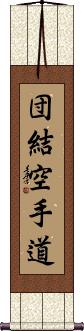
Karate-do空手道
空手道
kara te dou
karatedou
kara te do
kōng shǒu dào
kong shou dao
k`ung shou tao
kong1 shou3 dao4
kongshoudao
kungshoutao
kung shou tao
Kenpo / Kempo / Quan Fa / Chuan Fa拳法
拳法
kenpou
kenpo
quán fǎ
quan fa
ch`üan fa
quan2 fa3
quanfa
chüanfa
chüan fa
Kempo Karate / Law of the Fist Empty Hand空手拳法
空手拳法
kara te ken pou
karatekenpou
kara te ken po
kōng shǒu quán fǎ
kong shou quan fa
k`ung shou ch`üan fa
kong1 shou3 quan2 fa3
kongshouquanfa
kungshouchüanfa
kung shou chüan fa
Kobudo (Japanese)古武道
古武道
kubudou
kubudo
gǔ wǔ dào
gu wu dao
ku wu tao
gu3 wu3 dao4
guwudao
Kodokan讲道馆
講道館
kou dou kan
koudoukan
ko do kan
n/a
Korean CKD Virtues谦逊正直温柔忍耐克己不屈
謙遜正直溫柔忍耐克己不屈
n/aqiān xùn zhèng zhí wēn róu rěn nài kè jǐ bù qū
qian xun zheng zhi wen rou ren nai ke ji bu qu
ch`ien hsün cheng chih wen jou jen nai k`o chi pu ch`ü
qian1 xun4 zheng4 zhi2 wen1 rou2 ren3 nai4 ke4 ji3 bu4 qu1
chien hsün cheng chih wen jou jen nai ko chi pu chü
Kung Fu / Gong Fu功夫
功夫
kan fu / ku fu
kanfu/kufu
gōng fu
gong fu
kung fu
gong1 fu
gongfu
Kyuki-Do击气道
擊氣道
n/ajī qì dào
ji qi dao
chi ch`i tao
ji1 qi4 dao4
jiqidao
chichitao
chi chi tao
Laughing Dragon Kung Fu笑龙功夫
笑龍功夫
n/axiào lóng gōng fu
xiao long gong fu
hsiao lung kung fu
xiao4 long2 gong1 fu
xiaolonggongfu
Lingering Mind残心
殘心
zan shin
zanshin
cán xīn
can xin
ts`an hsin
can2 xin1
canxin
tsanhsin
tsan hsin
Master / Sifu / Shi Fu / Shifu师傅
師傅
n/ashī fu
shi fu
shih fu
shi1 fu
shifu
Sensei / Master / Teacher / Mister先生
先生
senseixiān shēng
xian sheng
hsien sheng
xian1 sheng1
xiansheng
Mind Like Water水の心
水の心
mizu no kokoro
mizunokokoro
n/a
Monkey Fist猴拳
猴拳
n/ahóu quán
hou quan
hou ch`üan
hou2 quan2
houquan
houchüan
hou chüan
Mushindo无心道
無心道
mu shin dou
mushindou
mu shin do
n/a
No Mind / Mushin无心
無心
mu shin
mushin
wú xīn
wu xin
wu hsin
wu2 xin1
wuxin
Patience / Perseverance / To Endure / Tolerant忍耐
忍耐
nintairěn nài
ren nai
jen nai
ren3 nai4
rennai
Purified Spirit / Enlightened Attitude先心
先心
sen shin
senshin
n/a
Pushing Hands / Tui Sau推手
推手
n/atuī shǒu
tui shou
t`ui shou
tui1 shou3
tuishou
tuishou
tui shou
Qi Gong / Chi Kung气功
氣功
kikou
kiko
qì gōng
qi gong
ch`i kung
qi4 gong1
qigong
chikung
chi kung
Sakasa (Japanese)逆さ
逆さ
sakasan/a
Self-Restraint / Self-Control克己
克己 / 剋己
kokki
koki
kè jǐ
ke ji
k`o chi
ke4 ji3
keji
kochi
ko chi
Shaolin Chuan / Shao Lin Quan少林拳
少林拳
n/ashǎo lín quán
shao lin quan
shao lin ch`üan
shao3 lin2 quan2
shaolinquan
shaolinchüan
shao lin chüan
Shorinji Kempo / Kenpo少林寺拳法
少林寺拳法
shourinji kenpou
shourinjikenpou
shorinji kenpo
shào lín sì quán fǎ
shao lin si quan fa
shao lin ssu ch`üan fa
shao4 lin2 si4 quan2 fa3
shaolinsiquanfa
shaolinssuchüanfa
shao lin ssu chüan fa
Shorin-Ryu (Japanese)少林流
少林流
shou rin ryu
shourinryu
sho rin ryu
shào lín liú
shao lin liu
shao4 lin2 liu2
shaolinliu
Shotokan (Japanese Only)松涛館
鬆濤館
shou tou kan
shoutoukan
sho to kan
sōng tāo guǎn
song tao guan
sung t`ao kuan
song1 tao1 guan3
songtaoguan
sungtaokuan
sung tao kuan
Shotokan Aikido (Japanese)松涛館合気道 (Modern Japanese)
鬆濤館合氣道 (Old Japanese/Chinese)
shou tou kan ai ki dou
shoutoukanaikidou
sho to kan ai ki do
sōng tāo guǎn hé qì dào
song tao guan he qi dao
sung t`ao kuan ho ch`i tao
song1 tao1 guan3 he2 qi4 dao4
songtaoguanheqidao
sungtaokuanhochitao
sung tao kuan ho chi tao
Shotokan Karate-Do松涛館空手道
鬆濤館空手道
shou tou kan kara te dou
shoutoukankaratedou
sho to kan kara te do
sōng tāo guǎn kōng shǒu dào
song tao guan kong shou dao
sung t`ao kuan k`ung shou tao
song1 tao1 guan3 kong1 shou3 dao4
songtaoguankongshoudao
sungtaokuankungshoutao
sung tao kuan kung shou tao
Southern Praying Mantis南派螳螂
南派螳螂
n/anán pài táng láng
nan pai tang lang
nan p`ai t`ang lang
nan2 pai4 tang2 lang2
nanpaitanglang
nanpaitanglang
nan pai tang lang
Sticky Hands / Chi Sau黐手
黐手
n/achī shǒu
chi shou
ch`ih shou
chi1 shou3
chishou
chihshou
chih shou
Sword Saint (Japanese)剣圣
剣聖 / 剣聖
kenseijiàn shèng
jian sheng
chien sheng
jian4 sheng4
jiansheng
Taekwondo跆拳道
跆拳道
te kon do
tekondo
tái quán dào
tai quan dao
t`ai ch`üan tao
tai2 quan2 dao4
taiquandao
taichüantao
tai chüan tao
Teacher / Master / Old Sage老师
老師
n/alǎo shī
lao shi
lao shih
lao3 shi1
laoshi
Uechi-Ryu Karate-Do上地流空手道
上地流空手道
ue chi ryuu kara te dou
uechiryuukaratedou
ue chi ryu kara te do
n/a
Wing Chun咏春
詠春
n/ayǒng chūn
yong chun
yung ch`un
yong3 chun1
yongchun
yungchun
yung chun
Wing Chun Fist咏春拳
詠春拳
n/ayǒng chūn quán
yong chun quan
yung ch`un ch`üan
yong3 chun1 quan2
yongchunquan
yungchunchüan
yung chun chüan
Five Ancestors Fist五祖拳
五祖拳
n/awǔ zǔ quán
wu zu quan
wu tsu ch`üan
wu3 zu3 quan2
wuzuquan
wutsuchüan
wu tsu chüan
Xing Yi Quan形意拳
形意拳
ke i ken
keiken
xíng yì quán
xing yi quan
hsing i ch`üan
xing2 yi4 quan2
xingyiquan
hsingichüan
hsing i chüan
Heart of Judo
yawararóu
rou
jou
rou2
rou
Zendo / The Zen Way禅道
禅道 / 禪道
zen dou
zendou
zen do
chán dào
chan dao
ch`an tao
chan2 dao4
chandao
chantao
chan tao

If you have not set up your computer to display Chinese, the characters in this table probably look like empty boxes or random text garbage.
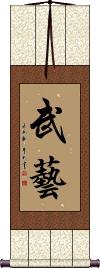
This is why I spent hundreds of hours making images so that you could view the characters in the "martial arts" listings above.
If you want your Windows computer to be able to display Chinese characters you can either head to your Regional and Language options in your Win XP control panel, select the [Languages] tab and click on [Install files for East Asian Languages]. This task will ask for your Win XP CD to complete in most cases. If you don't have your Windows XP CD, or are running Windows 98, you can also download/run the simplified Chinese font package installer from Microsoft which works independently with Win 98, ME, 2000, and XP. It's a 2.5MB download, so if you are on dial up, start the download and go make a sandwich.

Some people may refer to this entry as Kanji, Characters, in Mandarin Chinese, Characters, in Chinese Writing, in Japanese Writing, in Asian Writing, Ideograms, Chinese symbols, Hieroglyphics, Glyphs, in Chinese Letters, Hanzi, in Japanese Kanji, Pictograms, in the Chinese Written-Language, or in the Japanese Written-Language.


Chinese Martial Arts
A guide to Chinese martial arts focusing on styles of kung fu, history, practise, ... Chinese Martial Arts. Jun 1, 2002. Black Belt ...

ChinaFromInside.com presents... Jarek's Chinese Martial Arts Pages: HOME
... and video materials on Chinese martial arts released in Mainland China, most ... be helpful to all of us who look for true achievement in Chinese martial arts. ...

Chinese Internal Martial Arts
page about chinese internal martial arts ... THE CHINESE INTERNAL MARTIAL ARTS ... of health and self defense, the Chinese martial arts are some of the best means ...

Chinese Martial Arts
WebMaster. 240 Arlington Street, Acton ?MA ?01720 (978) 635-1090 ...

AN INTRODUCTION TO CHINESE MARTIAL ARTS
This spreading of Chinese Wushu has interested martial-arts researchers; some ... Traditionally, Chinese martial arts are classified by one of three methods: ...

Chinese Martial Arts
... burden he was educated in martial arts by an old master called ... In ancient Chinese, the ideogram for "fist" is a generic reference to the martial arts. ...

Terry Chan's Chinese Martial Arts Page
Various articles and links about Chinese internal martial arts. ... CHINESE INTERNAL MARTIAL ARTS ... overview article on Chinese martial arts written by Liang ...

Chinese martial arts: Information from Answers.com
For a list of styles, see List of Chinese martial arts ... Chinese martial arts can be traced back to the Zhou Dynasty in the 12th century ...

Chinese Martial Arts Institute - Welcome!
Chinese Martial Arts Institute provides a safe and family-oriented martial arts experience for ... The Chinese martial arts, "Wu Shu" in China or "Kung Fu" in ...

Chinese Styles
... Virtual Library: Martial Arts provides extensive links to Chinese Martial Arts. ... good Martial Arts book? Check out the Virtual Bookstore: Martial Arts for ...

Chinese Martial Arts Center
... goal is to teach traditional Chinese Martial Arts, and to pass down the ... History: Chinese Martial arts (Wushu), have been created for the development of ...

Chinese Martial Arts and Yoga | The Center for Body-Mind Harmony | Akron, Ohio
... CLASSES IN TRADITIONAL CHINESE INTERNAL AND EXTERNAL MARTIAL ARTS AS WELL AS STRETCH AND TONE. ... classes in traditional Chinese Martial Arts and Yoga, as ...

AAU - Chinese Martial Arts
2007 AAU Chinese Martial Arts. Division National Championships. Date of Event: ... 2006 AAU Chinese Martial Arts. National Championship. Saturday, September ...

Japanese Martial Arts
Welcome to Horace Mann's Webpage on: Traditional Japanese Martial Arts: ... these martial arts were brought from China, but the Japanese further developed ...

Japanese Martial Arts
Within five years he had become the idol of Japanese martial arts circles. ... adapted or incorporated by virtually all other Japanese open-handed martial arts. ...

Japanese Martial Arts
Lately, martial arts fever has hit Japan, and Japanese young people are ... The styles of Japanese martial arts are different, but they have the same "soul, ...

Japanese Arts History
Japanese martial arts are more straight line fighting styles, than the circular ... in the West, Japanese arts range from empty hand martial systems to joint ...

Japanese Martial Arts Character Dictionary
... is an excellent reference for any student of the Japanese Martial Arts. ... challenge of learning the terminology of Japanese martial arts. ...

Japanese Calligraphy for the Martial Arts
Martial Arts Calligraphy by Master Calligrapher Eri Takase ... Japanese Martial Arts and Calligraphy are tightly connected with a tradition ...

Japanese Styles
... Virtual Library: Martial Arts provides extensive links to Japanese Martial Arts. ... good Martial Arts book? Check out the Virtual Bookstore: Martial Arts for ...

History of Martial Arts
Korean Martial Arts - Hwa Rang Do - Tae Soo Do ... Tai Chi Chuan - Kung Fu - Wu Shu. Japanese Martial Arts - Aikido - Karate - Judo - Kendo - Jujutsu ...

Japanese Martial Arts
Martial Arts. Judo. about the martial art of Judo ("the gentle way") Karate ... The world's largest selection of martial arts products in the world! ...

Keen's Martial Arts Academy
Specializing in traditional Japanese Martial Arts Training. ... We offer training in Traditional Japanese Martial Arts and more. ...

Japanese Sword Arts
... Martial Arts of Kendo and Iaido, as well as Japanese sword arts in general. ... This section of the VL: Martial Arts is concerned with Japanese sword arts. ...

Japanese Martial Arts Center - Ann Arbor Michigan - Judo Jujutsu Iaido Meditation
The Japanese Martial Arts Center (JMAC) in Ann Arbor Michigan offers traditional ... Tokyo Champion and author of many books and articles on Japanese martial arts. ...

MartialArtsMart.com - Japanese Dictionary of Martial Arts
MartialArtsMart's 30, 000 square-foot brick-and-mortar warehouse near San ... The Encyclopedic Japanese-English Dictionary of the Japanese Martial Arts The ...

Custom Martial Arts Certificates hand-lettered by Master Japanese Calligrapher Eri Takase
... all of the requirements MARTIAL ARTS STYLE/SCHOOL for the specified ... Takase's column in Martial Arts Insider Magazine: How To Write Names in Japanese ...

Did you like this? Share it:


Copyright Oriental Outpost 2002-2012   -   All Rights Reserved
Image Use Policy Privacy Policy