Custom Monkey Chinese Calligraphy Wall Scroll
We have many options to create artwork with the character/symbol for Monkey on a wall scroll or portrait.
If you want to create a cool Monkey wall scroll, this is the place. Below you will find a few Asian symbols that express the idea of Monkey.
See our Chinese Zodiac and Animal Signs webpage.
1. Monkey
4. Monkey / Ape
5. Monkey Fist
6. Monkey King
8. Monkey Fist
10. Water Monkey
11. Wood Monkey
12. Fire Monkey
13. Earth Monkey
15. Drunken Fist
17. Wukong / Goku
Monkey
Year of the Monkey / Zodiac Sign
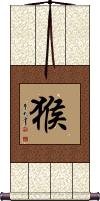
猴 is the monkey character in Chinese.
猴 means ape in Japanese due to an error made long ago as Japan absorbed Chinese characters.
If you were born in the year of the monkey, you . . .
Are smart, brave, active, and competitive.
Like new things.
Have a good memory.
Are quick to respond
Have an easy time winning people's trust.
Are, however, not very patient.
See also our Chinese Zodiac page.
Note: This character does have the meaning of monkey in Korean Hanja but is not used very often.
Drunken Monkey
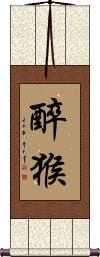
醉猴 is the short title for Drunken Monkey (often used as a title for a style of martial arts or kung fu which mimics the movements of a drunk monkey).
This martial arts style was inspired by the novel, “Journey to the West.”
See Also: Monkey Fist
Drunken Monkey
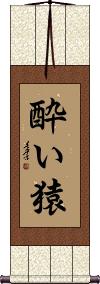
Drunken Monkey Kung Fu
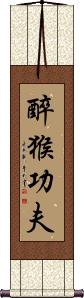
醉猴功夫 is the title for Drunken Monkey Kung Fu (Gong Fu).
The martial arts style was inspired by the novel, “Journey to the West.”
See Also: Monkey Fist
Monkey / Ape
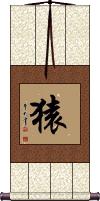
猿 is one of those cases when an error was made as Chinese characters were absorbed into the Japanese language during the 5th century.
In Japanese, this means monkey.
In Chinese, this means ape.
The Japanese word for ape means monkey in Chinese, so you can see how they were simply reversed.
Monkey Fist
Saruken
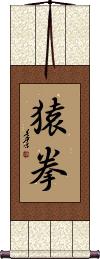
猿拳 is the Japanese martial arts title, “Monkey Fist,” referring to Monkey-Style Kung Fu.
猿拳 is very similar to a Chinese term that uses a different first character (the characters for ape and monkey were reversed when Japan borrowed Chinese characters, so this would be “Ape Fist” if a Chinese person read it).
Monkey King
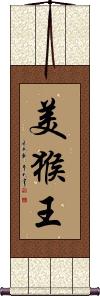
美猴王 is the specific title for “Monkey King.”
A character made famous by the ancient novel Journey to the West.
It literally means “Handsome/Beautiful Monkey King.”
See Also: Monkey Fist | Drunken Monkey
Monkey King
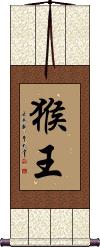
猴王 is the short title for “Monkey King.” This can refer to the character made famous by the ancient novel Journey to the West.
This literally reads “Monkey King.” However, this title is open to interpretation and could be used for someone who is the boss of the primate exhibit at the zoo or certain characters in Chinese opera.
See Also: Monkey Fist | Drunken Monkey
Monkey Stealing Peaches
Martial arts term
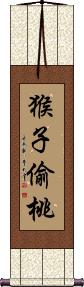
猴子偷桃 is a martial arts term that I find hilarious. I thought Stephen Chow had made this up for his Monkey King movie. After some research, it turns out to be real.
This can be translated as “monkey stealing peaches” or “monkey steals the peach.” It refers to distracting an opponent with one hand and seizing his testicles with the other.
In colloquial Chinese speech, this can refer to grabbing somebody by the balls (without any martial arts technique to the grabbing).
Monkey Fist
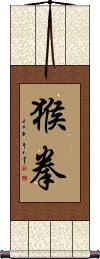
猴拳 literally means what you think, it's the “Monkey Fist” school of Kung Fu. A style that mimics the punches and movements of monkeys and apes.
Becoming popular during the Qing Dynasty, this style can trace its origins back to as early as the Song Dynasty. Some of the romance and popularity of this style comes from the novel “Journey to the West” which features the Monkey King and his fighting skills.
This novel and martial arts style has spawned a stream of Hong Kong movies featuring the Monkey King and other Kung Fu style variations such as “Drunken Monkey” and “Monkey Stealing Peaches” (a technique of disabling your opponent by grabbing and yanking on his testicles).
Note: This kind of makes sense in Korean Hanja and Japanese Kanji but probably unknown by all Koreans and Japanese except those who have an interest in this form of Kung Fu.
Yaen / Wild Monkey
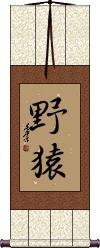
This means wild monkey in Japanese.
Also refers to a 1970 Japanese film of the same name.
Water Monkey
The Year of the Water Monkey
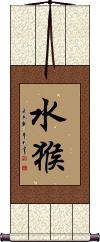
水猴 is Water Monkey in Chinese.
In the Chinese zodiac and sexagenary (60-year) cycle, this combination occurs in years that include 1872, 1932, 1992, and 2052.
In the sexagenary cycle, this year is represented by 壬申.
Wood Monkey
The Year of the Wood Monkey
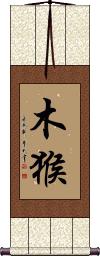
木猴 is Wood Monkey in Chinese.
In the Chinese zodiac and sexagenary (60-year) cycle, this combination occurs in years that include 1884, 1944, 2004, and 2064.
In the sexagenary cycle, this year is represented by 甲申.
Fire Monkey
The Year of the Fire Monkey
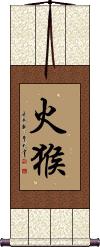
火猴 is Fire Monkey in Chinese.
In the Chinese zodiac and sexagenary (60-year) cycle, this combination occurs in years that include 1896, 1956, 2016, and 2076.
In the sexagenary cycle, this year is represented by 丙申.
Earth Monkey
The Year of the Earth Monkey
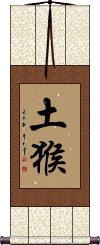
土猴 is Earth Monkey in Chinese.
In the Chinese zodiac and sexagenary (60-year) cycle, this combination occurs in years that include 1908, 1968, 2028, and 2088.
In the sexagenary cycle, this year is represented by 戊申.
Golden/Metal Monkey
The Year of the Golden/Metal Monkey
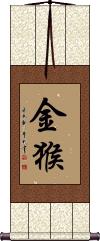
金猴 is Golden/Metal Monkey in Chinese.
In the Chinese zodiac and sexagenary (60-year) cycle, this combination occurs in years that include 1920, 1980, 2040, and 2100.
In the sexagenary cycle, this year is represented by 庚申.
Drunken Fist
(A legitimate style of Kung Fu)
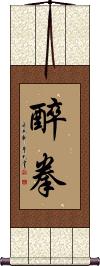
醉拳 is Drunken Fist, a traditional Chinese martial art/technique of Kung Fu.
It is a northern style of martial art that imitates a drunk person in its movements. Many staggering movements serve to deceive the opponent and keep them off-balance.
Some consider Drunken Fist to be among the more complex styles of martial arts due to the need for robust joints and fingers.
See Also: Drunken Monkey
Sun Wukong / Son Goku
Monkey King
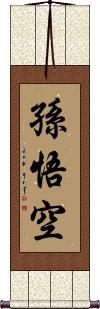
孫悟空 is the name Sun Wukong, also known as the Monkey King. He is the main character with supernatural powers in the ancient Chinese novel Journey to the West.
This title is also known as the real name of the Monkey King in Japanese. This can also be the Son Goku, better known as simply Goku, a fictional character of the Dragon Ball Japanese manga series.
Wukong / Goku
Monkey King
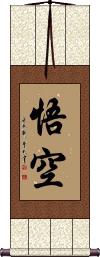
悟空 is the short name or given name of Sun Wukong, the Monkey King, from the ancient Chinese novel Journey to the West.
This title is also known as the given name of the Monkey King in Japanese. This can also be Goku, short for Son Goku, a fictional character of the Dragon Ball Japanese manga series (also based loosely on the Monkey King).
Five Ancestors Fist
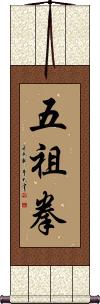
五祖拳 is a martial arts concept (or school) known as Five Ancestors' Fist.
The first character means five.
The second means ancestor, forefather, or grandparents.
The third means fist.
The ancestors referred to by this title and whose attributes contribute to this style are as follows:
1. Grace of the White Crane.
2. Agility of the Monkey.
3. Precision and skill of Emperor Taizu (great mythical ancestor).
4. Power of Luohan (Buddhist arhat).
5. Breath of Damo (founder of Buddhism, or the first Buddha).
Journey to the West
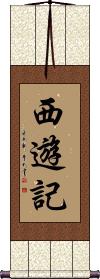
西遊記 is the original title of the novel Journey to the West.
Written during the Ming dynasty, this novel by Wu Cheng'en (吳承恩) is one of the four classic stories of Chinese literature.
Sometimes this book is titled, Pilgrimage to the West, Monkey King, or Magic Monkey.
Many movies and TV series depict or adapt portions of this story.
This in-stock artwork might be what you are looking for, and ships right away...
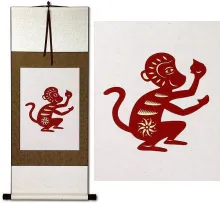
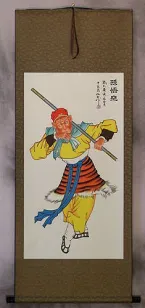
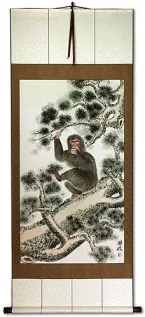
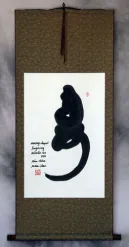
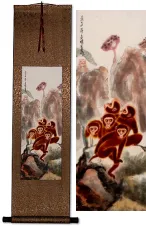
Longevity Monkey Chinese Symbol Wall Scroll
Discounted Blemished
Gallery Price: $63.00
Your Price: $35.00
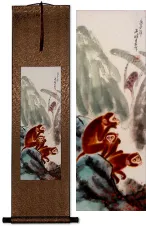
Longevity Monkey Chinese Symbol Wall Scroll
Discounted Blemished
Gallery Price: $63.00
Your Price: $35.00
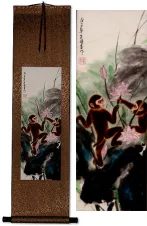
Longevity Monkey Chinese Symbol Wall Scroll
Discounted Blemished
Gallery Price: $63.00
Your Price: $35.00
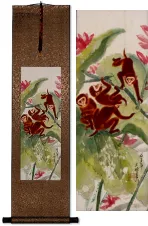
The following table may be helpful for those studying Chinese or Japanese...
| Title | Characters | Romaji (Romanized Japanese) | Various forms of Romanized Chinese | |
| Monkey | 猴 | hóu / hou2 / hou | ||
| Drunken Monkey | 醉猴 | zuì hóu / zui4 hou2 / zui hou / zuihou | tsui hou / tsuihou | |
| Drunken Monkey | 酔い猿 | yo i saru / yoisaru | ||
| Drunken Monkey Kung Fu | 醉猴功夫 / 醉猴功伕 醉猴功夫 | zuì hóu gōng fu zui4 hou2 gong1 fu zui hou gong fu zuihougongfu | tsui hou kung fu tsuihoukungfu |
|
| Monkey Ape | 猿 | saru | yuán / yuan2 / yuan | yüan |
| Monkey Fist | 猿拳 | saruken | ||
| Monkey King | 美猴王 | měi hóu wáng mei3 hou2 wang2 mei hou wang meihouwang | ||
| Monkey King | 猴王 | hóu wáng / hou2 wang2 / hou wang / houwang | ||
| Monkey Stealing Peaches | 猴子偷桃 | hóu zi tōu táo hou2 zi5 tou1 tao2 hou zi tou tao houzitoutao | hou tzu t`ou t`ao houtzutoutao hou tzu tou tao |
|
| Monkey Fist | 猴拳 | hóu quán / hou2 quan2 / hou quan / houquan | hou ch`üan / houchüan / hou chüan | |
| Yaen Wild Monkey | 野猿 | yaen | ||
| Water Monkey | 水猴 | shuǐ hóu / shui3 hou2 / shui hou / shuihou | ||
| Wood Monkey | 木猴 | mù hóu / mu4 hou2 / mu hou / muhou | ||
| Fire Monkey | 火猴 | huǒ hóu / huo3 hou2 / huo hou / huohou | ||
| Earth Monkey | 土猴 | tǔ hóu / tu3 hou2 / tu hou / tuhou | t`u hou / tuhou / tu hou | |
| Golden/Metal Monkey | 金猴 | jīn hóu / jin1 hou2 / jin hou / jinhou | chin hou / chinhou | |
| Drunken Fist | 醉拳 | suiken | zuì quán / zui4 quan2 / zui quan / zuiquan | tsui ch`üan / tsuichüan / tsui chüan |
| Sun Wukong Son Goku | 孫悟空 孙悟空 | son go kuu / songokuu / son go ku | sūn wù kōng sun1 wu4 kong1 sun wu kong sunwukong | sun wu k`ung sunwukung sun wu kung |
| Wukong Goku | 悟空 | go kuu / gokuu / go ku | wù kōng / wu4 kong1 / wu kong / wukong | wu k`ung / wukung / wu kung |
| Five Ancestors Fist | 五祖拳 | wǔ zǔ quán wu3 zu3 quan2 wu zu quan wuzuquan | wu tsu ch`üan wutsuchüan wu tsu chüan |
|
| Journey to the West | 西遊記 西游记 | sei yuu ki / seiyuuki / sei yu ki | xī yóu jì xi1 you2 ji4 xi you ji xiyouji | hsi yu chi hsiyuchi |
| In some entries above you will see that characters have different versions above and below a line. In these cases, the characters above the line are Traditional Chinese, while the ones below are Simplified Chinese. | ||||




