Many custom options...


And formats...



Not what you want?
Try other similar-meaning words, fewer words, or just one word.
All I Need is You in Chinese / Japanese...
Buy an All I Need is You calligraphy wall scroll here!
Personalize your custom “All I Need is You” project by clicking the button next to your favorite “All I Need is You” title below...
1. I Need You
2. I Want You
3. You are always a beauty in your lover’s eyes
4. Dog
5. Chu
7. Gemini
8. Comparison Leads to Truth and Enlightenment
9. Ueshiba
13. Sesshin
14. Speed
15. Sushi
16. Sandokai
17. Martial Morality / Martial Arts Ethics / Virtue
18. One Who Does Not Do Bad Things, Worries Not of Knocks at His Door
19. Inspiration
20. Wellness
21. Sachi
22. Yuki
23. Inhale
24. Yushinkai
26. Chinese or Korean Army General
27. Bodhidharma
31. Kempo Karate / Law of the Fist Empty Hand
33. Maune
34. No one knows a son better than the father
35. Helpfulness
36. Don’t Panic
37. Appreciation and Love for Your Parents
38. Maiya
39. Rago
40. Felina / Felidae / Felinae
41. Star Lotus
42. Chau
43. Iris Flower
44. Day
45. Khánh
46. Sasuke
48. Homosexual Male / Gay Male
50. Taekwondo
51. Five Red Bats
52. Double Happiness Guest Book
53. Che Guevara
54. Kai Zen / Kaizen
55. Dana: Almsgiving and Generosity
56. Warriors Adapt and Overcome
57. Corinthians 13:4
I Need You
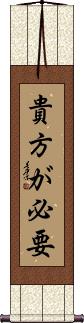
Some people like to say, “I love you” but others might want to say “I need you.” 貴方が必要 is “I need you” in Japanese.
The first two characters mean “You.”
The middle character is a connecting particle. In this case, it more or less means “are.”
The last two characters mean necessary, needed, essential, indispensable, or necessity.
The “I” in the title is implied. Effectively this means “I need you.”
I Need You
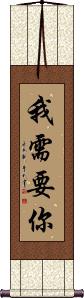
Some people like to say, “I love you” but others might want to say “I need you.” That is what this 我需要你 phrase is all about.
The first character means “I.” The second and third create a compound word that means “need” and “want” at the same time. The last character means “you.”
I Want You
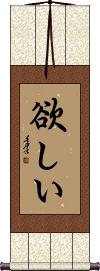
Some people like to say, “I love you,” but if you want to say “I want you,” here it is in Japanese... 欲しい
This can be read as “I want you” or as a single word, “wanted,” “wished for,” “in need of,” or “desired.”
Note: Because this selection contains some special Japanese Hiragana characters, it should be written by a Japanese calligrapher.
You are always a beauty in your lover’s eyes
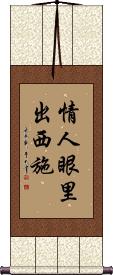
Any woman with affection for Asian art will love a gift of this Chinese proverb calligraphy on a wall scroll.
She will melt in your arms as you tell her the meaning of these characters.
Contained in this phrase is a reference to the most beautiful woman in Chinese history. Her name was Xi Shi, and she was known to have good looks that need not have fine robes or makeup. Her charms were so powerful that she brought down an entire kingdom (in a successful effort to bring honor and pride back to her people).
情人眼里出西施 is a great way to express that the woman in your life is your one love.
Dog
Year of the Dog / Zodiac Sign
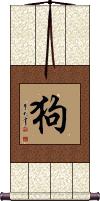
狗 is the character for dog, canine, or hound in Chinese.
If you were born in the year of the dog, you . . .
Are strong-willed
Loyal to your friends and mate.
Never compromise when you think you are right.
Note: Can be pronounced, and means dog in Japanese but feels like a very old word (see our other dog if you need a Japanese dog).
See also our Chinese Zodiac page.
Chu
Surname
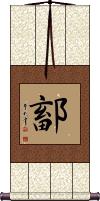
This is a Chinese surname that romanizes as Chu.
Please note, there are several surnames that romanize as Chu. In fact, in the mainland, names that romanize as Zhu would be Chu in Taiwan. It's easy to get confused to please email me if you are not sure about which surname you need (send me an image of the character if you can).
Smooth Sailing
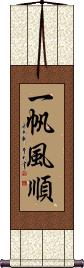
一帆風順 is just what you think it means. It suggests that you are on a trouble-free voyage through life, or literally on a sailing ship or sailboat. It is often used in China as a wish for good luck on a voyage or as you set out on a new quest or career in your life. Some may use this in place of “bon voyage.”
The literal meaning is “Once you raise your sail, you will get the wind you need, and it will take you where you want to go.” Another way to translate it is “Your sail and the wind follow your will.”
This is a great gift for a mariner, sailor, adventurer, or someone starting a new career.
Note: Can be understood in Korean Hanja but is rarely used.
See Also: Bon Voyage | Adventure | Travel
Gemini Zodiac Symbol / Sign
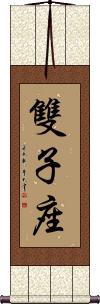
雙子座 is the Chinese way to write Gemini (twins) of western astrology.
This was also the version used in Japan until they simplified the first Kanji to 双 after WWII. If you need the modern Japanese 双子座 instead of the older 雙子座, just let me know when you place your order.
See Also: Chinese Zodiac
Comparison Leads to Truth and Enlightenment
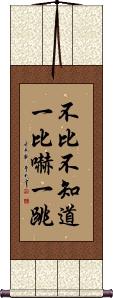
不比不知道一比吓一跳 is a Chinese proverb that literally means: [If one not does] not make comparisons, [one will] not know [the truth] when [one] compares, [one will be] greatly surprised.
This goes to the idea that if you do not know bad times, you cannot know what good times are.
...And...
You can not know light without experiencing darkness.
Another way to translate this would be: If you wish to be enlightened, you need to make comparisons and analyze every aspect (of a situation, issue, or problem).
Ueshiba
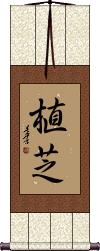
This is a Japanese surname that romanizes as Ueshiba.
Please note: This is not the only Japanese name that romanizes as Ueshiba. If you need a different Ueshiba, just contact me and I'll set it up for you.
Living / Live Life
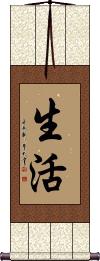
生活 means life, living, to live, or the state of being alive. It can also refer to your daily existence or livelihood. It can also be a suggestion to just “Live life.”
生活 is also the term used in other titles such as “healthy living” or Lance Armstrong's “Livestrong” campaign (Chinese title for Livestrong only).
If you need a reminder that you are alive and to take a breath, this might be the perfect wall scroll for you.
Songahm Taekwondo
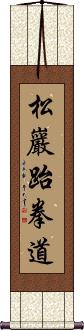
松巖跆拳道 is the title Songahm Taekwondo.
If you want this written in Korean Hangul instead of Hanja, click on the Hangul characters below the Korean flag above.
Note, Songahm is usually written in Hanja as 松巖. However, in Traditional Chinese, it would be 鬆巖, and in modern Japanese, it can be 松岩 (but not known in this context - I think it's a small train station and place in Japan).
Technically, all of these can also be Korean Hanja so that you might see these variations in use. If you need a version other than 松巖, just let me know when you order.
Realistic / Practical
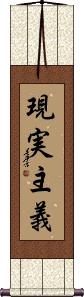
現実主義 means realistic or practical in Japanese.
If you need a reminder to remain grounded in your life, this is a great way to do that.
Sesshin
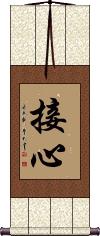
接心 is a Japanese Buddhist term meaning concentration or a period of intensive zazen.
While 接心 is the most common way to write this, other variants include 攝心 (Traditional Chinese), 摂心 (alternate Japanese), and 摄心 (Simplified Chinese). If you need any of these alternate forms, just let me know and I will set it up with the calligrapher for you.
While this is a Japanese term, it will be recognized by most Chinese folks at a Japanese Buddhist term and they will pronounce it as “jiē xīn” in Mandarin.
Speed
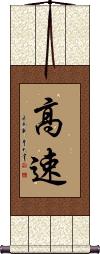
高速 means “high speed” or “in high gear” in Chinese and Japanese Kanji.
In old Korean Hanja, it also means “high speed” but can also be a nickname for “rapid transit.”
高速 is the best selection if you want to say “speed” in regard to your race car, race boat, or lifestyle. You need this word, which literally means “high speed,” as the Asian word for “speed” alone does not suggest whether you mean fast or slow.
Sushi
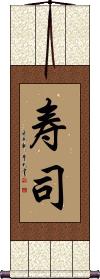
Got a 寿司/sushi restaurant and need an appropriate wall scroll? Or maybe you love sushi enough to have it on your wall. This sushi calligraphy scroll is for you.
Note that the written characters for sushi are the same in Chinese and Japanese. However, the first character is actually a modern Japanese / Simplified Chinese, so in some cases, it will be written differently in Taiwan, Hong Kong, and some older Japanese sushi restaurants where you might see 壽司 instead of 寿司.
Sandokai
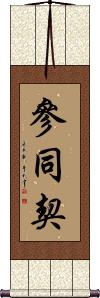
This is the title for the poem, Sandōkai as used in the Soto school of Zen Buddhism.
If you need the full text of the poem on a scroll or more info, please contact me.
Martial Morality / Martial Arts Ethics / Virtue
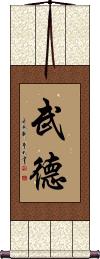
This refers to the virtue, morality, and ethics that any practitioner of martial arts should possess.
This can be used in both Chinese and Japanese in place of English terms such as “soldierly virtue,” “good conduct” (military), “warrior ethics,” and being honorable regarding any fight or competition.
In Japanese, there is a slight variation in the last character, making it 武徳 instead of 武德 in Japan. And yes, just one little horizontal stroke is omitted. If you need the Japanese version, please choose a Japanese calligrapher, or drop me a note so that I make sure you get the characters you intend.
See Also: Morality of Mind | Morality of Deed
One Who Does Not Do Bad Things, Worries Not of Knocks at His Door
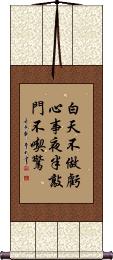
白天不做亏心事夜半敲门不吃惊 literally translates as: [If one does] not do bad things in the daytime, one need not be alarmed at knocks on the door in the middle of the night.
The meaning is something like, “A quiet conscience sleeps in thunder.” Basically, the message is, “don't commit crimes and you won't be jumpy every time the doorbell rings (so don't do anything wrong and your life will have fewer worries and you can sleep at night).”
Inspiration
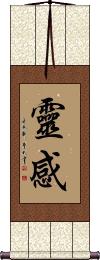
靈感 is the Chinese word closest to hitting the mark for the English word inspiration.
In a more extended context, I have even seen this translated as “brain wave.”
The first character means alert, departed soul, efficacious, quick, effective, or intelligent.
The second character means to feel, to move, to touch, or to affect.
The combined meaning of these two characters changes a bit, but I think it's nice to know the individual meanings to give you a better understanding of where a word comes from.
You could describe this word as “the thought that pops into your head just before you patent the greatest widget ever invented that everyone in the world will want.”
At least, that's the idea.
This term can also mean “intelligent thought” if you translate it directly from each character. If you are looking for inspiration or need to be inspired, this is the word for you.
 When the first character was absorbed into Japanese from Chinese, an alternate form became the standard in Japan. The Kanji shown to the right is the form currently used in Japan. This is still considered an alternate form in China to this day.
it’s
readable by both Chinese and Japanese people but if your audience is Japanese, I recommend the Kanji shown to the right - just click on that Kanji to order that version.
When the first character was absorbed into Japanese from Chinese, an alternate form became the standard in Japan. The Kanji shown to the right is the form currently used in Japan. This is still considered an alternate form in China to this day.
it’s
readable by both Chinese and Japanese people but if your audience is Japanese, I recommend the Kanji shown to the right - just click on that Kanji to order that version.
Wellness
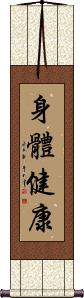
身體健康 is how to express “wellness” in Chinese. The meaning is not much different than the idea of “good health.” The first two characters alone are often translated as “health.” Some will also translate this title as “physical health.”
If you want to fill your room with a feeling of wellness, this is the wall scroll for you.
This is also the ancient way to express wellness in Japanese Kanji and old Korean Hanja. The modern Japanese form is 身体健康 (the only difference is the second Kanji). Let me know if you need your calligraphy written in modern Japanese.
Sachi
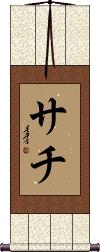
サチ is the name Sachi in Japanese Katakana.
There are a couple ways to write Sachi in Japanese, so you might need to carefully research the correct version.
Note: Because this title is entirely Japanese Katakana, it should be written by a Japanese calligrapher.
Yuki
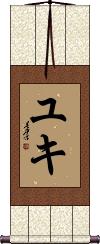
ユキ is the name Yuki in Japanese.
However, there are several Kanji names in Japanese that romanize as Yuki or Yuuki, so contact me if you need a specific version.
Note: Because this title is entirely Japanese Katakana, it should be written by a Japanese calligrapher.
Inhale
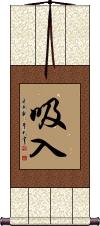
吸入 is a Chinese, Japanese, and old Korean word that means inhale, inhalation, or to breathe in.
吸 by itself can mean to inhale or suck in.
入 means to enter (in this case, the body), so it clarifies that this is the true inhalation of air into the body.
If you need a reminder to breathe (slow down and take a deep breath), this may be the word you want hanging on your wall.
Yushinkai

友心会 is the martial arts title Yushinkai in Japanese Kanji.
This can translate as “Friendship Club” or “Friends Heart Club.”
Other possible titles that are romanized as Yushinkai are 有心会 and 結心会. These have a meaning that is more like Heartfelt Club or Heart-to-Heart Club. Be sure to check carefully to see what your school title is before you order. Let me know if you need one of these alternate versions.
Chushin Aikido Dojo

中心合気道道場 is the name Chushin Aikido Dojo in Japanese Kanji.
The Japanese romanization, Chushin, can also be 忠心 (Loyal-Heart) or 中真 (True Center), so let me know if you need 忠心合気道道場 or 中真合気道道場 instead of 中信合気道道場.
Chinese or Korean Army General
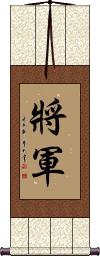
將軍 is the more Chinese and Korean Hanja version or General.
There is a slight variation in the way the first character is written compared to the Japanese Shogun (将軍) title.
So if you want to specifically refer to a Chinese or Korean General, this is the way. Japanese people would still easily identify this as “shogun.”
Note: This term is also used for Admiral in Korean in a certain context (if you need a better title for Admiral, just let me know).
Bodhidharma
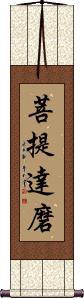
菩提達磨 is the title Bodhidharma in Chinese and Japanese.
Bodhidharma, commonly known as Damo, is reputed as the founder of the Chan (Zen) or Intuitional or Mystic School.
He likely came from south India and spread Mahayana Buddhism throughout China (even meeting the Emperor) and his disciples likely spread this all the way to Korea, Japan, and beyond in the 5th and 6th centuries.
Sometimes the last character varies in Chinese to 摩 instead of 磨 - let me know if you need a certain variation when you order.
Realistic / Practical
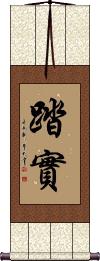
踏實 means realistic or practical.
If you need a reminder to remain grounded in your life, this is a great way to do that. 踏實 also can have the meanings of “at ease,” “down to earth,” “to have peace of mind,” “free from anxiety,” steady, or steadfast.
God Give Me Strength
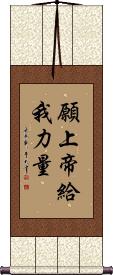
願上帝給我力量 is a wish or a prayer that you might call out at a desperate time.
Translated by us for a military serviceman in Iraq. He may need to use this phrase often, though I am not sure where he's going to find a place to hang a wall scroll.
Purpose / Aim / Goal
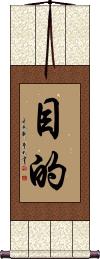
目的 is a word that means purpose, aim, goal, target, objective, or intention.
If you need a reminder about seeking purpose in life, your job, or following your goal, hanging this on your wall might help.
Kempo Karate / Law of the Fist Empty Hand
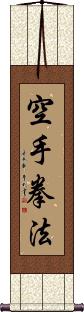
空手拳法 is the Kanji title for Kempo Karate.
The first two characters mean “karate” - technically they express “empty hand.”
The last two express “fist law” which is Romanized from Japanese as “Kenpo” or “Kempo.”
That “empty hand” translation can be understood better when you grasp the idea that karate is a martial art without weapons (other than the weapons organic to your body, such as your foot, hand, fist, etc). When you practice karate, you do so with empty hands (no weapons).
Note: There is also an antiquated way to write karate. It has the same pronunciation but a different first character which means “Tang” as in the Tang Dynasty. Some dojos use that form - let us know if you need that alternate form, and we'll add it.
Seven Rules of Happiness
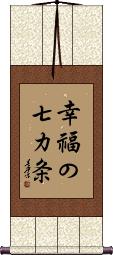
幸福の七カ条 is the title for the 7 rules of happiness in Japanese.
The rules themselves take up a lot of space:
1. 成功や栄誉や勝ち負けを目的に、ことを行ってはいけない。
2. しないではいられないことをし続けなさい。
3. 他人との比較ではない、あくまで自分の楽しさを追及すべし。
4. 好きの力を信じる。
5. 才能と収入は別、努力は人を裏切ると心得よ。
6. 怠け者になりなさい。
7. 目に見えない世界を信じる。
...so this title is probably all you need.
Note: Because this selection contains some special Japanese Katakana characters, it should be written by a Japanese calligrapher.
Maune
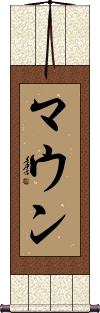
マウン is the name Maune in Japanese Katakana.
Be careful, as there are also a few Japanese given names and surnames that romanize as Maune such as 真畝, 眞宇根, and 真宇根. If you need one of these, please contact me. マウン is the way to write the western name Maune only.
Note: Because this title is entirely Japanese Katakana, it should be written by a Japanese calligrapher.
No one knows a son better than the father
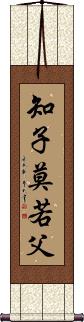
知子莫若父 can be translated as “No one knows a son better than his father.”
This idiom is based on the idea that after spending many years together, family members know everything about each other. Better than anyone else, a father knows the qualities and shortcomings of his son.
If you are looking for something about “father and son,” this is probably the best selection.
While this is the original proverb (very old), others have been composed about various combinations of mothers, sons, daughters, and fathers. Let me know if you need a custom version.
Helpfulness
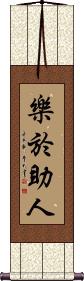
樂於助人 is about helpfulness, being of service to others, and doing thoughtful things that make a difference in their lives.
Offer your help without waiting to be asked. Ask for help when you need it. When we help each other, we get more done. We make our lives easier.
See Also: Caring | Charity | Benevolence
Don’t Panic
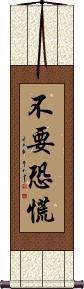
If you need a strange homage to the Hitchhiker's Guide to the Galaxy, this might be it.
不要恐慌 says “Don't Panic” in Chinese. A Chinese person who is not familiar with this masterpiece of a book, will not see the humor but that will be your chance to suggest reading some Douglas Adams (which has been translated into Chinese).
Appreciation and Love for Your Parents
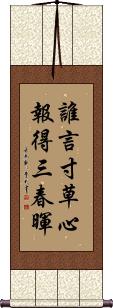
誰言寸草心報得三春暉 is the last line of a famous poem. It is perceived as a tribute or ode to your parents or mother from a child or children that have left home.
The poem was written by Meng Jiao during the Tang Dynasty (about 1200 years ago). The Chinese title is “You Zi Yin” which means “The Traveler's Recite.”
The last line as shown here speaks of the generous and warm spring sunlight which gives the grass far beyond what the little grass can could ever give back (except perhaps by showing its lovely green leaves and flourishing). The metaphor is that the sun is your mother or parents, and you are the grass. Your parents raise you and give you all the love and care you need to prepare you for the world. A debt that you can never repay, nor is repayment expected.
The first part of the poem (not written in the characters to the left) suggests that the thread in a loving mother's hands is the shirt of her traveling offspring. Vigorously sewing while wishing them to come back sooner than they left.
...This part is really hard to translate into English that makes any sense but maybe you get the idea. We are talking about a poem that is so old that many Chinese people would have trouble reading it (as if it was the King James Version of Chinese).
Maiya
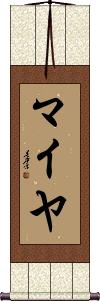
This is the English name Maiya in Japanese Katakana.
There are native Japanese names such as 舞弥, 舞也, 舞野, or 真衣弥 that can romanize as Maiya. The name here is appropriate if your English name is Maiya. Contact me if you need one of these other names.
Note: Because this title is entirely Japanese Katakana, it should be written by a Japanese calligrapher.
Rago
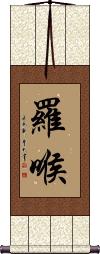
This is a Japanese personal name, Rago.
The meaning can be the intersection of the Moon's orbit with the ecliptic in Vedic astronomy (from Sanskrit Rāhu).
In Buddhist context, this can be, “the demon who is supposed to seize the sun and moon and thus cause eclipses.”
This is a variant of the Chinese 羅睺. It can also be written 羅護 or 羅虎. If you need the more ancient Chinese version, just let me know.
Felina / Felidae / Felinae
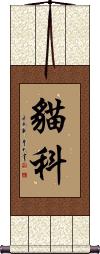
貓科 is the Chinese way to write Felidae, Felina, or Felinae (the cat family).
In Japanese, they use a slightly different first character and write 猫科, and pronounce it “nekoka” instead of the original 貓科.
Also, in Chinese, sometimes the title for the sub-family of cats is 猫亚科 for Felinae. If you need a special term, just contact me.
Star Lotus
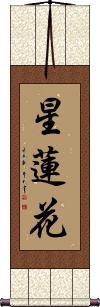
星蓮花 is the title Star Lotus in Chinese.
For star lotus, some may write 星荷 instead - especially in Taiwan for reasons I am not sure of. 星荷 is sometimes romanized as “sing he” or “sing ho” though it would be “xīng hé” in mainland pinyin romanization. If you need a particular version or more info, please get in touch with me.
Chau
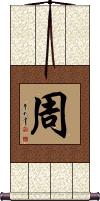
周 is the name Chau in Chinese (Mandarin).
The last name Chau (or Châu) has diverse origins, most prominently as a Vietnamese surname meaning "pearl," linking to Chinese roots, and also as various anglicized forms of Chinese names like Zhou (周), meaning dynasty/circle, or Zhu (朱), meaning vermilion.
If you need 朱 instead of 周, please let me know when ordering.
Iris Flower
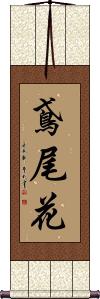
鳶尾花 is the title for the iris flower in Chinese and Japanese.
If your name happens to be Iris, this is a beautiful way to express your name by meaning in both of these languages (it will mean your name but not sound like your name).
Can also mean wall iris, roof iris, or Iris tectorum.
Note: There are other titles for specific iris varieties - contact us if you need something special.
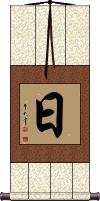
This is how to write “day” in Chinese, Japanese, and Korean Hanja.
This can also mean “Sun,” the star in the middle of the Solar system in which we live. In Japanese, it can also mean “sunshine” or even “Sunday.”
When writing the date in modern Chinese and Japanese, putting a number in front of this character indicates the day of the month. Of course, you need to indicate the month too... The month is expressed with a number followed by the character for the moon. So “three moons ten suns” would be “March 10th” or “3/10.”
Note: This is also the first character for the proper name of Japan. Remember that Japan is “The land of the rising sun”? Well, the first character for Japan means “sun” and the second means “origin” so you get the real meaning now. Sometimes, in China, this sun character can be a short name for Japan or a suffix for something of or from Japan.
Khánh
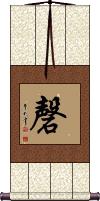
磬 means “chime stones,” but I'm including it here for those looking for the original Chinese character for the Vietnamese name Khánh.
Other definitions include ancient percussion instrument made of stone or jade pieces hung in a row and struck as a xylophone, sounding stone, ancient Chinese chime shaped like a chevron.
There is also a possibility that your original character is 慶 which means to celebrate or felicity. Contact me if you need that character.
Sasuke
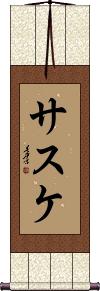
サスケ is the Japanese title of the TV show, Sasuke Rising.
サスケ is the original Japanese TV show that inspired the American Ninja Warrior, Ninja Warrior UK, and other variations.
It should be noted that in Japan, the show's title is usually displayed in capital Roman letters as “SASUKE,” rather than the Japanese text, サスケ. Although, both titles are known in Japan (you'd probably need to search for サスケ if looking to buy a Sasuke DVD in Japan).
Notes: Sasuke can also be a given name (written the same way). There are also other names that romanize as Sasuke in Japanese.
Note: Because this title is entirely Japanese Katakana, it should be written by a Japanese calligrapher.
Wing Chun Fist Maxims (Part 2)
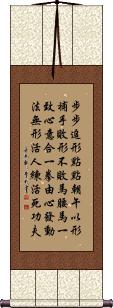
A customer asked me to split these Wing Chun maxims into two parts, so he could order a couplet.
It thought this was a good idea, so it's been added here.
6 步步追形, 點點朝午
7 以形補手, 敗形不敗馬
8 腰馬一致, 心意合一
9 拳由心發, 動法無形
10 活人練活死功夫
Be sure to order both part 1 and part 2 together. They need to be a matched set. It will be incomplete as a single wall scroll. Also, each wall scroll is handmade, so if you order them separately, weeks or months apart, they will vary a little by length, shade of paper, etc.
Homosexual Male / Gay Male
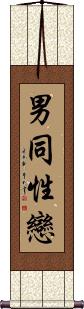
You need the male character in front of the word for homosexual in Chinese to create this word.
It's a much nicer way to say “Gay Male” than English words like Fag, Fairy, Sissy, Puff, Poof, Poofster, Swish, or Pansy. Although I suppose it could be used as a substitute for Nancy Boy, Queer, or Queen (for which, last time I checked, my gay friends said were OK in the right context).
For those of you who think China is a restrictive society - there are at least two gay discos in Beijing, the capital of China. It's at least somewhat socially acceptable to be a gay male in China. However, lesbians seem to be shunned a bit.
I think the Chinese government has realized that the 60% male population means not everybody is going to find a wife (every gay male couple that exists means two more women in the population are available for the straight guys), and the fact that it is biologically impossible for men to give birth, may be seen as helping to decrease the over-population in China.
Qi Gong / Chi Kung
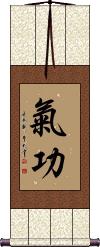
氣功 or Qigong is the title of a technique that is somewhere between medical practice, meditation, and in some cases, religion.
The definition is blurred depending on which school of Qigong you are following. In some cases, it is even incorporated with martial arts.
Some people (even Chinese people) mix this title with Tai Chi (Tai Qi) exercises.
Lately, in China, people will claim to practice Tai Chi rather than Qigong because the Qigong title was recently used as a cover for an illegal pseudo-religious movement in China with the initials F.G. or F.D. (I can not write those names here for fear of our website being banned in China).
You can learn those names and more here: Further info about Qigong
If you are wondering why I wrote “Qi Gong” and “Chi Kung” as the title of this calligraphy entry, I should teach you a little about the various ways in which Chinese can be Romanized. One form writes this as “Chi Kung” or “Chikung” (Taiwan). In the mainland and elsewhere, it is Romanized as “Qi Gong” or “Qigong.” The pronunciation is the same in Taiwan, mainland, and Singapore Mandarin. Neither Romanization is exactly like English. If you want to know how to say this with English rules, it would be something like “Chee Gong” (but the “gong” has a vowel sound like the “O” in “go”).
Romanization is a really confusing topic and has caused many Chinese words to be mispronounced in the west. One example is “Kung Pao Chicken,” which should actually be more like “Gong Bao” with the “O” sounding like “oh” for both characters. Neither the Romanization system in Taiwan nor the Mainland is perfect, in my opinion, and leads to many misunderstandings.
In modern Japan, you may see this written as 気功, but the original 氣功 is still recognized. If you need the Japanese version, please contact me.
Taekwondo
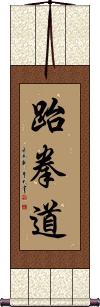
跆拳道 is one of the most widespread types of martial arts in the world as well as being an Olympic sport. Taekwondo was born in Korea with influences of Chinese and Japanese styles combined with traditional Korean combat skills. Some will define it as the “Korean art of empty-handed self-defense.”
In the simplest translation, the first character means “kick,” the second character can mean either “fist” or “punching,” and the third means “way” or “method.” Altogether, you could say this is the “Kick Punch Method.” When heard or read in various Asian languages, all will automatically think of this famous Korean martial art. It is written the same in Japanese Kanji, Chinese, and Korean Hanja characters - so the appearance of the characters is universal. However, you should note that there is another way to write this in modern Korean Hangul characters, which looks like the image to the right. 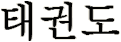
We suggest the original Korean Hanja (Chinese characters) for a wall scroll, but if you need the Hangul version, you must use master calligrapher Cao Bin: Order Taekwondo in Korean Hangul
Note: Taekwondo is sometimes Romanized as Tae-Kwondo, Tae Kwon Do, Taekwon-do, Taegwondo, Tae Gweon Do, Tai Kwon Do, Taikwondo, Taekwando, Tae Kwan Do and in Chinese Taiquandao, Tai Quan Dao, Taichuando, or Tai Chuan Tao.
Five Red Bats
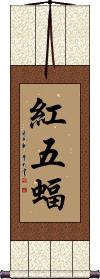
紅五蝠 is a play on words in Chinese because of some homophones.
The first thing you need to know is that the word for bat, 蝠, sounds exactly like the word for good fortune, 福. Thus, bats are often associated with good luck and good fortune in Chinese culture.
Five bats (五福 / 五蝠) means “five fortunes,” referring to luck, prosperity, wealth, happiness, and longevity.
The word red, 红, has the same sound as 宏 meaning vast, great, or magnificent. Therefore, a red bat means “vast fortune.”
Altogether, five red bats represent vast reaches of the five fortunes.
Double Happiness Guest Book
Customize a special Asian guest book for your wedding
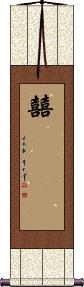
Start customizing a “Double Happiness Guest Book Wall Scroll” Here!
The paper panel length can be whatever you choose from 68cm to 135cm (27” to 53”).
If you don't mention what paper length you want in the special instructions tab (on the next page), we'll make it about 100cm (40”).
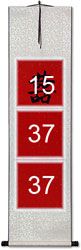
The medium-size scroll with a 33cm x 100cm (13” x 40”) paper panel can usually handle up to 89 signatures. That breaks down to 37 signatures per empty square and 15 signatures around the 囍 character. If you switch to a 135cm paper panel, add another 37 potential signatures.
We can splice two 135cm papers together, but that would be a crazy-long scroll. These are only estimates, your mileage may vary.
With silk panels, this will yield a wall scroll about 155cm (61”) long. That's enough for up to 89 signatures. Of course, that depends on if your guests just sign a brief salutation and name, or more verbose good wishes. Customer feedback is that 126 people can sign the 135cm long paper on a medium-sized scroll. If we go bigger than that, there will be a minor paper seam and an extra charge. Email me with your specifications if you need something special.
Most customers pick the festive red paper with gold flecks and white or ivory silk. Red is a good luck color in Chinese culture, thus the most popular choice. But, you can do any color combination that you want.
There is a long history of Chinese-character-use outside of mainland China. This Double Happiness character is also seen at weddings in Korea, Vietnam, Hong Kong, and Taiwan, as well as in Chinese communities in Thailand, Indonesia, and elsewhere. While Japan borrowed Chinese characters into their language, you won't see 囍 as often at Japanese weddings.
Che Guevara
Latin American / Cuban Revolutionary
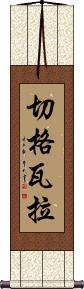
切格瓦拉 is the name “Che Guevara,” as written (transliterated) in Mandarin Chinese.
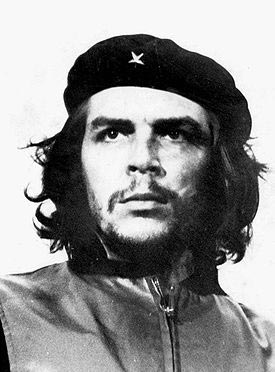 Once revered by Chinese people as a Socialist rebel, he's now just a historical figure that school children briefly learn about in China.
切格瓦拉 is because China used to be a truly-Communist/Socialist nation, and thus, other Communists and Socialists were heroes.
In modern China, with its free-market economy, those former heroes fade a little.
We are not offering the “Che” character alone, as few would associate it with Che Guevara, so you need the full name to be clear (minus Ernesto, which is his real first name).
Kai Zen / Kaizen
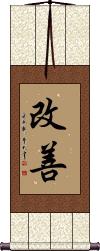
改善 means betterment, improvement, to make better, or to improve - specifically incremental and continuous improvement.
改善 became very important in post-war Japan when Edwards Deming came to Japan to teach concepts of incremental and continuous improvement (for which the big 3 auto-makers did not want to hear about at the time - even kicking Deming out of their offices). The Japanese workforce absorbed this concept when their culture was in flux and primed for change.
This kaizen term is closely associated with the western title “Total Quality Management.” Perhaps dear to my heart since I spent years studying this at university before I moved to China where TQM did not seem to exist. Slowly, this concept has entered China as well (I've actually given lectures on the subject in Beijing).
If you are trying to improve processes at your business or need to remind yourself of your continuous TQM goals, this would be a great wall scroll to hang behind your desk or in your workplace.
See Also: Kansei
Dana: Almsgiving and Generosity
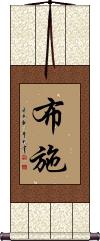
布施 is the Buddhist practice of giving known as Dāna or दान from Pali and Sanskrit.
Depending on the context, this can be alms-giving, acts of charity, or offerings (usually money) to a priest for reading sutras or teachings.
Some will put Dāna in these two categories:
1. The pure or unsullied charity, which looks for no reward here but only in the hereafter.
2. The sullied almsgiving whose object is personal benefit.
The first kind is, of course, the kind that a liberated or enlightened person will pursue.
Others will put Dāna in these categories:
1. Worldly or material gifts.
2. Unworldly or spiritual gifts.
You can also separate Dāna into these three kinds:
1. 財布施 Goods such as money, food, or material items.
2. 法布施 Dharma, as an act to teach or bestow the Buddhist doctrine onto others.
3. 無畏布施 Courage, as an act of facing fear to save someone or when standing up for someone or standing up for righteousness.
The philosophies and categorization of Dāna will vary among various monks, temples, and sects of Buddhism.
Breaking down the characters separately:
布 (sometimes written 佈) means to spread out or announce, but also means cloth. In ancient times, cloth or robs were given to the Buddhist monks annually as a gift of alms - I need to do more research, but I believe there is a relationship here.
施 means to grant, to give, to bestow, to act, to carry out, and by itself can mean Dāna as a single character.
Dāna can also be expressed as 檀那 (pronounced “tán nà” in Mandarin and dan-na or だんな in Japanese). 檀那 is a transliteration of Dāna. However, it has colloquially come to mean some unsavory or unrelated things in Japanese. So, I think 布施 is better for calligraphy on your wall to remind you to practice Dāna daily (or whenever possible).
Warriors Adapt and Overcome
Soldiers need a fluid plan
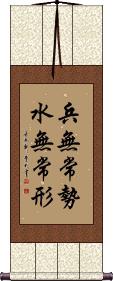
This literally translates as: Troops/soldiers/warriors have no fixed [battlefield] strategy [just as] water has no constant shape [but adapts itself to whatever container it is in].
Figuratively, this means: One should seek to find whatever strategy or method is best suited to resolving each individual problem.
This proverb is about as close as you can get to the military idea of “adapt improvise overcome.” 兵無常勢水無常形 is the best way to express that idea in both an ancient way, and a very natural way in Chinese.
Corinthians 13:4
All you need to know about LOVE
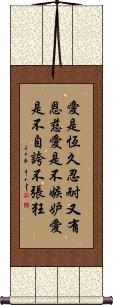
愛是恆久忍耐又有恩慈愛是不嫉妒愛是不自誇不張狂 is 1st Corinthians 13:4 in Chinese.
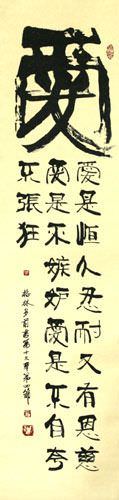
With large “love” character added.
In English, this reads:
1st Corinthians 13:4 (KJV) Charity suffereth long, and is kind; charity envieth not; charity vaunteth not itself, is not puffed up...
1st Corinthians 13:4 (NIV) Love is patient, love is kind. It does not envy, it does not boast, it is not proud.
1st Corinthians 13:4 (Basic English) Love is never tired of waiting; love is kind; love has no envy; love has no high opinion of itself, love has no pride.
The Chinese translation follows the love meaning, rather than the King James' use of “charity.” I was a little confused when writing this description with the significant differences between the NIV vs. KJV translations. After speaking to a Greek scholar about this, it would seem that the KJV has an almost errant translation with the use of “charity” in place of “love.”
We used the most popular Christian Chinese Bible, which is the Chinese Union Version (CUV). The CUV was first published in 1919. We use this so that the Chinese translation would be as accurate and standard as possible. Any Chinese Christian worth their salt will easily be able to identify this verse when they see these characters.
If you want a big “love” character written above the verse on your artwork, just make a note in the “special instructions” tab when you are customizing your artwork. There is no extra charge for that service on this special verse.
This in-stock artwork might be what you are looking for, and ships right away...

Gallery Price: $61.00
Your Price: $33.88
Gallery Price: $108.00
Your Price: $59.88

Gallery Price: $61.00
Your Price: $33.88

Gallery Price: $61.00
Your Price: $33.88


Gallery Price: $120.00
Your Price: $49.88
Gallery Price: $304.00
Your Price: $168.88
Gallery Price: $90.00
Your Price: $49.88
The following table may be helpful for those studying Chinese or Japanese...
| Title | Characters | Romaji (Romanized Japanese) | Various forms of Romanized Chinese | |
| I Need You | 貴方が必要 | ana ta ga hitsu you anatagahitsuyou ana ta ga hitsu yo | ||
| I Need You | 我需要你 | wǒ xū yào nǐ wo3 xu1 yao4 ni3 wo xu yao ni woxuyaoni | wo hsü yao ni wohsüyaoni |
|
| I Want You | 欲しい | hoshii / hoshi | ||
| You are always a beauty in your lover’s eyes | 情人眼里出西施 | qíng rén yǎn lǐ chū xī shī qing2 ren2 yan3 li3 chu1 xi1 shi1 qing ren yan li chu xi shi qingrenyanlichuxishi | ch`ing jen yen li ch`u hsi shih chingjenyenlichuhsishih ching jen yen li chu hsi shih |
|
| Dog | 狗 | inu / ku | gǒu / gou3 / gou | kou |
| Chu | 鄐 | chù / chu4 / chu | ch`u / chu | |
| Smooth Sailing | 一帆風順 一帆风顺 | yī fán fēng shùn yi1 fan2 feng1 shun4 yi fan feng shun yifanfengshun | i fan feng shun ifanfengshun |
|
| Gemini Zodiac Symbol Sign | 雙子座 双子座 | futago-za | shuāng zǐ zuò shuang1 zi3 zuo4 shuang zi zuo shuangzizuo | shuang tzu tso shuangtzutso |
| Comparison Leads to Truth and Enlightenment | 不比不知道一比嚇一跳 不比不知道一比吓一跳 | bù bǐ bù zhī dào yī bǐ xià yì tiào bu4 bi3 bu4 zhi1 dao4 yi1 bi3 xia4 yi4 tiao4 bu bi bu zhi dao yi bi xia yi tiao | pu pi pu chih tao i pi hsia i t`iao pu pi pu chih tao i pi hsia i tiao |
|
| Ueshiba | 植芝 | ueshiba | ||
| Living Live Life | 生活 | sei katsu / seikatsu | shēng huó sheng1 huo2 sheng huo shenghuo | |
| Songahm Taekwondo | 松巖跆拳道 | sōng yán tái quán dào song1 yan2 tai2 quan2 dao4 song yan tai quan dao songyantaiquandao | sung yen t`ai ch`üan tao sungyentaichüantao sung yen tai chüan tao |
|
| Realistic Practical | 現実主義 | genjitsu shugi / genjisu syugi | ||
| Sesshin | 接心 | sesshin / seshin | jiē xīn / jie1 xin1 / jie xin / jiexin | chieh hsin / chiehhsin |
| Speed | 高速 | kousoku / kosoku | gāo sù / gao1 su4 / gao su / gaosu | kao su / kaosu |
| Sushi | 壽司 寿司 | su shi / sushi | shòu sī / shou4 si1 / shou si / shousi | shou ssu / shoussu |
| Sandokai | 參同契 | san dou kai sandoukai san do kai | cān tóng qì can1 tong2 qi4 can tong qi cantongqi | ts`an t`ung ch`i tsantungchi tsan tung chi |
| Martial Morality Martial Arts Ethics Virtue | 武德 | bu toku / butoku | wǔ dé / wu3 de2 / wu de / wude | wu te / wute |
| One Who Does Not Do Bad Things, Worries Not of Knocks at His Door | 白天不做虧心事夜半敲門不吃驚 白天不做亏心事夜半敲门不吃惊 | bái tiān bú zuò kuī xīn shì yè bàn qiāo mén bù chī jīng bai2 tian1 bu2 zuo4 kui1 xin1 shi4 ye4 ban4 qiao1 men2 bu4 chi1 jing1 bai tian bu zuo kui xin shi ye ban qiao men bu chi jing | pai t`ien pu tso k`uei hsin shih yeh pan ch`iao men pu ch`ih ching pai tien pu tso kuei hsin shih yeh pan chiao men pu chih ching |
|
| Inspiration | 靈感 灵感 | reikan | líng gǎn / ling2 gan3 / ling gan / linggan | ling kan / lingkan |
| Wellness | 身體健康 身体健康 | shin tai ken kou shintaikenkou shin tai ken ko | shēn tǐ jiàn kāng shen1 ti3 jian4 kang1 shen ti jian kang shentijiankang | shen t`i chien k`ang shentichienkang shen ti chien kang |
| Sachi | サチ | sachi | ||
| Yuki | ユキ | yuki | ||
| Inhale | 吸入 | kyuu nyuu / kyuunyuu / kyu nyu | xī rù / xi1 ru4 / xi ru / xiru | hsi ju / hsiju |
| Yushinkai | 友心會 友心会 | yuu shin kai yuushinkai yu shin kai | ||
| Chushin Aikido Dojo | 中心合気道道場 | chuu shin ai ki dou dou jou chuushinaikidoudoujou chu shin ai ki do do jo | ||
| Chinese or Korean Army General | 將軍 将军 | shougun / shogun | jiāng jūn jiang1 jun1 jiang jun jiangjun | chiang chün chiangchün |
| Bodhidharma | 菩提達磨 菩提达磨 | bodai daruma bodaidaruma | pú tí dá mó pu2 ti2 da2 mo2 pu ti da mo putidamo | p`u t`i ta mo putitamo pu ti ta mo |
| Realistic Practical | 踏實 踏实 | tā shí / ta1 shi2 / ta shi / tashi | t`a shih / tashih / ta shih | |
| God Give Me Strength | 願上帝給我力量 愿上帝给我力量 | yuàn shàng dì gěi wǒ lì liàng yuan4 shang4 di4 gei3 wo3 li4 liang4 yuan shang di gei wo li liang yuanshangdigeiwoliliang | yüan shang ti kei wo li liang yüanshangtikeiwoliliang |
|
| Purpose Aim Goal | 目的 | mokuteki | mù dì / mu4 di4 / mu di / mudi | mu ti / muti |
| Kempo Karate Law of the Fist Empty Hand | 空手拳法 | kara te ken pou karatekenpou kara te ken po | kōng shǒu quán fǎ kong1 shou3 quan2 fa3 kong shou quan fa kongshouquanfa | k`ung shou ch`üan fa kungshouchüanfa kung shou chüan fa |
| Seven Rules of Happiness | 幸福の七カ條 幸福の七カ条 | kou fuku no nana ka jou koufukunonanakajou ko fuku no nana ka jo | ||
| Maune | マウン | maun | ||
| No one knows a son better than the father | 知子莫若父 | zhī zǐ mò ruò fù zhi1 zi3 mo4 ruo4 fu4 zhi zi mo ruo fu zhizimoruofu | chih tzu mo jo fu chihtzumojofu |
|
| Helpfulness | 樂於助人 乐于助人 | lè yú zhù rén le4 yu2 zhu4 ren2 le yu zhu ren leyuzhuren | le yü chu jen leyüchujen |
|
| Don’t Panic | 不要恐慌 | bú yào kǒng huāng bu2 yao4 kong3 huang1 bu yao kong huang buyaokonghuang | pu yao k`ung huang puyaokunghuang pu yao kung huang |
|
| Appreciation and Love for Your Parents | 誰言寸草心報得三春暉 谁言寸草心报得三春晖 | shuí yán cùn cǎo xīn bào dé sān chūn huī shui2 yan2 cun4 cao3 xin1 bao4 de2 san1 chun1 hui1 shui yan cun cao xin bao de san chun hui | shui yen ts`un ts`ao hsin pao te san ch`un hui shui yen tsun tsao hsin pao te san chun hui |
|
| Maiya | マイヤ | maiya | ||
| Rago | 羅喉 | ragou / rago | luó hóu / luo2 hou2 / luo hou / luohou | lo hou / lohou |
| Felina Felidae Felinae | 貓科 猫科 | nekoka | māo kē / mao1 ke1 / mao ke / maoke | mao k`o / maoko / mao ko |
| Star Lotus | 星蓮花 星莲花 | xīng lián huā xing1 lian2 hua1 xing lian hua xinglianhua | hsing lien hua hsinglienhua |
|
| Chau | 周 | zhōu / zhou1 / zhou | chou | |
| Iris Flower | 鳶尾花 鸢尾花 | ichi hatsu hana ichihatsuhana | yuān wěi huā yuan1 wei3 hua1 yuan wei hua yuanweihua | yüan wei hua yüanweihua |
| Day | 日 | hi / nichi | rì / ri4 / ri | jih |
| Khánh | 磬 | kei / ke | qìng / qing4 / qing | ch`ing / ching |
| Sasuke | サスケ | sasuke | ||
| Wing Chun Fist Maxims (Part 2) | 步步追形點點朝午以形補手敗形不敗馬腰馬一致心意合一拳由心發動法無形活人練活死功夫 步步追形点点朝午以形补手败形不败马腰马一致心意合一拳由心发动法无形活人练活死功夫 | |||
| Homosexual Male Gay Male | 男同性戀 男同性恋 | nán tóng xìng liàn nan2 tong2 xing4 lian4 nan tong xing lian nantongxinglian | nan t`ung hsing lien nantunghsinglien nan tung hsing lien |
|
| Qi Gong Chi Kung | 氣功 气功 | ki kou / kikou / ki ko | qì gōng / qi4 gong1 / qi gong / qigong | ch`i kung / chikung / chi kung |
| Taekwondo | 跆拳道 | te kon do / tekondo | tái quán dào tai2 quan2 dao4 tai quan dao taiquandao | t`ai ch`üan tao taichüantao tai chüan tao |
| Five Red Bats | 紅五蝠 红五蝠 | hóng wǔ fú hong2 wu3 fu2 hong wu fu hongwufu | hung wu fu hungwufu |
|
| Double Happiness Guest Book | 囍 喜喜 | xǐ / xi3 / xi | hsi | |
| Che Guevara | 切格瓦拉 | qiè gé wǎ lā qie4 ge2 wa3 la1 qie ge wa la qiegewala | ch`ieh ko wa la chiehkowala chieh ko wa la |
|
| Kai Zen Kaizen | 改善 | kai zen / kaizen | gǎi shàn / gai3 shan4 / gai shan / gaishan | kai shan / kaishan |
| Dana: Almsgiving and Generosity | 布施 | fuse | bù shī / bu4 shi1 / bu shi / bushi | pu shih / pushih |
| Warriors Adapt and Overcome | 兵無常勢水無常形 兵无常势水无常形 | bīng wú cháng shì shuǐ wú cháng xíng bing1 wu2 chang2 shi4 shui3 wu2 chang2 xing2 bing wu chang shi shui wu chang xing | ping wu ch`ang shih shui wu ch`ang hsing ping wu chang shih shui wu chang hsing |
|
| Corinthians 13:4 | 愛是恆久忍耐又有恩慈愛是不嫉妒愛是不自誇不張狂 爱是恒久忍耐又有恩慈爱是不嫉妒爱是不自夸不张狂 | ài shì héng jiǔ rěn nài yòu yǒu én cí ài shì bú jì dù ài shì bú zì kuā bù zhāng kuáng ai4 shi4 heng2 jiu3 ren3 nai4 you4 you3 en2 ci2 ai4 shi4 bu2 ji4 du4 ai4 shi4 bu2 zi4 kua1 bu4 zhang1 kuang2 ai shi heng jiu ren nai you you en ci ai shi bu ji du ai shi bu zi kua bu zhang kuang | ai shih heng chiu jen nai yu yu en tz`u ai shih pu chi tu ai shih pu tzu k`ua pu chang k`uang ai shih heng chiu jen nai yu yu en tzu ai shih pu chi tu ai shih pu tzu kua pu chang kuang |
|
| In some entries above you will see that characters have different versions above and below a line. In these cases, the characters above the line are Traditional Chinese, while the ones below are Simplified Chinese. | ||||

Successful Chinese Character and Japanese Kanji calligraphy searches within the last few hours...



