Many custom options...


And formats...



Conduct in Chinese / Japanese...
Buy a Conduct calligraphy wall scroll here!
Personalize your custom “Conduct” project by clicking the button next to your favorite “Conduct” title below...
1. Good Conduct
2. The Foundation of Good Conduct
3. 4. Right Action / Perfect Conduct
4. Filial Piety / Filial Conduct
8. Isshin Dojo
10. Leadership
11. Shugyo
12. Martial Morality / Martial Arts Ethics / Virtue
13. Ten perfect Mahayana rules
14. All Tenets of the Noble Eightfold Path
16. Listen to Your Heart / Follow Your Heart
17. Furinkazan
18. Ninja
Good Conduct
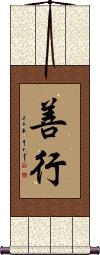
善行 means good actions, good deeds, good conduct, or benevolence.
This can be the given name Yoshiyuki in Japanese.
The Foundation of Good Conduct
Quote from Confucius
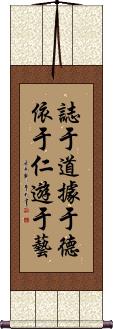
This proverb, 志于道据于德依于仁游于艺, from the Analects of Confucius translates as:
Resolve yourself in the Dao/Tao/Way.
Rely on Virtue.
Reside in benevolence.
Revel in the arts.
According to Confucius, these are the tenets of good and proper conduct.
This was written over 2500 years ago. The composition is in ancient Chinese grammar and phrasing. A modern Chinese person would need a background in Chinese literature to understand this without the aid of a reference.
4. Right Action / Perfect Conduct
Samyak Karmanta / Samma Kammanta
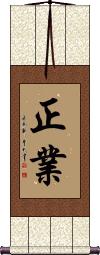
正業 is one of the Noble Eightfold Paths of Buddhism. Right Action, along with Right Speech and Right Living, constitute the path to Virtue.
The five precepts of Right Action are...
1. Refrain from destroying living beings (no murder or any form of taking a life).
2. Refrain from stealing.
3. Refrain from sexual misconduct (adultery, rape, etc.).
4. Refrain from false speech (lying or trickery).
5. Refrain from intoxicants that lead to heedlessness (no drugs or alcohol).
This concept can be summarized as “Avoidance of actions that conflict with moral discipline.”
Note: In Japanese, when read by a non-Buddhist, this will mean “the right job/vocation.”
This term is exclusively used by devout Buddhists. It is not a common term, and is remains an unknown concept to most Japanese and Chinese people.
See Also: Buddhism | Enlightenment | Noble Eightfold Path
Filial Piety / Filial Conduct
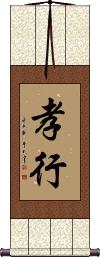
孝行 expresses the idea of filial piety or filial conduct.
While the first character means filial piety by itself, the second character adds “action.” Therefore this represents the actions you take to show your respect and obedience to your elders or ancestors.
Confucius is probably the first great advocate for filial piety.
Indomitable Courage

不屈勇氣 can be translated as “Unyielding,” “Unstoppable Bravery,” or “Indomitable Courage.”
In martial contexts, this phrase is often used as a motto emphasizing mindset, conduct, or training attitude.
Isshin Academy

一心学院 can be translated as “Isshin Academy.”
In martial arts usage, this term is typically chosen to express a training mindset, ethical conduct, or personal cultivation. It is commonly used in dojo culture, mottos, and calligraphy titles.
Cross-language note: while the core meaning is broadly shared across Chinese and Japanese usage, nuance and frequency can differ by tradition.
Swim / Swimming
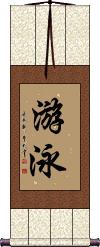
游泳 is the Chinese and Japanese Kanji for swimming, or swim. This can be the act of or the sport of swimming.
In a certain context, this could mean bathing. Further, like the old phrase, “it's going swimmingly.” this word can refer to the “conduct of life.”
Isshin Dojo

一心道場 can be translated as “Isshin Dojo.”
In martial arts usage, this term is typically chosen to express a training mindset, ethical conduct, or personal cultivation. It is commonly used in dojo culture, mottos, and calligraphy titles.
Unyielding Self-Reliance

不屈自律 can be translated as “Indomitable Self-Discipline,” “Tenacious Self-Control,” or “Unyielding Self-Discipline.”
In martial contexts, this phrase is often used as a motto emphasizing mindset, conduct, or training attitude.
Leadership
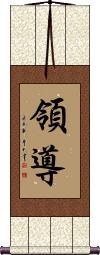
領導 is the Chinese word for “Leadership.”
It contains the ideas of “to lead,” “to direct,” “to conduct,” and “to guide.” Putting a wall scroll with this word on your wall suggests that you are honing your leadership skills or holding a leadership position.
Shugyo
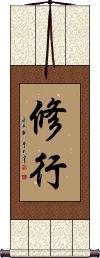
修行 is shugyō or shugyou in Japanese. It refers to ascetic practices, training, practice, discipline, and study.
修行 is also a word in the original Chinese, referring more to religious studies and practices.
In the Buddhist context, this represents caryā. In Buddhism, this relates to one's conduct, observing and doing, cultivating oneself in the right practice, and/or being pious.
Martial Morality / Martial Arts Ethics / Virtue
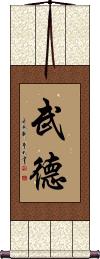
This refers to the virtue, morality, and ethics that any practitioner of martial arts should possess.
This can be used in both Chinese and Japanese in place of English terms such as “soldierly virtue,” “good conduct” (military), “warrior ethics,” and being honorable regarding any fight or competition.
In Japanese, there is a slight variation in the last character, making it 武徳 instead of 武德 in Japan. And yes, just one little horizontal stroke is omitted. If you need the Japanese version, please choose a Japanese calligrapher, or drop me a note so that I make sure you get the characters you intend.
See Also: Morality of Mind | Morality of Deed
Ten perfect Mahayana rules
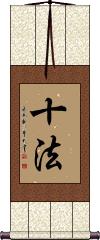
十法 is the title of the ten perfect or perfecting Mahāyāna rules.
The order of rules is as follows:
1. right belief.
2. right conduct.
3. right spirit.
4. the joy of the bodhi mind.
5. joy in the dharma.
6. joy in meditation.
7. pursuing the correct dharma.
8. obedience to, or accordance with dharma.
9. departing from pride, desire, etc.
10. comprehending the inner teaching of Buddha and taking no pleasure in attaining such knowledge or noting the ignorance of others.
This title is only used in the context of Buddhism. Japanese and Chinese people who are not familiar with Buddhism will not recognize this title.
All Tenets of the Noble Eightfold Path
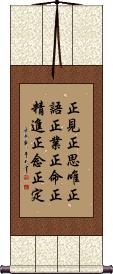
These are the eight tenets of the Buddhist Noble Eightfold Path written altogether.
Here's this list of tenets in English:
1. Right View / Right Understanding / Right Perspective / Perfect View
2. Right Resolve / Right Thought / Right Intention / Perfect Resolve
3. Right Speech / Right Talk / Perfect Speech
4. Right Action / Perfect Conduct
5. Right Living / Right Livelihood / Perfect Livelihood
6. Right Effort / Right Endeavor / Perfect Effort
7. Right Mindfulness / Right Memory / Perfect Mindfulness
8. Right Concentration / Perfect Concentration
Martial Arts / Budo
Way of the Warrior
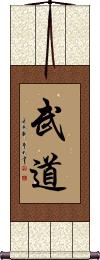
武道 is the very common Japanese way to say “Martial Arts.”
武道 is used mostly in Japanese dojos but is also understood in Chinese and Korean.
Some will use this title to mean chivalry (the conduct of a knight) or military art. The way this word is understood would depend on the context in which it is used.
The first character means “force,” “warlike,” or “essence of a warrior.”
The second character means “method,” “path,” and “the way.” It is the same character used to describe/mean the philosophy of Taoism / Daoism.
Some will also translate this as “The Way of the Warrior”; especially in the context of Korean martial arts.
Listen to Your Heart / Follow Your Heart
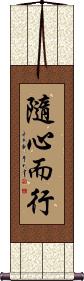
隨心而行 is the closest way to express this idea in Chinese. Literally translated, this phrase means “Allow your heart to dictate your behavior” or “Let your heart guide your conduct” in Chinese. You could also translate this as “follow your heart.” Or, with a bit of imagination, it could mean: “let your spirit be your guide.”
Note that in some cases, “heart” can mean “mind,” “soul” or even “spirit” in Chinese. In ancient China, it was thought that the big pumping organ in your chest was where your thoughts came from, or where your soul resides.
Ancient western thought followed a similar belief. Thus phrases like “I love you with all my heart” and “I give you my whole heart.”
Furinkazan
military strategy
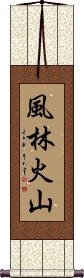
風林火山 is the battle strategy and proverb of Japanese feudal lord Takeda Shingen (1521-1573 AD).
This came from the Art of War by Chinese strategist and tactician Sun Tzu (Sunzi).
You can think of this as an abbreviation to remind officers and troops how to conduct battle.
風林火山 is a word list: Wind, Forest, Fire, Mountain.
The more expanded meaning is supposed to be...
“Swift as the wind, quiet as the forest, fierce as fire, and immovable as a mountain”
“As fast as the wind, as quiet as the forest, as daring as fire, and immovable as the mountain”
“Move as swift as the wind, stay as silent as a forest, attack as fierce as fire, undefeatable defense like a mountain”
“Move swiftly like the wind, stay silent like the forest, attack fiercely like fire, take a tactical position on the mountain”
See Also: Art of War
Ninja
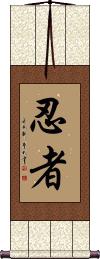
In feudal Japan, ninjas or shinobi (literally, “one who is concealed” or “one that endures”) were sometimes assassins and agents of espionage. The ninja, like samurai, followed their special code of conduct.
The role of the ninja has been romanticized in many American movies (and to a lesser extent in Japanese movies). Because the ninja craze has taken off in the west, Japan has followed the trend, and you'll see plenty of ninja-related imagery in Japan. Note that when writing this as Kanji, Japanese tend to write the first character in the form shown to the right. If you select a Japanese calligrapher, please expect that form. Our Chinese calligraphers can also write it in Japanese form, but only if you request it (in the special instructions about your order during checkout).
Justice / Rectitude / Right Decision
Also means: honor loyalty morality righteousness
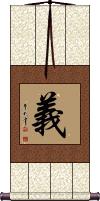
義 is about doing the right thing or making the right decision, not because it's easy but because it's ethically and morally correct.
No matter the outcome or result, one does not lose face if tempering proper justice.
義 can also be defined as righteousness, justice, morality, honor, or “right conduct.” In a more expanded definition, it can mean loyalty to friends, loyalty to the public good, or patriotism. This idea of loyalty and friendship comes from the fact that you will treat those you are loyal to with morality and justice.
義 is also one of the five tenets of Confucius's doctrine.
 There's also an alternate version of this character sometimes seen in Bushido or Korean Taekwondo tenets. It's just the addition of a radical on the left side of the character. If you want this version, click on the image to the right instead of the button above.
This is also a virtue of the Samurai Warrior
See our page with just Code of the Samurai / Bushido here
See Also: Judgment | Impartial | Confucius Tenets
The following table may be helpful for those studying Chinese or Japanese...
| Title | Characters | Romaji (Romanized Japanese) | Various forms of Romanized Chinese | |
| Good Conduct | 善行 | zenkou / zenko | shàn xíng shan4 xing2 shan xing shanxing | shan hsing shanhsing |
| The Foundation of Good Conduct | 誌于道據于德依于仁遊于藝 志于道据于德依于仁游于艺 | zhì yú dào jù yú dé yī yú rén yóu yú yì zhi4 yu2 dao4 ju4 yu2 de2 yi1 yu2 ren2 you2 yu2 yi4 zhi yu dao ju yu de yi yu ren you yu yi | chih yü tao chü yü te i yü jen yu yü i | |
| 4. Right Action Perfect Conduct | 正業 正业 | sei gyou / seigyou / sei gyo | zhèng yè / zheng4 ye4 / zheng ye / zhengye | cheng yeh / chengyeh |
| Filial Piety Filial Conduct | 孝行 | koukou / koko | xiào xìng xiao4 xing4 xiao xing xiaoxing | hsiao hsing hsiaohsing |
| Indomitable Courage | 不屈勇氣 不屈勇气 | fukutsu-yūki | bù qū yǒng qì bu4 qu1 yong3 qi4 bu qu yong qi buquyongqi | pu ch`ü yung ch`i puchüyungchi pu chü yung chi |
| Isshin Academy | 一心學院 一心学院 | isshin-gakuin ishin-gakuin | yī xīn xué yuàn yi1 xin1 xue2 yuan4 yi xin xue yuan yixinxueyuan | i hsin hsüeh yüan ihsinhsüehyüan |
| Swim Swimming | 游泳 | yuuei / yue yuei / yue | yóu yǒng / you2 yong3 / you yong / youyong | yu yung / yuyung |
| Isshin Dojo | 一心道場 | isshin-dōjō ishin-dōjō | yī xīn dào chǎng yi1 xin1 dao4 chang3 yi xin dao chang yixindaochang | i hsin tao ch`ang ihsintaochang i hsin tao chang |
| Unyielding Self-Reliance | 不屈自律 | fukutsu-jiritsu | bù qū zì lǜ bu4 qu1 zi4 lv4 bu qu zi lv buquzilv | pu ch`ü tzu lü puchützulü pu chü tzu lü |
| Leadership | 領導 领导 | lǐng dǎo / ling3 dao3 / ling dao / lingdao | ling tao / lingtao | |
| Shugyo | 修行 | shu gyou / shugyou / shu gyo | xiū xíng / xiu1 xing2 / xiu xing / xiuxing | hsiu hsing / hsiuhsing |
| Martial Morality Martial Arts Ethics Virtue | 武德 | bu toku / butoku | wǔ dé / wu3 de2 / wu de / wude | wu te / wute |
| Ten perfect Mahayana rules | 十法 | jippou / jipo | shí fǎ / shi2 fa3 / shi fa / shifa | shih fa / shihfa |
| All Tenets of the Noble Eightfold Path | 正見正思唯正語正業正命正精進正念正定 正见正思唯正语正业正命正精进正念正定 | shouken shoushiyui shougo shougo shoumyou shoushoujin shounen shoujou shoken shoshiyui shogo shogo shomyo shoshojin shonen shojo | zhèng jiàn zhèng sī wéi zhèng yǔ zhèng yè zhèng mìng zhèng jīng jìn zhèng niàn zhèng dìng zheng4 jian4 zheng4 si1 wei2 zheng4 yu3 zheng4 ye4 zheng4 ming4 zheng4 jing1 jin4 zheng4 nian4 zheng4 ding4 zheng jian zheng si wei zheng yu zheng ye zheng ming zheng jing jin zheng nian zheng ding | cheng chien cheng ssu wei cheng yü cheng yeh cheng ming cheng ching chin cheng nien cheng ting |
| Martial Arts Budo | 武道 | bu dou / budou / bu do | wǔ dào / wu3 dao4 / wu dao / wudao | wu tao / wutao |
| Listen to Your Heart Follow Your Heart | 隨心而行 随心而行 | suí xīn ér xíng sui2 xin1 er2 xing2 sui xin er xing suixinerxing | sui hsin erh hsing suihsinerhhsing |
|
| Furinkazan | 風林火山 风林火山 | fuu rin ka zan fuurinkazan fu rin ka zan | fēng lín huǒ shān feng1 lin2 huo3 shan1 feng lin huo shan fenglinhuoshan | |
| Ninja | 忍者 | ninja | rěn zhě / ren3 zhe3 / ren zhe / renzhe | jen che / jenche |
| Justice Rectitude Right Decision | 義 义 | gi | yì / yi4 / yi | i |
| In some entries above you will see that characters have different versions above and below a line. In these cases, the characters above the line are Traditional Chinese, while the ones below are Simplified Chinese. | ||||

Successful Chinese Character and Japanese Kanji calligraphy searches within the last few hours...



