Many custom options...


And formats...



Eath in Chinese / Japanese...
Buy an Eath calligraphy wall scroll here!
Personalize your custom “Eath” project by clicking the button next to your favorite “Eath” title below...
Switched to secondary search mode due to lack of results using primary.
These secondary results may not be very accurate. Try a different but similar meaning word or phrase for better results. Or...
Look up Eath in my Japanese Kanji & Chinese Character Dictionary(My dictionary is a different system then the calligraphy search you just tried)
If you want a special phrase, word, title, name, or proverb, feel free to contact me, and I will translate your custom calligraphy idea for you.
1. Beeath
3. Breathe
5. Cheatham
10. Honorable Death - No Surrender
11. Featherstone
12. Galbreath
13. Gilbreath
14. Gilreath
15. Greathouse
16. Grim Reaper / God of Death
17. Heath
18. Heather
19. Leath
20. Arata / Leather
21. Leatherman
22. Leathers
23. Leatherwood
25. Merriweather
27. Sword of Death
28. Birth Old-Age Sickness Death
29. Regardless of the Weather, We Overcome Troubles Together
30. Weatherford
31. Weatherly
32. Weathers
33. Weathersby
34. Weatherspoon
Beeath

比思 is the name Beeath in Chinese (Mandarin).
Beeath

ビース is the name Beeath in Japanese Katakana.
Note: Because this title is entirely Japanese Katakana, it should be written by a Japanese calligrapher.
Breath of Life
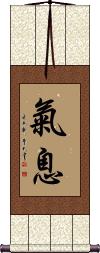
氣息 can mean breath of life or panting for want of breath in the Buddhist context.
In other contexts, it can mean breath, smell, odor, or flavor.
Breathe
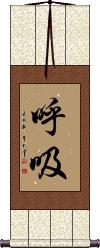
呼吸 means to breathe, breathing or breath in Chinese characters, old Korean Hanja, and Japanese Kanji.
These two characters mean to exhale and inhale. Maybe this will remind you to “just breathe.”
Death Before Dishonor
Better to be broken jade than unbroken pottery
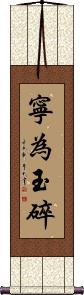
寧為玉碎 is the short version of a longer Chinese proverb which means “rather be shattered piece of jade than an unbroken piece of pottery.”
寧為玉碎 says the “rather be a broken piece of jade” part (the second half is implied - everyone in China knows this idiom).
A little more explanation:
Death is implied with the “broken” meaning. Jade is one of the most precious materials in Chinese history, and in this case, is compared with one's honor and self-worth. Pottery is just something you eat off of; it has no deep value, just as a person who has lost their honor or had none to begin with.
Thus, this means “better to die with honor than to live in shame” or words to that effect.
This is often translated in English as “Death Before Dishonor,” the famous military slogan.
I would also compare this to the English proverb, “Better to die on your feet than to live on your knees.”
Death Before Dishonor
Better to be broken jade than unbroken pottery
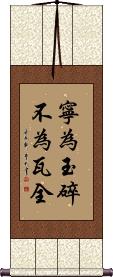
寧為玉碎不為瓦全 is the long version of a Chinese proverb that means “rather be shattered piece of jade than an unbroken piece of pottery.”
A little more explanation:
Death is implied with the “broken” meaning. Jade is one of the most precious materials in Chinese history, and in this case, is compared with one's honor and self-worth. Pottery is just something you eat off of, it has no deep value, just as a person who has lost their honor, or had none to begin with.
Thus, this means “better to die with honor than to live in shame” or words to that effect.
寧為玉碎不為瓦全 is often translated in English as “Death Before Dishonor,” the famous military slogan.
I would also compare this to the English proverb, “Better to die on your feet than to live on your knees.”
This is an idiom. It therefore doesn’t directly say exactly what it means. If you think about the English idiom, "The grass is always greener," it does not directly say "jealousy" or "envy" but everyone knows that it is implied.
Cheatham

切瑟姆 is the name Cheatham in Chinese (Mandarin).
Cheatham

チーサム is the name Cheatham in Japanese Katakana.
Note: Because this title is entirely Japanese Katakana, it should be written by a Japanese calligrapher.
Death Before Surrender
Rather die than compromise
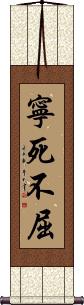
寧死不屈 is often translated as “Death Before Dishonor.”
The literal translation is more like, “Better die than compromise.” The last two characters mean “not to bend” or “not to bow down.” Some might even say that it means “not to surrender.” Thus, you could say this proverb means “Better to die than live on my knees” or simply “no surrender” (with the real idea being that you would rather die than surrender).
Death Before Dishonor
You can die or kill, but never dishonor or disgrace yourself
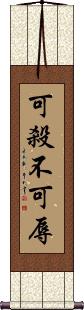
可殺不可辱 almost directly matches the idea of “Death Before Dishonor” while also being an ancient Chinese proverb.
The direct meaning is, “[you] can die/kill [but you] cannot [allow] dishonor/disgrace [upon yourself].” Chinese grammar, and especially ancient grammar, is a little different than English. Not nearly as many articles are needed, and a lot is implied.
There are many ways to express ideas similar to “Death Before Dishonor” in Chinese, and I would rate this one in the top two.
Death Before Dishonor
A soldier can die or kill, but never dishonor or disgrace himself
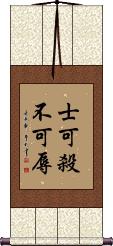
士可殺不可辱 almost directly matches the military idea of “Death Before Dishonor,” while also being an ancient Chinese proverb.
The direct meaning is, “[A] soldier/warrior can die/kill [but he/she] cannot [allow] dishonor/disgrace [upon himself/herself].” Chinese grammar, and especially ancient grammar, is a little different than English. Not nearly as many articles are needed, and a lot is implied.
There are a lot of ways to express ideas similar to “Death Before Dishonor” in Chinese, and I would rate this one in the top two.
This is the original form of this proverb with the character for “soldier/warrior” at the beginning. Most of the time, this character is dropped, becoming a five-character proverb (the soldier/warrior part is implied, even without the character being present in the proverb). We also offer a shorter version.
Death Before Dishonor
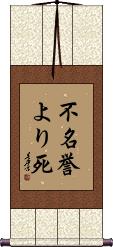
不名誉より死 is the Japanese version of “Death Before Dishonor.”
Japanese grammar is a bit different than English, so this really means something like “Rather die than to be dishonored.” However, “dishonor” is the first three Kanji, and death is the last Kanji. There are two Hiragana (より) which indicate the preference is death when comparing dishonor to death.
Note: Because this selection contains some special Japanese Hiragana characters, it should be written by a Japanese calligrapher.
Death with Dignity
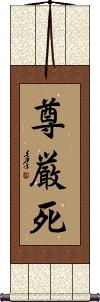
尊厳死 is not a good choice for a wall scroll unless you have a very specific and personal reason.
This was added at the request of a customer.
尊厳死 means “death with dignity” or “natural death” (as opposed to extending one's life unnaturally with life support).
Death Before Surrender
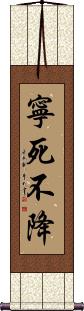
寧死不降 is an ancient Chinese proverb that can be translated as “Rather die than surrender,” “Prefer death over surrender,” “To prefer death to surrender,” or simply “No surrender.”
This is probably the closest proverb to the English proverb “Better to die on your feet than to live on your knees.”
Honorable Death - No Surrender
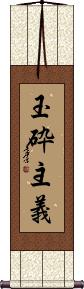
This ancient Japanese proverb can be translated as “The principle of honorable death and no surrender,” or simply “No surrender.”
If you directly translate this, you get something that means “Doctrine of suicide,” or “Ideology of honorable death.”
玉砕主義 is a specifically-Japanese proverb that embraces the long history of honorable suicide or self-sacrifice for honor in Japanese culture.
Featherstone

費瑟斯通 is the name Featherstone in Chinese (Mandarin).
Featherstone

フェザーストーン is the name Featherstone in Japanese Katakana.
Note: Because this title is entirely Japanese Katakana, it should be written by a Japanese calligrapher.
Galbreath

加爾布雷斯 is the name Galbreath in Chinese (Mandarin).
Galbreath

ガルブレス is the name Galbreath in Japanese Katakana.
Note: Because this title is entirely Japanese Katakana, it should be written by a Japanese calligrapher.
Gilbreath

吉爾布雷斯 is the name Gilbreath in Chinese (Mandarin).
Gilbreath

ギルブレス is the name Gilbreath in Japanese Katakana.
Note: Because this title is entirely Japanese Katakana, it should be written by a Japanese calligrapher.
Gilreath

吉爾雷斯 is the name Gilreath in Chinese (Mandarin).
Gilreath

ギルリース is the name Gilreath in Japanese Katakana.
Note: Because this title is entirely Japanese Katakana, it should be written by a Japanese calligrapher.
Greathouse

格雷特豪斯 is the name Greathouse in Chinese (Mandarin).
Greathouse

グレートハウス is the name Greathouse in Japanese Katakana.
Note: Because this title is entirely Japanese Katakana, it should be written by a Japanese calligrapher.
Grim Reaper / God of Death
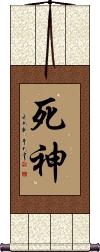
死神 is the title of the mythological figure (often called the Grim Reaper in western culture) in charge of taking the souls of those who die.
This title can be translated directly as “god of death” or “spirit of death.” The first character literally means “death,” and the second means “spirit” or “god.”
死神 is a very strange title for a calligraphy wall scroll. I'm not even sure if my calligraphers will write it, as it has some bad superstitious feelings attached to it.
Heath
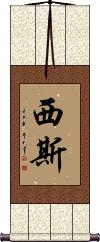
西斯 is the transliteration to Mandarin Chinese for the name Heath.
This name is a little rough in Chinese, as there no sound like, “he” and no “th” sound in Chinese. This Chinese version sounds like “Hsisuh.”
Heath
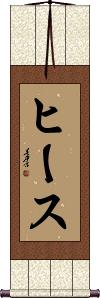
ヒース is the name Heath in Japanese.
Note: Because this title is entirely Japanese Katakana, it should be written by a Japanese calligrapher.
Heather
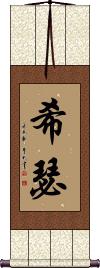
希瑟 is the name Heather in Chinese (Mandarin).
Heather
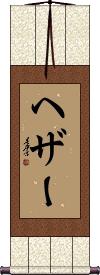
ヘザー is the name Heather in Japanese.
Note: Because this title is entirely Japanese Katakana, it should be written by a Japanese calligrapher.
Leath
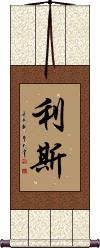
利斯 is the name Leath in Chinese (Mandarin).
Leath
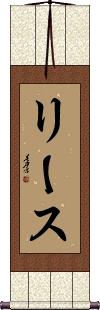
リース is the name Leath in Japanese Katakana.
Note: Because this title is entirely Japanese Katakana, it should be written by a Japanese calligrapher.
Arata / Leather
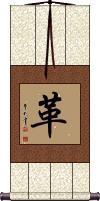
革 is the Chinese, Japanese Kanji, and old Korean Hanja for animal hide, leather, tanned animal hide, skins, hides, or pelts.
This can also mean to reform, remove, strip, expel (from an office), or to cut off.
革 is also a Japanese given name Arata and can refer to the anime character of the same name.
Leatherman

萊瑟曼 is the name Leatherman in Chinese (Mandarin).
Leatherman

レザーマン is the name Leatherman in Japanese Katakana.
Note: Because this title is entirely Japanese Katakana, it should be written by a Japanese calligrapher.
Leathers

萊瑟斯 is the name Leathers in Chinese (Mandarin).
Leathers

レザーズ is the name Leathers in Japanese Katakana.
Note: Because this title is entirely Japanese Katakana, it should be written by a Japanese calligrapher.
Leatherwood

萊瑟伍德 is the name Leatherwood in Chinese (Mandarin).
Leatherwood

レザーウッド is the name Leatherwood in Japanese Katakana.
Note: Because this title is entirely Japanese Katakana, it should be written by a Japanese calligrapher.
Life in Every Breath
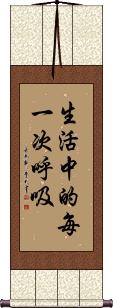
生活中的每一次呼吸 means “life in every breath” in Chinese.
This phrase is more like “every breath in life” as if it's a quantity of breaths that makes up your life.
There are many ways to understand this phrase in English, so this is one of a few ways it could be translated into Chinese. If you’re looking for a different meaning, please contact me.
Life in Every Breath
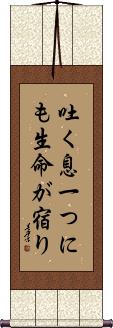
吐く息一つにも生命が宿り means “life in every breath” in Japanese.
This phrase is more like “every single breath as you live and dwell.”
The characters breakdown this way:
吐く息 (hakuiki) to breathe; exhaled air; one's breath; breathing.
一つ (hitotsu) one; only; just.
にも (nimo) also; too; as well; even.
生命 (seimei) life; existence; living.
が (ga) particle.
宿り (yadori) to lodge; to dwell; lodging; abode; shelter.
Note: Because this selection contains some special Japanese Hiragana characters, it should be written by a Japanese calligrapher.
Merriweather

梅里韋瑟 is the name Merriweather in Chinese (Mandarin).
Merriweather

メリウェザー is the name Merriweather in Japanese Katakana.
Note: Because this title is entirely Japanese Katakana, it should be written by a Japanese calligrapher.
Return From Death’s Door
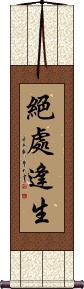
絕處逢生 is a Chinese proverb/idiom that talks of coming back from death's door or an unexpected rescue from danger.
Figuratively, this can be to recover from a seemingly impossible situation or to find a way out of a predicament.
If you have survived a near-death experience or severe illness, this might be an appropriate wall scroll for you.
Sword of Death
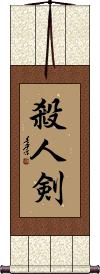
殺人剣 is a Japanese title for “Death Sword,” “Life Taking Sword,” or “satsujinken.”
This is the opposite of katsujinken or the “life-saving sword.” This title is not as commonly used in Japanese but pairs well when hung with katsujinken.
The first two Kanji are a word that translates as homicide, murder or kill (a person). 殺人剣 is specifically to kill a person (as the second character means person or human) as opposed to an animal, etc.
The last Kanji is the Japanese variant of the originally-Chinese character for a sword.
See Also: Katsujinken
Birth Old-Age Sickness Death
Born to Suffer
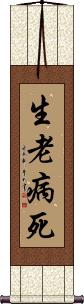
生老病死 means “to be born, to grow old, to get sick and to die” or “birth, aging, sickness, and death.”
This is an old somewhat-morbid Chinese proverb that is also used in Korean and Japanese. It figuratively means the fate of humankind (i.e. mortality) or suggests that we are all born to suffer.
In the Buddhist context, there are the “four inevitables in human life” or “four afflictions that are the lot of every human” known as “四苦” (literally “four afflictions”). Sometimes this proverb is written with that affliction character, 苦, at the end like 生老病死苦.
Regardless of the Weather, We Overcome Troubles Together
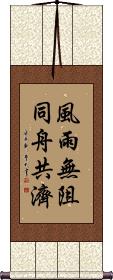
The first four characters are often translated as “Go ahead as planned regardless of the weather” or, “[Overcome] despite the rain and wind.” The last four characters can mean “Stick together” but literally means “Take the same boat [together].”
風雨無阻同舟共濟 is a Chinese proverb that suggests that you are willing (or should be willing) to overcome any adversity, and accomplish your task at hand. The second part (last four characters) is sometimes left off but this second part strongly suggests that you should overcome that adversity together.
Weatherford

韋瑟福德 is the name Weatherford in Chinese (Mandarin).
Weatherford

ウェザーフォード is the name Weatherford in Japanese Katakana.
Note: Because this title is entirely Japanese Katakana, it should be written by a Japanese calligrapher.
Weatherly

韋瑟利 is the name Weatherly in Chinese (Mandarin).
Weatherly

ウェザリー is the name Weatherly in Japanese Katakana.
Note: Because this title is entirely Japanese Katakana, it should be written by a Japanese calligrapher.
Weathers

韋瑟斯 is the name Weathers in Chinese (Mandarin).
Weathers

ウェザース is the name Weathers in Japanese Katakana.
Note: Because this title is entirely Japanese Katakana, it should be written by a Japanese calligrapher.
Weathersby

韋瑟斯比 is the name Weathersby in Chinese (Mandarin).
Weathersby

ウェザースビー is the name Weathersby in Japanese Katakana.
Note: Because this title is entirely Japanese Katakana, it should be written by a Japanese calligrapher.
Weatherspoon

韋瑟斯龐 is the name Weatherspoon in Chinese (Mandarin).
Weatherspoon

ウェザースプーン is the name Weatherspoon in Japanese Katakana.
Note: Because this title is entirely Japanese Katakana, it should be written by a Japanese calligrapher.
The following table may be helpful for those studying Chinese or Japanese...
| Title | Characters | Romaji (Romanized Japanese) | Various forms of Romanized Chinese | |
| Beeath | 比思 | bǐ sī / bi3 si1 / bi si / bisi | pi ssu / pissu | |
| Beeath | ビース | biisu / bisu | ||
| Breath of Life | 氣息 气息 | kisoku | qì xī / qi4 xi1 / qi xi / qixi | ch`i hsi / chihsi / chi hsi |
| Breathe | 呼吸 | ko kyuu / kokyuu / ko kyu | hū xī / hu1 xi1 / hu xi / huxi | hu hsi / huhsi |
| Death Before Dishonor | 寧為玉碎 宁为玉碎 | níng wéi yù suì ning2 wei2 yu4 sui4 ning wei yu sui ningweiyusui | ning wei yü sui ningweiyüsui |
|
| Death Before Dishonor | 寧為玉碎不為瓦全 宁为玉碎不为瓦全 | níng wéi yù suì bù wéi wǎ quán ning2 wei2 yu4 sui4 bu4 wei2 wa3 quan2 ning wei yu sui bu wei wa quan ningweiyusuibuweiwaquan | ning wei yü sui pu wei wa ch`üan ning wei yü sui pu wei wa chüan |
|
| Cheatham | 切瑟姆 | qiè sè mǔ qie4 se4 mu3 qie se mu qiesemu | ch`ieh se mu chiehsemu chieh se mu |
|
| Cheatham | チーサム | chiisamu / chisamu | ||
| Death Before Surrender | 寧死不屈 宁死不屈 | níng sǐ bù qū ning2 si3 bu4 qu1 ning si bu qu ningsibuqu | ning ssu pu ch`ü ningssupuchü ning ssu pu chü |
|
| Death Before Dishonor | 可殺不可辱 可杀不可辱 | kě shā bù kě rǔ ke3 sha1 bu4 ke3 ru3 ke sha bu ke ru keshabukeru | k`o sha pu k`o ju koshapukoju ko sha pu ko ju |
|
| Death Before Dishonor | 士可殺不可辱 士可杀不可辱 | shì kě shā bù kě rǔ shi4 ke3 sha1 bu4 ke3 ru3 shi ke sha bu ke ru shikeshabukeru | shih k`o sha pu k`o ju shihkoshapukoju shih ko sha pu ko ju |
|
| Death Before Dishonor | 不名譽より死 不名誉より死 | fu mei yo yo ri shi fumeiyoyorishi | ||
| Death with Dignity | 尊厳死 | son gen shi songenshi | ||
| Death Before Surrender | 寧死不降 宁死不降 | nìng sǐ bù xiáng ning4 si3 bu4 xiang2 ning si bu xiang ningsibuxiang | ning ssu pu hsiang ningssupuhsiang |
|
| Honorable Death - No Surrender | 玉砕主義 | gyokusai shugi gyokusaishugi | ||
| Featherstone | 費瑟斯通 费瑟斯通 | fèi sè sī tōng fei4 se4 si1 tong1 fei se si tong feisesitong | fei se ssu t`ung feisessutung fei se ssu tung |
|
| Featherstone | フェザーストーン | fezaasutoon fezasuton | ||
| Galbreath | 加爾布雷斯 加尔布雷斯 | jiā ěr bù léi sī jia1 er3 bu4 lei2 si1 jia er bu lei si jiaerbuleisi | chia erh pu lei ssu chiaerhpuleissu |
|
| Galbreath | ガルブレス | garuburesu | ||
| Gilbreath | 吉爾布雷斯 吉尔布雷斯 | jí ěr bù léi sī ji2 er3 bu4 lei2 si1 ji er bu lei si jierbuleisi | chi erh pu lei ssu chierhpuleissu |
|
| Gilbreath | ギルブレス | giruburesu | ||
| Gilreath | 吉爾雷斯 吉尔雷斯 | jí ěr léi sī ji2 er3 lei2 si1 ji er lei si jierleisi | chi erh lei ssu chierhleissu |
|
| Gilreath | ギルリース | giruriisu / girurisu | ||
| Greathouse | 格雷特豪斯 | gé léi tè háo sī ge2 lei2 te4 hao2 si1 ge lei te hao si geleitehaosi | ko lei t`e hao ssu koleitehaossu ko lei te hao ssu |
|
| Greathouse | グレートハウス | gureetohausu guretohausu | ||
| Grim Reaper God of Death | 死神 | shinigami | sǐ shén / si3 shen2 / si shen / sishen | ssu shen / ssushen |
| Heath | 西斯 | xī sī / xi1 si1 / xi si / xisi | hsi ssu / hsissu | |
| Heath | ヒース | hiisu / hisu | ||
| Heather | 希瑟 | xī sè / xi1 se4 / xi se / xise | hsi se / hsise | |
| Heather | ヘザー | hezaa / heza | ||
| Leath | 利斯 | lì sī / li4 si1 / li si / lisi | li ssu / lissu | |
| Leath | リース | riisu / risu | ||
| Arata Leather | 革 | arata / kaku | gé / ge2 / ge | ko |
| Leatherman | 萊瑟曼 莱瑟曼 | lái sè màn lai2 se4 man4 lai se man laiseman | ||
| Leatherman | レザーマン | rezaaman / rezaman | ||
| Leathers | 萊瑟斯 莱瑟斯 | lái sè sī lai2 se4 si1 lai se si laisesi | lai se ssu laisessu |
|
| Leathers | レザーズ | rezaazu / rezazu | ||
| Leatherwood | 萊瑟伍德 莱瑟伍德 | lái sè wǔ dé lai2 se4 wu3 de2 lai se wu de laisewude | lai se wu te laisewute |
|
| Leatherwood | レザーウッド | rezaaudo / rezaudo | ||
| Life in Every Breath | 生活中的每一次呼吸 | shēng huó zhōng de měi yī cì hū xī sheng1 huo2 zhong1 de mei3 yi1 ci4 hu1 xi1 sheng huo zhong de mei yi ci hu xi | sheng huo chung te mei i tz`u hu hsi sheng huo chung te mei i tzu hu hsi |
|
| Life in Every Breath | 吐く息一つにも生命が宿り | hakuiki hitotsu nimo seimei ga yadori | ||
| Merriweather | 梅里韋瑟 梅里韦瑟 | méi lǐ wéi sè mei2 li3 wei2 se4 mei li wei se meiliweise | ||
| Merriweather | メリウェザー | meriwezaa / meriweza | ||
| Return From Death’s Door | 絕處逢生 绝处逢生 | jué chǔ féng shēng jue2 chu3 feng2 sheng1 jue chu feng sheng juechufengsheng | chüeh ch`u feng sheng chüehchufengsheng chüeh chu feng sheng |
|
| Sword of Death | 殺人剣 杀人剣 | satsu jin ken satsujinken | ||
| Birth Old-Age Sickness Death | 生老病死 | shou rou byou shi shouroubyoushi sho ro byo shi | shēng lǎo bìng sǐ sheng1 lao3 bing4 si3 sheng lao bing si shenglaobingsi | sheng lao ping ssu shenglaopingssu |
| Regardless of the Weather, We Overcome Troubles Together | 風雨無阻同舟共濟 风雨无阻同舟共济 | fēng yǔ wú zǔ tóng zhōu gòng jì feng1 yu3 wu2 zu3 tong2 zhou1 gong4 ji4 feng yu wu zu tong zhou gong ji fengyuwuzutongzhougongji | feng yü wu tsu t`ung chou kung chi feng yü wu tsu tung chou kung chi |
|
| Weatherford | 韋瑟福德 韦瑟福德 | wéi sè fú dé wei2 se4 fu2 de2 wei se fu de weisefude | wei se fu te weisefute |
|
| Weatherford | ウェザーフォード | wezaafoodo / wezafodo | ||
| Weatherly | 韋瑟利 韦瑟利 | wéi sè lì wei2 se4 li4 wei se li weiseli | ||
| Weatherly | ウェザリー | wezarii / wezari | ||
| Weathers | 韋瑟斯 韦瑟斯 | wéi sè sī wei2 se4 si1 wei se si weisesi | wei se ssu weisessu |
|
| Weathers | ウェザース | wezaasu / wezasu | ||
| Weathersby | 韋瑟斯比 韦瑟斯比 | wéi sè sī bǐ wei2 se4 si1 bi3 wei se si bi weisesibi | wei se ssu pi weisessupi |
|
| Weathersby | ウェザースビー | wezaasubii / wezasubi | ||
| Weatherspoon | 韋瑟斯龐 韦瑟斯庞 | wéi sè sī páng wei2 se4 si1 pang2 wei se si pang weisesipang | wei se ssu p`ang weisessupang wei se ssu pang |
|
| Weatherspoon | ウェザースプーン | wezaasupuun wezasupun | ||
| In some entries above you will see that characters have different versions above and below a line. In these cases, the characters above the line are Traditional Chinese, while the ones below are Simplified Chinese. | ||||

Successful Chinese Character and Japanese Kanji calligraphy searches within the last few hours...



