Many custom options...


And formats...



Hear in Chinese / Japanese...
Buy a Hear calligraphy wall scroll here!
Personalize your custom “Hear” project by clicking the button next to your favorite “Hear” title below...
Listen
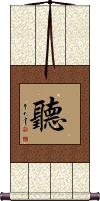
聽 means to listen, hear, and obey (depending on context).
聽 is a stand-alone word in Chinese but is usually seen in compound words in Korean. Therefore, this title is best for a Chinese audience.
 The ancient form of this character is shown in the upper left. However, there is a modern Japanese Kanji version shown to the right. If you want this modern Japanese version, please let us know when you place your order.
Listen to Your Heart / Follow Your Heart
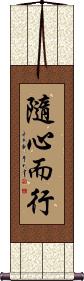
隨心而行 is the closest way to express this idea in Chinese. Literally translated, this phrase means “Allow your heart to dictate your behavior” or “Let your heart guide your conduct” in Chinese. You could also translate this as “follow your heart.” Or, with a bit of imagination, it could mean: “let your spirit be your guide.”
Note that in some cases, “heart” can mean “mind,” “soul” or even “spirit” in Chinese. In ancient China, it was thought that the big pumping organ in your chest was where your thoughts came from, or where your soul resides.
Ancient western thought followed a similar belief. Thus phrases like “I love you with all my heart” and “I give you my whole heart.”
Listen with Open Mind
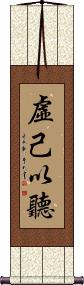
虛己以聽 is a Chinese proverb that means to listen to the ideas of others with an open mind.
Follow Your Heart
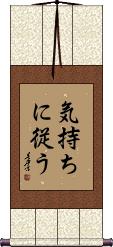
気持ちに従う is a Japanese phrase that means follow your heart.
The first part of this Japanese proverb means feeling, sensation, or mood.
The second part suggests the following, abiding by, or listening to this inner feeling.
In this context, you could say it means your heart, as the whole proverb suggests that you follow the feelings that you have inside.
Note: Because this selection contains some special Japanese Hiragana characters, it should be written by a Japanese calligrapher.
Listen to Both Sides and be Enlightened, Listen to One Side and be in the Dark
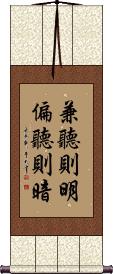
兼聽則明偏聽則暗 is an ancient Chinese proverb about getting all the information from all sides so that you truly understand a situation.
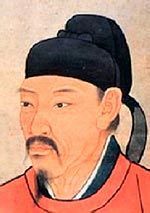
Wei Zheng
A man named Wei Zheng lived between 580-643 AD. He was a noble and wise historian and minister in the court of the early Tang Dynasty. The emperor once asked him, “What should an emperor do to understand the real-world situation, and what makes an emperor out-of-touch with reality?”
Wei Zheng replied, “Listen to both sides and you will be enlightened; listen to only one side and you will be left in the dark.”
Then Wei Zheng went on to cite examples of leaders in history that were victorious after heeding both sides of the story, and other leaders that met their doom because they believed one-sided stories which often came from flattering lips.
Please note that there is an unwritten rule when the same character appears twice in the same phrase, the calligrapher will alter the appearance so that no two characters are exactly alike in the same piece. This calligraphy has two repeating characters that will be written differently than they appear here.
This in-stock artwork might be what you are looking for, and ships right away...
These search terms might be related to Hear:
Always Try to Do Better
Learn From Wisdom
Learn From Your Predecessors
Learn New Ways From Old / Onkochishin
Let Us Try
Listen to Both Sides and Be Enlightened, Listen to One Side and Be in the Dark
Listen to Your Heart / Follow Your Heart
Study / Learn / School
Those Who Understand Are Clever, Those Who Know Themselves Are Truly Wise
When Three People Gather, One Becomes a Teacher
When Three People Gather, Wisdom is Multiplied
You May Learn From Victory, You Will Learn From Failure
Not the results for hear that you were looking for?
Below are some entries from our dictionary that may match your hear search...
| Characters If shown, 2nd row is Simp. Chinese |
Pronunciation Romanization |
Simple Dictionary Definition |
僧 see styles |
sēng seng1 seng sou / so そう |
More info & calligraphy: Sangha / Order of Monks(1) monk; priest; (2) (abbreviation) (See 僧伽・そうぎゃ) sangha (the Buddhist community); (surname) Sou 僧伽 saṅgha, an assembly, collection, company, society. The corporate assembly of at least three (formerly four) monks under a chairman, empowered to hear confession, grant absolution, and ordain. The church or monastic order, the third member of the triratna. The term 僧 used alone has come to mean a monk, or monks in general. Also僧佉, 僧加, 僧企耶.; A fully ordained monk, i.e. a bhikṣu as contrasted with the śramaņa. |
聽 听 see styles |
tīng ting1 t`ing ting chō |
More info & calligraphy: ListenTo hear, listen, hearken; listen to, obey. |
戒 see styles |
jiè jie4 chieh kai; ingoto(ok) かい; いんごと(ok) |
to guard against; to exhort; to admonish or warn; to give up or stop doing something; Buddhist monastic discipline; ring (for a finger) (1) (かい only) {Buddh} admonition; commandment; (2) sila (precept) śīla, 尸羅. Precept, command, prohibition, discipline, rule; morality. It is applied to the five, eight, ten, 250, and other commandments. The five are: (1) not to kill; (2 ) not to steal; (3) not to commit adultery; (4) not to speak falsely; (5) not to drink wine. These are the commands for lay disciples; those who observe them will be reborn in the human realm. The Sarvāstivādins did not sanction the observance of a limited selection from them as did the 成實宗 Satyasiddhi school. Each of the five precepts has five guardian spirits, in all twenty-five, 五戒二十五神. The eight for lay disciples are the above five together with Nos. 7, 8, and 9 of the following; the ten commands for the ordained, monks and nuns, are the above five with the following: (6) not to use adornments of flowers, nor perfumes; (7) not to perform as an actor, juggler, acrobat, or go to watch and hear them; (8) not to sit on elevated, broad, and large divans (or beds); (9) not to eat except in regulation hours; (10) not to possess money, gold or silver, or precious things. The 具足戒full commands for a monk number 250, those for a nun are 348, commonly called 500. Śīla is also the first of the 五分法身, i.e. a condition above all moral error. The Sutra of Brahma's Net has the following after the first five: (6) not to speak of the sins of those in orders; (7) not to vaunt self and depreciate others; (8) not to be avaricious; (9) not to be angry; (10) not to slander the triratna. |
由 see styles |
yóu you2 yu yoshitsugu よしつぐ |
to follow; from; because of; due to; by; via; through; (before a noun and a verb) it is for ... to ... (1) reason; significance; cause; (2) piece of information that one has heard; I hear that ...; it is said that ...; (personal name) Yoshitsugu From; by: a cause, motive; to allow, let; translit. yo, yu; e. g. 由乾; 由乾陀羅 由乾陁羅, Yugaṃdhara, idem 踰健達羅. |
經 经 see styles |
jīng jing1 ching tsune つね |
classics; sacred book; scripture; to pass through; to undergo; to bear; to endure; warp (textile); longitude; menstruation; channel (TCM); abbr. for economics 經濟|经济[jing1 ji4] (female given name) Tsune A warp, that which runs lengthwise; to pass through or by, past; to manage, regulate; laws, canons, classics. Skt. sūtras; threads, threaded together, classical works. Also called 契經 and 經本. The sūtras in the Tripiṭaka are the sermons attributed to the Buddha; the other two divisions are 律 the Vinaya, and 論 the śāstras, or Abhidharma; cf. 三藏. Every sūtra begins with the words 如是我聞 'Thus did I hear', indicating that it contains the words of Śākyamuni. |
聆 see styles |
líng ling2 ling rei / re れい |
(literary) to hear; to listen (given name) Rei |
聞 闻 see styles |
wén wen2 wen mineyuki みねゆき |
to hear; news; well-known; famous; reputation; fame; to smell; to sniff at (personal name) Mineyuki To hear; to make known to; to smell. |
とか see styles |
doga ドガ |
(prt,conj) (1) (oft. as ...とか...とか) and the like; such as; among other things; and so on; (exp,prt) (2) (used to convey hearsay or uncertain information; oft. with 言う, 聞く, etc.) or something; something like; a (certain); (exp,prt) (3) (at sentence end) I hear that ...; people say that ...; rumour has it that ...; (exp,prt) (4) (colloquialism) (used to make a statement vague or less absolute; usu. after a noun) or something; something like; or whatever; (personal name) Degas |
三乘 see styles |
sān shèng san1 sheng4 san sheng minori みのり |
(surname) Minori Triyāna, the three vehicles, or conveyances which carry living beings across saṁsāra or mortality (births-and-deaths) to the shores of nirvāṇa. The three are styled 小,中, and 大. Sometimes the three vehicles are defined as 聲聞 Śrāvaka, that of the hearer or obedient disciple; 緣覺Pratyeka-buddha, that of the enlightened for self; these are described as 小乘 because the objective of both is personal salvation; the third is 菩薩Bodhisattva, or 大乘 Mahāyāna, because the objective is the salvation of all the living. The three are also depicted as 三車 three wains, drawn by a goat, a deer, an ox. The Lotus declares that the three are really the One Buddha-vehicle, which has been revealed in three expedient forms suited to his disciples' capacity, the Lotus Sūtra being the unifying, complete, and final exposition. The Three Vehicles are differently explained by different exponents, e.g. (1) Mahāyāna recognizes (a) Śrāvaka, called Hīnayāna, leading in longer or shorter periods to arhatship; (b) Pratyeka-buddha, called Madhyamayāna, leading after still longer or shorter periods to a Buddhahood ascetically attained and for self; (c) Bodhisattva, called Mahayana, leading after countless ages of self-sacrifce in saving others and progressive enlightenment to ultimate Buddhahood. (2) Hīnayāna is also described as possessing three vehicles 聲, 緣, 菩 or 小, 中, 大, the 小 and 中 conveying to personal salvation their devotees in ascetic dust and ashes and mental annihilation, the 大 leading to bodhi, or perfect enlightenment, and the Buddha's way. Further definitions of the Triyāna are: (3) True bodhisattva teaching for the 大; pratyeka-buddha without ignorant asceticism for the 中; and śrāvaka with ignorant asceticism for the 小. (4) (a) 一乘 The One-Vehicle which carries all to Buddhahood: of this the 華嚴 Hua-yen and 法華 Fa-hua are typical exponents; (b) 三乘法 the three-vehicle, containing practitioners of all three systems, as expounded in books of the 深密般若; (c) 小乘 the Hīnayāna pure and simple as seen in the 四阿合經 Four Āgamas. Śrāvakas are also described as hearers of the Four Truths and limited to that degree of development; they hear from the pratyeka-buddhas, who are enlightened in the Twelve Nidānas 因緣; the bodhisattvas make the 六度 or six forms of transmigration their field of sacrificial saving work, and of enlightenment. The Lotus Sūtra really treats the 三乘. Three Vehicles as 方便 or expedient ways, and offers a 佛乘 Buddha Vehicle as the inclusive and final vehicle. |
三忍 see styles |
sān rěn san1 ren3 san jen sannin |
The tree forms of kṣānti, i.e. patience (or endurance, tolerance). One of the groups is patience under hatred, under physical hardship, and in pursuit of the faith. Another is patience of the blessed in the Pure Land in understanding the truth they hear, patience in obeying the truth, patience in attaining absolute reality; v. 無量壽經. Another is patience in the joy of remembering Amitābha, patience in meditation on his truth, and patience in constant faith in him. Another is the patience of submission, of faith, and of obedience. |
三猿 see styles |
sān yuán san1 yuan2 san yüan sanen; sanzaru さんえん; さんざる |
(See 見猿,言わ猿,聞か猿) three wise monkeys (who "see no evil, hear no evil, and speak no evil") The three monkeys, one guarding its eyes, another its ears, a third its mouth. |
不聞 不闻 see styles |
bù wén bu4 wen2 pu wen fumon ふもん |
(surname) Fumon does not hear [of] |
中聽 中听 see styles |
zhōng tīng zhong1 ting1 chung t`ing chung ting |
pleasant to hear (i.e. agreeable news); to one's liking; music to one's ears; Taiwan pr. [zhong4 ting1] |
二教 see styles |
èr jiào er4 jiao4 erh chiao nikyō |
Dual division of the Buddha's teaching. There are various definitions: (1) Tiantai has (a) 顯教 exoteric or public teaching to the visible audience, and (b) 密教 at the same time esoteric teaching to an audience invisible to the other assembly. (2) The 眞言 Shingon School by "exoteric" means all the Buddha's preaching, save that of the 大日經 which it counts esoteric. (3) (a) 漸教 and (b) 頓教 graduated and immediate teaching, terms with various uses, e.g. salvation by works Hīnayāna, and by faith, Mahāyāna, etc.; they are applied to the Buddha's method, to the receptivity of hearers and to the teaching itself. (4) Tiantai has (a) 界内教 and (b) 界外教 teachings relating to the 三界 or realms of mortality and teachings relating to immortal realms. (5) (a) 半字教 and (b) 滿字教 Terms used in the Nirvāṇa sūtra, meaning incomplete word, or letter, teaching and complete word teaching, i.e. partial and complete, likened to Hīnayāna and Mahāyāna. (6) (a) 捃收教 and (b) 扶律談常教 of the Nirvāṇa sūtra, (a) completing those who failed to hear the Lotus; (b) "supporting the law, while discoursing on immortality," i.e. that the keeping of the law is also necessary to salvation. (7) Tiantai's division of (a) 偏教 and (b) 圓教 the partial teaching of the 藏, 通, and schools as contrasted with the perfect teaching of the 圓 school. (8) Tiantai's division of (a) 構教 and (6) 實教 temporary and permanent, similar to the last two. (9) (a) 世間教 The ordinary teaching of a moral life here; (b) 出世間教 the teaching of Buddha-truth of other-worldly happiness in escape from mortality. (10) (a) 了義教 the Mahāyāna perfect or complete teaching, and (b) 不了義教 Hīnayāna incompleteness. (11) The Huayan division of (a) 屈曲教 indirect or uneven teaching as in the Lotus and Nirvāṇa sūtras, and (b) 平道教 direct or levelled up teaching as in the Huayan sūtra. (12) The Huayan division of (a) 化教 all the Buddha's teaching for conversion and general instruction, and (b) 制教 his rules and commandments for the control and development of his order. |
五品 see styles |
wǔ pǐn wu3 pin3 wu p`in wu pin gohon |
A division of the disciples, in the Lotus Sutra, into five grades— those who hear and rejoice; read and repeat; preach; observe and meditate; and transform self and others. |
令聞 令闻 see styles |
lìng wén ling4 wen2 ling wen reimon / remon れいもん |
good reputation; fame; (given name) Reimon cause to hear |
伺う see styles |
ukagau うかがう |
(transitive verb) (1) (humble language) to call on someone; to call at a place; to pay a visit; to wait on someone; (transitive verb) (2) (humble language) to ask; to inquire; (transitive verb) (3) (humble language) to hear; to be told; (transitive verb) (4) to implore (a god for an oracle); to seek direction (from your superior); (v5u,vi) (5) (from 御機嫌を伺う) to speak to (a large crowd at a theatre, etc.) |
信海 see styles |
xìn hǎi xin4 hai3 hsin hai shinkai しんかい |
(given name) Shinkai The ocean of faith: the true virtue of the believing hear is vast and boundless as the ocean. |
信珠 see styles |
xìn zhū xin4 zhu1 hsin chu shinshu |
The pearl of faith; as faith purifies the hear it is likened to a pearl of the purest water. |
候由 see styles |
sourouyoshi / soroyoshi そうろうよし |
(expression) (archaism) I hear that ... |
八難 八难 see styles |
bān án ban1 an2 pan an hachinan |
The eight conditions in which it is difficult to see a Buddha or hear his dharma: in the hells: as hungry ghosts; as animals; in Uttarakuru (the northern continent where all is pleasant); in the long-life heavens (where life is long and easy); as deaf, blind, and dumb; as a worldly philosopher; in the intermediate period between a Buddha and his successor. Also 八無暇. |
六卽 see styles |
liù jí liu4 ji2 liu chi rokusoku |
The six stages of Bodhisattva developments as defined in the Tiant 'ai 圓教, i. e. Perfect, or Final Teaching, in contrast with the previous, or ordinary six developments of 十信, 十住, 十行, etc., as found in the 別教 Differentiated or Separate school. The Tiantai six are: (1) 理卽 realization that all beings are of Buddha-nature; (2) 名字卽 the apprehension of terms, that those who only hear and believe are in the Buddha. law and potentially Buddha; (3) 觀行卽 advance beyond terminology to meditation, or study and accordant action; it is known as 五品觀行 or 五品弟子位; (4) 相似卽 semblance stage, or approximation to perfection in purity, the 六根淸淨位, i. e. the 十信位; (5) 分證卽 discrimination of truth and its progressive experiential proof, i. e. the 十住, 十行, 十廻向, 十地, and 等覺位 of the 別教 known also as the 聖因 cause or root of holiness. (6) 究竟卽 perfect enlightenment, i. e. the 妙覺位 or 聖果 fruition of holiness. (1) and (2) are known as 外凡 external for, or common to, all. (1) is theoretical; (2) is the first step in practical advance, followed by (3) and (4) styled 内凡 internal for all, and (3), (4), (5), and (6) are known as the 八位 the eight grades. |
六難 六难 see styles |
liun án liun4 an2 liun an rokunan |
The six difficult things— to be born in a Buddha-age, to hear the true Buddha-law, to beget a good heart, to be born in the central kingdom (India), to be born in human form, and to be perfect; see, Nirvana Sutra 23. |
再審 再审 see styles |
zài shěn zai4 shen3 tsai shen saishin さいしん |
to hear a case again; review; retrial (noun, transitive verb) (1) {law} retrial; reopening of a case; (noun, transitive verb) (2) review; reexamination |
受理 see styles |
shòu lǐ shou4 li3 shou li juri じゅり |
to accept to hear a case; to handle (a service) (noun, transitive verb) acceptance |
受聽 受听 see styles |
shòu tīng shou4 ting1 shou t`ing shou ting |
nice to hear; worth listening to |
叨擾 叨扰 see styles |
tāo rǎo tao1 rao3 t`ao jao tao jao |
to bother; to trouble; (polite expression of appreciation for time taken to hear, help or host the speaker) sorry to have bothered you; thank you for your time |
塞耳 see styles |
sāi ěr sai1 er3 sai erh |
to block one's ears (not wishing to hear) |
多寶 多宝 see styles |
duō bǎo duo1 bao3 to pao Tahō |
(多寳) (多寳如來, 多寶如來) Prabhūtaratna, abundant treasures, or many jewels. The Ancient Buddha, long in nirvana, who appears in his stūpa to hear the Buddha preach the Lotus doctrine, by his presence revealing, inter alia, that nirvana is not annihilation, and that the Lotus doctrine is the Buddha-gospel; v. Lotus Sutra 寳塔品. |
好聽 好听 see styles |
hǎo tīng hao3 ting1 hao t`ing hao ting |
pleasant to hear |
Click here for more hear results from our dictionary
The following table may be helpful for those studying Chinese or Japanese...
| Title | Characters | Romaji (Romanized Japanese) | Various forms of Romanized Chinese | |
| Listen | 聽 听 / 聴 | chou / ki / cho / ki | tīng / ting1 / ting | t`ing / ting |
| Listen to Your Heart Follow Your Heart | 隨心而行 随心而行 | suí xīn ér xíng sui2 xin1 er2 xing2 sui xin er xing suixinerxing | sui hsin erh hsing suihsinerhhsing |
|
| Listen with Open Mind | 虛己以聽 虚己以听 | xū jǐ yǐ tīng xu1 ji3 yi3 ting1 xu ji yi ting xujiyiting | hsü chi i t`ing hsüchiiting hsü chi i ting |
|
| Follow Your Heart | 気持ちに従う | kimochi ni shitagau kimochinishitagau | ||
| Listen to Both Sides and be Enlightened, Listen to One Side and be in the Dark | 兼聽則明偏聽則暗 兼听则明偏听则暗 | jiān tīng zé míng, piān tīng zé àn jian1 ting1 ze2 ming2, pian1 ting1 ze2 an4 jian ting ze ming, pian ting ze an | chien t`ing tse ming, p`ien t`ing tse an chien ting tse ming, pien ting tse an |
|
| In some entries above you will see that characters have different versions above and below a line. In these cases, the characters above the line are Traditional Chinese, while the ones below are Simplified Chinese. | ||||

Successful Chinese Character and Japanese Kanji calligraphy searches within the last few hours...



