Many custom options...


And formats...



Important in Chinese / Japanese...
Buy an Important calligraphy wall scroll here!
Personalize your custom “Important” project by clicking the button next to your favorite “Important” title below...
Remember What Is Important To You
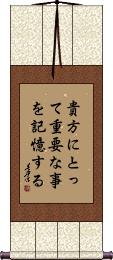
貴方にとって重要な事を記憶する means “Remember What Is Important To You” in Japanese.
Note: Because this selection contains some special Japanese Hiragana characters, it should be written by a Japanese calligrapher.
Remember What Is Important To You
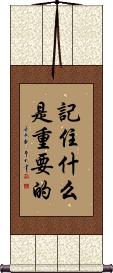
记住什么是重要的 means “Remember What Is Important To You” in Mandarin Chinese.
The two most important days in your life...

人生で一番大事な日は二日ある。生まれた日と、なぜ生まれたかを分かった日 is Mark Twain's quote, “The two most important days in your life are the day you are born and the day you find out why” in Japanese.
Note: Because this selection contains some special Japanese Hiragana characters, it should be written by a Japanese calligrapher.
This in-stock artwork might be what you are looking for, and ships right away...

Gallery Price: $61.00
Your Price: $33.88
These search terms might be related to Important:
Central Africa
Central African Republic
I Am Worthy of Being Loved
One Key Opens One Lock
Perseverance is the Key
The Key to Immortality is First Living a Life Worth Remembering
Time is More Valuable Than Jade
Vital
Worthy
Not the results for important that you were looking for?
Below are some entries from our dictionary that may match your important search...
| Characters If shown, 2nd row is Simp. Chinese |
Pronunciation Romanization |
Simple Dictionary Definition |
精華 精华 see styles |
jīng huá jing1 hua2 ching hua seika / seka せいか |
More info & calligraphy: Seika / Quintessenceessence; quintessence; flower; glory; (f,p) Seika |
蘭克 兰克 see styles |
lán kè lan2 ke4 lan k`o lan ko |
More info & calligraphy: Rank |
和敬清寂 see styles |
wakeiseijaku / wakesejaku わけいせいじゃく |
More info & calligraphy: Elements of the Tea Ceremony |
介 see styles |
jiè jie4 chieh tasuku たすく |
to introduce; to lie between; between; shell; armor (given name) Tasuku scales, mail: important; resolute, firm; an attendant; petty, small. |
喪 丧 see styles |
sàng sang4 sang mo(p); sou / mo(p); so も(P); そう |
to lose something abstract but important (courage, authority, one's life etc); to be bereaved of (one's spouse etc); to die; disappointed; discouraged (noun - becomes adjective with の) (1) mourning; (2) (も only) (archaism) calamity; misfortune Mourning. To lose; destroy. |
大 see styles |
dài dai4 tai yutaka ゆたか |
see 大夫[dai4 fu5] (pref,adj-na,n) (1) large; big; great; huge; vast; major; important; serious; severe; (prefix) (2) great; prominent; eminent; distinguished; (suffix) (3) -sized; as big as; the size of; (suffix noun) (4) (abbreviation) (See 大学・1) university; (5) large (e.g. serving size); large option; (6) (abbreviation) (See 大の月) long month (i.e. having 31 days); (given name) Yutaka Maha. 摩訶; 麼賀. Great, large, big; all pervading, all-embracing; numerous 多; surpassing ; mysterious 妙; beyond comprehension 不可思議; omnipresent 體無不在. The elements, or essential things, i.e. (a) 三大 The three all-pervasive qualities of the 眞如 q.v. : its 體, 相 , 用 substance, form, and functions, v. 起信論 . (b) 四大 The four tanmātra or elements, earth, water, fire, air (or wind) of the 倶舍論. (c)五大 The five, i.e. the last four and space 空, v. 大日經. (d) 六大 The six elements, earth, water, fire, wind, space (or ether), mind 識. Hīnayāna, emphasizing impersonality 人空, considers these six as the elements of all sentient beings; Mahāyāna, emphasizing the unreality of all things 法空, counts them as elements, but fluid in a flowing stream of life, with mind 識 dominant; the esoteric sect emphasizing nonproduction, or non-creation, regards them as universal and as the Absolute in differentiation. (e) 七大 The 楞嚴經 adds 見 perception, to the six above named to cover the perceptions of the six organs 根. |
専 see styles |
zhuān zhuan1 chuan makoto まこと |
Japanese variant of 專|专 (suffix noun) (1) (slang) exclusively doing ...; person who exclusively does ...; fetish for ...; someone with a fetish for ...; (2) (obsolete) first; most important thing; number one priority; (given name) Makoto |
臍 脐 see styles |
qí qi2 ch`i chi heso(p); hozo; heso へそ(P); ほぞ; ヘソ |
(bound form) the navel; the umbilicus; (bound form) the belly flap of a crab; apron (1) (kana only) navel; belly button; (2) (へそ, ヘソ only) (kana only) protrusion or depression in the middle of an object; (3) (kana only) center; centre; most important part; main point navel |
衝 冲 see styles |
chòng chong4 ch`ung chung katsuhiro かつひろ |
powerful; vigorous; pungent; towards; in view of (1) important point (e.g. on a route); (2) important role (responsibility, etc.); (3) {astron} (See 合・ごう・4) opposition; (personal name) Katsuhiro |
要 see styles |
yào yao4 yao yoshi よし |
to want; to need; to ask for; will; shall; about to; need to; should; if (same as 要是[yao4 shi5]); (bound form) important (1) main point; essential point; important thing; (n,adj-f) (2) necessity; need; requirement; (surname) Yoshi Important, essential, necessary, strategic; want, need; about to; intercept; coerce; agree, etc. |
計 计 see styles |
jì ji4 chi hakaru はかる |
to calculate; to compute; to count; to regard as important; to plan; ruse; meter; gauge (n,n-suf) (1) plan; (n,n-suf) (2) meter; measuring device; (prefix) (3) (in) total; total (of); (given name) Hakaru To reckon, count (on); scheme; add to, annex; translit. ke; cf. 髻, 鷄. |
識 识 see styles |
zhì zhi4 chih tsuguhide つぐひで |
to record; to write a footnote (1) acquaintanceship; (2) {Buddh} vijnana; consciousness; (3) (after a signature) written by ...; (personal name) Tsuguhide vijñāna, "the art of distinguishing, or perceiving, or recognizing, discerning, understanding, comprehending, distinction, intelligence, knowledge, science, learning . . . wisdom." M.W. parijñāna, "perception, thorough knowledge," etc. M.W. It is intp. by 心 the mind, mental discernment, perception, in contrast with the object discerned; also by 了別 understanding and discrimination. There are classifications of 一識 that all things are the one mind, or are metaphysical; 二識 q. v. discriminating the ālaya-vijñāna or primal undivided condition from the mano-vijñāna or that of discrimination; 三識 in the Laṅkāvatāra Sutra, fundamental, manifested and discriminate; 五識 q.v. in the 起信論, i.e. 業, 轉, 現, 知, and 相續識; 六識 the perceptions and discernings of the six organs of sense; also of 8, 9, 10, and 11 識. The most important is the eight of the 起信論, i.e. the perceptions of the six organs of sense, eye, ear, nose, tongue, body (or touch), and mind, together with manas, intp. as 意識 the consciousness of the previous moment, on which the other six depend; the eighth is the ālaya-vijñāna, v. 阿賴耶, in which is contained the seed or stock of all phenomena and which 無沒 loses none, or nothing, is indestructible; a substitute for the seventh is ādāna 'receiving' of the 唯識, which is intp. as 無解 undiscriminated, or indefinite perception; there is a difference of view between the 相 and the 性 schools in regard to the seventh and eight 識; and the latter school add a ninth called the amala, or pure vijñāna, i.e. the non-phenomenal 眞如識. The esoterics add that all phenomena are mental and all things are the one mind, hence the one mind is 無量識 unlimited mind or knowledge, every kind of knowledge, or omniscience. vijñāna is one of the twelve nidānas.; Ālaya-vijñāna and mano-vijñāna; i. e. 阿梨耶 | and 分別事 |; v. 識. |
三多 see styles |
sān duō san1 duo1 san to mitsuda みつだ |
(personal name) Mitsuda Much intercourse with good friends, much hearing of the Law, much meditation on the impure. Also, much worship, much service of good friends, much inquiry on important doctrines. There are other groups. |
上客 see styles |
joukyaku; joukaku / jokyaku; jokaku じょうきゃく; じょうかく |
(1) guest of honor; guest of honour; (2) good customer; important customer |
不動 不动 see styles |
bù dòng bu4 dong4 pu tung fudou / fudo ふどう |
motionless (adj-no,n) (1) immovable; motionless; firm; unwavering; unshakable; steadfast; (2) (abbreviation) {Buddh} (See 不動明王) Acala (Wisdom King); Fudō; fierce Buddhist deity; (place-name, surname) Fudou acala; niścala; dhruva. The unmoved, immobile, or motionless; also 無動 the term is used for the unvarying or unchanging, for the pole-star, for fearlessness, for indifference to passion or temptation. It is a special term of Shingon 異言 applied to its most important Bodhisattva, the 不動明王 q. v. |
中論 中论 see styles |
zhōng lùn zhong1 lun4 chung lun Chūron |
中觀論 Prāñnyāya-mūla-śāstra-ṭīkā, or Prāṇyamula-śāstra-ṭīkā; the Mādhyamika-śāstra, attributed to the bodhisattvas Nāgārjuna as creator, and Nīlacakṣus as compiler; tr. by Kumārajīva A. D. 409. It is the principal work of the Mādhyamika, or Middle School, attributed to Nāgārjuna. Versions only exist in Chinese and Tibetan; an English translation by Miyamoto exists and publication is promised; a German version is by Walleser. The 中論 is the first and most?? important of the 三論 q. v. The teaching of this School is found additionally in the 順中論; 般若燈論釋大乘中觀釋論 and 中論疏. Cf. 中道. The doctrine opposes the rigid categories of existence and non-existence 假 and 空, and denies the two extremes of production (or creation) and nonproduction and other antitheses, in the interests of a middle or superior way. |
主な see styles |
omona おもな |
(pre-noun adjective) (See 主・おも・1) chief; main; principal; important |
主次 see styles |
zhǔ cì zhu3 ci4 chu tz`u chu tzu |
the important and the less important; primary and secondary |
主脳 see styles |
shunou / shuno しゅのう |
(noun - becomes adjective with の) (1) head; leader; leading spirit; (2) (archaism) important part |
事跡 事迹 see styles |
shì jì shi4 ji4 shih chi jiseki じせき |
deed; past achievement; important event of the past evidence; trace; vestige |
五山 see styles |
wǔ shān wu3 shan1 wu shan goyama ごやま |
(rare) five most important temples of a region; (surname) Goyama Five mountains and monasteries: (1) in India, sacred because of their connection with the Buddha: 鞞婆羅跋怒 Vaibhāra-vana; 薩多般那求呵 Saptaparṇaguhā; 因陀羅勢羅求呵 Indraśailaguhā; 薩簸恕魂直迦鉢婆羅 Sarpiṣ kuṇḍikā-prāgbhāra; 耆闍崛 Gṛdhrakūṭa; (2) in China, established during the Five Dynasties and the Southern Sung dynasty, on the analogy of those in India; three at Hangzhou at 徑山 Jingshan, 北山 Beishan, and 南山 Nanshan and two at Ningbo at 阿育王山 King Aśoka Shan and 太白山 Taiboshan. Later the Yuan dynasty established one at 全陵 Chin Ling, the 天界大龍翔隻慶寺 which became chief of these under the Ming dynasty. |
任事 see styles |
rèn shì ren4 shi4 jen shih |
appointment to an important post |
体要 see styles |
taiyou / taiyo たいよう |
important point |
侍從 侍从 see styles |
shì cóng shi4 cong2 shih ts`ung shih tsung shijū |
to serve (an important personage); attendant; retainer to attend on |
保駕 保驾 see styles |
bǎo jià bao3 jia4 pao chia |
(in former times) to escort the emperor (or other important personage); (nowadays) to escort sb (usually jocular) |
偉い see styles |
erai えらい |
(adjective) (1) great; excellent; admirable; remarkable; distinguished; important; celebrated; famous; eminent; (2) (kana only) awful; terrible |
偉大 伟大 see styles |
wěi dà wei3 da4 wei ta idai いだい |
huge; great; grand; worthy of the greatest admiration; important (contribution etc) (adjectival noun) great; grand; magnificent; outstanding; mighty |
元年 see styles |
yuán nián yuan2 nian2 yüan nien mototoshi もととし |
first year of an emperor's reign; first year of an era; first year of a significant time period (1) first year (of an imperial era); (2) year something (important) first happened or began; (personal name) Mototoshi |
先務 see styles |
senmu せんむ |
most important task; most pressing task; urgent business |
公館 公馆 see styles |
gōng guǎn gong1 guan3 kung kuan koukan / kokan こうかん |
residence (of sb rich or important); mansion official residence |
Click here for more important results from our dictionary
The following table may be helpful for those studying Chinese or Japanese...
| Title | Characters | Romaji (Romanized Japanese) | Various forms of Romanized Chinese | |
| Remember What Is Important To You | 貴方にとって重要な事を記憶する | anata ni totte jyuyou na koto wo kioku suru anata ni totte jyuyo na koto wo kioku suru | ||
| Remember What Is Important To You | 記住什么是重要的 记住什么是重要的 | jì zhù shén shì zhòng yào de ji4 zhu4 shen2 me shi4 zhong4 yao4 de ji zhu shen me shi zhong yao de jizhushenmeshizhongyaode | chi chu shen me shih chung yao te | |
| The two most important days in your life... | 人生で一番大事な日は二日ある生まれた日となぜ生まれたかを分かった日 | Jinsei de ichiban daijina hi wa futsuka aru. Umaretahi to, naze umareta ka o wakatta hi | ||
| In some entries above you will see that characters have different versions above and below a line. In these cases, the characters above the line are Traditional Chinese, while the ones below are Simplified Chinese. | ||||

Successful Chinese Character and Japanese Kanji calligraphy searches within the last few hours...



