Many custom options...


And formats...



Not what you want?
Try other similar-meaning words, fewer words, or just one word.
Neve Give Up in Chinese / Japanese...
Buy a Neve Give Up calligraphy wall scroll here!
Personalize your custom “Neve Give Up” project by clicking the button next to your favorite “Neve Give Up” title below...
Switched to secondary search mode due to lack of results using primary.
These secondary results may not be very accurate. Try a different but similar meaning word or phrase for better results. Or...
Look up Neve Give Up in my Japanese Kanji & Chinese Character Dictionary(My dictionary is a different system then the calligraphy search you just tried)
If you want a special phrase, word, title, name, or proverb, feel free to contact me, and I will translate your custom calligraphy idea for you.
1. Even a fool may sometimes come up with a good idea
4. Ascend
6. Birth / Life
7. If you cannot bite, do not show your teeth
9. Brahmavihara - The Four Immeasurables
11. You May Learn from Victory, You Will Learn from Failure
12. Broken Hearted
13. Wisdom and Insight of the Buddha
14. Open Your Heart
15. Chito-Ryu
16. Choose Life
17. Commitment
18. Confucius
19. Corinthians 13:4
21. Crisis equals Danger plus Opportunity?
22. Give Up Desire
23. Dana: Almsgiving and Generosity
24. Daodejing / Tao Te Ching - Excerpt
25. Daodejing / Tao Te Ching - Chapter 81
27. Dedication
28. Desire
29. Discipline
30. Double Happiness Guest Book
32. Dripping Water Penetrates Stone
33. Dynamic
35. Enso - Japanese Zen Circle
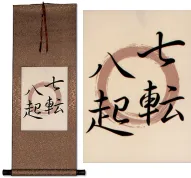
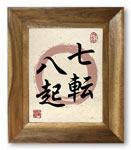
37. Fall Down Seven Times, Get Up Eight
38. Flourish and Blossom Everywhere
39. Forest
40. Forgiveness
41. Generosity
44. Good Good Study, Day Day Up
45. Gowri
46. Green Plum and Bamboo Horse
47. Guanxi
49. Gung Ho
50. Happy New Year
51. Heaven
52. Hello / Ni Hao
53. Woman of Strong Character / Woman Hero
54. Glory and Honor
55. Hot / Heat
56. Ice / Frost
57. Ikigai
60. A Life of Serenity Yields Understanding
61. Achieve Inner Peace; Find Deep Understanding
62. Innovation
63. Inspiration
64. Inspired
65. Intense / Serious / Deep / Profound
66. Jesus
67. Jinni
68. Safety and Well-Being of the Family
69. Tang Soo Do / Tang Hand Way
70. Meet the Buddha, Kill the Buddha
71. Kyokushin
73. Listen to Your Heart / Follow Your Heart
74. Live Laugh Love
75. Live Free or Die
77. Loyalty
78. The Lord's Prayer / Luke 11:2-4
79. The Lord's Prayer / Mathew 6:9-13
80. Mercy / Compassion / Buddhist Loving Kindness
86. Mountain Travels Poem by Dumu
87. Accept the Situation and Move On
88. Musashi
89. Neve
90. Never Give Up
91. Never Give In / Never Succumb / Never Lose
93. New Beginning
94. Ninja
95. No Fear
Even a fool may sometimes come up with a good idea
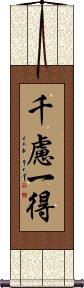
千慮一得 means “1000 tries, one success,” or “[a] thousand tries [leads to] one success.”
This proverb is a humble way to express your success, ideas, or accomplishments. As if you are a fool who just got lucky in inventing or creating something.
Translations for this proverb include:
Even without any notable ability on my part, I may still get it right sometimes by good luck.
Even a fool may sometimes come up with a good idea.
Compare this to the English idiom, “Even a broken clock is right twice a day.”
Always Try to do Better
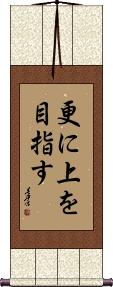
This Japanese proverb literally translates as: [After having achieved a fair degree of success,] one should still try to do better.
Others may translate this as “Always try to improve,” or “Always try to be better.”
Note: Because this selection contains some special Japanese Hiragana characters, it should be written by a Japanese calligrapher.
See Also: Never Give Up
Ardent / Fierce
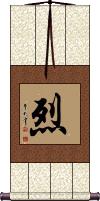
烈 is a Chinese word that means ardent; intense; fierce; stern; upright; to give one's life for a noble cause.
In another context, this character can refer to one's exploits or achievements.
In the Buddhist context, this is burning, fierce, virtuous, and/or heroic.
While technically, it had the same meaning in Japanese, it's usually a female given name, Retsu in Japanese these days.
Ascend
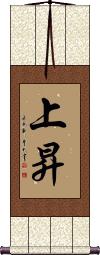
上昇 means to rise up, to go up, or to ascend in Chinese, Japanese Kanji, and old Korean Hanja.
If you are rising, ascending, or climbing, this is the word for you.
In the older Buddhist context, this means to ascend, with the implication that the destination is the heavenly realm.
Beauty Shop / Beauty Salon
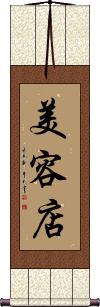
美容店 is how to write “Beauty Shop” or “Beauty Salon.”
If you own such a business, this will make a nice wall scroll to hang up - and many of your Asian customers will be able to read and appreciate it.
When traveling in China, you will see signs like this in the window of any place that offers full services of hair styling, manicures, pedicures, and often shampoo with head and back massage.
However, as a handmade wall scroll, this becomes a very fancy piece of artwork that shows the high class of your business (a great sign for your window if you don't get direct sunlight).
Birth / Life
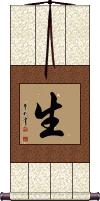
生 is a Chinese word that means “to be born” and “to give birth.”
Also, it's often used to refer to life itself, and sometimes “to grow.”
生 is used in a lot of compound words such as “yi sheng,” which means “doctor” (literally “healer of life”), “sheng ri” which means “birthday” (literally “birth-day”), and “xue sheng” which means student (literally “studying life” or “learner [about] life”). Few Chinese people will think of the literal meaning when this uses words like doctor and student - but it is interesting to note.
生 has the same root meaning in Korean Hanja and Japanese. However, in Japanese, there are many possible pronunciations, and this can be used to mean “raw” or “unprocessed” (as in draft beer). Therefore, not be the best if your audience is Japanese.
See Also: Vitality
If you cannot bite, do not show your teeth
If you cannot fight, don't start one
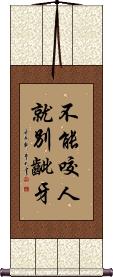
不能咬人就别龇牙 is a Chinese proverb that literally translates as: [if you] can't bite people, don't bare [your] teeth.
Figuratively, this means: Don't show your anger if you can't do anything about the situation.
Some will also say this means “Don't start a fight that you cannot win.” Others will say it means that you must be willing to back up your words (perhaps with your fists).
Blessings and Good Wishes
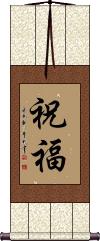
祝福 is a nice way to give good wishes to someone.
It can be a general blessing or used to congratulate someone for a special occasion or graduation.
This has a good meaning in Japanese but is more appropriate when expressed orally. 祝福 is not a natural selection for a wall scroll if your audience is Japanese.
Brahmavihara - The Four Immeasurables
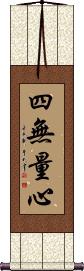
四無量心 is the cattāri brahmavihārā or catvāri apramāṇāni.
The four immeasurables, or infinite Buddha-states of mind. These four dhyānas include:
1. 慈無量心 boundless kindness, maitrī, or bestowing of joy or happiness.
2. 悲無量心 boundless pity, karuṇā, to save from suffering.
3. 喜無量心 boundless joy, muditā, on seeing others rescued from suffering.
4. 捨無量心 limitless indifference, upekṣā, i.e., rising above these emotions or giving up all things.
Bravery / Courage
Courage in the face of Fear
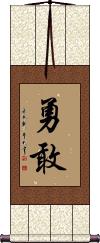
勇敢 is about courage or bravery in the face of fear.
You do the right thing even when it is hard or scary. When you are courageous, you don't give up. You try new things. You admit mistakes. This kind of courage is the willingness to take action in the face of danger and peril.
勇敢 can also be translated as braveness, valor, heroic, fearless, boldness, prowess, gallantry, audacity, daring, dauntless, and/or courage in Japanese, Chinese, and Korean. This version of bravery/courage can be an adjective or a noun. The first character means bravery and courage by itself. The second character means “daring” by itself. The second character emphasizes the meaning of the first but adds the idea that you are not afraid of taking a dare, and you are not afraid of danger.
勇敢 is more about brave behavior and not so much the mental state of being brave. You'd more likely use this to say, “He fought courageously in the battle,” rather than “He is very courageous.”
You May Learn from Victory, You Will Learn from Failure
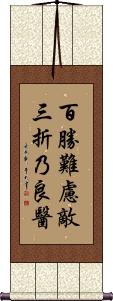
百胜难虑敌三折乃良医 is a Chinese proverb that literally translates as: [Even a general who has won a] hundred victories [may be] hard put to see through the enemy's [strategy], [but one who has] broken [his] arm three [times] [will] be a good doctor.
Figuratively, this means: One cannot always depend on past successes to guarantee future success but one can always learn from lessons drawn from failure.
See Also: Failure - Mother of Success | Experience - Mother of Success | Fall Down 7 Times Get Up 8 | Hard Knocks
Broken Hearted
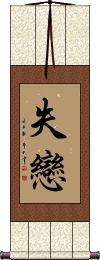
In Chinese, this can mean losing one's love; to breaking up (in a romantic relationship); to feel jilted.
In Japanese Kanji, this means disappointing love, broken heart, unrequited love, or being lovelorn.
失戀 is also valid in old Korean Hanja, which means unrequited love, unreturned love, a disappointment in love, or a broken heart.
Note: In modern Japan, they will tend to write the more simple 失恋 form instead of 失戀. If you order this from the Japanese master calligrapher, expect the more simple modern version to be written (unless you give us instructions to use the older or more traditional version).
Wisdom and Insight of the Buddha
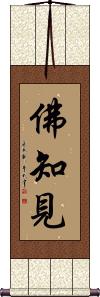
This title represents the wisdom and insight of the Buddha, or the penetrative power of Buddha's wisdom, or vision.
佛知見 is a term derived from the Lotus Sutra, perhaps up to 1900 years ago.
Open Your Heart

敞開心扉 is the most common way to express the idea of “Opening your heart” in Chinese.
This phrase is made up or two words:
敞开 = To open wide, to be unrestricted.
心扉 = Inner heart or soul.
If you want it brokend down further into individual characters:
敞 = Open to the view of all people, spacious, to open wide, or to disclose.
开 = Open, to start, or the beginning.
心 = Heart/Mind
扉 = Door, gate, opening, or the title page.
So maybe you can say, “To open wide the door of your heart and mind to all.”
Other variations of “open your heart” also exist such as 打開心扉, 敞開你的心扉, 打開你的心, and Simplified Chinese 敞开心扉, 打开心扉, 敞开你的心扉, or 打开你的心. These are also correct, but not as commonly used as 敞開心扉.
Chito-Ryu
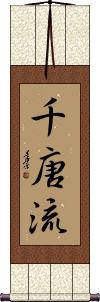
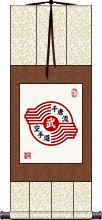
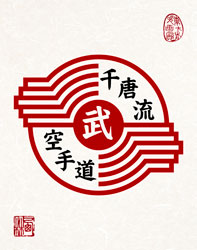
千唐流 (Chitō-Ryū, Chito-Ryu, or Chitoryu) is a style of karate founded by Tsuyoshi Chitose.
Here's the meaning of each character of the title:
千 = 1000
唐 = China (literally Tang, as in Tang Dynasty).
流 = Style or School.
Together, Chito-Ryu means “1,000 [year old] Chinese style.”
I will leave it up to you whether this is of Japanese or Okinawan style. The title certainly suggests roots traced back to China.
Choose Life
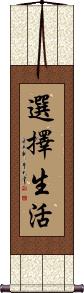
選擇生活 can mean to choose life instead of death (or suicide) or to choose to live life to the fullest.
I think of it as the key phrase used by Renton (Ewan McGregor) in the movie Trainspotting. While Chinese people will not think of Trainspotting when they see this phrase, for me, it will always be what comes near the end of this colorful rant:
Choose life. Choose a job. Choose a career. Choose a family. Choose a fucking big television. Choose washing machines, cars, compact disc players, and electrical tin can openers. Choose good health, low cholesterol, and dental insurance. Choose fixed-interest mortgage repayments. Choose a starter home. Choose your friends. Choose leisure wear and matching luggage. Choose a three-piece suite on-hire purchase in a range of fucking fabrics. Choose DIY and wondering who the fuck you are on a Sunday morning. Choose sitting on that couch watching mind-numbing, spirit-crushing game shows, stuffing fucking junk food into your mouth. Choose rotting away at the end of it all, pissing your last in a miserable home, nothing more than an embarrassment to the selfish, fucked-up brats you have spawned to replace yourself. Choose your future. Choose life.
Commitment
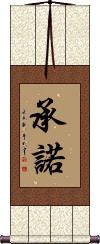
承諾 embodies the idea of commitment but also means to make a big effort or to undertake a great task.
Commitment is caring deeply about something or someone. It is deciding carefully what you want to do and then giving it 100%, holding nothing back. You give your all to a friendship, a task, or something you believe in. You finish what you start. You keep your promises.
In Chinese, this word directly means to undertake something or to make a promise to do something.
Outside of the commitment idea, this particular word can also mean approval, acceptance, consent, assent, acquiescence, or agreement, depending on context (especially in Japanese and Korean). Therefore, this word is probably best if your audience is Chinese.
See Also: Partnership | Hard Work | Dedication
Confucius
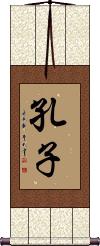
孔子 is how to write the name of the great sage, known in the West as Confucius.
His real name is Kongzi (The name Confucius is a westernized version of his name - his family name is Kong, and “zi” was added as a title of distinction).
He lived some 2500 years ago in Qufu, a town in modern-day Shandong Province of Northern China (about 6 hours south of Beijing by bus). He was a consort to Emperors, and after his death, the impact of his philosophies still served to advise emperors, officials, and common people for generations.
Also during these thousands of years, the Kong family remained powerful in China, and the Kong estate was much like the Vatican in Rome. The Kong estate existed as if on sovereign ground with its own small garrison of guards and the privileges of a kingdom within an empire.
This was true up until the time the Kong family had to flee to Taiwan in 1949 when the Red Army took victory over the Nationalists during the Revolution. The home of Confucius was later razed and all statues were defaced or stolen during the Cultural Revolution. Finally, after years of smearing his name and image, it is once again okay to celebrate the teachings of Confucius in mainland China.
Known as Khổng Tử in Vietnamese.
Corinthians 13:4
All you need to know about LOVE
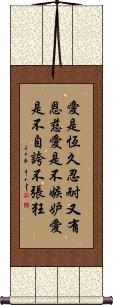
愛是恆久忍耐又有恩慈愛是不嫉妒愛是不自誇不張狂 is 1st Corinthians 13:4 in Chinese.
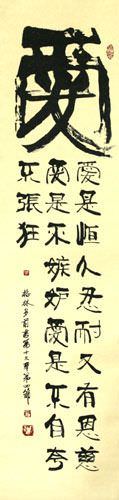
With large “love” character added.
In English, this reads:
1st Corinthians 13:4 (KJV) Charity suffereth long, and is kind; charity envieth not; charity vaunteth not itself, is not puffed up...
1st Corinthians 13:4 (NIV) Love is patient, love is kind. It does not envy, it does not boast, it is not proud.
1st Corinthians 13:4 (Basic English) Love is never tired of waiting; love is kind; love has no envy; love has no high opinion of itself, love has no pride.
The Chinese translation follows the love meaning, rather than the King James' use of “charity.” I was a little confused when writing this description with the significant differences between the NIV vs. KJV translations. After speaking to a Greek scholar about this, it would seem that the KJV has an almost errant translation with the use of “charity” in place of “love.”
We used the most popular Christian Chinese Bible, which is the Chinese Union Version (CUV). The CUV was first published in 1919. We use this so that the Chinese translation would be as accurate and standard as possible. Any Chinese Christian worth their salt will easily be able to identify this verse when they see these characters.
If you want a big “love” character written above the verse on your artwork, just make a note in the “special instructions” tab when you are customizing your artwork. There is no extra charge for that service on this special verse.
Corinthians 13:4

愛は忍耐強い。愛は情け深い。ねたまない。愛は自慢せず、高ぶらない。is 1st Corinthians 13:4 in Japanese.
In English, this reads:
1st Corinthians 13:4 (KJV) Charity suffereth long, and is kind; charity envieth not; charity vaunteth not itself, is not puffed up...
1st Corinthians 13:4 (NIV) Love is patient, love is kind. It does not envy, it does not boast, it is not proud.
1st Corinthians 13:4 (Basic English) Love is never tired of waiting; love is kind; love has no envy; love has no high opinion of itself, love has no pride.
If you want a big “love” character written above the verse on your artwork, just make a note in the “special instructions” tab when you are customizing your artwork. There is no extra charge for that service on this special verse.
Note: Because this selection contains some special Japanese Hiragana characters, it should be written by a Japanese calligrapher.
Courtesy / Politeness
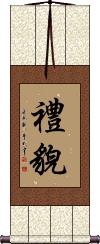
禮貌 is a Chinese and old Korean word that means courtesy or politeness.
Courtesy is being polite and having good manners. When you speak and act courteously, you give others a feeling of being valued and respected. Greet people pleasantly. Bring courtesy home. Your family needs it most of all. Courtesy helps life to go smoothly.
If you put the words "fēi cháng bù" in front of this, it is like adding "very much not." it’s a great insult in China, as nobody wants to be called "extremely discourteous" or "very much impolite."
Crisis equals Danger plus Opportunity?
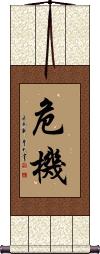
危機 means crisis in Chinese and Japanese.
Separately, the first character here does mean “danger” or “to endanger,” and the second character can mean “opportunity.”
However, I want to debunk a myth that was propagated by some westerners who did not have a clear understanding of Asian languages...
While often, Chinese/Japanese/Korean compound words (words of two or more characters) are the sum of their parts, this is not always the case. The compound is often understood with a completely different meaning than the two characters individually.
Many have said that the Chinese/Japanese/Korean word for Crisis is made up of the characters for “danger” and “opportunity.” 危機 is true when phrased this way.
However, it's not absolutely correct to say that “danger + opportunity = crisis” in Asian cultures.
English example:
If I tell you that...
Bovine creature + Guy behind the plate in baseball = Locomotive train protection

...you would think I was mad. But consider that “cow + catcher = cowcatcher,” which is the device that used to be found on steam engines to protect them if they hit an animal on the tracks. When we hear the word “cowcatcher,” we don't separate the words into their individual meanings (necessarily).
The same is true with the word for crisis in Chinese/Japanese/Korean. While you can separate the characters, few Asian people would automatically do so in their minds.
The final answer:
It is a half-truth to say, “danger plus opportunity equals crisis” in Chinese/Japanese/Korean. Use this statement and concept with caution.
Also, the second character can mean “secret” or “machine,” depending on context so I guess you have to say “a dangerous machine = crisis” or “danger + a secret = crisis.” Both of these are only slightly more ridiculous than the first premise.
PS: 危機 is probably not a great word for a scroll unless you have a special use for it.
Give Up Desire
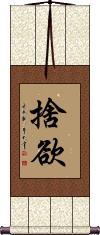
捨欲 is a Buddhist term that means to give up desire or the act of cutting off desire.
In Buddhism, our attachments, greed, and/or desires are the root of our suffering. Release them and live a happy life!
Dana: Almsgiving and Generosity
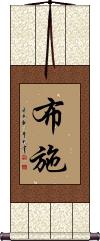
布施 is the Buddhist practice of giving known as Dāna or दान from Pali and Sanskrit.
Depending on the context, this can be alms-giving, acts of charity, or offerings (usually money) to a priest for reading sutras or teachings.
Some will put Dāna in these two categories:
1. The pure or unsullied charity, which looks for no reward here but only in the hereafter.
2. The sullied almsgiving whose object is personal benefit.
The first kind is, of course, the kind that a liberated or enlightened person will pursue.
Others will put Dāna in these categories:
1. Worldly or material gifts.
2. Unworldly or spiritual gifts.
You can also separate Dāna into these three kinds:
1. 財布施 Goods such as money, food, or material items.
2. 法布施 Dharma, as an act to teach or bestow the Buddhist doctrine onto others.
3. 無畏布施 Courage, as an act of facing fear to save someone or when standing up for someone or standing up for righteousness.
The philosophies and categorization of Dāna will vary among various monks, temples, and sects of Buddhism.
Breaking down the characters separately:
布 (sometimes written 佈) means to spread out or announce, but also means cloth. In ancient times, cloth or robs were given to the Buddhist monks annually as a gift of alms - I need to do more research, but I believe there is a relationship here.
施 means to grant, to give, to bestow, to act, to carry out, and by itself can mean Dāna as a single character.
Dāna can also be expressed as 檀那 (pronounced “tán nà” in Mandarin and dan-na or だんな in Japanese). 檀那 is a transliteration of Dāna. However, it has colloquially come to mean some unsavory or unrelated things in Japanese. So, I think 布施 is better for calligraphy on your wall to remind you to practice Dāna daily (or whenever possible).
Daodejing / Tao Te Ching - Excerpt
Excerpt from Chapter 67
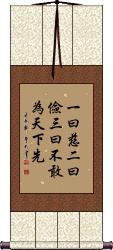
一曰慈二曰儉三曰不敢為天下先 is an excerpt from the 67th Chapter of Lao Tzu's (Lao Zi's) Te-Tao Ching (Dao De Jing).
This is the part where the three treasures are discussed. In English, we'd say these three treasures are compassion, frugality, and humility. Some may translate these as love, moderation, and lack of arrogance. I have also seen them translated as benevolence, modesty, and “Not presuming to be at the forefront in the world.” You can mix them up the way you want, as translation is not really a science but rather an art.
I should also explain that the first two treasures are single-character ideas, yet the third treasure was written out in six characters (there are also some auxiliary characters to number the treasures).
If Lao Tzu's words are important to you, then a wall scroll with this passage might make a great addition to your home.
Daodejing / Tao Te Ching - Chapter 81
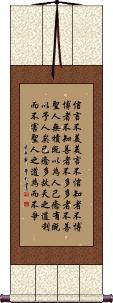
信言不美美言不信知者不博博者不知善者不多多者不善聖人無積既以為人己癒有既以予人矣已癒多故天之道利而不害聖人之道為而不爭 is the Mawangdui version of Daodejing chapter 81.
Credible words are not eloquent;
Eloquent words are not credible.
The wise are not erudite;
The erudite are not wise.
The adept are not all-around;
The all-around are not adept.
The sages do not accumulate things.
Yet the more they have done for others,
The more they have gained themselves;
The more they have given to others,
The more they have gotten themselves.
Thus, the way of tian (heaven) is to benefit without harming;
The way of sages is to do without contending.
Sincere words are not showy;
showy words are not sincere.
Those who know are not “widely learned";
those “widely learned” do not know.
The good do not have a lot;
Those with a lot are not good.
The Sage accumulates nothing.
Having used what he had for others,
he has even more.
Having given what he had to others,
what he has is even greater.
Therefore, the Way of Heaven is to benefit and not cause any harm,
The Way of Man is to act on behalf of others and not to compete with them.
True words aren't charming,
charming words aren't true.
Good people aren't contentious,
contentious people aren't good.
People who know aren't learned,
learned people don't know.
Wise souls don't hoard;
the more they do for others the more they have,
the more they give the richer they are.
The Way of heaven provides without destroying.
Doing without outdoing
is the Way of the wise.
Not Long for this World
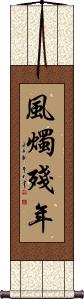
This phrase means “Old and ailing with little time left” or “Not long for this world.”
There is a real suggestion here that someone will die soon.
This was added by a special request of a customer and is perhaps, not the most positive phrase that you could put on a wall scroll.
This would be the most offensive possible gift to give to an older person - please do not do that!
Dedication
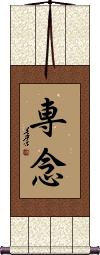
専念 is the Japanese word for dedication.
It means “give undivided attention” or “devote oneself to (something).”
Note: This can be pronounced in Korean, but it's not a commonly used term.
See Also: Devotion | Passion | Tenacious | Commitment
Desire
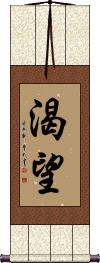
This Chinese word can mean desirous, wishful, or desire.
The first character means to thirst for [something] or to be thirsty. The second character means to hope for, to expect, to gaze (into the distance), or to look for something. The combined meaning of these two characters changes a bit, but I think it's nice to know the individual meanings to give you a better understanding of where a word comes from.
Korean definitions of this word include craving, longing, and thirst for knowledge.
Discipline
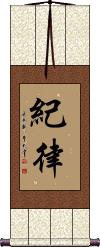
紀律 is a Chinese and Korean word that conveys the idea of extreme self-control and perhaps self-sacrifice, and obedience.
This word matches the kind of “discipline” I was in the Marine Corps. There is also an additional idea of maintaining order or being orderly in your tasks.
This idea would also fit an athlete training for the Olympics who gives up many pleasures to stay focused on their training.
See Also: Self-Control | Will-Power
Double Happiness Guest Book
Customize a special Asian guest book for your wedding
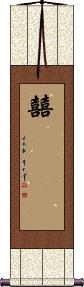
Start customizing a “Double Happiness Guest Book Wall Scroll” Here!
The paper panel length can be whatever you choose from 68cm to 135cm (27” to 53”).
If you don't mention what paper length you want in the special instructions tab (on the next page), we'll make it about 100cm (40”).
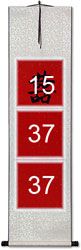
The medium-size scroll with a 33cm x 100cm (13” x 40”) paper panel can usually handle up to 89 signatures. That breaks down to 37 signatures per empty square and 15 signatures around the 囍 character. If you switch to a 135cm paper panel, add another 37 potential signatures.
We can splice two 135cm papers together, but that would be a crazy-long scroll. These are only estimates, your mileage may vary.
With silk panels, this will yield a wall scroll about 155cm (61”) long. That's enough for up to 89 signatures. Of course, that depends on if your guests just sign a brief salutation and name, or more verbose good wishes. Customer feedback is that 126 people can sign the 135cm long paper on a medium-sized scroll. If we go bigger than that, there will be a minor paper seam and an extra charge. Email me with your specifications if you need something special.
Most customers pick the festive red paper with gold flecks and white or ivory silk. Red is a good luck color in Chinese culture, thus the most popular choice. But, you can do any color combination that you want.
There is a long history of Chinese-character-use outside of mainland China. This Double Happiness character is also seen at weddings in Korea, Vietnam, Hong Kong, and Taiwan, as well as in Chinese communities in Thailand, Indonesia, and elsewhere. While Japan borrowed Chinese characters into their language, you won't see 囍 as often at Japanese weddings.
Drink Up! / Cheers!
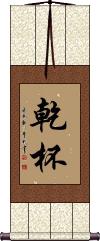
乾杯 is the common way to say “cheers” or give a toast in Chinese, Japanese and old Korean (written the same in all three languages, though pronounced differently).
乾杯 is an appropriate wall scroll for a bar, pub, or another drinking area.
The first character literally means “dry” or “parched.”
The second character means “cup” or “glass.”
Together the meaning is to drink up (empty your glass).
Drink Up! / Cheers!
Alternate version
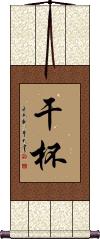
干杯 is an alternate form of the word in Chinese that means “drink up” or “cheers.”
The first character is still pronounced the same, but the form is quite different. This version is used in mainland China but is not really used in Korea or Japan.
Dripping Water Penetrates Stone
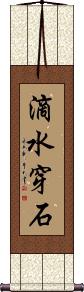
滴水穿石 is a Chinese proverb that means, dripping water penetrates stone.
The figurative meaning can be translated as:
Constant perseverance yields success.
You can achieve your aim if you try hard without giving up.
Persistent effort overcomes any difficulty.
While 滴水穿石 is the most common character order, you will likely see 水滴石穿, might see 滴水石穿, and will rarely see 小水穿石 in the wild.
Dynamic
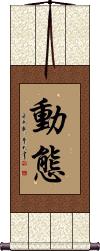
動態 is the Chinese, Japanese Kanji, and old Korean Hanja for a word that means “dynamic state.”
This word can also mean:
movement; motion; development; trend; dynamic (science); the state of being dynamic.
This word can be used to describe someone or an organization that keeps up with cutting-edge trends. Always flexible, always changing, always moving.
Education / Refinement
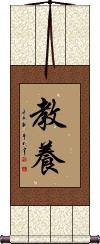
教養 is a Chinese and Japanese word that means to train, to educate, to bring up, to nurture, education, culture, upbringing, early conditioning, cultivation, and/or refinement.
Enso - Japanese Zen Circle
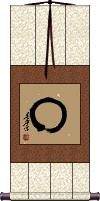
〇 is the famous Enso symbol, which you will see widely used by Japanese Zen Buddhists.
In a twist, I am starting to see Enso used more and more by Chinese Buddhists.
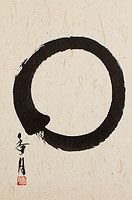
Here is the typical appearance of Enso artwork by Japanese calligrapher Kougetsu.
Enso is not a Japanese Kanji character. It falls more into the category of a symbol. There is some debate, but many consider Enso to be a religious symbol.
Some call this “The Circle of Enlightenment.” Others call it the “Infinity Circle.” If you actually took the meanings of the two Kanji (円相) that make up the word “En-so,” you could read it as “Mutual Circle” or “Circle of Togetherness.” I think the Enso symbol can simply mean different things to different people. Therefore, you should let it have the meaning that you perceive.
The appearance of your Enso will be determined by the artist's personal style, feeling, mood, etc.
Extreme Faithfulness
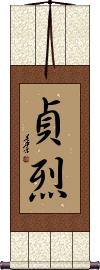
貞烈 is the Japanese Kanji for “Extreme Faithfulness.”
The first Kanji means “firm adherence to one's principles,” chastity (of a woman), chaste, etc.
The second Kanji means ardent, intense, fierce, stern, upright, to give one's life for a noble cause, exploits, achievements, virtuous, and in some contexts, heroic.
Now you get the idea why this refers to someone who is extremely faithful (to a cause, themselves, their religious beliefs, or their philosophy.
Fall Down Seven Times, Get Up Eight
Always rising after a fall or repeated failures
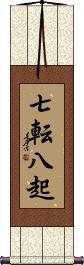
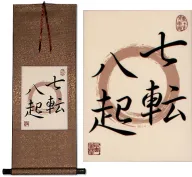
七転八起 is a Japanese proverb that relays the vicissitudes of life, with the meaning “seven times down eight times up.”
Some would more naturally translate it into English as “Always rising after a fall or repeated failures” or compare it to the English, “If at first, you don't succeed, try, try again.”
The first Kanji is literally “7.” The second means “fall down” (sometimes this Kanji means “turn around,” “revolve” or “turn over” but in this case, it holds the meaning of “fall”). The third is “8.” And the last is “get up,” “rouse,” or “rise.”
Basically, if you fail 7 times, you should recover from those events and be prepared to rise an 8th time. This also applies if it is the world or circumstances that knock you down seven times...
...just remember that you have the ability to bounce back from any kind of adversity.
Note: This can be pronounced in two ways. One is “shichi ten hakki” or “shichitenhakki.” The other is “nana korobi ya oki” also written, “nanakorobi-yaoki.”
Special Note: The second character is a Kanji that is not used in China. Therefore, please select a Japanese calligrapher for this title.
Flourish and Blossom Everywhere
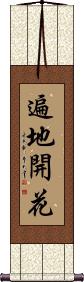
遍地開花 is a Chinese proverb that means “to blossom everywhere,” “to spring up all over the place,” or “to flourish on a large scale.”
遍地 = everywhere
開花 = opening flowers
Forest
Wooded Area
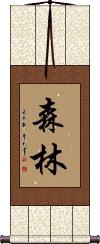
森林 is how to generically write “forest” or “woods” in Chinese, Japanese Kanji, and old Korean Hanja.
If you look at the first character, you will see that it is made up of three trees. The second is actually two trees. 森林 is one of those words that really visually expresses the meaning.
If your name is Forest, I suggest this title to represent your name.
Forgiveness (from the top down)
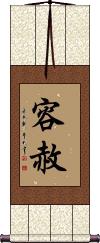
容赦 is the kind of forgiveness that a king might give to his subjects for crimes or wrong-doings.
容赦 is a rather high-level forgiveness. Meaning that it goes from a higher level to a lower (not the reverse).
Alone, the first character can mean “to bear,” “to allow,” and/or “to tolerate,” and the second can mean “to forgive,” “to pardon,” and/or “to excuse.”
When you put both characters together, you get forgiveness, pardon, mercy, leniency, or going easy (on someone).
See Also: Benevolence
Generosity
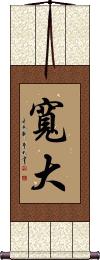
寬大 is a Chinese, Japanese, and Korean word that means Generosity.
Generosity is giving and sharing. You share freely, not with the idea of receiving something in return. You find ways to give others happiness and give just for the joy of giving. Generosity is one of the best ways to show love and friendship.
寬大 can also be translated as charitable, magnanimity, liberality, or in some contexts, broad-mindedness.
Note: There is a tiny deviation in the first character when written in Japanese. If you choose our Japanese master calligrapher, the little dot on the lower right of the first character will be omitted. With or without the dot, this can be read in Chinese, Japanese Kanji, and old Korean Hanja.
See Also: Benevolence | Altruism | Charity
I give you my hand
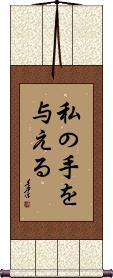
私の手を与える means “I give you my hand,” in Japanese.
Note: Because this selection contains some special Japanese Hiragana characters, it should be written by a Japanese calligrapher.
God Give Me Strength
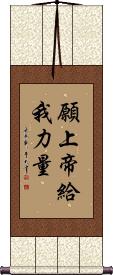
願上帝給我力量 is a wish or a prayer that you might call out at a desperate time.
Translated by us for a military serviceman in Iraq. He may need to use this phrase often, though I am not sure where he's going to find a place to hang a wall scroll.
God Give Me Strength
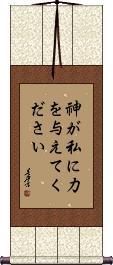
神が私に力を与えてください is “God give me strength” in Japanese.
This is the long and formal version. We also have a short version.
Note: Because this selection contains some special Japanese Hiragana characters, it should be written by a Japanese calligrapher.
God Give Me Strength
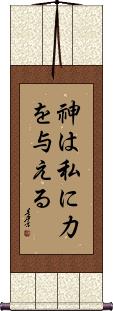
神は私に力を與える means “God give me strength,” in Japanese.
神は私に力を與える is the short version, we also have a longer more formal version.
Note: Because this selection contains some special Japanese Hiragana characters, it should be written by a Japanese calligrapher.
Good Good Study, Day Day Up
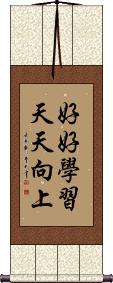
好好學習天天向上 is a famous proverb by Chairman Mao Zedong that sounds really strange when directly translated into English.
I include it in our database of phrases to illustrate how different the construction and grammar can be between Chinese and English. The direct translation is “Good Good Study, Day Day Up.” In Chinese, a repeated character/word can often serve to reinforce the idea (like saying “very” or suggesting “a lot of”). So “good good” really means “a lot of good.” While “day day” can be better translated as “day in day out.” The idea of “up” has a meaning in China of “rising above” or “improving.”
After understanding all of this, we come up with a slightly better translation of “With a lot of good study, day in and day out, we raise above.”
The more natural translation of this proverb would be something like, “study hard, and keep improving.”
Gowri
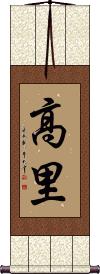
This is a transliteration we came up with in Mandarin Chinese for the name Gowri.
Green Plum and Bamboo Horse
Innocent Children's Games
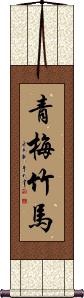
青梅竹馬 means “green plums and hobby-horse.”
Figuratively, it means “innocent children's games,” “childhood sweethearts,” or “a couple who grew up as childhood friends.”
This phrase may sound a little strange as it's a kind of Chinese proverb or idiom. It makes much more sense in Chinese than in English.
Guanxi
The Chinese Concept of Relationship and Exchange of Favors
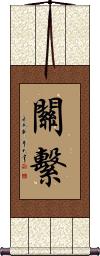
The dictionary definition is:
Relations/relationship, to concern, to affect, to have to do with, or connection.
But there's more to it...
In China, the relationship that you have with certain people can open doors for you. Having guanxi with someone also means they would never defraud you but are honor-bound to treat you fairly (of course, this goes both ways). Sometimes it is suggested that guanxi is the exchange of favors. 關繫 / 関繫 / 關係 is more about having a relationship that allows you to ask for and expect favors without shame.
There is no concept in western culture that exactly matches guanxi, but perhaps having a social or professional network is similar.
Note that there are some variations common within Chinese, Japanese Kanji, and Korean Hanja for this word... Japanese tend to use a Chinese alternate form as shown to the right for
the first character.
 There's also another alternate form of that first character (currently used as the official Simplified form in mainland China) which looks like the character shown to the right. It's basically the central radical of the alternate version shown above but without the “door radical” around it. In more free-flowing calligraphy styles, this version would be the likely choice for a calligrapher.
 In Modern Japanese, they use the character shown to the right.
They also tend to use this same form in Korean Hanja (I've only checked this word in my Korean dictionary, but it has not been confirmed by a translator's review).
 If that was not confusing enough, there is another alternate form of that second character. See right.
An Asian calligrapher of any nationality may use these forms at their discretion. However, They would tend to stick to the most common form used in their respective languages.
If you have any preference on any of these issues, please give us a special note with your order, and we'll make sure it's done the way you want.
Guide / Help / Cooperate
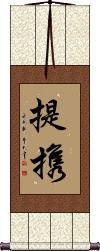
提携 varies a bit depending on which language you are reading it in.
提携 means to guide and help (younger people) in Chinese.
Cooperation or “working in concert” in Korean.
And cooperation, tie-up, joint business, and link-up in Japanese.
Gung Ho
Working Together
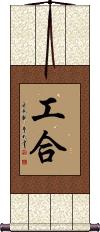
工合 is one of those Asian words that is used more in English than in the original Chinese.
Gung Ho was originally used to speak of Carlson's Raiders, a group of “Gung Ho” U.S. Marines who went on an island-hopping campaign of death during WWII.
A movie called Gung Ho came out in the mid-1940s and was later re-released in the 1950s depicting the 2nd Marine Raider Battalion, and brought this word to the mainstream.
It is still sometimes used today within the U.S. Marine Corps brotherhood to refer to a unit or group that works well together or is otherwise efficient and motivated (has good morals).
In 1986, there was a movie called Gung Ho about a Japanese company taking over an American automotive factory. They completely ignored the fact that this was a Chinese title.
It should be noted that this title actually means a condition, state, manner, or the health of something in Japanese.
Language and pronunciation notes:
Like many Asian words absorbed into common use in English, this one is drastically mispronounced. The official Romanization is “gong he” but that doesn't tell you enough. The vowel sound on the first character is like the English word “own,” now just add the g-sounds to the beginning and end. The second character is misleading, as you might think it is like the English word “he.” In reality, the vowel sound is more like the “u” in “up.”
It should also be noted that the current generation in China no longer uses or recognizes this as a common word or slogan.
Note: This can be pronounced and is a word in Japanese, though seldom used. Japanese will use a variation of "具合" instead. But still, not common.
Happy New Year
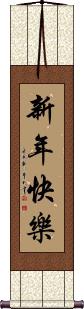
If you want to wish someone a happy new year, 新年快樂 is the way.
You can hang this up during Western New Years (Dec 31st - Jan 1st) and keep it up until after Chinese New Year which happens in either January or February of each year (it changes from year to year because China uses a lunar calendar).
Heaven
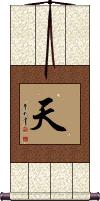
天 means “heaven” or “sky” in Chinese, Japanese Kanji, and old Korean Hanja.
The context determines if you are talking about heaven or the sky above (often they are the same concept).
When combined with other characters, words like “today” and “tomorrow” are created. While sometimes the character for “sun” is used to mean “day,” often “sky” represents “day” in Asian languages.
Example: 今天 (this sky) = “today,” 明天 (next sky) = “tomorrow” in modern Chinese and Japanese.
In Chinese culture, regardless of which religion, it's almost always assumed that God (and any other deities) live up above the sky. The concept of God living in the sky is likely the reason heaven is associated with this character.
The equation goes something like this: God's domain is the sky, thus, the sky is heaven.
Note: As a single character, this is a little ambiguous, so you might want to choose our Kingdom of Heaven selection instead.
Hello / Ni Hao
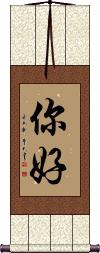
你好 is the day-to-day way to say hello in Chinese.
The characters literally mean, “You good?” It's the equivalent of “What's up?” in English, where nobody expects an actual answer.
This explanation is here for educational purposes only. 你好 is an oral word that is not appropriate for a scroll (not a bad meaning, just very odd for a wall scroll).
Woman of Strong Character / Woman Hero
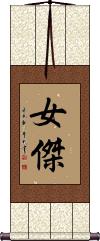
女傑 can mean brave woman, heroine, lady of character, distinguished woman, outstanding woman, and sometimes prominent woman.
Some people might use this to give a title to women like Amelia Earhart, Rosa Parks, Queen Elizabeth the First, Joan of Arc, Mulan Fa, Yevdokiya Nikolayevna Zavaliy, Harriet Tubman, Anne Frank, Clara Barton, and Jane Eyre.
I use it for a woman like Araceli Segarra (the first woman from Spain to climb Mt. Everest) and gave one of my daughters the middle name of Araceli.
Glory and Honor
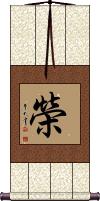
榮 relates to giving someone a tribute or praise.
It's a little odd as a gift, so this may not be the best selection for a wall scroll.
I've made this entry because this character is often misused as “honorable” or “keeping your honor.” It's not quite the same meaning, as this usually refers to a tribute or giving an honor to someone.
榮 is often found in tattoo books incorrectly listed as the western idea of personal honor or being honorable. Check with us before you get a tattoo that does not match the meaning you are really looking for. As a tattoo, this suggests that you either have a lot of pride in yourself or that you have a wish for prosperity for yourself and/or your family.
 In modern Japanese Kanji, glory and honor look like the image to the right.
There is a lot of confusion about this character, so here are some alternate translations for this character: prosperous, flourishing, blooming (like a flower), glorious beauty, proud, praise, rich, or it can be the family name “Rong.” The context in which the character is used can change the meaning between these various ideas.
In the old days, this could be an honor paid to someone by the Emperor (basically a designation by the Emperor that a person has high standing).
To sum it up: 榮 has a positive meaning; however, it's a different flavor than the idea of being honorable and having integrity.
Hot / Heat
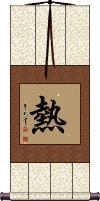
熱 means hot in Chinese, Japanese Kanji, and old Korean Hanja.
This can also be translated as: to warm up; to heat up; hot weather; fervent; fever; (high) temperature.
In some contexts, it can mean zeal, passion, enthusiasm, craze, or rage.
Ice / Frost
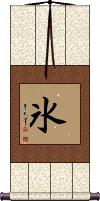
冰 is the Japanese Kanji for “ice” or “frost.”
冰 is also the way to write “ice” in old Korean Hanja.
Note: This form is not commonly used anymore in Chinese - though still understood for the most part.
FYI: There was a time when Japan did not have a written language and simply absorbed Chinese characters into their language by meaning. When this occurred around the 5th century, the character shown here was a common but alternate way to write “ice” in Chinese, so it was the one that ended up being absorbed into the Japanese language. Not long after that, a similar thing happened in Korea - although Korea has replaced virtually all of the Chinese characters they once used with the new Hangul writing system.
Ikigai

生き甲斐 is a Japanese word that means something one lives for, a reason for being, a purpose in life, or French, raison d'etre.
Everyone has an ikigai. Finding it requires a deep and often lengthy search for self. Finding your Ikigai is the way to also find satisfaction and meaning in life.
Your Ikigai could be almost anything. For some, it is running for president. For others, satisfaction is found in raising children.
Ikigai is why you get up in the morning; bringing meaning to your life and pursuing your Ikigai makes life worthwhile.
Improvise Adapt Overcome
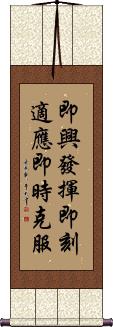
即興發揮即刻適應即時克服 is the coolest way to put together this famous word list, “Improvise Adapt Overcome.”
There are shorter ways to write “adapt,” and “overcome,” but “improvise” needs a four-character word to be expressed accurately in Chinese. To match them up, the other two are using four-character words as well. This makes it sound more natural in Chinese (though word lists are not a natural construct in Chinese grammar).
The words break down like this: 即興發揮, 即刻適應, 即時克服. I suggest the 3-column option when you customize your wall scroll. That way, the words will occupy one column each.
A great gift for a U.S. Marine, or anyone who follows this mantra.
Indomitable / Unyielding
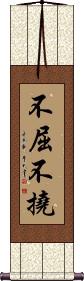
不屈不撓 means “Indomitable” or “Unyielding.”
不屈不撓 is a long word by Chinese standards. At least, it is often translated as a single word into English. It's actually a proverb in Chinese.
If you want to break it down, you can see that the first and third characters are the same. Both mean “not” (they work as a suffix to make a negative or opposite meaning to whatever character follows).
The second character means “bendable.”
The last means “scratched” or “bothered.”
So this really means “Won't be bent, can't be bothered.” I have also seen it written as “Will not crouch, will not submit.” This comes from the fact that the second character can mean “to crouch” and the last can mean “to submit” (as in “to give in” such as “submitting to the rule of someone else”). This may explain better why these four characters mean “indomitable.”
Notes:
Some will translate this as “indomitable spirit”; however, technically, there is no character to suggest the idea of “spirit” in this word.
Other translations include indefatigability, indomitableness, or unremitting tenacity.
The first two characters can be stand-alone words in Chinese.
In Japanese, this is considered two words (with very similar meanings). It's more common to see the word order flipped to 不撓不屈 in Japanese.
The same characters are used in old Korean Hanja. Just like in Japanese, the words are swapped to 不撓不屈 creating a word pronounced “불요불굴” in Korean.
See 不撓不屈
A Life of Serenity Yields Understanding
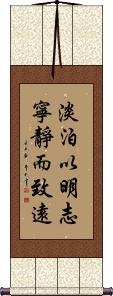
淡泊以明志寧靜而致遠 is a kind of complex ten-character proverb composed by Zhuge Liang about 1800 years ago.
淡泊以明志寧靜而致遠 is a Chinese proverb that means “Leading a simple life will yield a clear mind, and having inner peace will help you see far (into the world).”
What I have translated as “simple life” means NOT being materialistic and NOT competing in the rat race.
The last word means “far” but the deeper meaning is that you will surpass what you can currently see or understand. Perhaps even the idea of opening up vast knowledge and understanding of complex ideas.
The whole phrase has a theme that suggests that if you are NOT an aggressive, cut-throat person who fights their way to the top, no matter how many people they crush along the way, and instead seek inner peace, you will have a happier existence and be more likely to understand the meaning of life.
See Also: Serenity
Achieve Inner Peace; Find Deep Understanding
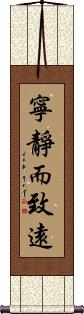
寧靜而致遠 is five characters from a longer ten-character proverb composed by Zhuge Liang about 1800 years ago.
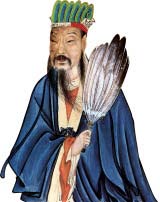
诸葛亮 Zhuge Liang
The proverb means “Your inner peace/tranquility/serenity will help you see or reach far (into the world).”
The last word means “far” but the deeper meaning is that you will surpass what you can currently see or understand. Perhaps even opening up vast knowledge and understanding of complex ideas.
Innovation
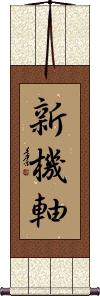
新機軸 is a Japanese word that is used to mean: innovation, new departure, new way, milestone, or breakthrough.
The literal meaning is, “new axis” or “new axle.” It's almost like saying a new wheel (like coming up with a round wheel when the previous version was square).
Please note that this also has meaning in Chinese but only would mean “new axle” without the meaning of “innovation” being associated with it. Consider this to be “Japanese only.”
Inspiration
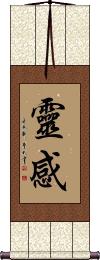
靈感 is the Chinese word closest to hitting the mark for the English word inspiration.
In a more extended context, I have even seen this translated as “brain wave.”
The first character means alert, departed soul, efficacious, quick, effective, or intelligent.
The second character means to feel, to move, to touch, or to affect.
The combined meaning of these two characters changes a bit, but I think it's nice to know the individual meanings to give you a better understanding of where a word comes from.
You could describe this word as “the thought that pops into your head just before you patent the greatest widget ever invented that everyone in the world will want.”
At least, that's the idea.
This term can also mean “intelligent thought” if you translate it directly from each character. If you are looking for inspiration or need to be inspired, this is the word for you.
 When the first character was absorbed into Japanese from Chinese, an alternate form became the standard in Japan. The Kanji shown to the right is the form currently used in Japan. This is still considered an alternate form in China to this day.
it’s
readable by both Chinese and Japanese people but if your audience is Japanese, I recommend the Kanji shown to the right - just click on that Kanji to order that version.
When the first character was absorbed into Japanese from Chinese, an alternate form became the standard in Japan. The Kanji shown to the right is the form currently used in Japan. This is still considered an alternate form in China to this day.
it’s
readable by both Chinese and Japanese people but if your audience is Japanese, I recommend the Kanji shown to the right - just click on that Kanji to order that version.
Inspired
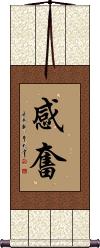
感奮 is a Chinese and Japanese word that means, moved and inspired, fired with enthusiasm, stirred up, moved to action, or state of being inspired.
Intense / Serious / Deep / Profound
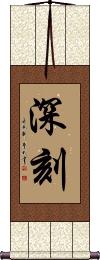
深刻 is a Chinese word that is the form of intense that describes a person who is deep, serious, and a true thinker.
If you find yourself contemplating the world and coming up with profound ideas, this might be the word for you. In some contexts (especially Korean), it can mean seriousness, gravity, or acuteness.
In Japanese, this can mean “serious problem” or can be a rare given name, Misa. You should not use this if your audience is Japanese.
Jesus
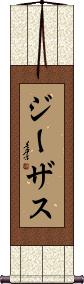
ジーザス is the name Jesus in Japanese.
This is a common version that approximates pronunciation in English. However, there are many variations for writing Jesus in Japanese, and it's hard to come up with an absolute answer (transliteration of names is more art than science).
Note: Because this title is entirely Japanese Katakana, it should be written by a Japanese calligrapher.
Jinni
Golden Girl
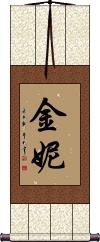
金妮 is a transliteration to Mandarin Chinese for the name Jinni.
This means “golden girl” or “girl of gold” in Chinese.
This is the special name I made up and chose for my third daughter. There is also another, more common way to transliterate this name which is 吉尼 instead of 金妮.
Safety and Well-Being of the Family
Kanai Anzen
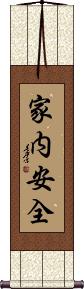
家內安全 is the Japanese way of saying “Family First.”
It's a Japanese proverb about the safety and well-being of your family and/or peace and prosperity in the household.
Some Japanese will hang an amulet in their home with these Kanji. The purpose is to keep your family safe from harm.
According to Shinto followers, hanging this in your home is seen as an invocation to God to always keep family members free from harm.
We were looking for a way to say “family first” in Japanese when this proverb came up in the conversation and research. While it doesn't say “family first,” it shows that the safety and well-being of your family is your first or most important priority. So, this proverb is the most natural way to express the idea that you put your family first.
See Also: Peace and Prosperity
Tang Soo Do / Tang Hand Way
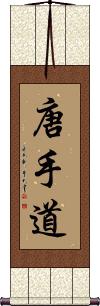
唐手道 is the alternate title for Karate-do.
This title uses a character, 唐, which represents the Tang Dynasty of China. Thus, this is often translated as the “Tang Hand Way” or incorrectly, “Tang Fist Way.”
I have also seen some call it “China Hand Way.”
Many in Korea refer to and romanize these characters as “Tang Soo Do” (당수도) where these characters refer to a kind of Korean style of Karate.
There is not a lot of information on this title but some believe that a simplified form of Kung Fu that started in China and ended up very popular in Japan used this title initially. It was later changed in Japan to a different Karate title which means “Empty Hand” (as in, without weapons).
Note: When used in Korean, this is pronounced 당수도. This title is often romanized as “Tang Soo Do,” “Tangsudo,” “Dang Su Do,” or “Dangsudo.” The last two romanizations on that list are the official Korean government romanization, though martial arts schools tend to use other non-standard versions.
Meet the Buddha, Kill the Buddha
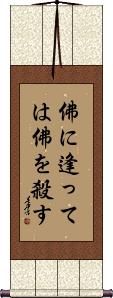
This controversial Buddhist koan means “On encountering Buddha, you should kill him.”
This is the short concise Japanese version of an original statement by ninth-century Chinese Buddhist monk Linji Yixuan, “If You Meet The Buddha On The Road, Kill Him.”
This takes some explaining... The concept here is that if you think you have seen, experienced, or achieved true enlightenment, the chances that you really have are so slim that you should kill or dismiss that idea.
Another suggestion is that one's path to becoming a Buddha is one's own, and one should not get caught up in religious fervor, and avoid “showing off” that they are a Buddhist.
Helpful references for this concept:
Lion's Roar addresses "If You Meet The Buddha On The Road, Kill Him"
Kill the Buddha
Note: Because this selection contains some special Japanese Hiragana characters, it should be written by a Japanese calligrapher.
Kyokushin
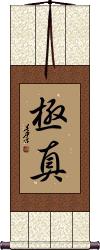
極真 is the Japanese title Kyokushin.
The literal meaning is “great truth” or “ultimate truth.” However, 極真 is usually associated with the style of stand-up, full-contact karate, founded in 1964 by Masutatsu Oyama (大山倍達).
Practitioners of the Kyokushinkai Karate follow a philosophy of discipline and self-improvement.
Life in Every Breath
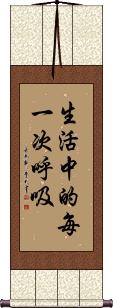
生活中的每一次呼吸 means “life in every breath” in Chinese.
This phrase is more like “every breath in life” as if it's a quantity of breaths that makes up your life.
There are many ways to understand this phrase in English, so this is one of a few ways it could be translated into Chinese. If you’re looking for a different meaning, please contact me.
Listen to Your Heart / Follow Your Heart
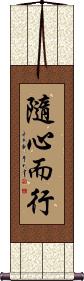
隨心而行 is the closest way to express this idea in Chinese. Literally translated, this phrase means “Allow your heart to dictate your behavior” or “Let your heart guide your conduct” in Chinese. You could also translate this as “follow your heart.” Or, with a bit of imagination, it could mean: “let your spirit be your guide.”
Note that in some cases, “heart” can mean “mind,” “soul” or even “spirit” in Chinese. In ancient China, it was thought that the big pumping organ in your chest was where your thoughts came from, or where your soul resides.
Ancient western thought followed a similar belief. Thus phrases like “I love you with all my heart” and “I give you my whole heart.”
Live Laugh Love
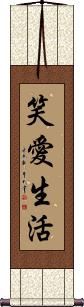
In English, the word order shown in the title is the most natural or popular. In Chinese, the natural order is a little different:
The first character means laugh (sometimes means smile).
The second character means love.
The last two characters mean “live” as in “to be alive” or “pursue life.”
Please note: 笑愛生活 is not a normal phrase in that it does not have a subject, verb, or object. It is a word list. Word lists are not common in Asian languages/grammar (at least not as normal as in English). We only added this entry because so many people requested it.
We put the characters in the order shown above, as it almost makes a single word with the meaning “A life of laughter and love.” It's a made-up word, but it sounds good in Chinese.
We removed the Japanese pronunciation guide from this entry, as the professional Japanese translator deemed it "near nonsense" from a Japanese perspective. Choose this only if your audience is Chinese and you want the fewest-possible characters to express this idea.
In Korean, this would be 소애생활 or "so ae saeng hwar" but I have not confirmed that this makes sense in Korean.
Live Free or Die
Give me liberty or give me death
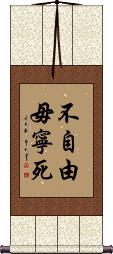
不自由毋寧死 means “Give me liberty or give me death” in Chinese.
This is also the best way to say, “Live free or die.”
The characters break down this way:
不 = Not; none; without.
自由 = Freedom; liberty; freewill; self-determination.
毋寧 = Rather; would rather; rather be.
死 = Dead; death.
This will go nicely next to your “Don't tread on me” flag. This phrase is known well enough in China that it's listed in a few dictionaries. Though I doubt you will find too many Chinese citizens willing to yell this on the steps of the capital in Beijing.
See Also: Death Before Dishonor
Lost / Dazed and Confused
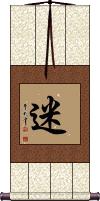
迷 is one of those characters that can mean a lot of different things depending on context. When written alone, as a single character on a wall scroll, it opens up the possibilities and allows you to decide what it means to you.
The key definition is “to be lost.” This could be physically or mentally lost. It can be someone lost in their thoughts, lost in an ocean, or just confused about where they are. The reason for the confused state may be due to internal or external reasons.
Here are some entries from various Asian dictionaries...
Chinese: lost, confused, bewilder, crazy about, fan, enthusiast, mystery.
Japanese: lost, astray, perplexed, in doubt, err, illusion.
Korean: lost, bewildered, fascinated, deluded.
Loyalty
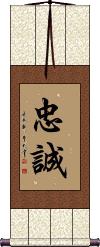
忠誠 is the written form of loyalty that is universal in Chinese, Japanese Kanji, and old Korean Hanja.
Loyalty is staying true to someone. It is standing up for something you believe in without wavering. It is being faithful to your family, country, school, friends, or ideals when the going gets tough and when things are good. With loyalty, you build relationships that last forever.
Notes:
1. There is also a Japanese version that is part of the Bushido Code which may be more desirable depending on whether your intended audience is Japanese or Chinese.
2. This version of loyalty is sometimes translated as devotion, sincerity, fidelity, or allegiance.
The Lord's Prayer / Luke 11:2-4
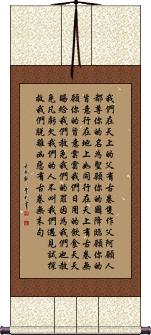
Here is the Lord's Prayer in Chinese from Luke 11:2-4.
The Chinese text with punctuation is:
Part of 11:2 ...我们在天上的父,有古卷只作父阿愿人都尊你的名为圣。愿你的国降临。愿你的旨意行在地上,如同行在天上。有古卷无愿你的旨意云云。
11:3 我们日用的饮食,天天赐给我们。
11:4 赦免我们的罪,因为我们也赦免凡亏欠我们的人。不叫我们遇见试探。救我们脱离凶恶。有古卷无末句。
Note that punctuation is not included in traditional Chinese calligraphy artwork.
From KJV, this is:
Part of 11:2 ...Our Father which art in heaven, Hallowed be thy name. Thy kingdom come. Thy will be done, as in heaven, so in earth.
11:3 Give us day by day our daily bread.
11:4 And forgive us our sins; for we also forgive everyone that is indebted to us. And lead us not into temptation, but deliver us from evil.
The Lord's Prayer / Mathew 6:9-13
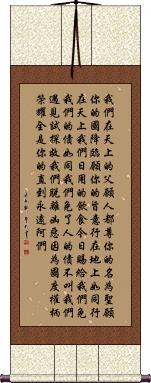
Here is the Lord's Prayer in Chinese from Mathew 6:9-13.
The Chinese text with punctuation is:
Part of 6:9 ...我们在天上的父,愿人都尊你的名为圣。
6:10 愿你的国降临,愿你的旨意行在地上,如同行在天上。
6:11 我们日用的饮食,今日赐给我们。
6:12 免我们的债,如同我们免了人的债。
6:13 不叫我们遇见试探,救我们脱离凶恶,因为国度,权柄,荣耀,全是你的,直到永远,阿们。
Note that punctuation is not included in traditional Chinese calligraphy artwork.
From KJV, this is:
Part of 6:9 ...Our Father which art in heaven, Hallowed be thy name.
6:10 Thy kingdom come. Thy will be done in earth, as it is in heaven.
6:11 Give us this day our daily bread.
6:12 And forgive us our debts, as we forgive our debtors.
6:13 And lead us not into temptation, but deliver us from evil: For thine is the kingdom, and the power, and the glory, forever. Amen.
Mercy / Compassion / Buddhist Loving Kindness
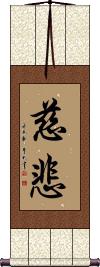
Besides the title above, 慈悲 can also be defined as clemency or lenience and sometimes the act of giving charity.
In the Buddhist context, it can be defined as “benevolence,” “loving-kindness and compassion,” or “mercy and compassion.”
This Buddhist virtue is perhaps the most important to employ in your life. All sentient beings that you encounter should be given your loving kindness. And trust me, however much you can give, it comes back. Make your life and the world a better place!
This Chinese/Japanese Buddhist term is the equivalent of Metta Karuna from Pali or Maitri Karuna from Sanskrit.
慈 can mean loving-kindness by itself.
悲 adds a component of sorrow, empathy, compassion, and sympathy for others.
See Also: Benevolence
Military Discipline
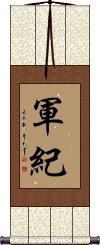
軍紀 means military discipline or military principles.
If maintaining your military discipline is important to you personally or important to your military unit, this is the wall scroll to have up behind your desk. In fact, it's the kind of thing I expect to see behind the desk of a First Sergeant or maybe a hardcore NCO.
Note: In some rare contexts, it could be extended to mean “morale,” but “discipline” is much closer to the commonly-held definition.
Note: This term is not well-known outside the military services in Asia (not used by the common person).
See Also: Self-Discipline
Mind Your Own Business
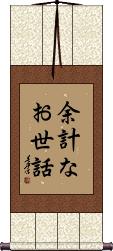
余計なお世話 suggests that you do not give unwanted help or advice to someone.
The Japanese characters break down this way:
余計 (yokei) too much, unnecessary, extraneous, abundance, surplus, excess, superfluity.
な (na) connecting article.
お世話 (osewa) help, aid, assistance.
Note: Because this selection contains some special Japanese Hiragana characters, it should be written by a Japanese calligrapher.
Mixed Martial Arts
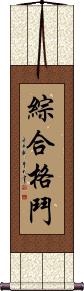
綜合格鬥 is a common Chinese title for “Mixed Martial Arts” or “MMA.”
The characters or words in this title break down this way:
綜合 zōng hé = composite, synthesized, to sum up, to integrate, and/or to synthesize.
格 gé = style, frame, or rule.
斗 dòu = fight, to battle, or to struggle.
Monkey Stealing Peaches
Martial arts term
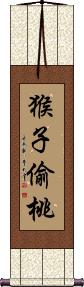
猴子偷桃 is a martial arts term that I find hilarious. I thought Stephen Chow had made this up for his Monkey King movie. After some research, it turns out to be real.
This can be translated as “monkey stealing peaches” or “monkey steals the peach.” It refers to distracting an opponent with one hand and seizing his testicles with the other.
In colloquial Chinese speech, this can refer to grabbing somebody by the balls (without any martial arts technique to the grabbing).
Monshu / Gate Keeper
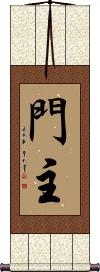
In modern Japanese, 門主 is the title of a head priest of a temple or monastery.
This can also refer to the spiritual leader of the sect and/or direct descendant of its founder.
In the past, this could refer to the founder of a Buddhist sect.
The literal meaning of 門主 is gatekeeper or keeper of the gate.
In the Chinese Buddhist dictionary, this entry comes up as the controller of a gate or sect. However, this term is not commonly used in Chinese.
Mountain Travels Poem by Dumu

This poem was written almost 1200 years ago during the Tang dynasty.
It depicts traveling up a place known as Cold Mountain, where some hearty people have built their homes. The traveler is overwhelmed by the beauty of the turning leaves of the maple forest that surrounds him just as night overtakes the day, and darkness prevails. His heart implores him to stop, and take in all of the beauty around him.
First, before you get to the full translation, I must tell you that Chinese poetry is a lot different than what we have in the west. Chinese words simply don't rhyme in the same way that English or other western languages do. Chinese poetry depends on rhythm and a certain beat of repeated numbers of characters.
I have done my best to translate this poem keeping a certain feel of the original poet. But some of the original beauty of the poem in its original Chinese will be lost in translation.
Far away on Cold Mountain, a stone path leads upwards.
Among white clouds, people's homes reside.
Stopping my carriage I must, as to admire the maple forest at nights fall.
In awe of autumn leaves showing more red than even flowers of early spring.
Hopefully, this poem will remind you to stop, and “take it all in” as you travel through life.
The poet's name is “Du Mu” in Chinese that is: 
 .
.
The title of the poem, “Mountain Travels” is: 

You can have the title, poet's name, and even “Tang Dynasty” written as an inscription on your custom wall scroll if you like.
More about the poet:
Dumu lived from 803-852 AD and was a leading Chinese poet during the later part of the Tang dynasty.
He was born in Chang'an, a city in central China and the former capital of the ancient Chinese empire in 221-206 BC. In present-day China, his birthplace is currently known as Xi'an, the home of the Terracotta Soldiers.
He was awarded his Jinshi degree (an exam administered by the emperor's court which leads to becoming an official of the court) at the age of 25 and went on to hold many official positions over the years. However, he never achieved a high rank, apparently because of some disputes between various factions, and his family's criticism of the government. His last post in the court was his appointment to the office of Secretariat Drafter.
During his life, he wrote scores of narrative poems, as well as a commentary on the Art of War and many letters of advice to high officials.
His poems were often very realistic and often depicted everyday life. He wrote poems about everything, from drinking beer in a tavern to weepy poems about lost love.
The thing that strikes you most is the fact even after 1200 years, not much has changed about the beauty of nature, toils, and troubles of love and beer drinking.
Accept the Situation and Move On
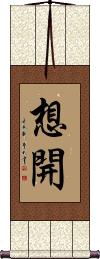
想開 is a Chinese title that translates as “move on.”
It can mean getting over a shock or bereavement. More often, it means avoiding dwelling on unpleasant things or accepting the situation and moving on. It's a suggestion to get over it and get on with life.
The literal meaning of the characters is something like “thoughts opening.” But it's understood more as getting over the same old thoughts and opening yourself up to new thoughts or ways of thinking.
Musashi
The most famous Samurai
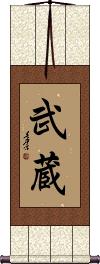
Miyamoto Musashi is probably the most famous Samurai in all of Japanese history.
武蔵 is the short title for a man long in legend. While coming from a lower class, his new sword and fighting techniques put him on par with the best that feudal Japan had to offer. His long career started with his first duel at age 13!
He is credited with using two swords at once and never losing a single battle in his career. After becoming a Buddhist, and getting older, like many old warriors, he took up a peaceful and solitary life until his death around 1645 A.D.
Note: Technically, Musashi is his given name, and Miyamoto is his surname. However, it's suggested that he assumed both of these names and had a few other names in childhood, as well as being given a Buddhist name. It's hard to know what to call him, as with most Kanji, there are multiple pronunciations. The characters for Musashi can also be pronounced Takezō. But everyone in modern times seems to know him by the name Musashi.
Neve
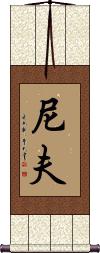
尼夫 is the name Neve in Chinese (Mandarin).
Neve
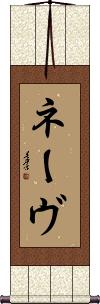
ネーヴ is the name Neve in Japanese.
Note: Because this title is entirely Japanese Katakana, it should be written by a Japanese calligrapher.
Never Give Up
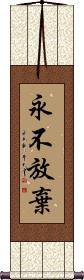
The first character means “eternal” or “forever,” and the second means “not” (together, they mean “never”). The last two characters mean “give up” or “abandon.” Altogether, you can translate this proverb as “never give up” or “never abandon.”
Depending on how you want to read this, 永不放棄 is also a statement that you will never abandon your hopes, dreams, family, or friends.
Never Give In / Never Succumb / Never Lose
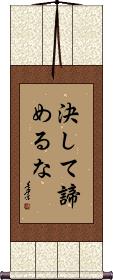
決して諦めるな is a Japanese term that informally means “never give up.”
It's also a Japanese way to say “never surrender.”
Note: Because this selection contains some special Japanese Hiragana characters, it should be written by a Japanese calligrapher.
See Also: Tenacity | Perseverance | Hope
There is always a way out
Never say die
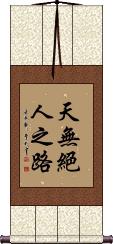
天無絕人之路 is a proverb that means “Heaven never bars one's way,” “Don't despair and you will find a way through,” and “Never give up hope,” and is the Chinese way to say “Never say die.”
New Beginning
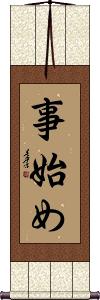
事始め is a Japanese word that means taking up a new line of work or the beginning of new things.
In another context, it can refer to starting the preparations for New Year's festivities or resuming work after the New Year's vacation.
New Beginning
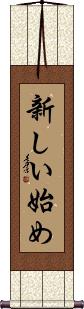
新しい始め is a verbose Japanese phrase that means “new beginning.”
The first three characters mean new, novel, fresh, recent, latest, up-to-date, or modern.
The last two characters mean beginning, start outset, opening, or origin.
Note: Because this selection contains some special Japanese Hiragana characters, it should be written by a Japanese calligrapher.
Ninja
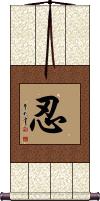
忍 is just the first character of “Ninja.”
It means to beat, to endure, or to tolerate.
Some use this as the short form of “Ninja” but it would be more correct to use the two-character version in most cases (and for clarity). Other definitions of this Kanji include: to bear, put up with, conceal, spy, or sneak. It is also a character in Korean Hanja and Chinese but not well-known with this meaning but rather a definition like “patience.” Note that when writing this as Kanji, Japanese will tend to write it in the form shown to the right. If you select our Japanese master calligrapher, please expect this Kanji form (yes, it's just one stroke that is slightly different in location, crossing another stroke in the Japanese Kanji form).
No Fear
(2 characters)
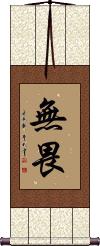
無畏 literally means “No Fear.” But perhaps not the most natural Chinese phrase (see our other “No Fear” phrase for a complete thought). However, this two-character version of “No Fear” seems to be a very popular way to translate this into Chinese when we checked Chinese Google.
Note: This also means “No Fear” in Japanese and Korean, but this character pair is not often used in Japan or Korea.
This term appears in various Chinese dictionaries with definitions like “without fear,” intrepidity, fearless, dauntless, and bold.
In the Buddhist context, this is a word derived from the word Abhaya, meaning: Fearless, dauntless, secure, nothing, and nobody to fear. Also, from vīra meaning: courageous, bold.
See Also: Never Give Up | No Worries | Undaunted | Bravery | Courage | Fear No Man
This in-stock artwork might be what you are looking for, and ships right away...

Gallery Price: $100.00
Your Price: $49.88

Gallery Price: $162.00
Your Price: $89.88

Gallery Price: $162.00
Your Price: $89.88
Gallery Price: $100.00
Your Price: $39.88
Gallery Price: $100.00
Your Price: $39.88

Gallery Price: $61.00
Your Price: $33.88

Gallery Price: $100.00
Your Price: $49.88

Gallery Price: $222.00
Your Price: $122.88
Gallery Price: $200.00
Your Price: $69.88

Successful Chinese Character and Japanese Kanji calligraphy searches within the last few hours...



