Many custom options...


And formats...



Not what you want?
Try other similar-meaning words, fewer words, or just one word.
Old Sage in Chinese / Japanese...
Buy an Old Sage calligraphy wall scroll here!
Personalize your custom “Old Sage” project by clicking the button next to your favorite “Old Sage” title below...
Teacher / Master / Old Sage
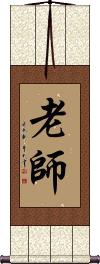
老師 directly translates as “old teacher,” “old master,” or “old sage.”
Together, they are understood as “teacher.” When you think about that, also realize that with age comes respect in Asian cultures. So calling someone old is a term of respect (not like the way we mean it in English). You could replace “old” with “respected” and be closer to how this is meant in Chinese.
Teachers, in general, are more respected by their students and the population in China. When I was a teacher in China, I certainly felt that.
This term is also used for masters of certain fields. For instance, a master calligrapher would respectfully be addressed as a “teacher.” In this case, “master” and “teacher” are synonymous.
Other artists (especially those who are famous or accomplished) should be addressed with this term. Also, some martial arts schools use this term of respect for their masters/teachers/instructors.
This title is recognized in Japanese as "roushi" with the same meaning but it’s rarely used in Japan.
Confucius
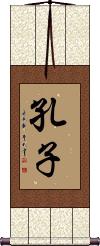
孔子 is how to write the name of the great sage, known in the West as Confucius.
His real name is Kongzi (The name Confucius is a westernized version of his name - his family name is Kong, and “zi” was added as a title of distinction).
He lived some 2500 years ago in Qufu, a town in modern-day Shandong Province of Northern China (about 6 hours south of Beijing by bus). He was a consort to Emperors, and after his death, the impact of his philosophies still served to advise emperors, officials, and common people for generations.
Also during these thousands of years, the Kong family remained powerful in China, and the Kong estate was much like the Vatican in Rome. The Kong estate existed as if on sovereign ground with its own small garrison of guards and the privileges of a kingdom within an empire.
This was true up until the time the Kong family had to flee to Taiwan in 1949 when the Red Army took victory over the Nationalists during the Revolution. The home of Confucius was later razed and all statues were defaced or stolen during the Cultural Revolution. Finally, after years of smearing his name and image, it is once again okay to celebrate the teachings of Confucius in mainland China.
Known as Khổng Tử in Vietnamese.
Fairy / Nymph
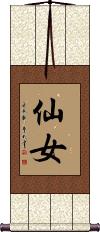
仙女 is a Chinese, Japanese Kanji, and old Korean Hanja way to write fairy or nymph.
This can also be translated as a female elf or female sage.
In Japanese, this can be the female given name, Sennyo.
Wise and Virtuous
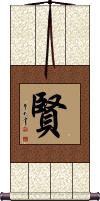
賢 is used to refer to being a wise, trustworthy, and virtuous person. But it also contains the ideas of intelligence, genius, scholarship, virtue, sage, saint, good, and excellent in character.
賢 is used in Chinese, Japanese Kanji, and old Korean Hanja. Also used in a Buddhist context with the same meaning.
Note: Can also be the male given name, Masaru, in Japanese.
Holy Spirit / Holy Ghost
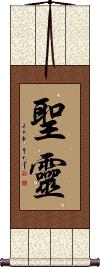
聖靈 is the title for the Holy Spirit or Holy Ghost as used by Jewish, Catholic, and Protestant (and other Christian) Chinese people.
And yes, Chinese Jews do exist, but there are not many of them.
The first character means Holy, Sacred, Saint, or Sage. The second means ghost, spirit, efficacious, or intelligence.
This is valid in Chinese characters and old Korean Hanja. This will be recognized in Japan but see the note below...
 In modern Japan, they now use a variant/simplified Kanji of the second character of Holy Spirit. If you want this Japanese version, click on the Kanji to the right instead of the button above.
Shakyamuni / The Buddha
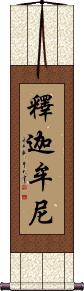
釋迦牟尼 is a transliteration of “Shakyamuni” or “Sakyamuni” in Chinese, Japanese, and old Korean.
The perceived meaning of the name is roughly translated as “Sage of the Sakyas.”
This same Buddha is also known as “Siddhartha Gautama,” “Gotama Buddha,” “Tathagata,” or simply, “The Supreme Buddha.”
Shakyamuni is the legendary man and prince who eventually established the Buddhist religion.
Note: Occasionally Romanized as “Siddhattha Gotama.”
This combination of characters is sometimes seen and used in South Korea and Japan as well (with the same meaning).
Note: 釋迦牟尼 came from the Sanskrit शाक्यमुनि and can also be romanized with diuretics as Śākyamuni.
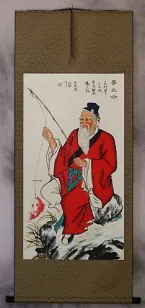
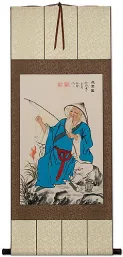
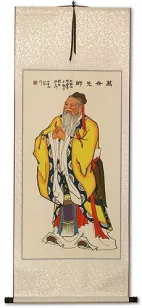
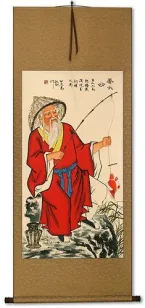
This in-stock artwork might be what you are looking for, and ships right away...
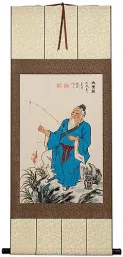
Gallery Price: $71.00
Your Price: $39.00
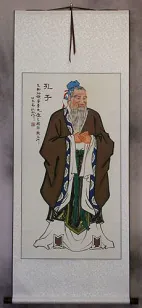
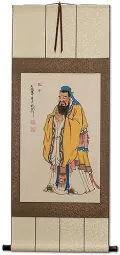
Gallery Price: $63.00
Your Price: $35.00
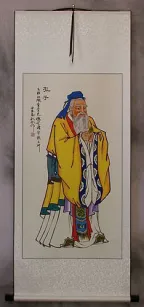
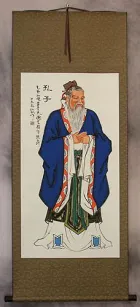
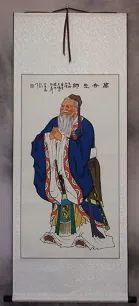

Gallery Price: $71.00
Your Price: $39.00
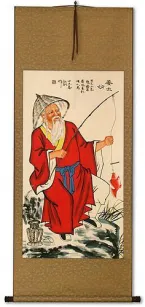
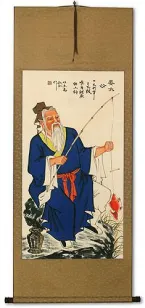
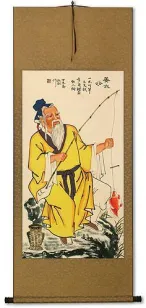
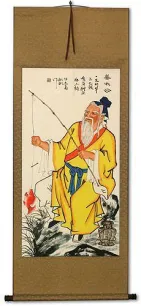
Not the results for old sage that you were looking for?
Below are some entries from our dictionary that may match your old sage search...
| Characters If shown, 2nd row is Simp. Chinese |
Pronunciation Romanization |
Simple Dictionary Definition |
聖人 圣人 see styles |
shèng rén sheng4 ren2 sheng jen masato まさと |
More info & calligraphy: Holy Man / Saint(1) {Christn} saint; (2) (orig. meaning) wise and virtuous person (esp. in Confucianism); great religious teacher; sage; (3) (See 清酒) refined sake; (male given name) Masato is the opposite of the 凡人 common, or unenlightened man. |
夫子 see styles |
fū zǐ fu1 zi3 fu tzu tsumako つまこ |
Master (old form of address for teachers, scholars); (used sarcastically) pedant (1) (honorific or respectful language) (term of address formerly used in China) teacher; wise man; sage; master; (2) (honorific or respectful language) (See 孔子) Confucius; (3) the person concerned; you; he; she; (female given name) Tsumako |
The following table may be helpful for those studying Chinese or Japanese...
| Title | Characters | Romaji (Romanized Japanese) | Various forms of Romanized Chinese | |
| Teacher Master Old Sage | 老師 老师 | lǎo shī / lao3 shi1 / lao shi / laoshi | lao shih / laoshih | |
| Confucius | 孔子 | koushi / koshi | kǒng zǐ / kong3 zi3 / kong zi / kongzi | k`ung tzu / kungtzu / kung tzu |
| Fairy Nymph | 仙女 | sen nyo / sennyo | xiān nǚ / xian1 nu:3 / xian nu: / xiannu: | hsien nü / hsiennü |
| Wise and Virtuous | 賢 贤 | ken | xián / xian2 / xian | hsien |
| Holy Spirit Holy Ghost | 聖靈 / 聖霊 圣灵 | sei rei / seirei | shèng líng sheng4 ling2 sheng ling shengling | |
| Shakyamuni The Buddha | 釋迦牟尼 释迦牟尼 | sha ka mu ni shakamuni | shì jiā móu ní shi4 jia1 mou2 ni2 shi jia mou ni shijiamouni | shih chia mou ni shihchiamouni |
| In some entries above you will see that characters have different versions above and below a line. In these cases, the characters above the line are Traditional Chinese, while the ones below are Simplified Chinese. | ||||

Successful Chinese Character and Japanese Kanji calligraphy searches within the last few hours...



