Many custom options...


And formats...



Rough in Chinese / Japanese...
Buy a Rough calligraphy wall scroll here!
Personalize your custom “Rough” project by clicking the button next to your favorite “Rough” title below...
I’d Rather Be With You
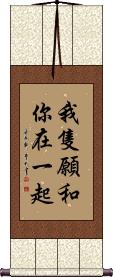
我隻願和你在一起 is a Chinese phrase that is the rough equivalent of, “You are the one I want to be with,” or “I only wish to be with you.”
Niten Ichi Ryu

&#; is the martial arts title, Niten Ichi-Ryū.
The rough translation is “Two Heavens as One.”
Fierce
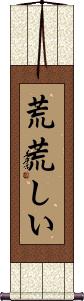
This Japanese word means fierce.
This can also be translated as rough, wild, rude, harsh, gruff, or violent, depending on context.
Note: Because this selection contains some special Japanese Hiragana characters, it should be written by a Japanese calligrapher.
Dojocho
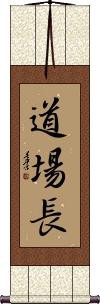
This is the title Dōjōchō in Japanese.
The rough meaning is “Dojo Administrator” or “Dojo Boss.”
Heath
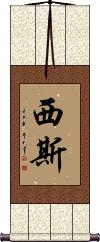
西斯 is the transliteration to Mandarin Chinese for the name Heath.
This name is a little rough in Chinese, as there no sound like, “he” and no “th” sound in Chinese. This Chinese version sounds like “Hsisuh.”
Seeing is Believing
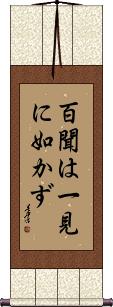
百聞は一見に如かず is the Japanese version of an ancient Chinese proverb that means “Seeing once is better than hearing one hundred times.”
It is the rough equivalent of “seeing is believing,” “one eye-witness is better than many hearsays,” or “a picture is worth a thousand words.”
Sometimes it's simply more prudent to verify with your own eyes.
Note: Because this selection contains some special Japanese Hiragana characters, it should be written by a Japanese calligrapher.
See Also: Hearing a Hundred Times is Not as Good as Seeing Once
Offering / Puja
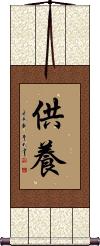
供養 is the Chinese, Japanese, and Korean rough equivalent to the Sanskrit word, Pūjā.
The meaning is: To make offerings (to the Gods), to supply, to provide for one's elders, to support one's parents, a memorial service for the dead, holding a service, any offering for body or mind, to make offerings of whatever nourishes (e.g., food, goods, incense, lamps, scriptures, the doctrine).
The final meaning varies greatly depending on the context in which the word is used.
Cao / Kusa / Grass
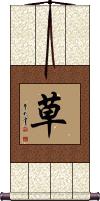
草 means grass or straw in Chinese, Japanese Kanji, and old Korean Hanja.
Depending on the context, this can also mean a manuscript, draft (of a document), or rough copy. In the botany context, it can also refer to weeds, herbs, thatch, or plants.
草 is also the first character of caoshu or sōsho, the Chinese and Japanese wild cursive script style of calligraphy.
Sometimes written in variant form 艸.
This can be the surname Sou/Sō, or the given name Kusa in Japanese (there are also other romanizations for this Kanji).
Reiki Precepts by Usui Mikao (Alternate)
Alternate Version
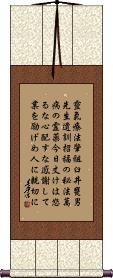
靈氣療法肇祖臼井甕男先生遺訓招福の秘法萬病の霊薬今日丈けは心配すな感謝して業を励げめ人に親切に is an alternate version of the precepts or tenets of Reiki by Usui Mikao.
It is impossible to be sure which version or versions were actually written by Usui Mikao. This is the less common of the three versions that you might see in the wild.
Here is a breakdown of the characters and a rough translation:
靈氣 療法 肇祖 臼井甕男。
Reiki therapy founder Mikao Usui
先生 遺訓。
Teacher's testament
招福の秘法, 萬病の霊薬。
Invite blessings of [the] secret method, 10,000 illnesses of spiritual medicine.
今日丈けは: 怒るな, 心配すな, 感謝して, 業をはげめ, 人に親切に。
At least for today: Do not be angry, do not worry, be grateful, work with diligence, [and] be kind to people.
Note: Because this selection contains some special Japanese Hiragana characters, it should be written by a Japanese calligrapher.
Mama / Mother / Mommy
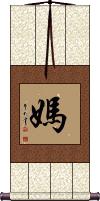
媽 is the oral way that most Chinese people refer to their mothers. Often, they will put this together twice (two of the same character in a row) to create a word that sounds like “Mama.” That's absolutely what little kids call their mothers in China. This Chinese “Mama” is the rough equivalent of “Mommy” in English. Beyond a certain age, Chinese will start to just say “Ma,” which is like saying “Mom.”
This entry is just here for a language lesson. This would make a strange wall scroll by Chinese standards. In Chinese, there are sometimes oral words that don't seem appropriate when written in calligraphy, and this is one of them. See our entry for “Loving Mother” for a better selection.
See Also: Loving Mother | Family
Tibet
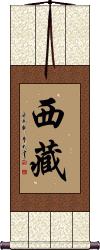
西藏 is the Chinese and Japanese name for Tibet.
It is a vast area in southwest China for which the Chinese government has little control (except in the capital of Llasa). During your travels in Tibet (outside of Llasa) you will find it is rough country full of ruthless bandits and honorable and upright Living Buddhas. There are about 2000 Living Buddhas in Tibet, and at least 10 times more bandits ready to ambush you on the road or trail.
On the eastern frontier of Tibet, you will find the place designated to be Shangri-la. It's a friendly village of Tibetans and is the gateway to greater Tibet.
The full official Chinese name is Tibet Autonomous Region or 西藏自治區|西藏自治区. The name here, 西藏 is quite old - from several dynasties ago.
Reiki Precepts by Usui Mikao
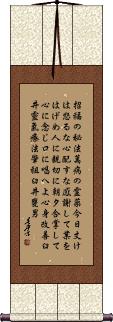
These are the precepts of Reiki that are attributed to Usui Mikao.
Here is a breakdown of the characters and a rough translation:
招福の秘法, 萬病の霊薬。
Invite blessings of [the] secret method, 10,000 illnesses of spiritual medicine.
今日丈けは: 怒るな, 心配すな, 感謝して, 業をはげめ, 人に親切に。
At least for today: Do not be angry, do not worry, be grateful, work with diligence, and be kind to people.
朝夕合掌して, 心に念じ, 口に唱へよ, 心身改善。
Morning [and] evening perform gassho (join hands), [with your] heart/mind in silent prayer, [with your] mouth chant, [thusly] mind [and] body [will] reform/improve.
臼井靈氣療法! -肇祖, 臼井甕男。
Usui Reiki Ryōhō! -Founder, Usui Mikao.
The middle portion of this is often titled, “The Five Principles of Reiki” and makes a nice calligraphy selection by itself. The Japanese text presented here can be considered the more verbose version.
Note: Because this selection contains some special Japanese Hiragana characters, it should be written by a Japanese calligrapher.
These search terms might be related to Rough:
Godo / the Hard Way
Hard Work
Harsh
Heaven Rewards Hard Work
Industrious / Hard Working
Physical Strength
Schooled by Experience and Hard Knocks
Skill Acquired Through Hard Training
Strong Bones Come From Hard Knocks
Tough / Unbeatable
Use Hard Work to Overcome Adversity
Wisdom From Hard Knocks
You Must Endure a Harsh Winter to Appreciate the Warmth of Springtime
The following table may be helpful for those studying Chinese or Japanese...
| Title | Characters | Romaji (Romanized Japanese) | Various forms of Romanized Chinese | |
| I’d Rather Be With You | 我隻願和你在一起 我只愿和你在一起 | wǒ zhǐ yuàn hé nǐ zài yī qǐ wo3 zhi3 yuan4 he2 ni3 zai4 yi1 qi3 wo zhi yuan he ni zai yi qi wozhiyuanhenizaiyiqi | wo chih yüan ho ni tsai i ch`i wochihyüanhonitsaiichi wo chih yüan ho ni tsai i chi |
|
| Niten Ichi Ryu | 二天一龍 二天 一流 | ni ten ichi ryuu nitenichiryuu ni ten ichi ryu | ||
| Fierce | 荒荒しい | ara ara shii / ararashi araarashii / ararashi ara ara shi / ararashi | ||
| Dojocho | 道場長 | dou jou chou doujouchou do jo cho | ||
| Heath | 西斯 | xī sī / xi1 si1 / xi si / xisi | hsi ssu / hsissu | |
| Seeing is Believing | 百聞は一見に如かず | hyakubun wa ikken ni shikazu hyakubunwaikkennishikazu hyakubun wa iken ni shikazu | ||
| Offering Puja | 供養 供养 | ku you / kuyou / ku yo | gòng yǎng gong4 yang3 gong yang gongyang | kung yang kungyang |
| Cao Kusa Grass | 草 | sou / kusa / so / kusa | cǎo / cao3 / cao | ts`ao / tsao |
| Reiki Precepts by Usui Mikao (Alternate) | 靈氣療法肇祖臼井甕男先生遺訓招福の秘法萬病の霊薬今日丈けは怒るな心配すな感謝して業を励げめ人に親切に | reiki ryouhou chouso usui mikao sensei ikun shoufuku no hihou yorozu byou no reiyaku kyou take ke wa oko ru na shinpai suna kansha shite gou o hagemu ge me hito ni shinsetsu ni reiki ryoho choso usui mikao sensei ikun shofuku no hiho yorozu byo no reiyaku kyo take ke wa oko ru na shinpai suna kansha shite go o hagemu ge me hito ni shinsetsu ni | ||
| Mama Mother Mommy | 媽 妈 | mā / ma1 / ma | ||
| Tibet | 西藏 | seizou / chibetto seizo / chibetto | xī zàng / xi1 zang4 / xi zang / xizang | hsi tsang / hsitsang |
| Reiki Precepts by Usui Mikao | 招福の秘法萬病の霊薬今日丈けは怒るな心配すな感謝して業をはげめ人に親切に朝夕合掌して心に念じ口に唱へよ心身改善臼井靈氣療法肇祖臼井甕男 | shou fuku no hihou man byou no rei yaku kyou da ke wa oko ru na shin pai su na kan sha shi te gyou wo ha ke me hito ni shin setsu ni asayuu gasshou shite kokoro ni nenji kuchi ni tonae yo shin shin kaizen usui rei ki ryou hou cho so usu i mika o sho fuku no hiho man byo no rei yaku kyo da ke wa oko ru na shin pai su na kan sha shi te gyo wo ha ke me hito ni shin setsu ni asayu gasho shite kokoro ni nenji kuchi ni tonae yo shin shin kaizen usui rei ki ryo ho cho so usu i mika o | ||
| In some entries above you will see that characters have different versions above and below a line. In these cases, the characters above the line are Traditional Chinese, while the ones below are Simplified Chinese. | ||||

Successful Chinese Character and Japanese Kanji calligraphy searches within the last few hours...



