Buy a Custom Welcome Chinese or Japanese Calligraphy Wall Scroll
We have many options to create artwork with the Chinese characters / Asian symbols / Japanese Kanji for Welcome on a wall scroll or portrait.
If you want to create a cool Welcome wall scroll, this is the place. Below you will find a few Asian symbols that express the idea of Welcome.
2. Welcome Home
3. Welcome
5. Passionate Love / Ardent Love and Devotion
7. Enthusiasm
11. Hot / Heat
13. Fatherly Master / Sifu / Shi Fu / Shifu
14. Mind Body Spirit
15. Appreciation and Love for Your Parents
16. Settai
17. Boar / Pig
A Traditional Warm Welcome
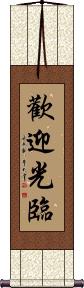
歡迎光臨 would be the ultimate Chinese “welcome mat.” Except it will be on your wall, and people will not step on it.
In a somewhat literal translation, you could say it means “I feel happy as I welcome you, as you have brought a shining light to this place with your arrival,” or more simply, “I am happy you've come as your presents brightens up the place.”
It has become common for this greeting to be announced by the staff upon the arrival of any customer into a fancy store in China. You will also see these characters on the “welcome mats” in front of 4 and 5-star hotels in China.
Having this on a wall scroll is an extra nice touch. I have seen a few horizontal scrolls with this phrase on the wall behind the reception desk of better hotels or near the front door of fine shops. At the fanciest department stores and restaurants in China, several greeters (almost always young women) will stand by the front door, all wearing sashes with this phrase embroidered. As you walk in, they will bow and say “huan ying guang lin” to welcome you to the establishment.
Note: The first two and last two characters do make words in Korean Hanja but are seldom used as a sentence like this in Korean.
Welcome Home
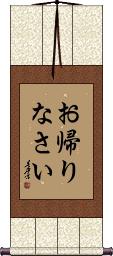
お帰りなさい is a common Japanese way to say, “welcome home.”
This is said by a person greeting another as they return home. It's a typical phrase that is almost said by reflex as part of Japanese courtesy or etiquette.
Sometimes written as 御帰りなさい (just the first character is Kanji instead of Hiragana).
Note: Because this selection contains some special Japanese Hiragana characters, it should be written by a Japanese calligrapher.
Welcome
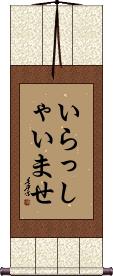
いらっしゃいませ is the Japanese greeting that you'll hear just about every time you enter a sushi bar, restaurant, or shop in Japan.
This calligraphy would be appropriate to hang by the entry door of your business or shop.
Note: Because this title is entirely Japanese Hiragana, it should be written by a Japanese calligrapher.
Welcome to the Dojo
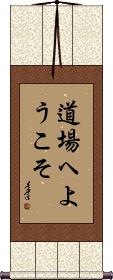
道場へようこそ or “Dōjō e yōkoso” means “Welcome to the dojo” or “welcome to [our] dojo” in Japanese.
Note: Because this selection contains some special Japanese Hiragana characters, it should be written by a Japanese calligrapher.
Passionate Love / Ardent Love and Devotion
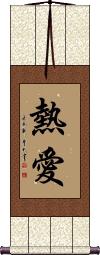
熱愛 means love passionately, ardent love, devotion, adoration.
The literal meaning is “hot love,” as the first character means heat, fervent, hot, and warm. Sometimes it can mean fever, restlessness, or zeal. The second character is, of course, love. If you adore and are devoted to someone with all your love, this is the title for you.
Devotion / Enthusiasm
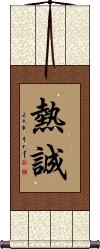
熱誠 is universal in Chinese, Japanese Kanji, and old Korean Hanja.
It can mean earnestness, enthusiasm, ardor, zeal, devotion, spirit, or fervor.
Enthusiasm
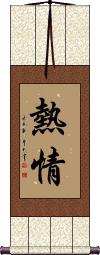
熱情 is a Chinese and Korean word for enthusiasm that can also be translated as passion (for a cause), ardency, ardor/ardour, enthusiasm, or zeal.
Enthusiasm is being warm, cheerful, happy, and full of spirit. It is doing something wholeheartedly and eagerly. When you are enthusiastic, you have a positive attitude.
In some contexts, this could mean being extremely fond of something or having a fondness for a cause or person.
This Chinese word can also be translated as "sincere and warm" or literally "warm sentiment / affection."
See Also: Motivation | Passion | Commitment | Tenacity
Enthusiasm / Warm-Hearted
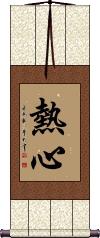
熱心 literally means “warm-hearted” (can also mean warm-spirited or warm-souled).
This is one of a few ways to say Enthusiasm in Chinese, Japanese Kanji, and old Korean Hanja.
熱心 is also used to express the ideas of earnestness or eagerness.
Can mean “zeal” in Japanese.
Always Be Prepared
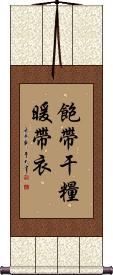
饱带干粮暖带衣 is a proverb that translates as:
Carry [extra] food when [you are] full and [extra] clothes when [you are] warm.
Figuratively, this means:
Always be prepared for a rainy day.
Make Guests Feel at Home
Home away from home
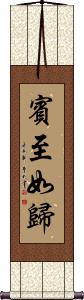
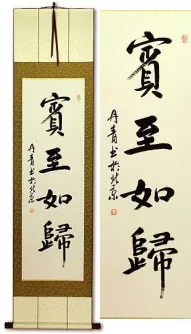
This Chinese phrase suggests that a good host will make guests feel like they are returning home or are as comfortable as they would be at their own homes.
賓至如歸 is also the Chinese equivalent of “a home away from home,” and is used by Chinese hotels, guest houses, and inns to suggest the level of their hospitality that will make you feel at home during your stay.
Hot / Heat
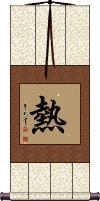
熱 means hot in Chinese, Japanese Kanji, and old Korean Hanja.
This can also be translated as: to warm up; to heat up; hot weather; fervent; fever; (high) temperature.
In some contexts, it can mean zeal, passion, enthusiasm, craze, or rage.
Kindness / Caring
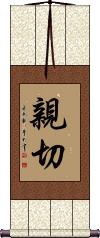
親切 is a Chinese/Japanese/Korean word that can also mean affectionate, cordial, warm, or close (emotionally).
Kindness shows you care and are doing some good to make life better for others. Be thoughtful about people's needs. Show love and compassion to someone who is sad or needs your help. When you are tempted to be cruel, to criticize or tease, decide to be kind instead.
See Also: Love | Caring | Benevolence
Fatherly Master / Sifu / Shi Fu / Shifu
Martial Arts Teacher
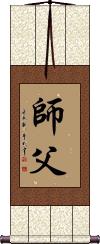
師父 means master in Chinese (occasionally used in Korean Hanja and Japanese). In the context of Martial Arts, this is the master and teacher who instructs students.
The second character by itself means father. Thus, you get the “Fatherly Master” translation. There's an old Chinese saying that goes something like, “One who is your teacher for one day is your father for life.”
Language notes: I've often seen this romanized as “sifu,” this is actually the Cantonese romanization. In Mandarin Chinese, it's “Shifu.” The pronunciation in Mandarin is actually like “sure foo” (using typical English pronunciation). There's an “R-sound” in there, which is not obvious from the romanization. Many martial arts studios incorrectly pronounce this like “she foo” (which is actually the Japanese pronunciation). In Cantonese, it sounds like “Sea foo” (almost like “seafood,” minus the “d” at the end).
師父 is kind of a weird selection for a calligraphy wall scroll; this entry is more for educational purposes. But you are welcome to buy it if it suits your circumstances.
Mind Body Spirit
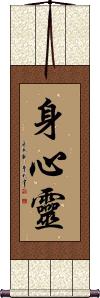
身心靈 is probably the best way to express the idea of “Body, Mind, and Spirit” in Chinese and old Korean Hanja. We are actually using the word “heart” here because, for thousands of years, the heart was thought to be the place where your thoughts, feelings, and emotions came from. We do something similar in the west when we say “warm-hearted” or “I love you with all of my heart.” In this context, heart = mind in Asian language and culture.
The very literal translation of these three characters is “body, heart & spirit,” which could also be interpreted as “body, mind & soul.”
We have arranged these characters in this order because it simply “feels” like the proper order in the Chinese language. Word lists like this are not so common for calligraphy artwork, so we must be careful to put them in the most natural order. It should be noted that this is not a common title in Asia, nor is it considered an actual phrase (as it lacks a clear subject, verb, and object).
 In Japanese Kanji, they use an alternate form of the character for soul or spirit. If you want this using the Japanese alternate, please click on the Kanji shown to the right instead of the button above.
Japanese disclaimer: This is not a natural phrase/list in Japanese. While not totally-natural in Chinese, this word list is best if your audience is Chinese.
Appreciation and Love for Your Parents
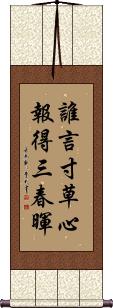
誰言寸草心報得三春暉 is the last line of a famous poem. It is perceived as a tribute or ode to your parents or mother from a child or children that have left home.
The poem was written by Meng Jiao during the Tang Dynasty (about 1200 years ago). The Chinese title is “You Zi Yin” which means “The Traveler's Recite.”
The last line as shown here speaks of the generous and warm spring sunlight which gives the grass far beyond what the little grass can could ever give back (except perhaps by showing its lovely green leaves and flourishing). The metaphor is that the sun is your mother or parents, and you are the grass. Your parents raise you and give you all the love and care you need to prepare you for the world. A debt that you can never repay, nor is repayment expected.
The first part of the poem (not written in the characters to the left) suggests that the thread in a loving mother's hands is the shirt of her traveling offspring. Vigorously sewing while wishing them to come back sooner than they left.
...This part is really hard to translate into English that makes any sense but maybe you get the idea. We are talking about a poem that is so old that many Chinese people would have trouble reading it (as if it was the King James Version of Chinese).
Settai
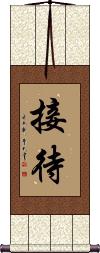
This is the Japanese surname Settai.
This also is a word that means to receive (a visitor), to admit (allow somebody to enter), reception, welcome, to receive and treat, to entertain, or wait upon.
Boar / Pig
Year of the Pig / Zodiac Sign
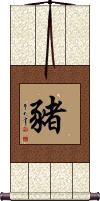
豬 is the character for boar, pig, or swine in Chinese and old Korean.
If you were born in the year of the boar/year of the pig, you...
Are optimistic.
Have good luck with wealth and money.
Are honest, generous, and warm-hearted.
 The character shown to the right is the Japanese Kanji for "wild boar."
it’s
an alternate/simplified form of pig/boar in Chinese (can be read by both Chinese and Japanese people). Click on that character instead of the button above if you want this version.
See also our Chinese Zodiac page.
This in-stock artwork might be what you are looking for, and ships right away...
Gallery Price: $100.00
Your Price: $49.77
Gallery Price: $500.00
Your Price: $178.88
Gallery Price: $400.00
Your Price: $138.88
Gallery Price: $400.00
Your Price: $138.88
Gallery Price: $108.00
Your Price: $59.88
Gallery Price: $108.00
Your Price: $59.88
Gallery Price: $400.00
Your Price: $138.88
The following table may be helpful for those studying Chinese or Japanese...
| Title | Characters | Romaji (Romanized Japanese) | Various forms of Romanized Chinese | |
| A Traditional Warm Welcome | 歡迎光臨 欢迎光临 | huān yíng guāng lín huan1 ying2 guang1 lin2 huan ying guang lin huanyingguanglin | huan ying kuang lin huanyingkuanglin |
|
| Welcome Home | お帰りなさい | okaerinasai | ||
| Welcome | いらっしゃいませ | irasshai mase irasshaimase irashai mase | ||
| Welcome to the Dojo | 道場へようこそ | dou jou e youkoso doujoueyoukoso do jo e yokoso | ||
| Passionate Love Ardent Love and Devotion | 熱愛 热爱 | netsu ai / netsuai | rè ài / re4 ai4 / re ai / reai | je ai / jeai |
| Devotion Enthusiasm | 熱誠 热诚 | nessei / nesei | rè chéng / re4 cheng2 / re cheng / recheng | je ch`eng / jecheng / je cheng |
| Enthusiasm | 熱情 热情 | rè qíng / re4 qing2 / re qing / reqing | je ch`ing / jeching / je ching | |
| Enthusiasm Warm-Hearted | 熱心 热心 | nesshin / neshin | rè xīn / re4 xin1 / re xin / rexin | je hsin / jehsin |
| Always Be Prepared | 飽帶干糧暖帶衣 饱带干粮暖带衣 | bǎo dài gān liáng nuǎn dài yī bao3 dai4 gan1 liang2 nuan3 dai4 yi1 bao dai gan liang nuan dai yi baodaiganliangnuandaiyi | pao tai kan liang nuan tai i paotaikanliangnuantaii |
|
| Make Guests Feel at Home | 賓至如歸 宾至如归 | bīn zhì rú guī bin1 zhi4 ru2 gui1 bin zhi ru gui binzhirugui | pin chih ju kuei pinchihjukuei |
|
| Hot Heat | 熱 热 | netsu | rè / re4 / re | je |
| Kindness Caring | 親切 亲切 | shin setsu / shinsetsu | qīn qiè / qin1 qie4 / qin qie / qinqie | ch`in ch`ieh / chinchieh / chin chieh |
| Fatherly Master Sifu Shi Fu Shifu | 師父 师父 | shi fu / shifu | shī fù / shi1 fu4 / shi fu / shifu | shih fu / shihfu |
| Mind Body Spirit | 身心靈 / 身心霊 身心灵 | mi shin rei mishinrei | shēn xīn líng shen1 xin1 ling2 shen xin ling shenxinling | shen hsin ling shenhsinling |
| Appreciation and Love for Your Parents | 誰言寸草心報得三春暉 谁言寸草心报得三春晖 | shuí yán cùn cǎo xīn bào dé sān chūn huī shui2 yan2 cun4 cao3 xin1 bao4 de2 san1 chun1 hui1 shui yan cun cao xin bao de san chun hui | shui yen ts`un ts`ao hsin pao te san ch`un hui shui yen tsun tsao hsin pao te san chun hui |
|
| Settai | 接待 | settai | jiē dài / jie1 dai4 / jie dai / jiedai | chieh tai / chiehtai |
| Boar Pig | 豬 猪 | inoshishi | zhū / zhu1 / zhu | chu |
| In some entries above you will see that characters have different versions above and below a line. In these cases, the characters above the line are Traditional Chinese, while the ones below are Simplified Chinese. | ||||




