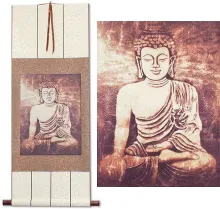
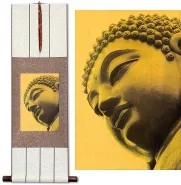
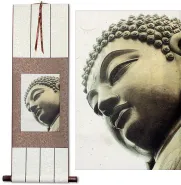
BUDDHA
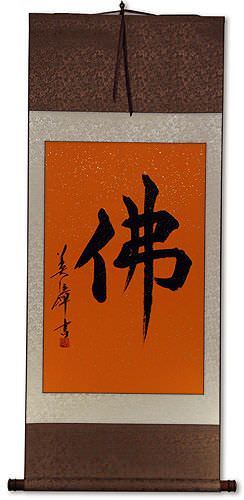
HOTOKE Japanese Kanji Wall Scroll
50¾"
24½"
Typical Gallery Price: $300.00
$118.88Sold Out
Sorry you missed it.
• Hand-Painted Artwork.
• Handmade Wall Scroll.
• Money-Back Guarantee.
Approximate Measurements
Artwork Panel: 44.3cm x 69cm ≈ 17½" x 27¼"
Silk/Brocade: 53.5cm x 129cm ≈ 21" x 50¾"
Width at Wooden Knobs: 62.5cm ≈ 24½"
Information about caring for your wall scrollSee Larger Image

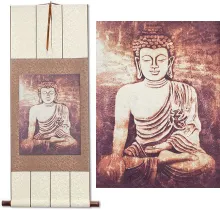
Buddha - Buddhism
Japanese Kanji / Chinese character / old Korean Hanja Calligraphy Wall Scroll
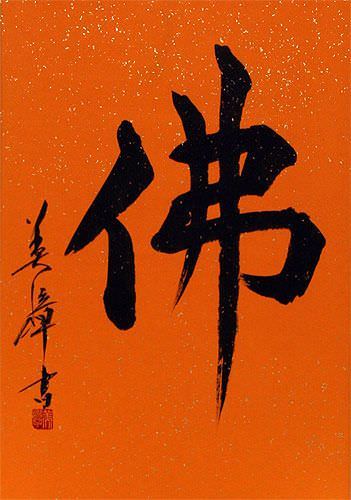
Close up view of the artwork mounted to this silk brocade wall scroll
This particular calligraphy is done in Kai-Gyosho (Running-Regular Script). This style features bold but flowing strokes. It's written on Buddha-Orange xuan paper, with gold flakes. This orange color is used almost exclusively for Buddhist-related Japanese and Chinese calligraphy.
This is the Kanji that is Romanized and pronounced "Hotoke" (Hoe Toe Kay) in Japanese. This Kanji represents The Buddha and Buddhism. This Kanji and concept originally came from China (after Buddhism came from India) where this character is Romanized and pronounced "Fo".
The form written on this scroll is the ancient Chinese form that is also used in Japan (usually for religious purposes). It is also common to write Hotoke in Japanese in the alternate form which looks like this: 
The Kanji version written on this wall scroll will be readily-understood by both Chinese and most Japanese people (non-Buddhist Japanese people may not immediately recognize this more ancient form).
Want a Buddhism wall scroll completely customized to your desires?
Link: Options for custom Buddha and Buddhism Chinese / Japanese Kanji / Korean Hanja calligraphy are available here!
Chinese and Japanese Calligraphy is only practiced by those with a keen and agile hand. It is an art that dates back thousands of years. Great artists, writers, and poets of China and Japan are often admired for their calligraphy ability and style.
This piece was done by Master Calligrapher Bishou Imai of Nara, Japan.
To create this art, Master Imai used special calligraphy ink on Buddha-orange gold-flaked xuan paper (rice paper). The raw calligraphy was then taken to our mounting shop in Beijing where some of the best mounters in China laminated this to more sheets of xuan paper and mounted it as a beautiful silk brocade wall scroll.
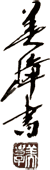
Authentic Japanese Calligraphy by Japanese Master Calligrapher Bishou Imai
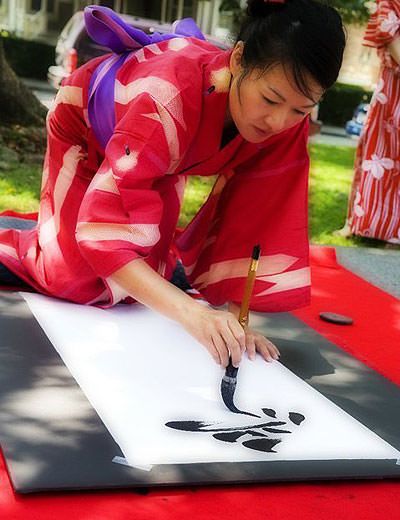
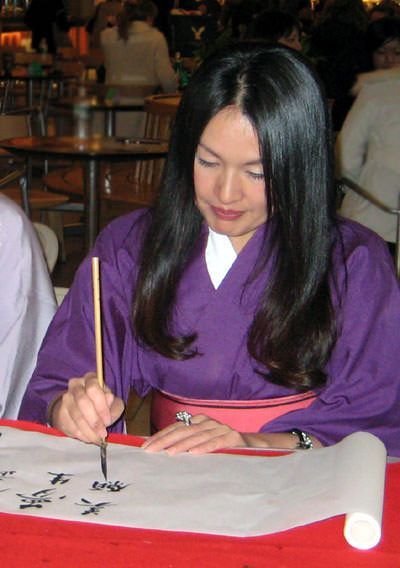
Japanese Master Calligrapher Bishou Imai.
Shown here crafting her artwork which follows
a 1600-year Japanese tradition.
Bishou was born and raised in Nara, Japan. She began her studies of Calligraphy at the age of four at Baikou Calligraphy School. When Bishou was 25 years old, she received a membership to the Tenshin Kai (calligraphy society) and her life as a calligrapher began. Bishou progressed to the next level, becoming a member of the Cho-ko Guild which is the most prestigious calligraphy society in Japan. During her apprenticeship, she taught calligraphy and studied the art of Japanese silk scroll making (hyougu) at Mizuno Hyougu-ten.
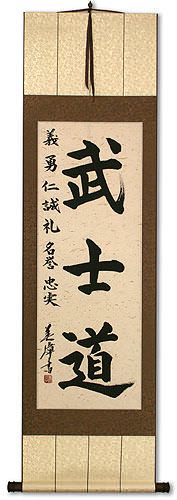
A sample of her work:
Bushido - Kaisho style
In 1998, Master Calligrapher Bishou Imai was awarded the highest rank in Japanese Calligraphy of Shihan. She currently holds a guild license for teaching both calligraphy and instructing teachers to teach calligraphy.
Bishou Imai is among the few to have won multiple best of category awards in national competitions (Japan). Her work has been displayed at the Tokyo Metropolitan Art Museum, Osaka Municipal Museum Of Art, Nara City Museum Of Art and Kyoto Municipal Museum Of Art.
In Addition to being a calligrapher, she is also an "artisan artist" (Hyougushi).

 is how Bishou is written. This name means "Beautiful Cliff/Mountain". You will see these characters signed just before the red signature stamp on her calligraphy pieces.
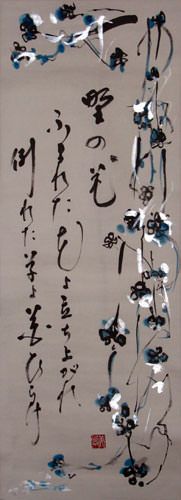
Kana Sosho
painting combination.
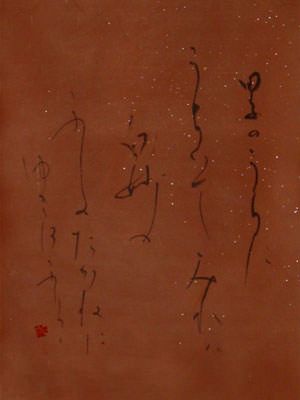
Kana style Japanese calligraphy
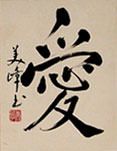
Single-Kanji
Love
calligraphy
in Kai-Gyosho
style.

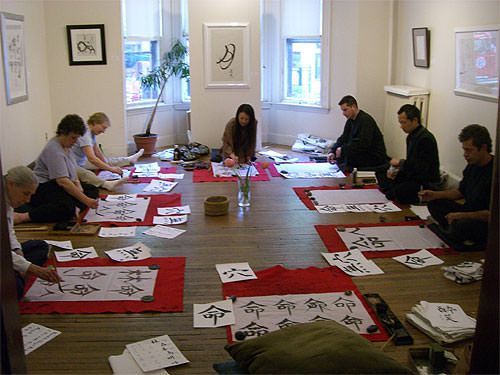
Master Imai, holding a Japanese calligraphy class in Boston.
This item was listed or modified
Jan 15th, 2014
Typical Gallery Price: $300.00
$118.88Sold Out
Sorry you missed it.