Many custom options


And formats


Not what you want?
Try other similar-meaning words, fewer words, or just one word.
Beauty Power Wisdom in Chinese / Japanese
Buy a Beauty Power Wisdom calligraphy wall scroll here!
Personalize your custom “Beauty Power Wisdom” project by clicking the button next to your favorite “Beauty Power Wisdom” title below.
Switched to secondary search mode due to lack of results using primary.
These secondary results may not be very accurate. Try a different but similar meaning word or phrase for better results. Or:
Look up Beauty Power Wisdom in my Japanese Kanji & Chinese Character Dictionary(My dictionary is a different system then the calligraphy search you just tried)
If you want a special phrase, word, title, name, or proverb, feel free to contact me, and I will translate your custom calligraphy idea for you.
1. 1. Right Understanding / Right Perspective / Right View / Perfect View
2. 2. Right Resolve / Right Thought / Right Intention / Perfect Resolve
4. Avatar
5. Awareness
6. Ba Ji Quan
9. Beauty / Beautiful / Handsome
12. Beautiful Girl
13. Beautiful Heart / Beautiful Mind
14. Beautiful Life / Life in Perfect Harmony
15. Beauty: The art of makeup / cosmetics
16. Beautiful Mind
18. Beautiful Sight
19. Beautiful Soul
20. Beautiful Heart / Beautiful Spirit
21. Beautiful Spirit
22. Beautiful Virtue
23. Beautiful Woman
26. Beautiful
27. You are always a beauty in your lover’s eyes
28. Beauty Salon
29. Beauty Shop / Beauty Salon
30. Beauty / Beautiful Princess
31. Beauty is in the eyes of the beholder
32. Bodhi - Awakening Enlightenment
33. You May Learn from Victory, You Will Learn from Failure
34. Wisdom and Insight of the Buddha
35. Charisma / Charm
36. Seeking Wisdom
37. The Five Tenets of Confucius
39. Confucius: Universal Education
40. Conquering Yourself is a Sign of Strength
41. Control of Power
42. Cooperation
44. Creativity
45. Great Wisdom
46. Great Illumination of Wisdom
47. Daodejing / Tao Te Ching - Chapter 33
48. Daodejing / Tao Te Ching - Chapter 27
49. Daodejing / Tao Te Ching - Chapter 54
51. Determination
52. Dharma / Buddhist Doctrine
53. Dharma Gate
54. Discipline
55. Discipline / Training / Tempering Character
56. Discipline
58. The Spirit of the Dragon Horse
59. The Spirit of the Dragon Horse and Power of a Tiger
61. Emperor
62. Empress
64. Eternal Beauty
66. Example is Better than Precept
67. Experience is the Mother of Wisdom
68. Eyeballs / Eyes
69. Failure is the Mother of Success
70. Faith
71. Destiny Determined by Heaven
72. Flower in the Mirror, Moon on Water
73. Fortitude / Strength of Character
75. Gem
78. Goddess of Beauty / Beautiful Spirit
81. Goju Association
82. The Good Life / Beautiful Life
83. The Guts Theory
85. Gwan
86. Glory and Honor
87. Imagination
88. Inner Beauty / Beauty of Spirit
89. Inner Beauty / Inner Wisdom
90. Intuitive Wisdom / Inner Light
1. Right Understanding / Right Perspective / Right View / Perfect View
Samyag Dristhi / Samyag Drsti / Samma Ditthi
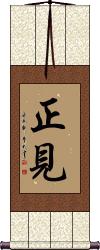
正見 is one of the Noble Eightfold Paths of Buddhism. Right View, along with the Right Thought, constitutes the path to Wisdom.
To get to the correct view of the world, you must first understand and follow Four Noble Truths.
Note: This term is exclusively used by devout Buddhists. It is not a common term, and remains an unknown concept to most Japanese and Chinese people.
See Also: Buddhism | Enlightenment | Noble Eightfold Path
2. Right Resolve / Right Thought / Right Intention / Perfect Resolve
Samyak Samkalpa / Samma Sankappa
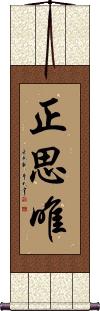
正思唯 is one of the Noble Eightfold Paths of Buddhism. Right Thought, along with the Right View, constitute the path to Wisdom.
In Buddhism, Right Thought, in simple terms, means to free yourself from having ill will towards anyone or anything. It also suggests that you remain harmless to other living creatures.
This can also be defined as “Resolve in favor of renunciation, goodwill, and non-harming of sentient beings.”
 There is an ancient/alternate version of the third character for this selection. You can see that alternation third character to the right. If you want your selection to use that older character, just click on the character to the right, instead of the button above.
Note: This term is exclusively used by devout Buddhists. It is not a common term, and remains an unknown concept to most Japanese and Chinese people.
See Also: Buddhism | Enlightenment | Noble Eightfold Path
Adamantine / King Kong
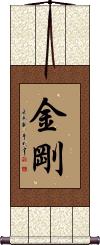
金剛 can translate as adamantine from Chinese, Japanese, and old Korean.
Other meanings and translations can include diamond, thunderbolt, Indra's indestructible weapon, a Buddhist symbol of the indestructible truth, Vajra (a mythical weapon), guardian deity, hardness, indestructibility, power, the least frangible of minerals.
The Chinese pronunciation of “Jīn Gāng” became the loanword used in English as “King Kong.” You can see King Kong as the indestructible ape guardian deity depending on how you read the story.
Avatar
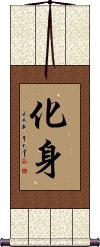
化身 is a way to say avatar in Chinese characters, Korean Hanja, and Japanese Kanji.
This is the original Buddhist idea of an avatar (not the movie). This can also mean: incarnation; reincarnation; embodiment; personification; impersonation.
化身 is the Chinese word used for the original Sanskrit, nirmāṇakāya. Alternates for nirmāṇakāya include 應身, 應化身, or 變化身. In the context of Buddhism, this is a Buddha's metamorphosic body, which has the power to assume any shape to propagate the Truth. This title, 化身, is used for the appearance of a Buddha's many forms.
Awareness
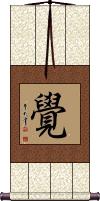
覺 can mean to feel; to figure out; thinking; awake; aware; bodhi; knowing; understanding; enlightenment; illumination; apprehend; perceive; realize.
覺 is a character that is impossible to define in a single word.
This term is often associated with Buddhism where it's understood to be: Illumination, enlightenment, or awakening in regard to the real in contrast to the seeming. However, it can also refer to enlightenment in regard to morality and evil.
Notes:
In Japanese, this can be the personal name Satoru.
In certain context, and only when pronounced as “jiao” in Chinese, it can refer to a nap, sleep or the state of sleeping. However, as a single character on a wall scroll, everyone will read this with the awareness or enlightenment context.
By no means is this the only way to write enlightenment. In fact, you should only choose this character if you are looking more for a word meaning awareness.
See Also: Enlightenment | Wisdom | Realization and Knowledge
Ba Ji Quan
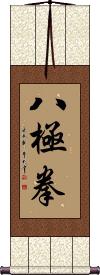
八極拳 is “Ba Ji Quan” or “Eight Extremes Fist.”
Some also translate this as “Eight Extremities Fist,” though I don't feel that's accurate.
八極拳 (Bājíquán) is a Chinese martial art that features explosive, short-range power and is famous for its elbow strikes. It originated in the Hebei Province in Northern China but spread to Taiwan and other places.
The full title is 開門八極拳 (Kāimén Bājíquán), which means Open-Door Bajiquan.
Other romanizations include: BaJiQuan, Pa Chi Ch`üan, or Pa Chi Chuan.
In Japan, this is known as Hakkyokuken.
Wisdom from Hard Knocks
The school of hard knocks
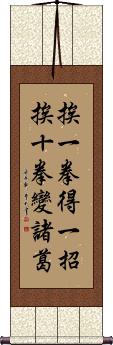
挨一拳得一招挨十拳變諸葛 is a Chinese proverb that literally translates as: Receive one blow, [and one] learns a lesson; Receive ten blows, [and one] becomes a great Zhuge [Liang].
You must first understand that a man named Zhuge Liang was one of the great strategists and philosophers in Chinese history. He's known as a man of great wisdom.
Figuratively, this phrase means:
One can learn much from failure or “hard knocks.”
Beauty of Nature
Ka-Chou-Fuu-Getsu
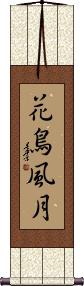
花鳥風月 is the Japanese Kanji proverb for “Beauties of Nature.”
The dictionary definition is “the traditional themes of natural beauty in Japanese aesthetics.”
The Kanji each represents an element of nature that constitutes beauty in traditional Japanese art and culture.
The Kanji breakdown:
花 = ka = flower (also pronounced “hana”)
鳥 = chou = bird (also pronounced “tori”).
風 = fuu = wind (also pronounced “kaze”).
月 = getsu = moon (also pronounced “tsuki”)
Beauty / Beautiful / Handsome
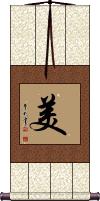
美 is often used to describe the beauty of a woman.
However, when applied to a man, it can mean handsome. It's also the first character in the word for “beauty salon” which you will see all over China and Japan.
美 can mean the given name for a girl (spell it or say it as “Mei” or “May”).
For a bit of trivia: The title for the “USA” in Chinese is “Mei Guo” which literally means “Beautiful Country.” This name was bestowed at a time before Chairman Mao came to power and decided that China didn't like the USA anymore (even though we fought together against the Japanese in WWII). But these days, Chinese people love Americans (but have a distaste for American politics and policy). But I digress...
美 is also how “Beautiful” is written in Japanese Kanji and Korean Hanja. 美 can also mean: very satisfactory; good; to be pleased with oneself; abbreviation for the USA; fine; handsome; admirable; madhura; sweet; and/or pleasant.
See Also: Beautiful Woman | Beautiful Girl
Mirror: Beautiful Clarity
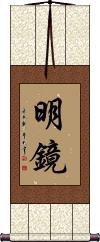
While 明鏡 means mirror in Chinese, Japanese Kanji, and old Korean Hanja, it's commonly used as a metaphor for something beautiful and bright or something that provides clarity and insight.
Beautiful Clear Sky
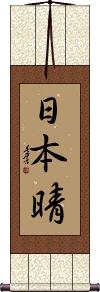
日本晴 is a Japanese Kanji title that means beautiful weather, clear and cloudless sky, or clear weather.
It's a little odd, but if you literally translated this phrase, it says, “Japanese weather,” as if that was an indication of perfect weather (maybe a little arrogant on behalf of Japan - I've experienced a monsoon there, which was unpleasant).
Beautiful Girl
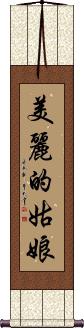
美麗的姑娘 is the best way to express “beautiful girl” in Chinese.
See Also: Beautiful Woman | Profound Mysterious Beauty
Beautiful Heart / Beautiful Mind
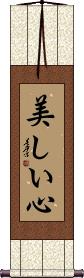
美しい心 means “beautiful heart” or “beautiful mind,” in Japanese.
The word for “heart” also means “mind” and sometimes “soul” in ancient Asia.
Note: Because this selection contains some special Japanese Hiragana characters, it should be written by a Japanese calligrapher.
Beautiful Life / Life in Perfect Harmony
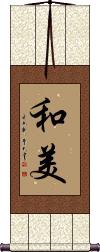
和美 is a word that means “harmonious” or, “in perfect harmony.”
The deeper meaning or more natural translation would be something like, “beautiful life.”
The first character means peace and harmony.
The second character means beautiful. But in this case, when combined with the first character, beautiful refers to being satisfied with what you have in your life. This can be having good relations, good feelings, comfort, and having enough (with no feeling of wanting).
Note: In Japanese, this is often used as the name “Wami.” This title is probably more appropriate if your audience is Chinese.
Beauty: The art of makeup / cosmetics
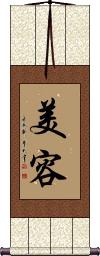
In Chinese, 美容 is the title for the art of beauty, as applying makeup or cosmetics to enhance beauty.
Note: In Japanese and Korean, this takes the meaning of beautiful face or beauty of figure or form. Be sure you know who your audience is and have matched the desired meaning.
Beautiful Mind
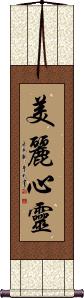
美麗心靈 means “Beautiful Mind” in Chinese.
美麗心靈 is also the Chinese title of the 2001 movie of the same name.
Beautiful Princess
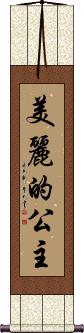
美麗的公主 is how to write beautiful princess in Chinese.
The first two characters mean feminine beauty or rather a way to say beautiful that only applies to women. The middle character is just a connecting character. The last two characters mean princess.
See Also: Queen
Beautiful Sight
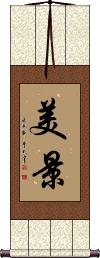
美景 can mean a beautiful view, beautiful scenery, or a beautiful sight.
Note: Not a commonly used word in modern Japanese.
Beautiful Soul
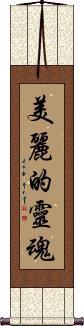
美麗的靈魂 means “Beautiful Soul” in Chinese.
The first two characters mean beautiful, beauty, or gorgeous.
The middle character connects the ideas (a possessive article).
The last two characters mean soul or spirit.
Beautiful Soul
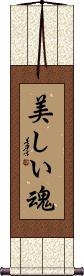
美しい魂 is a common way to write “Beautiful Soul” in Japanese.
Note: Because this selection contains some special Japanese Hiragana characters, it should be written by a Japanese calligrapher.
Beautiful Soul
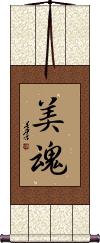
美魂 is a very short or abbreviated way to say “Beautiful Soul” in Japanese.
There is a more extended version that might be a little more natural and also closer to the intended meaning. This short title is often translated awkwardly as “Beauty Soul” in Japanese.
Beautiful Heart / Beautiful Spirit
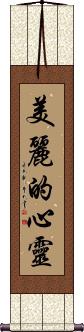
美麗的心靈 means a beautiful heart, a beautiful mind, or a beautiful spirit in Chinese.
Beautiful Spirit
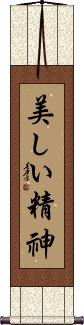
美しい精神 is a common way to write “Beautiful Spirit” in Japanese.
Note: Because this selection contains some special Japanese Hiragana characters, it should be written by a Japanese calligrapher.
Beautiful Virtue
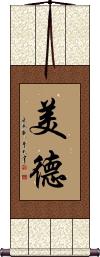
美德 written in Chinese or Korean Hanja can also mean “grace of character” or “noble virtue.”
 There is a slight variation in the modern Japanese Kanji form of the second character. If you want the modern Japanese version, please click on the special Kanji shown to the right instead of the button above. Note that the traditional Chinese form is still readable and understood by Japanese people (
it’s
the ancient Japanese form anyway).
Beautiful Woman
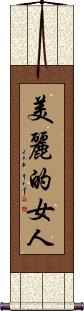
美麗的女人 is the best and most polite way to express “beautiful woman” in Chinese.
Note: Some people may like the simple 2-character 美女 way to express this, but there are some bad connotations with that, so better to stay with this longer and more respectful title.
See Also: Beautiful Girl | Profound Mysterious Beauty
Beautiful Dreamer
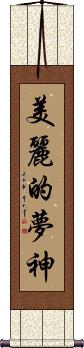
美麗的夢神 is the Chinese title for the song Beautiful Dreamer.
It translates as Beautiful Dream Saint.
Beautiful Woman Proverb
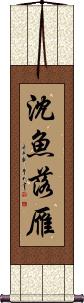
沈魚落雁 is an old proverb that literally means “fish sink, goose alights.”
...But this takes some explaining. This is a proverb from Zhuangzi (莊子), who lived in the late 4th century BC.
This figuratively refers to female beauty that is so captivating that even the birds and beasts take notice.
Perhaps a better and more accurate way to describe this is to say that it speaks of the charms of a uniquely beautiful woman who is so beautiful that fish stay on the bottom of the water and flying wild geese fall from the sky in shame.
This proverb is so famous that it is also known and used in Japan (same characters, different pronunciation).
Note: This can also be written 沉魚落雁 instead of 沈魚落雁 (just the first character varies slightly).
Beautiful
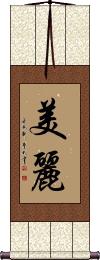
美麗 is a two-character word used often in Chinese, old Korean, and ancient Japanese to express beauty.
I've had a few requests for a “two-character beautiful,” and this is by far the best word. This is not a common word for an Asian person to want on a wall scroll. However, you will see it commonly used as an adjective in phrases, stories, and titles throughout magazines and signage in China.
美麗 can also be translated as gorgeous or lovely.
Note: 美麗 is not commonly used in modern Japan.
You are always a beauty in your lover’s eyes
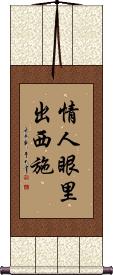
Any woman with affection for Asian art will love a gift of this Chinese proverb calligraphy on a wall scroll.
She will melt in your arms as you tell her the meaning of these characters.
Contained in this phrase is a reference to the most beautiful woman in Chinese history. Her name was Xi Shi, and she was known to have good looks that need not have fine robes or makeup. Her charms were so powerful that she brought down an entire kingdom (in a successful effort to bring honor and pride back to her people).
情人眼里出西施 is a great way to express that the woman in your life is your one love.
Beauty Salon
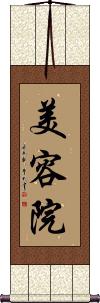
美容院 means beauty salon, lady's hair parlor, beauty parlor, or hairdressing salon in Chinese and Japanese.
Beauty Shop / Beauty Salon
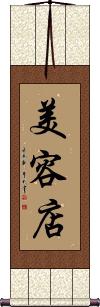
美容店 is how to write “Beauty Shop” or “Beauty Salon.”
If you own such a business, this will make a nice wall scroll to hang up - and many of your Asian customers will be able to read and appreciate it.
When traveling in China, you will see signs like this in the window of any place that offers full services of hair styling, manicures, pedicures, and often shampoo with head and back massage.
However, as a handmade wall scroll, this becomes a very fancy piece of artwork that shows the high class of your business (a great sign for your window if you don't get direct sunlight).
Beauty / Beautiful Princess
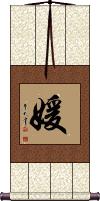
媛 means, a beauty; beautiful (woman); princess; a young lady of noble birth; girl; small & lovely.
媛 is used a bit more commonly in Chinese than in Japanese.
Note: This can be the female given name “Hime” in Japanese.
Beauty is in the eyes of the beholder
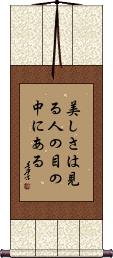
美しさは見る人の目の中にある means “Beauty is in the eyes of the beholder” in Japanese.
Japanese grammar and word order are different than English, but I will partially break this down for you:
美しさ = Beauty
は = is/relates
見る = to look/see
人の = person's
目の = eye's
中にあ = inside
る = !
Note: Because this selection contains some special Japanese Hiragana characters, it should be written by a Japanese calligrapher.
Bodhi - Awakening Enlightenment
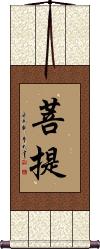
The Bodhi or 菩提 is the moment of completion in Buddhism.
It is when all things become known and you have completed your journey to enlightenment.
The reference is to the Bodhi tree where Siddhartha Gautama (the legendary man who established the Buddhist religion) achieved enlightenment. Sometimes this is referred to as “the tree of enlightenment,” but if you want the full version with the character for a tree at the end, please see the Bodhi Tree entry.
See Also: Buddhism | True Religion / Buddha Truth | Nirvana | Enlightenment
You May Learn from Victory, You Will Learn from Failure
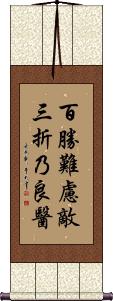
百胜难虑敌三折乃良医 is a Chinese proverb that literally translates as: [Even a general who has won a] hundred victories [may be] hard put to see through the enemy's [strategy], [but one who has] broken [his] arm three [times] [will] be a good doctor.
Figuratively, this means: One cannot always depend on past successes to guarantee future success but one can always learn from lessons drawn from failure.
See Also: Failure is the Mother of Success | Success | Time | Schooled by Experience and Hard Knocks
Wisdom and Insight of the Buddha
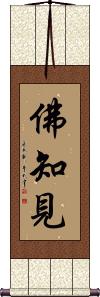
This title represents the wisdom and insight of the Buddha, or the penetrative power of Buddha's wisdom, or vision.
佛知見 is a term derived from the Lotus Sutra, perhaps up to 1900 years ago.
Charisma / Charm
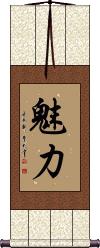
魅力 is the Chinese, Japanese Kanji, and old Korean Hanja for charm, fascination, glamor/glamour, charisma, attraction, and appeal.
The literal meaning of these two characters roughly translates as “charming power.”
魅力 is also a Japanese female given name Miryoku.
Seeking Wisdom
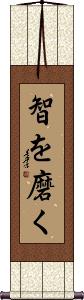
智を磨く is an old obscure Japanese phrase that means to refine, cultivate, or improve one's wisdom.
This is the mantra of one who is a seeker of wisdom. They will always want to polish, shine, refine, improve, and expand their knowledge and understanding.
Note: Because this selection contains some special Japanese Hiragana characters, it should be written by a Japanese calligrapher.
The Five Tenets of Confucius
The Five Cardinal Rules / Virtues of Confucius
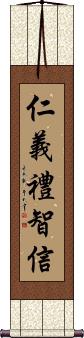
仁義禮智信 are the core of Confucius's philosophy.
Simply stated:
仁 = Benevolence / Charity
義 = Justice / Rectitude
禮 = Courtesy / Politeness / Tact
智 = Wisdom / Knowledge
信 = Fidelity / Trust / Sincerity
Many of these concepts can be found in various religious teachings. It should be clearly understood that Confucianism is not a religion but should instead be considered a moral code for a proper and civilized society.
This title is also labeled “5 Confucian virtues.”
 If you order this from the Japanese calligrapher, expect the middle Kanji to be written in a more simple form (as seen to the right). This can also be romanized as “jin gi rei satoshi shin” in Japanese. Not all Japanese will recognize this as Confucian tenets but they will know all the meanings of the characters.
See Also: Tea | Martial Morality / Martial Arts Ethics / Virtue
The Ease of the Scholar
Quote from Confucius
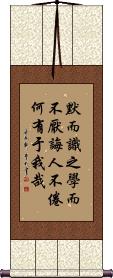
默而识之学而不厌诲人不倦何有于我哉 is a quote from the Analects of Confucius that translates as:
To quietly recite and memorize the classics,
to love learning without tiring of it,
never be bored with teaching,
How could these be difficult for me?
This is a suggestion that for a true scholar, all of these things come with ease.
This was written over 2500 years ago. The composition is in ancient Chinese grammar and phrasing. A modern Chinese person would need a background in Chinese literature to understand this without the aid of a reference.
Confucius: Universal Education
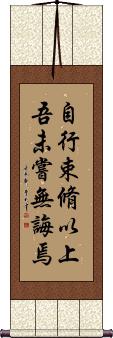
自行束脩以上吾未尝无诲焉 means, for anyone who brings even the smallest token of appreciation, I have yet to refuse instruction.
Another way to put it is: If a student (or potential student) shows just an ounce of interest, desire, or appreciation for the opportunity to learn, a teacher should offer a pound of knowledge.
This quote is from the Analects of Confucius.
This was written over 2500 years ago. The composition is in ancient Chinese grammar and phrasing. A modern Chinese person would need a background in Chinese literature to understand this without the aid of a reference.
Conquering Yourself is a Sign of Strength
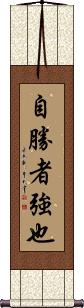
自勝者強也 means “One who conquers oneself is strong” in Chinese.
自勝 = Self-overcoming or self-conquering
者 = is
強 = Strength
也 = Also
Control of Power
Him Cho Chung
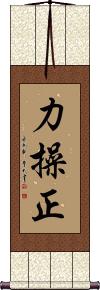
力操正 is a Korean martial arts title meaning “Power Control.”
It's most often cited as one of the 8 key concepts from Tang Soo Do.
This can be pronounced in Chinese but will only be recognized by those familiar with martial arts terms.
Cooperation
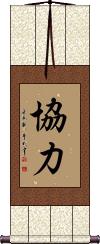
協力 is a Japanese word that means cooperation.
If you look at the second character, which means “strength” or “power,” and then you look at the first character, you will see that the first character seems to represent multiple “strengths” together. Thus, you can visually see the meaning of this word as “stronger when working together.” The combination of characters that form this word is commonly seen in Japanese Kanji and Korean Hanja but not used in China (however, a Chinese person could probably guess the meaning, and it can be pronounced in Chinese).
It is implied that you are cooperating to create some project or product.
This can also be translated as “joint effort.”
See Also: Partnership: Marriage
Courage and Strength
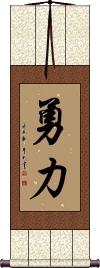
勇力 is a very short way to say “courage and strength” in Chinese and Japanese.
In Japanese, it's read more like “strong courage” or “powerful courage.” This can also be the personal name Yuri or Yuuri in Japanese.
Creativity
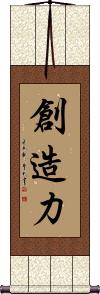
創造力 is a word that means “strength of creativity” or sort of “creativity (is your) strength.”
This can also be translated as “ingenuity.”
Creativity is the power of imagination. It is discovering your own special talents. Daring to see things in new ways and find different ways to solve problems. With your creativity, you can bring something new into the world.
The first character means “to create,” and the second means “to make or build.” Together they mean “creative.” The third character means “strength.”
Great Wisdom
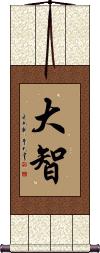
大智 is a Zen Buddhist title that means supreme wisdom, great wisdom, Buddha-wisdom, omniscience, or transcendental wisdom.
Great Illumination of Wisdom
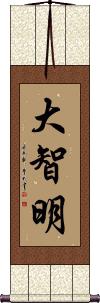
大智明 is a Zen Buddhist title that means the great illumination of wisdom.
This refers to wisdom so bright that it shines through obviously to all in its presence.
Daodejing / Tao Te Ching - Chapter 33
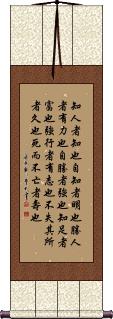
This is referred to as passage or chapter 33 of the Dao De Jing (often Romanized as “Tao Te Ching”).
These are the words of the philosopher Laozi (Lao Tzu).
To know others is wisdom;
To know oneself is acuity/intelligence.
To conquer others is power,
To conquer oneself is strength.
To know contentment is to have wealth.
To act resolutely is to have purpose.
To stay one's ground is to be enduring.
To die and yet not be forgotten is to be long-lived.
To understand others is to be knowledgeable;
To understand yourself is to be wise.
To conquer others is to have strength;
To conquer yourself is to be strong.
To know when you have enough is to be rich.
To go forward with strength is to have ambition.
To not lose your place is to be long-lasting.
To die but not be forgotten -- that's true long life.
He who is content is rich;
He who acts with persistence has will;
He who does not lose his roots will endure;
He who dies physically but preserves the Dao
will enjoy a long after-life.
Notes:
During our research, the Chinese characters shown here are probably the most accurate to the original text of Laozi. These were taken for the most part from the Mawangdui 1973 and Guodan 1993 manuscripts which pre-date other Daodejing texts by about 1000 years.
Grammar was a little different in Laozi’s time. So you should consider this to be the ancient Chinese version. Some have modernized this passage by adding, removing, or swapping articles and changing the grammar (we felt the oldest and most original version would be more desirable). You may find other versions printed in books or online - sometimes these modern texts are simply used to explain to Chinese people what the original text really means.
This language issue can be compared in English by thinking how the King James (known as the Authorized version in Great Britain) Bible from 1611 was written, and comparing it to modern English. Now imagine that the Daodejing was probably written around 403 BCE (2000 years before the King James Version of the Bible). To a Chinese person, the original Daodejing reads like text that is 3 times more detached compared to Shakespeare’s English is to our modern-day speech.
Extended notes:
While on this Biblical text comparison, it should be noted, that just like the Bible, all the original texts of the Daodejing were lost or destroyed long ago. Just as with the scripture used to create the Bible, various manuscripts exist, many with variations or copyist errors. Just as the earliest New Testament scripture (incomplete) is from 170 years after Christ, the earliest Daodejing manuscript (incomplete) is from 100-200 years after the death of Laozi.
The reason that the originals were lost probably has a lot to do with the first Qin Emperor. Upon taking power and unifying China, he ordered the burning and destruction of all books (scrolls/rolls) except those pertaining to Chinese medicine and a few other subjects. The surviving Daodejing manuscripts were either hidden on purpose or simply forgotten about. Some were not unearthed until as late as 1993.
We compared many research by various archeologists and historians before deciding on this as the most accurate and correct version. But one must allow that it may not be perfect, or the actual and original as from the hand of Laozi himself.
Daodejing / Tao Te Ching - Chapter 27
The Mastery of Effortless Skill

Chapter 27 of the Daodejing reveals a profound truth about mastery: the highest skill leaves no trace, requires no force, and appears almost invisible.
善行無轍跡,
善言無瑕謫,
善數不用籌策,
善閉無關鍵而不可開,
善結無繩約而不可解。
是以聖人常善救人,
故無棄人;
常善救物,
故無棄物。
是謂襲明。
故善人者,不善人之師;
不善人者,善人之資。
不貴其師,不愛其資,
雖智大迷,
是謂要妙。
The sage moves through life with such natural harmony that nothing seems imposed; doors need no locks, knots require no rope, and actions leave no mark behind.
This is the essence of wúwéi (effortless action), where true ability arises from deep alignment with the Tao rather than deliberate effort.
At its heart, this chapter teaches compassion without exception. The sage “abandons no one and nothing,” recognizing value in all people and all things. Even those who seem flawed or unrefined are not rejected, but understood as part of a greater whole with each person both a student and a teacher in the unfolding of life.
Laozi reminds us that wisdom is not about perfection or control, but about subtle awareness. The truly skilled individual does not rely on tools, rules, or rigid structures; instead, they embody an intuitive understanding that makes their actions naturally complete.
In this way, excellence becomes quiet, effortless, and beyond imitation.
This teaching also reflects a deeper philosophical insight: Opposites are interdependent. The “good” person learns from the “not good,” and the “not good” provides the material for growth. To reject either is to misunderstand the balance of existence itself.
As calligraphy, Daodejing Chapter 27 serves as a reminder to cultivate inner mastery rather than outward display. It is a meditation on refinement, humility, and the quiet power of skill perfected through harmony with the natural order.
Note: The Chinese text used here is based on the early Mawangdui silk manuscript tradition (2nd century BCE). The Guodian manuscripts do NOT preserve Chapter 27 in full form.
Daodejing / Tao Te Ching - Chapter 54
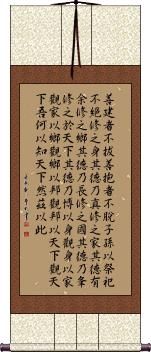
This is the Mawangdui version of Daodejing chapter 54.
By its virtue alone can one generation after another carry on the ancestral sacrifice.
Apply it to yourself, and by its power, you will be freed from dross.
Apply it to your household, and your household shall thereby have abundance.
Apply it to the village, and the village will be made secure.
Apply it to the kingdom, and the kingdom shall thereby be made to flourish.
Apply it to an empire, and the empire shall thereby be extended.
Therefore just as through oneself, one may contemplate Oneself;
So through the household one may contemplate the Household;
And through the village, one may contemplate the Village;
And through the kingdom, one may contemplate the Kingdom;
And through the empire, one may contemplate the Empire.
How do I know that the empire is so? By this.
What is firmly rooted cannot be pulled out;
What is tightly held in the arms will not slip loose;
Through this, the offering of sacrifice by descendants will never come to an end.
Cultivate it in your person, and its virtue will be genuine;
Cultivate it in the family, and its virtue will be more than sufficient;
Cultivate it in the hamlet, and its virtue will endure;
Cultivate it in the state, and its virtue will abound;
Cultivate it in the empire, and its virtue will be pervasive.
Hence look at the person through the person;
Look at the family through the family;
Look at the hamlet through the hamlet;
Look at the state through the state;
Look at the empire through the empire.
How do I know that the empire is like that?
By means of this.
Frightful Demon / Asura
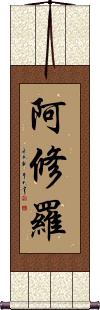
This demon title comes from the ancient Sanskrit word Asura.
阿修羅 is often used in Buddhism when describing various demons. Sometimes defined as “Fighting and battling a giant demon.”
In the context of Buddhism: This title originally meant a spirit, spirits, or even the gods (perhaps before 1700 years ago). It now generally indicates titanic demons, enemies of the gods, with whom, especially Indra, they wage constant war. They are defined as “not devas,” “ugly,” and “without wine.” There are four classes of asuras, separated according to their manner of rebirth. They can be egg-born, womb-born, transformation-born, and spawn- or water-born. Their abode is in the ocean, north of Sumeru but certain of the weaker dwell in a western mountain cave. They have realms, rulers, and palaces, as have the devas.
In terms of power, Asuras rank above humans but below most other deities. They live near the coastal foot of Mount Sumeru (on the northern side). Their domain is partially or wholly in the ocean.
Determination
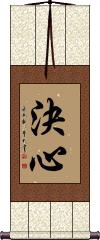
決心 is a Chinese, Japanese, and Korean word that holds the dictionary definition of determination but literally means determined heart.
The first character means to determine or determined.
The second character means heart, mind, or soul, so you can imagine that this form of determination partially means putting your heart into something. It can also be translated as resolve, resolution, or decision (as in a decision made and followed).
See Also: Sincerity and Devotion | Tenacious / Tenacity | Passions / Feelings / Emotions | Dedication | Will-Power / Self
Dharma / Buddhist Doctrine
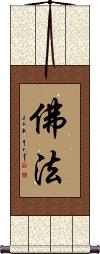
Dharma Gate
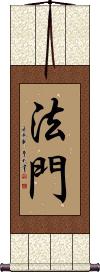
This is the Dharma Gate, The Gate to Enlightenment, or Dharmaparyāya.
The doctrines, or wisdom of Buddha is regarded as the door to enlightenment.
Discipline
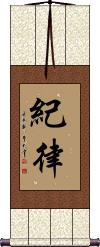
紀律 is a Chinese and Korean word that conveys the idea of extreme self-control and perhaps self-sacrifice, and obedience.
This word matches the kind of “discipline” I was in the Marine Corps. There is also an additional idea of maintaining order or being orderly in your tasks.
This idea would also fit an athlete training for the Olympics who gives up many pleasures to stay focused on their training.
See Also: Self-Control | Will-Power / Self
Discipline
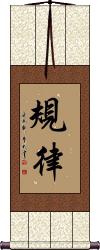
規律 is a Japanese word for discipline that relays the ideas of keeping order, and observance (of rules, laws, regulations).
This is also a word in Chinese and old Korean Hanja where it suggests that you are one who follows a certain law of behavior or has a regular and dependable pattern of behavior, personal regime, or rhythm.
See Also: Self-Control | Will-Power / Self
Discipline / Training / Tempering Character
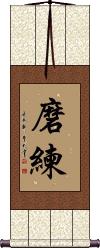
磨鍊 is a form of discipline which suggests training of the mind and character, aimed at producing self-control, obedience, etc.
One of my Chinese-English dictionaries even translates this as “tempering oneself” or turning yourself into hardened steel.
In old Korean Hanja, they use these characters in reverse order but with the same meaning. If you want the Korean version, please click this link instead of the button above: Korean version.
Discipline

鍛練 is the Japanese Kanji and Korean Hanja word used for discipline.
This has a meaning like “forging or creating something from lots of training and practice.” My Japanese dictionary translates this as “tempering, forging, hardening, disciplining, training.”
This is for Japanese and Korean only. In Chinese, these characters might be translated as (physical) “exercise.”


The modern form of the second Japanese Kanji looks like the first image to the right. There’s also an alternate modern form after that, and finally, an alternate traditional form. Because calligraphy is an art, the calligrapher could choose any of these possible forms. Let us know if you have a preference.
See Also: Self-Control | Will-Power / Self
Door of Great Wisdom
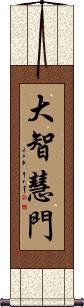
大智慧門 is the title for “The Great Wisdom Door,” or “The Gate to Great Wisdom.”
This refers to a portal to all wisdom and knowledge in Buddhism.
The Spirit of the Dragon Horse
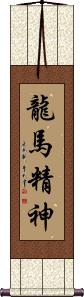
龍馬精神 is an old proverb that is used to wish someone good health and success combined as a great compliment.
The meaning is “The vigor and spirit of the legendary dragon-horse.” These four characters are often accompanied by four more which mean “...and the power and prestige of the tiger.” Here we are just offering the first part which is considered the short version.
By giving a wall scroll like this to someone, you were either wishing or telling them that they have an amazing quality. There is also a suggestion of good health - at least anyone with the vigor of a dragon horse would seem to also be in good health.
Note: In Japanese, this would be read as the spirit of 坂本龍馬 (Sakamoto_Ryōma), a beloved rebel who helped abolish the old Japanese feudal system. This can be confusing, so I am declaring this proverb to be Chinese only.
The Spirit of the Dragon Horse and Power of a Tiger
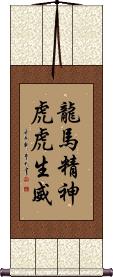
龍馬精神虎虎生威 is an old proverb that is used to wish someone great health and success combined as a great compliment.
The meaning is “The vigor and spirit of the legendary dragon-horse and the power and prestige of the tiger.”
By giving a wall scroll like this to someone, you were either wishing or telling them that they have these qualities. There is also a suggestion of good health - at least anyone with the vigor of a dragon horse would seem to also be in good health.
Electricity / Lightning
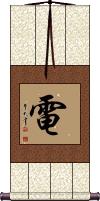
電 is the title for electricity in Chinese, Japanese Kanji, and old Korean Hanja.
While This means electric or electricity, it can also be used to mean lightning.
Note: This Kanji is not usually used alone like this in Japanese.
See Also: Thunder | Will-Power / Self | Supernatural Energy | Rain
Electricity / Lightning
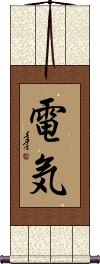
電氣 is the title for electricity in Japanese Kanji.
This can also be used to mean lightning in Japanese.
See Also: Thunder | Will-Power / Self | Supernatural Energy | Rain
Emperor
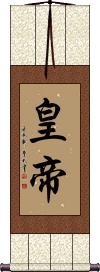
皇帝 means emperor in Chinese, Japanese, and old Korean.
From times of old, the emperors of Asia ruled under the authority of God himself. One definition of an emperor is a ruler put in power by God. This definition separates emperors from the various kings in Chinese history (although defining who is a king versus an emperor gets vague sometimes).
Occasionally, the emperor's wife was widowed, and she took the role of an empress until her death (see our entry for empress if that is what you are looking for).
Empress
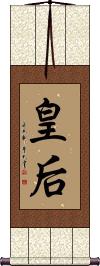
皇后 is the title of empress/emperess, the female form of the emperor.
皇后 is used in Chinese, Japanese Kanji, and old Korean Hanja.
While the emperor's reign was for life, if he died, his wife would hold his power. In this case, a woman was the ultimate ruler of the greater part of East Asia (now China) until her death and the succession of the emperor's firstborn son to lead the empire. Numerous times in various Chinese dynasties, an empress took power in this way.
The first character means emperor by itself.
The second character alone can mean “wife of an emperor or king” (the first character clarifies that we are talking about an empress and not a queen). It can also mean sovereign or last offspring, depending on context.
Note: In some books, this word is translated as queen. While only incorrect if you get technical (because an empress is theoretically a higher level than a queen), the meaning is very similar.
皇后 is sometimes used for the title of queen, but more technically, this is the wife of the emperor (a higher level than a queen).
See Also: Emperor | King | Queen | Phoenix (Female)
Energy / Capability
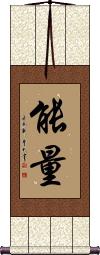
能量 means energy in Chinese and Japanese.
This can also refer to the capability, power, or ability that someone has.
This would also be the word in Chinese that you would use to say, “they have a lot of energy.”
Eternal Beauty
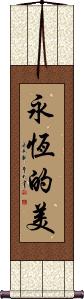
永恆的美 is how to write “Eternal Beauty” in Chinese.
Learning is Eternal
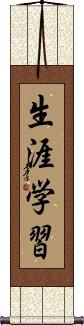
生涯學習 means “Learning is Eternal” or “Lifelong Learning,” in Japanese.
See Also: An Open Book Benefits Your Mind | Wisdom | Learn From Wisdom
Learning is Eternal
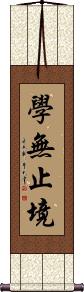
This Chinese philosophy tells of how we continue to learn throughout our lives.
This proverb can be translated in a few ways such as “Study has no end,” “Knowledge is infinite,” “No end to learning,” “There's always something new to study,” or “You live and learn.”
The deeper meaning: Even when we finish school we are still students of the world gaining more knowledge from our surroundings with each passing day.
See Also: An Open Book Benefits Your Mind | Wisdom | Learn From Wisdom
Example is Better than Precept
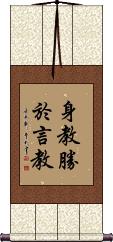
Tell somebody how to do something and they might get it.
Show them how to do it, and they will master it in no time.
身教勝於言教 can also be translated as “Behavior teaches more than words.”
See Also: Wisdom
Experience is the Mother of Wisdom
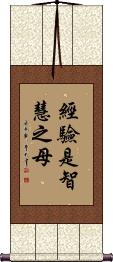
It's been said that wisdom comes from good judgment, and good judgment comes from experience, while experience comes from a series of times when you used bad judgment.
經驗是智慧之母 is a Chinese proverb that makes the simplest connection between experience and wisdom.
See Also: Failure is the Mother of Success | Wisdom | Learn From Wisdom
Eyeballs / Eyes
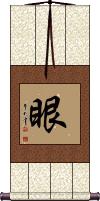
眼 is the simplest way to write eyes or eyeballs in Chinese, Japanese Kanji, and old Korean Hanja.
This can also mean eyesight, sight, vision, look, stare, glance, viewpoint, insight, perceptivity, the power of observation, or simply the eye.
Failure is the Mother of Success
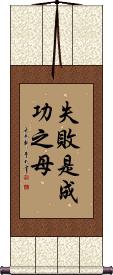
失败是成功之母 is a Chinese and Korean proverb that means “Every failure that you experience is a chance to learn from it and find success.”
Knowing what does not work is just as important as finding out what does work.
See Also: Experience is the Mother of Wisdom
Failure is the Mother of Success
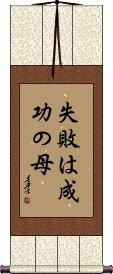
失敗は成功の母 is a Japanese proverb that means exactly what you think.
Every failure that you experience is a chance to learn from it and find success.
Knowing what does not work is just as important as finding out what does work.
Note: This is the Japanese version of an ancient Chinese proverb.
Note: Because this selection contains some special Japanese Hiragana characters, it should be written by a Japanese calligrapher.
See Also: Experience is the Mother of Wisdom
Faith
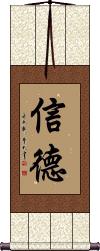
信德 is a term used often in Buddhism to express faith.
信德 is sometimes translated as the merit of the believing heart, faith of virtue, the power of faith, or virtuous faith.
In this context:
信 = Faith
德 = Virtue
Destiny Determined by Heaven
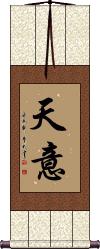
天意 is a way to express destiny in a slightly religious way.
天意 means “Heaven's Wish” or “Heaven's Desire,” with the idea of fate and destiny being derived as well. It suggests that your destiny comes from God / Heaven and that your path has already been chosen by a higher power.
My Japanese dictionary defines this word as “divine will” or “providence,” but it also holds the meaning of “the will of the emperor.” Therefore, I don't suggest this phrase if your audience is Japanese - it feels strange in Japanese anyway.
Flower in the Mirror, Moon on Water
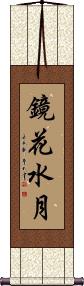
鏡花水月 is an old Asian proverb that means “flowers in a mirror and the moon reflected in the lake” or “flowers reflected on a mirror and the moon reflected on the water's surface.”
Literally, 鏡花水月 reads “Mirror Flower, Water Moon.”
Figuratively this can be used to represent many different ideas. It can be used to express an unrealistic rosy view or viewing things through rose-tinted spectacles. So you can use it to relay an idea about something that is visible but has no substance,
something that can be seen but not touched, or something beautiful but unattainable such as dreams or a mirage.
This expression is used to describe things like the subtle and profound beauty of poems that cannot be described in words.
鏡 = Mirror (or lens)
花 = Flower(s)
水 = Water
月 = Moon
Can also be written 水月鏡花 (just a slight change in word/character order).
Fortitude / Strength of Character
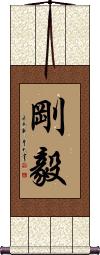
剛毅 is a Japanese and Chinese word that means resolute and firm, fortitude, firmness of character, hardihood, manliness, or macho.
See Also: Perseverance | With All the Strength of Your Heart | Tenacious / Tenacity
Fudo Myo-o / Wisdom King
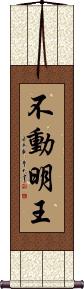
不動明王 is the fierce form of the Buddha Vairocana, and the most important of the Myō-ō or Ming Wang class of deities.
Romanized as Fudō Myō-ō, in Japanese Buddhism or Bùdòng Míngwáng / Pu-Tung Ming-Wang in Chinese Buddhism,
Originally Acala/Achala (अचल “The Immovable”), Acalanātha (अचलनाथ “Immovable Lord”) or Āryācalanātha (आर्याचलनाथ, “Noble Immovable Lord”).
In English, this deity is sometimes called “Wisdom King.”
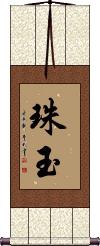
珠玉 is a Chinese, Japanese Kanji, and old Korean Hanja word meaning gem.
Beyond just the word gem, this can refer to pearls and jades, jewels, clever remarks, beautiful writing, gems of wisdom, genius, or an outstanding person.
If your name is Gem, this is a nice way to represent your name in 3 Asian languages. Though the pronunciation will be far from Gem, the meaning of gem is really nice.
Note: In Japanese, this is sometimes used as the female given name, Tama.
Girl Power / Woman Power
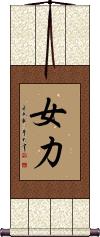
This can be read as “girl power,” “woman power,” “women empowerment” or “female strength.”
女力 is kind of a strange or unofficial title in Chinese and Japanese. At least, it's not common for a wall scroll.
This should be “onna ryoku” in Japanese but I found some who suggest it should be “me riki.”
God Give Me Strength
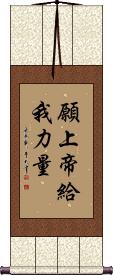
願上帝給我力量 is a wish or a prayer that you might call out at a desperate time.
Translated by us for a military serviceman in Iraq. He may need to use this phrase often, though I am not sure where he's going to find a place to hang a wall scroll.
God Give Me Strength
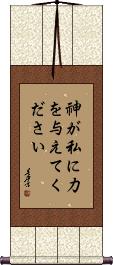
神が私に力を与えてください is “God give me strength” in Japanese.
This is the long and formal version. We also have a short version.
Note: Because this selection contains some special Japanese Hiragana characters, it should be written by a Japanese calligrapher.
Goddess of Beauty / Beautiful Spirit
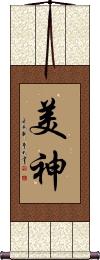
In Chinese, 美神 means Goddess of Beauty.
The first character means beauty or beautiful.
The second character means spirit (can also mean god, goddess, or soul).
Some will use this as a short way to say, “Beautiful Spirit.”
This has a similar meaning in Japanese but is used more often as a female given name in Japan. As a Japanese given name, it can be pronounced Mikami, Mikan, or Binasu.
God Give Me Strength
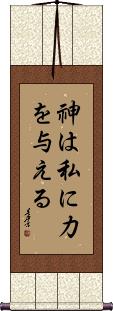
神は私に力を與える means “God give me strength,” in Japanese.
神は私に力を與える is the short version, we also have a longer more formal version.
Note: Because this selection contains some special Japanese Hiragana characters, it should be written by a Japanese calligrapher.
Goju Martial Arts

剛柔武道 can mean “Goju Martial Arts,” or “Goju Martial Way.”
剛柔 = Hard and soft or balanced power and yielding.
武道 = Martial way, martial arts, or an ethical/lifelong path of training.
Goju Association

剛柔協会 is “Goju-Kyokai,” which can mean “Goju Association.”
剛柔 = Hard and soft, or balanced power and yielding (Goju).
協会 = Association (Kyokai).
The Good Life / Beautiful Life
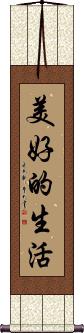
In Chinese, 美好的生活 means “Beautiful Life,” or “The Good Life.”
The Guts Theory
The belief that where there's a will, there's a way.
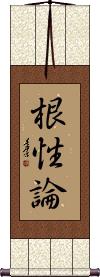
根性論 is a Japanese title that refers to the belief that where there's a will, there's a way.
Another way to translate this is “The Guts Theory” or “The Doctrine of Will-Power.” Maybe breaking down the meaning of the characters will help clarify this:
根性 = will-power; guts; temper; nature; spirit; nature and character; the nature of the powers of any sense.
論 = theory; doctrine; treatises on dogma, philosophy, discipline, etc.
Gutsy / Daring / Bold
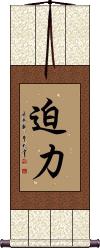
迫力 is a Chinese word that is a form of personal strength.
It is a word that describes a person who is willing to take a risk. In English, we might say, “Someone with guts.”
An example might be a person that is not rich but invests many money into something (knowing they could double their money or lose it all). Win or lose, this is a person that knows or pushes their potential.
Tearing this word apart, the first character means “to compel,” urgent, urge, force, imminent, or “spur on.” The second means power, strong, bear, or exert.
Note: 迫力 is also a word in Japanese Kanji and Korean Hanja but with a meaning more like force, intensity, appeal, strength, impact, force, or simply power.
Gwan
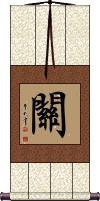
The surname "Gwan" is primarily of Chinese origin, meaning things like "mountain pass," "to close," or "to manage."
Other Chinese variations include 官 and 管.
Romanization variations of 關: Guan (Mandarin), Kwan (Cantonese/HK), Kuan (Taiwan), Quan (Vietnamese).
History: Associated with ancient states and officials, like the descendants of Guan Zhong.
In Korean there is a Gwan or Kwon that comes from 權 (권), meaning "power" or "authority," though "Gwan" can also be used as a given name with meanings like "strong" or "official".
Glory and Honor
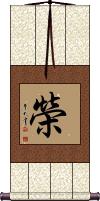
榮 relates to giving someone a tribute or praise.
It's a little odd as a gift, so this may not be the best selection for a wall scroll.
I've made this entry because this character is often misused as “honorable” or “keeping your honor.” It's not quite the same meaning, as this usually refers to a tribute or giving an honor to someone.
榮 is often found in tattoo books incorrectly listed as the western idea of personal honor or being honorable. Check with us before you get a tattoo that does not match the meaning you are really looking for. As a tattoo, this suggests that you either have many pride in yourself or that you have a wish for prosperity for yourself and/or your family.
 In modern Japanese Kanji, glory and honor look like the image to the right.
There is many confusion about this character, so here are some alternate translations for this character: prosperous, flourishing, blooming (like a flower), glorious beauty, proud, praise, rich, or it can be the family name “Rong.” The context in which the character is used can change the meaning between these various ideas.
In the old days, this could be an honor paid to someone by the Emperor (basically a designation by the Emperor that a person has high standing).
To sum it up: 榮 has a positive meaning; however, it's a different flavor than the idea of being honorable and having integrity.
Imagination
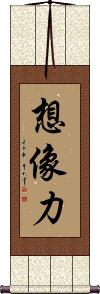
想像力 is probably the best way to express “imagination” in Chinese, Japanese Kanji, and old Korean Hanja.
It literally means “your strength to imagine.” The last character means strength or ability, while the first two mean imagine or conceptualize. My Japanese dictionary defines this as “The power of imagination.” While my Korean dictionary says, “imaginative power.”
Inner Beauty / Beauty of Spirit
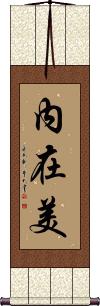
內在美 is a title that speaks of beauty on the inside.
It's not about outward or physical beauty but rather the inner beauty possessed by someone. This can also be translated as “beauty of spirit.”
Inner Beauty / Beauty of Spirit
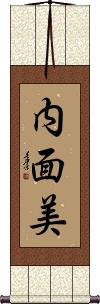
内面美 is a three-character title that speaks of beauty on the inside.
It's not about outward or physical beauty but rather the inner beauty possessed by someone. This can also be translated as “beauty of spirit.”
Inner Beauty / Inner Wisdom
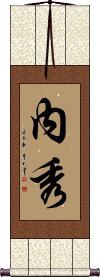
內秀 is an interesting word in Chinese that simultaneously means inner beauty and inner wisdom.
Some will translate it as “intelligent but unassuming.”
It's about having amazing abilities or traits on the inside which are not immediately obvious on the outside.
Intuitive Wisdom / Inner Light
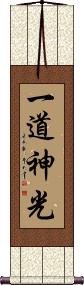
一道神光 is a Buddhist term that means “inner light,” or “intuitive wisdom.”
This actually reads, “[the] one path/way [of] spiritual light.” It implies that your spirit knows the way, and will light the path for you.
Inner Strength / Inner Well-Being and Health
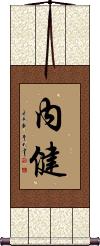
內健 is an old Chinese word meaning inner strength or inner health.
It's the idea of health and well-being starting or residing inside yourself. Also defined as fortitude within the context of good health.
Inner Strength is Better than Outward Appearance
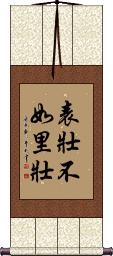
表壯不如里壯 literally translates as: [Better to be] strong inside than [to be] strong outside.
The ancient original meaning was:
[An] able [husband] outside [working to support a family is] not as good as [an] able [wife] inside [working and saving to take care of the family].
The current meaning is:
Inner strength is more important than outward appearance.
Inner Strength is Better than Outward Appearance
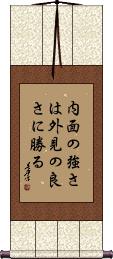
内面の強さは外見の良さに勝る is a Japanese proverb that literally translates as “inner/internal strength/power [versus] outward-appearance [the] merit/virtue/good quality [does] excel/surpass/exceed/outweigh.”
More naturally in English, this would be “Inner Strength Outweighs Outward Appearance.”
Note: Because this selection contains some special Japanese Hiragana characters, it should be written by a Japanese calligrapher.
This in-stock artwork might be what you are looking for, and ships right away...






Successful Chinese Character and Japanese Kanji calligraphy searches within the last few hours...